Web novels are now considered one of China’s three biggest cultural exports to the world, among online games and web series. Globally well-known titles range from the Lovecraftian-inspired fantasy Lord of the Mysteries on WebNovel.com to Wuxiaworld’s classic Chinese fantasies, such as Coiling Dragon and I Shall Seal the Heavens. These ultra-long series often go for hundreds or thousands of chapters but are fairly easy to consume. They captivate casual readers with feel-good plots, character level-ups, and world expansion. Among them, the fantasy and historical genres bring a distinctive Chinese flavor, drawing on Chinese philosophical and fantasy concepts, such as qi, cultivation (xiulian), and tribulation (jie), while transporting readers into a world of Chinese demons, immortals, heavenly palaces, and magical beasts. Many fans are also intrigued by traditional Chinese culture depicted in these novels, from ancient Chinese institutions, rituals, and cuisine to everyday lifestyle.
China’s online literature rose alongside the country’s decades-long economic boom. Through these fantasy worlds, ordinary people’s aspirations for success, faith in perseverance, and fascination with traditional Chinese culture became woven into the spirit of an era.
The golden age of online literature also gave rise to a new generation of wealthy authors, fueled by the growth of the IP economy through adaptations across film, television, animation, and games. According to the 2025 China Online Literature Blue Book, released at this year’s China Online Literature Forum in Hefei, Anhui province, China now has more than 33 million online literary works and over 520 million readers.
At a literary event hosted by the China Writers Association at the Beijing International Bookstore in late May, 11 representative figures of Chinese history, fantasy, and web novels gathered to share their experiences of taking Chinese stories overseas. Here is the first part of a series introducing the writers you should know.
Ma Boyong 马伯庸
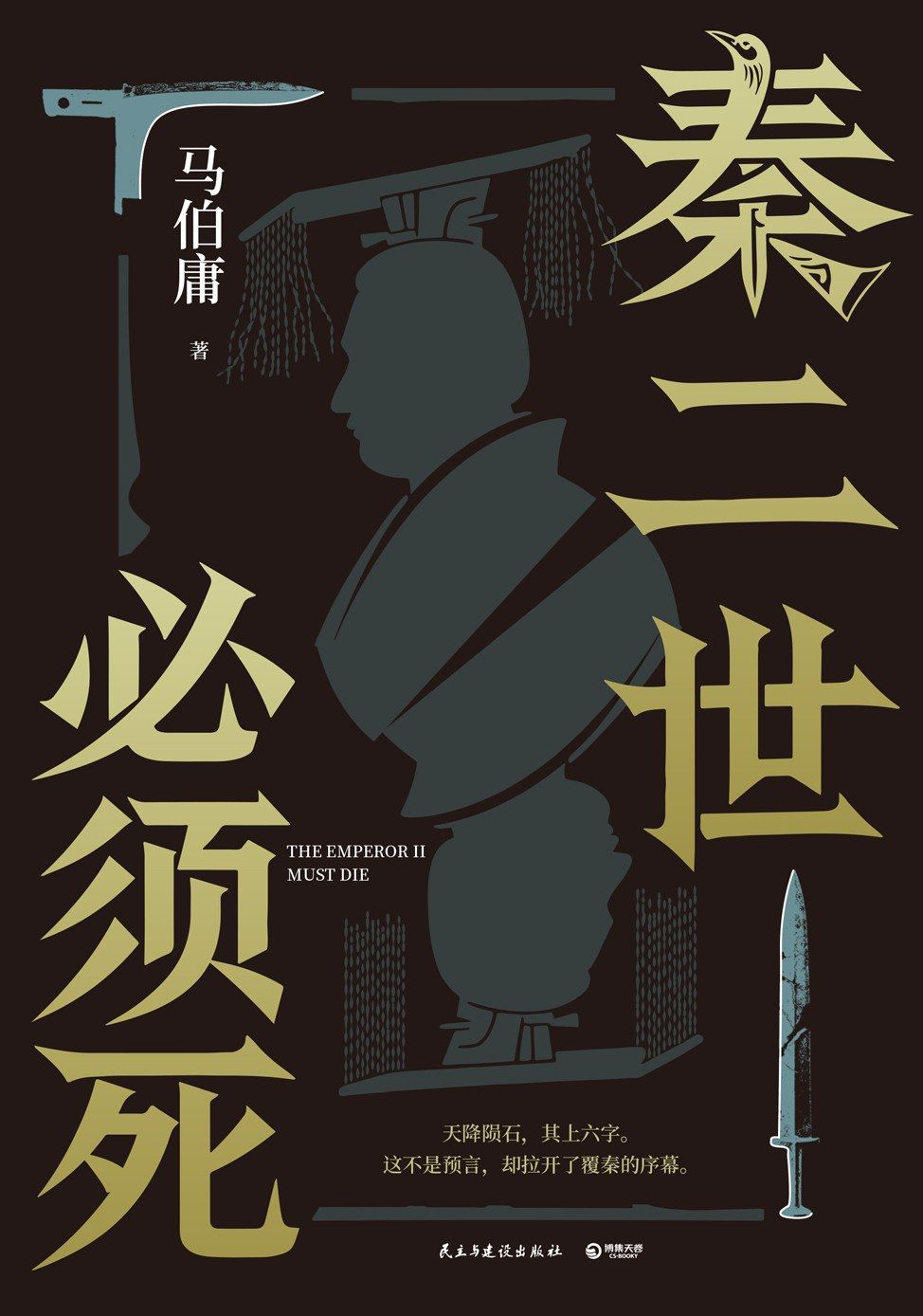
The Second Emperor of Qin Must Die (2026), Democracy and Construction Press
After first making his name with an online suspense story in 2000, Ma Boyong went on to establish himself as a best-selling and prolific novelist, whose work spans historical fiction, fantasy, and occasional historical essays. He excels at filling the blanks left by historical records with wild imagination. Rather than focusing on prominent figures, Ma often depicts how ordinary people are swept up in the currents of their time. In The Longest Day in Chang’an, a disgraced soldier is drawn into a web of conspiracy and political intrigue as he races to stop an imminent terrorist attack on the capital.
Ma also has a talent for weaving realism and contemporary relevance into his historical and fantasy works. In his satirical retelling of Journey to the West, The Annoyance of the Gods, a weary mid-level deity of the Heavenly Court, Taibai Jinxing, is assigned the delicate task of secretly assisting the monk on his pilgrimage to the West. He coordinates with different parties to conjure up performative tests for the monk and ensures the monk receives all the glory, since he has been handpicked by the Buddha for an important position. The satirical plots strike a chord with readers who know the frustrations of corporate bureaucracy and nepotism, leaving them laughing at the absurdity of it all.
Many of Ma’s iconic works have been adapted for film and television, from Schemes in Antiques, which explores antique authentication, forgery, and hidden histories, to The Lychees of Chang’an, which tells of a low-ranking official’s impossible mission to deliver fresh lychees across China for the imperial concubine’s birthday.
Ma is not, strictly speaking, a web novelist, but he maintains an active online presence, often publishing drafts in installments on Weibo and sharing his inspirations and intriguing historical discoveries with his 8.5 million followers.
Despite his popularity in China, Ma’s works remain largely unavailable in English, with only a few short stories translated so far. His rich historical settings and cultural references may pose challenges for translators and publishers, but they are also what make his writing unique. Missing one of China’s most celebrated contemporary novelists would be a loss.
Er Gen 耳根
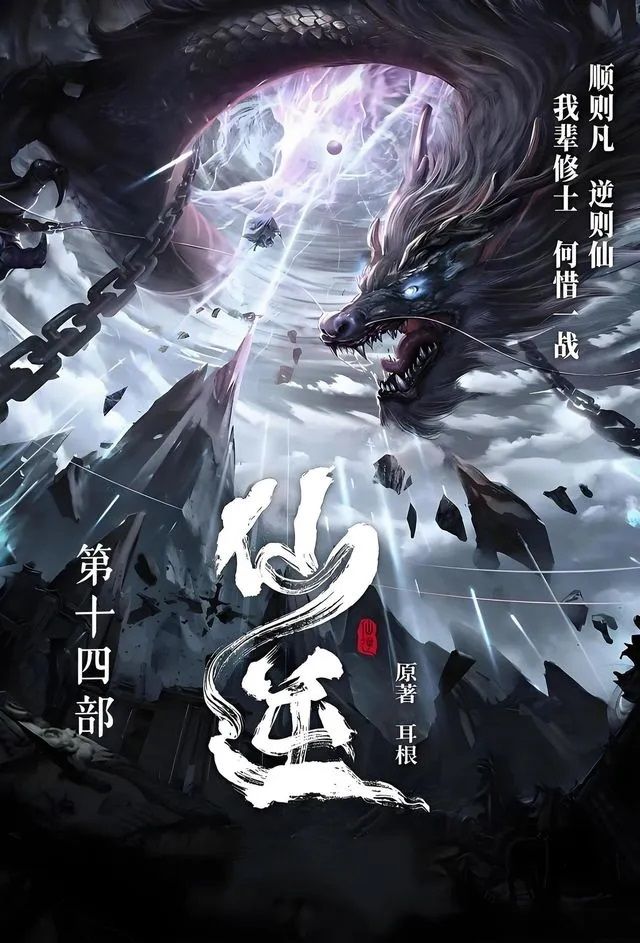
Renegade Immortal (2009 – 2012), Qidian.com
Liu Yong, better known as “Er Gen (literally ‘ear root’),” is said to have picked up writing unexpectedly: After coming across an unfinished web novel, he took it upon himself to complete the story. In 2009, the then-27-year-old elementary school English teacher began writing part-time on Qidian, one of China’s largest online platforms for male-oriented web fiction. It was a compromise with his family, who opposed his decision to quit his “iron-rice bowl” job.
While his modern supernatural-themed debut flopped, his second novel, Renegade Immortal, turned out to be a smashing success, paving his way to become a full-time novelist and a leading figure in the xiuxian (修仙, literally “cultivating immortality”) or cultivation sub-genre. Following a countryside lad’s bumpy journey of cultivation across the human world, the demon realm, and the realm of immortals as he seeks to save or revive his loved ones, the story won over young readers through its protagonist’s perseverance and eventual triumph over fate. The novel ran for almost three years, spanning a whopping 2,088 chapters, and received more than 800 million cumulative views. Its animated adaptation of the same title also earned a rating of over 9 out of 10 on the review platform Douban.
Having completed seven extremely lengthy works so far, Liu has built a sprawling fantasy universe populated by deities, evil spirits, demons, ghosts, and immortals, with each novel exploring a distinct style and theme. I Shall Seal the Heavens, Er Gen’s third novel, which ran from 2014 to 2016, uses black humor to craft a narrative that differs markedly from the genre’s typically solemn and tragic portrayals of protagonists’ quests to change their fates. A World Worth Protecting (2018 – 2021), on the other hand, blends science fiction with immortal cultivation and heroic adventures.
Er Gen’s work can be found on WebNovel in English, French, Spanish, Indonesian, and other languages.
I Eat Tomatoes 我吃西红柿

Coiling Dragon (2008 – 2009), Qidian.com
Zhu Hongzhi was a model student growing up, earning admission to the prestigious Suzhou University as a mathematics major. But in his junior year, he made the surprising decision to drop out and pursue writing full-time. Having dabbled in writing since high school, Zhu uploaded his first novel, Star Peak Legend, to Qidian under the handle “I Eat Tomato” during his freshman year in 2005. The story follows Zhang Xingfeng, a cultivator who is reborn into a powerful family while retaining his memories of his past life and innate abilities, as he overcomes abandonment, masters cultivation techniques, and rises from the mortal world to the realms of immortals and demons. It quickly gained popularity, and Zhu has since become financially independent through his writing. By the time Zhu dropped out of school, he had already written 6 million words of fantasy fiction and amassed a record-breaking 40,000 subscribers.
Though Zhu’s writing style has often been criticized as lacking in literary flourish, he is undoubtedly a prolific and commercially successful writer. His works have been adapted into various media, from the popular online game Coiling Dragon Online to the TV series The Legend of Jade Sword (2018) and the highly acclaimed anime The Demon Hunter (2023). In 2009, the game adaptation rights for Coiling Dragon were sold for more than 3 million yuan, setting a record at the time.
His works have also gained a significant following overseas. Coiling Dragon (2008), which follows a young noble who discovers a mysterious ring and embarks on a journey across worlds to become a legendary warrior, was first translated into English and published on Wuxiaworld by a Chinese American fan in 2014. It reportedly helped an American reader quit drug use after introducing him to a vast world of Chinese web novels that he found more fascinating and addictive than pharmaceuticals. Zhu’s works have since been picked up by overseas publishers and translated into multiple languages, including English, French, Russian, and Vietnamese.
Cuttlefish That Loves Diving 爱潜水的乌贼
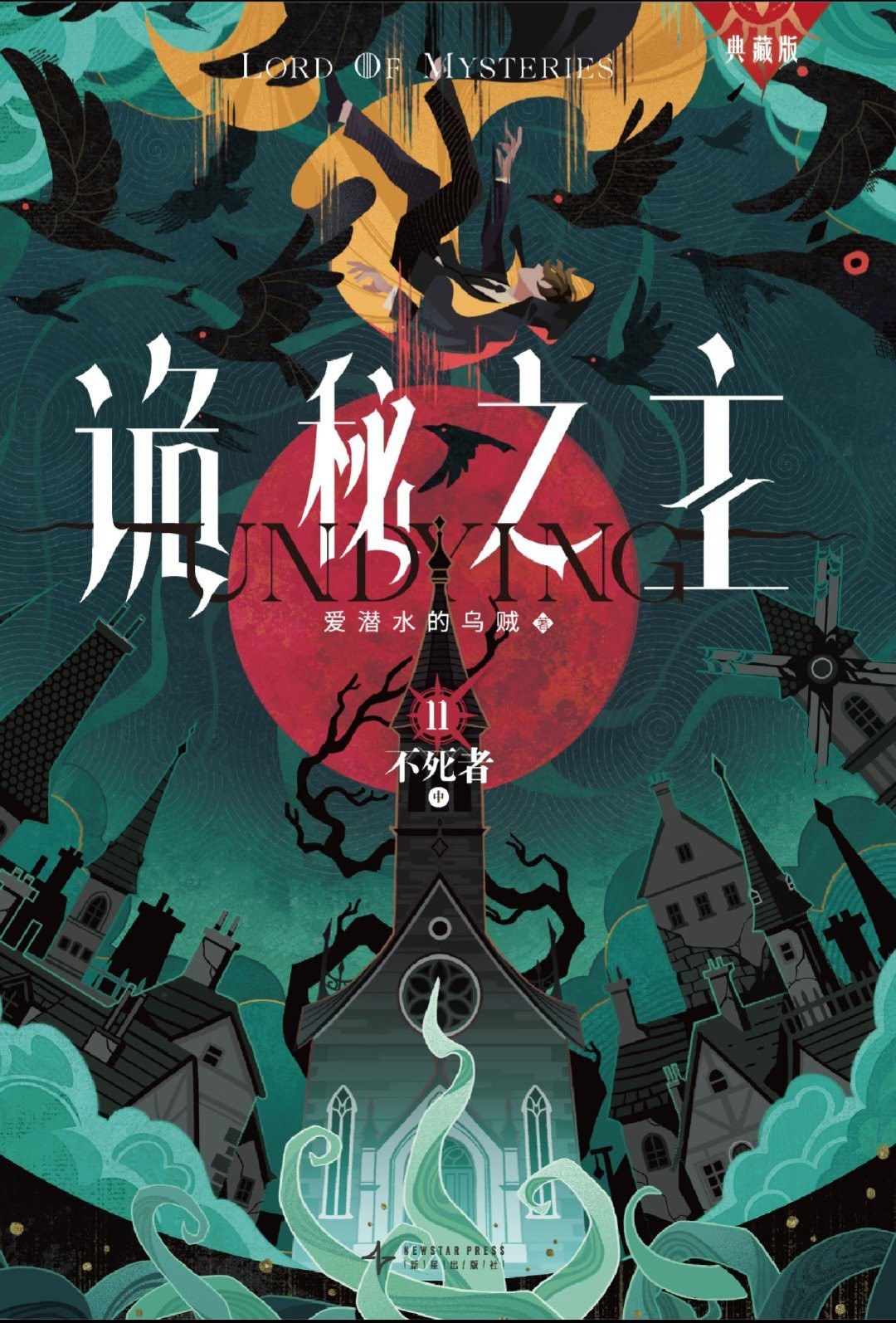
Lord of the Mysteries (2018 – 2020), Qidian.com
Lord of the Mysteries is perhaps one of the most successful Chinese web novels of the past decade. The story follows a young man who awakens in an alternate Victorian-era world filled with occult mysteries, secret organizations, and supernatural powers, as he rises through a mystical hierarchy while uncovering the hidden truths behind his new identity and the forces shaping the world. Even those who do not read web novels have likely heard of it, whether through its popular anime adaptation or its online game. In 2024, the series was even added to the collection of the British Library.
The author behind this sensational work, Yuan Ye, better known by his pen name “Cuttlefish That Loves Diving,” has been writing fantasy novels on Qidian since 2011. A computer science graduate from Sichuan University, he worked as a book editor for six years before quitting his job to write full-time in 2013.
To create an authentic and immersive reading experience, Yuan invests significant effort in researching source materials. For Lord of the Mysteries, which draws inspiration from the Cthulhu Mythos—a shared cosmic horror universe first created by American writer H. P. Lovecraft in the 1920s—Yuan conducted extensive research into Victorian society, history, and scientific developments, using real-world details as the foundation for his characters and plotlines.
After the 4.4-million-character first installment, Lord of Mysteries 2: Circle of Inevitability ran from 2023 to 2025, set six or seven years after the original story and following a new protagonist. Yuan Ye is currently updating his latest novel, Radiant Blade of the Wilderness, daily; the work draws inspiration from the core concepts of The Classic of Mountains and Seas (《山海经》), building a “post-Classic of Mountains and Seas” wuxia world with the ancient text as its foundation.
His works have been translated into multiple languages, including English, French, and Thai, and have amassed a large following overseas, particularly among English-speaking readers on WebNovel.
Talking Elbow 会说话的肘子
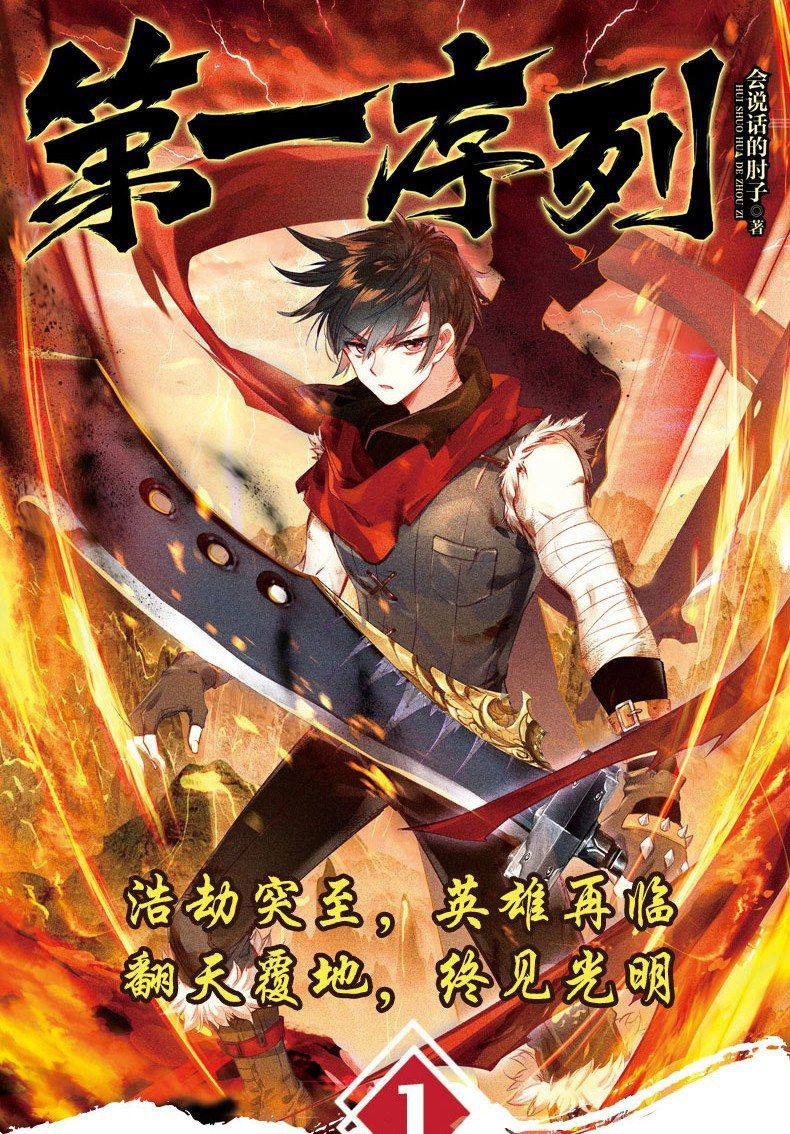
The First Order (2019 – 2024), Qidian.com
Ren He, one of China’s most influential online novelists for about a decade, better known by his pen name “Talking Elbow,” has drawn millions of readers with his mix of action, humor, and social commentary, spanning genres across sci-fi, urban fantasy, and game-themed stories.
Since his 2016 game-themed debut, League of Legends: Cataclysm Era, Ren’s six novels have all become major online hits. His best-known work, Spare Me, Great Lord! (2018) was released amid the rise of ACG-inspired web fiction, and won readers over with its imaginative world-building, fast-paced plot, and witty humor. Set in a modern supernatural world, the story revolves around an orphaned brother and sister as they grow from mischievous teenagers into protectors of their loved ones and their country.
Ren’s latest serialized novel, Green Mountain, follows a young man who travels through time and finds himself caught between the imperial court and the martial arts underworld. Torn between status and righteousness, he went on a series of adventures of danger, political intrigue, and romance, seeking the ideals of xia, or “heroic righteousness.” “The spirit of xia is a defining element of Chinese fantasy stories. Through this story, I hope to share my own understanding of what it means,” says Ren at the May event.
Related Articles