Today’s Tomb Sweeping Festival (also known as the Qingming Festival) is an opportunity to enjoy its most famous snack: Qingtuan (青团).
These green dumplings are made of glutinous rice mixed with Chinese mugwort leaves and are usually filled with sweet red bean paste. Edible when they are young and fresh, mugwort leaves are burned to repel mosquitos, used to treat minor swelling, and are even said to ward off evil. Before modern medicine, boiled mugwort leaves were regarded a great disinfectant, and washing your feet in warm mugwort-leaf water was also believed to bring a good night of sleep. In TCM, these leaves are prescribed to repel “cold” and “damp” inside the body, just want you want in a spring day.
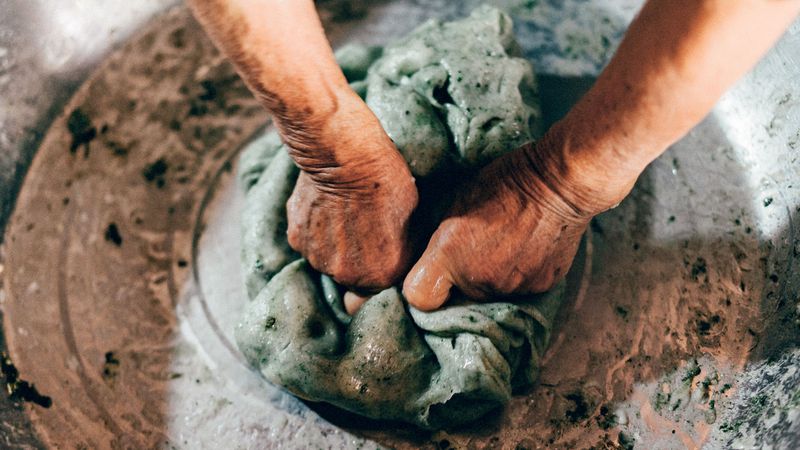
To make this snack, local people mash fresh mugwort leaves and mix them with flour. Then, sweet red bean filling is wrapped into the dough. After steaming, the Qingming dumpling becomes soft and delicate, with a mellow taste.
The snack is said to have been invented during the Taiping Rebellion, a massive revolt against the Qing government led by the Heavenly Kingdom of Peace. Around the Qingming Festival, one of the rebel generals of the Heavenly Kingdom of Peace, Li Xiucheng (李秀成), was hidden by a helpful farmer who disguised him as a humble farmhand. When the Qing soldiers couldn’t find Li, they surrounded the village and built checkpoints to screen every traveler just in case anyone was sending food to him. But the farmer came up with an idea: boil mugwort leaves and add them into sticky rice flour to make green rice balls that can be hidden easily in a basket of grass. In the end, Li got his dinner.
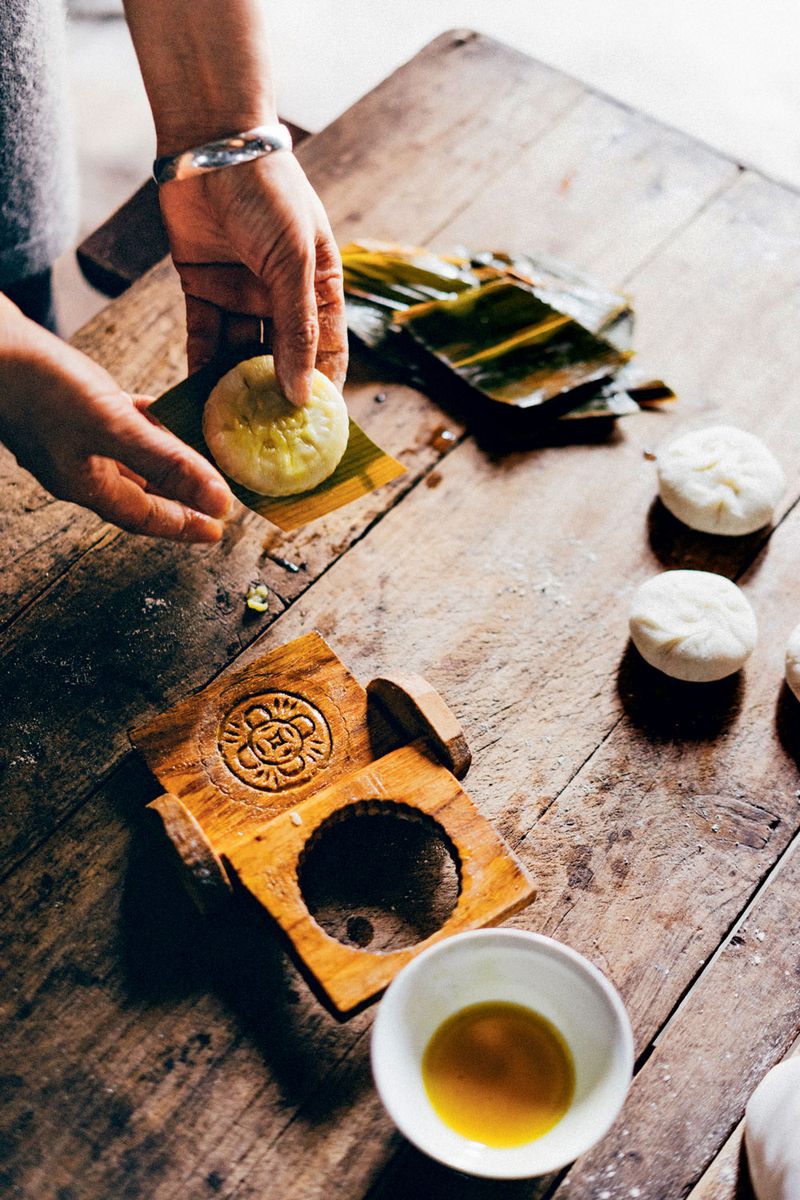
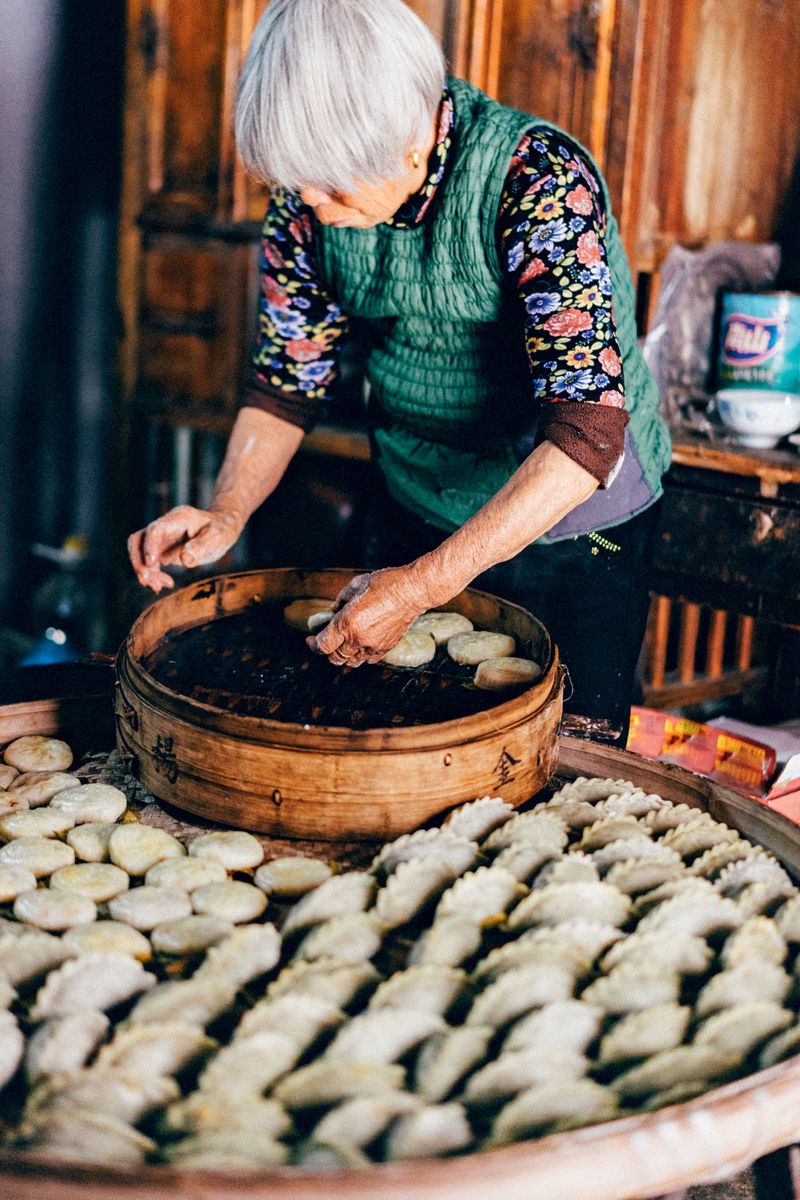
Today, mostly prepared and consumed as a street food in southern China, the Qingming dumpling is also sold in stores in packaged form. Those living south of the Yangtze River eat the snack on the Qingming Festival and offer it to the dead. If you are going to sweep tombs this year, take this lovely must-have delicacy for your ancestors.
Ingredients
- 100g glutinous rice flour
- 30g wheat starch
- 50g mugwort leaves
- 70g red bean
- 70g sugar
- 2 tbsp vegetable oil
Steps
- Soak the red beans in cold water overnight, then boil them until cooked. Grind them to make fine dry paste. If the paste is too moist, stir-fry with a little vegetable oil. Mix with the sugar and set aside.
- Wash the mugwort leaves and cut them into small pieces; grind the leaves using a grinder.
- Add glutinous rice flour to the ground leaves. Knead the mixture thoroughly together with warm water until the dough loses its stickiness; add a spoonful of oil into the dough for color
- Divide the dough into blocks of the same size.
- Stuff each block of dough with the red bean paste, make them into small balls or jiaozi-shaped dumplings if you like.
- Put the dumplings into a steamer and steam for 15 minutes, then serve.
Photography by Zhang Demeng (张德萌)
The Qingming Dumpling is a story from our issue, “Wildest Fantasy.” To read the entire issue, become a subscriber and receive the full magazine.
Related Articles