

This June, a different kind of LLM made waves on the Hong Kong stock market. The Anhui company Liuliumei, whose stock ticker is LLM, officially debuted on the main board of the Hong Kong Stock Exchange on June 15. Priced at 43.58 HK dollars per share, the stock more than doubled on its first day of trading, closing at 128 HK dollars, pushing the company’s market value above 10 billion HK dollars. Unlike the AI large language models that share its initials, this LLM has nothing to do with technology—it is a down-to-earth snack company specializing in green plum products, from dried plums and prunes to plum jelly.
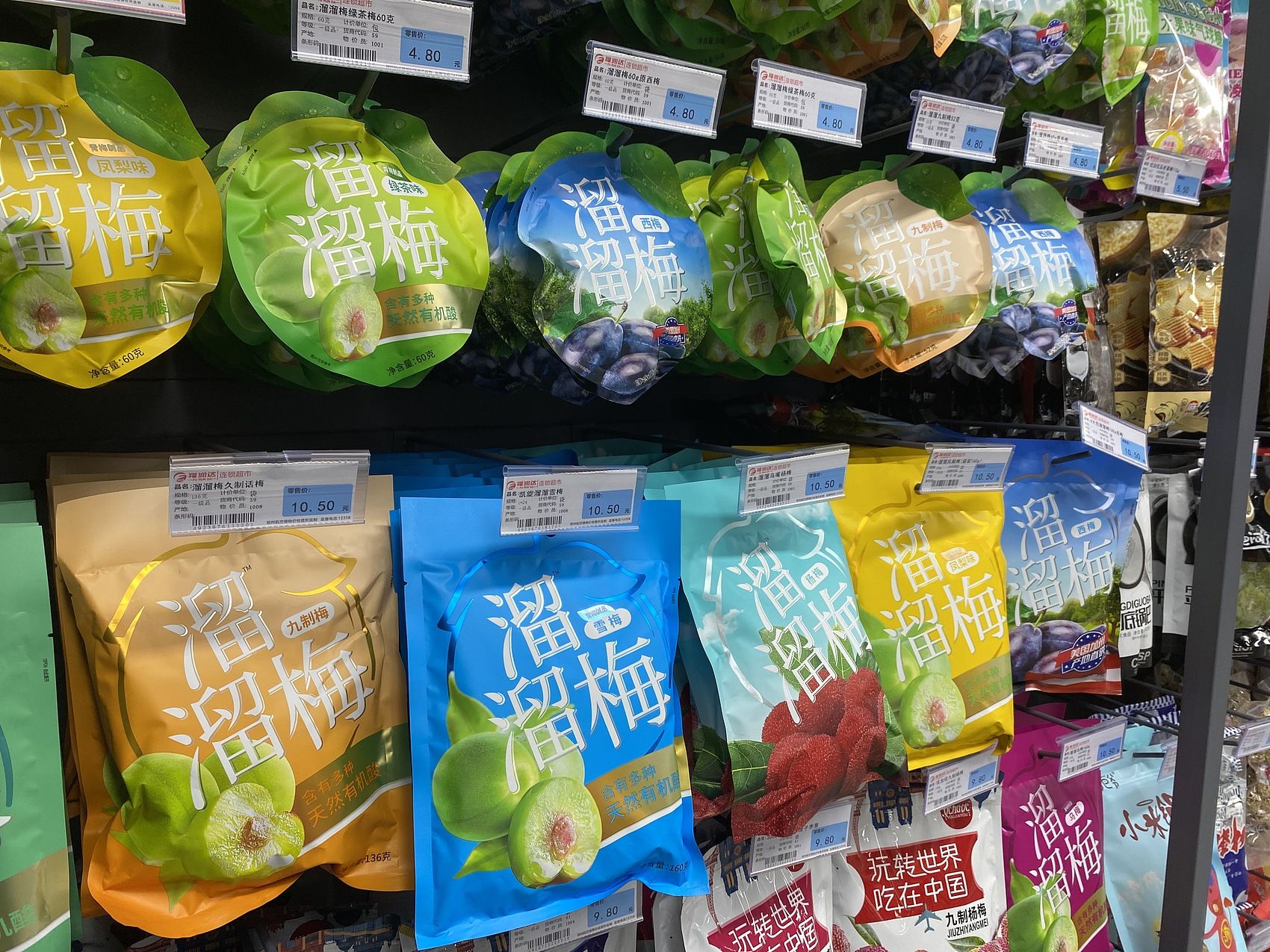
Liuliumei products can be found in supermarkets and convenience stores across China (VCG)
Founded in 1999, the company, whose name literally translates to “slip-slip plum,” sells a staggering two billion plums in various forms every year in China, including its popular crisp green plum, honey plum, and snow plum, which all deliver a signature balance of the brand’s sweet and tart flavors.
Yet the Liuliu Mei phenomenon is merely the latest incarnation of the deep cultural roots that plums have in China. For thousands of years, plums have held a unique place in Chinese food, literature, and language.
Read more about Chinese snacks:
- The Magic of Konjac: What’s Behind China’s Obsession with the Toxic Plant
- Nostalgia in a Nutshell: How Roasted Nuts and Seeds Become a Staple Winter Snack in China
- Stripped Down: The Story Behind China’s Favorite Snack
The consumption of plums in China can be traced as far back as the Shang dynasty (1600 – 1046 BCE), where they were used in cooking to provide sourness and acidity before fermented vinegar became commonplace. In the Book of Documents (《尚书》), one of the ancient Confucian Five Classics, the Shang king Wu Ding (武丁) tells his official Fu Yue (傅说): “In a well-seasoned soup, you would be the salt and plum.” As a metaphor for running the country, Wu praised his adviser Fu as the seasoning that holds everything together. The expression salt and plum (盐梅) came to symbolize a capable minister or counselor.
In another renowned episode from the historical novel Romance of the Three Kingdoms (《三国演义》) set in the late Eastern Han (25 – 220), plums play a suspenseful role in a classic moment of psychological warfare known as “discussing heroes over plums and wine.” Protagonist Liu Bei, then living under the watch of his rival Cao Cao, is tending a vegetable garden to disguise his own political ambitions when Cao Cao invites him to drink. Over a feast of warmed wine and green plums, Cao Cao quizzes Liu Bei about the great heroes of the age before pointing a finger first at Liu and then himself, provocatively stating “The only true heroes of today are you and I.” Alarmed at his cover being blown, Liu drops his spoon and chopsticks, but quickly recovers by pretending to be startled by a clap of thunder, temporarily dispelling Cao Cao’s suspicions about his designs on power.
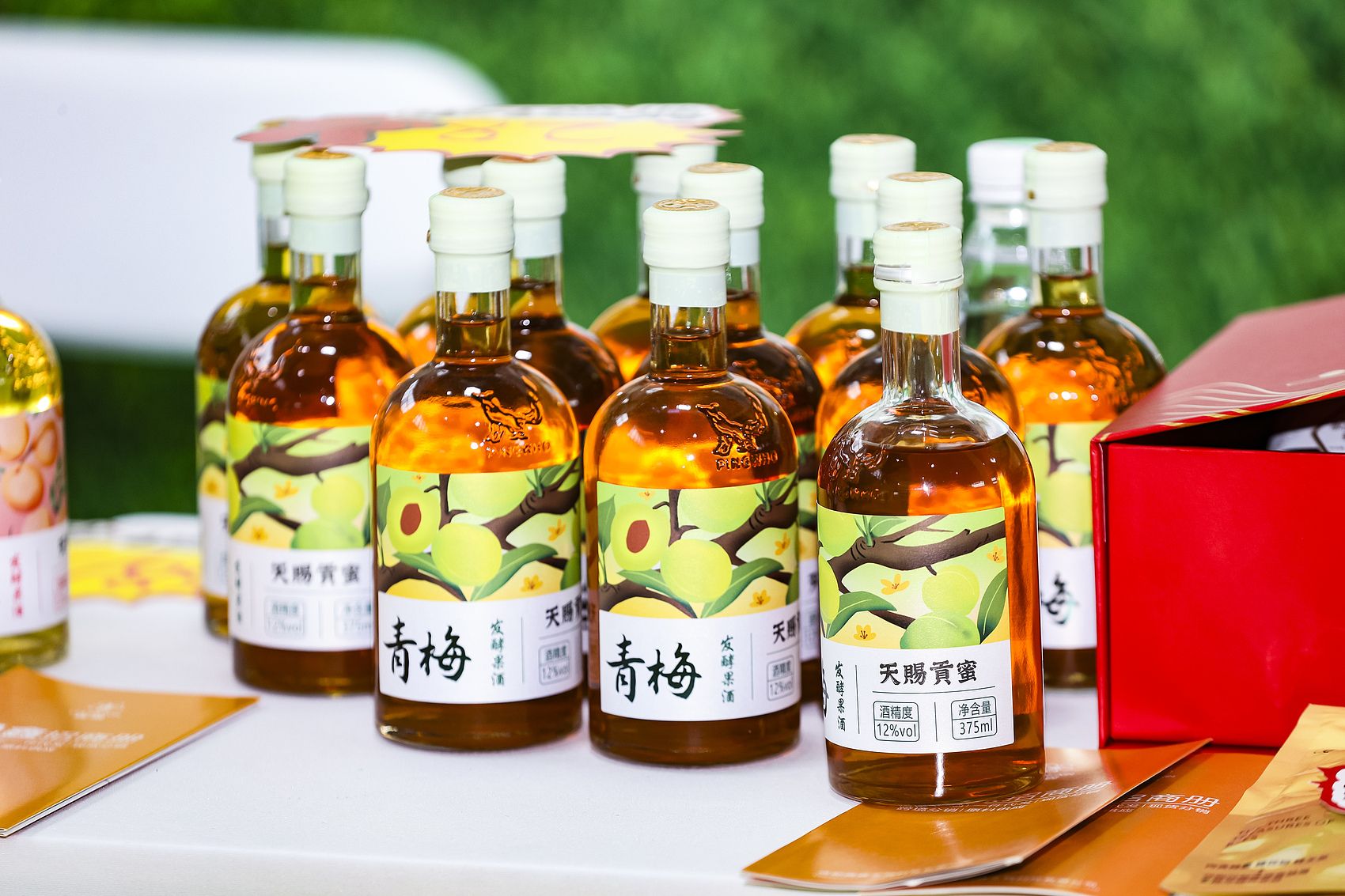
Green plums are traditionally steeped in rice wine to make a sweet, fragrant plum liqueur (VCG)
The connection between Cao Cao and plums continued in another well-known tale: “quenching one’s thirst by thinking of plums (望梅止渴).” Unlike the tense political encounter with Liu Bei, this story portrays Cao Cao as a resourceful military commander. According to the fifth-century compilation A New Account of the Tales of the World (《世说新语》), when Cao Cao’s exhausted troops struggled to find water during a campaign, he told them that a grove of plums lay just ahead. The mere thought of the sour fruit made the soldiers salivate, temporarily easing their thirst and giving them the strength to continue marching. Today, traditional Chinese medicine still associates plums with stimulating fluids and relieving thirst.
During the eighth century, ume plums are believed to have been introduced to Japan from China, as the island nation absorbed cultural influences from the Tang dynasty (618 – 907). The pits were later planted in the medicinal gardens and temples around the Japanese cities of Kyoto and Nara. Over time, the fruit took root in Japanese culture as an ornamental and medicinal plant as well as a food, eventually giving rise to salt-preserved umeboshi plums and the plum liqueur umeshu. The making of these products remains a household tradition in Japan to this day.
Meanwhile, in China, during the same period, the green plum acquired an enduring association with youthful romance. In his poem “Ballad of Changgan (《长干行》),” Li Bai (李白) recalls the childhood of a future couple, a boy who rides a bamboo pole as a hobbyhorse and his female companion with whom he plays with green plums at the edge of a well. The image later gave rise to the idiom “green plums and bamboo horse (青梅竹马),” used to describe close childhood companions with the implication of future romance.
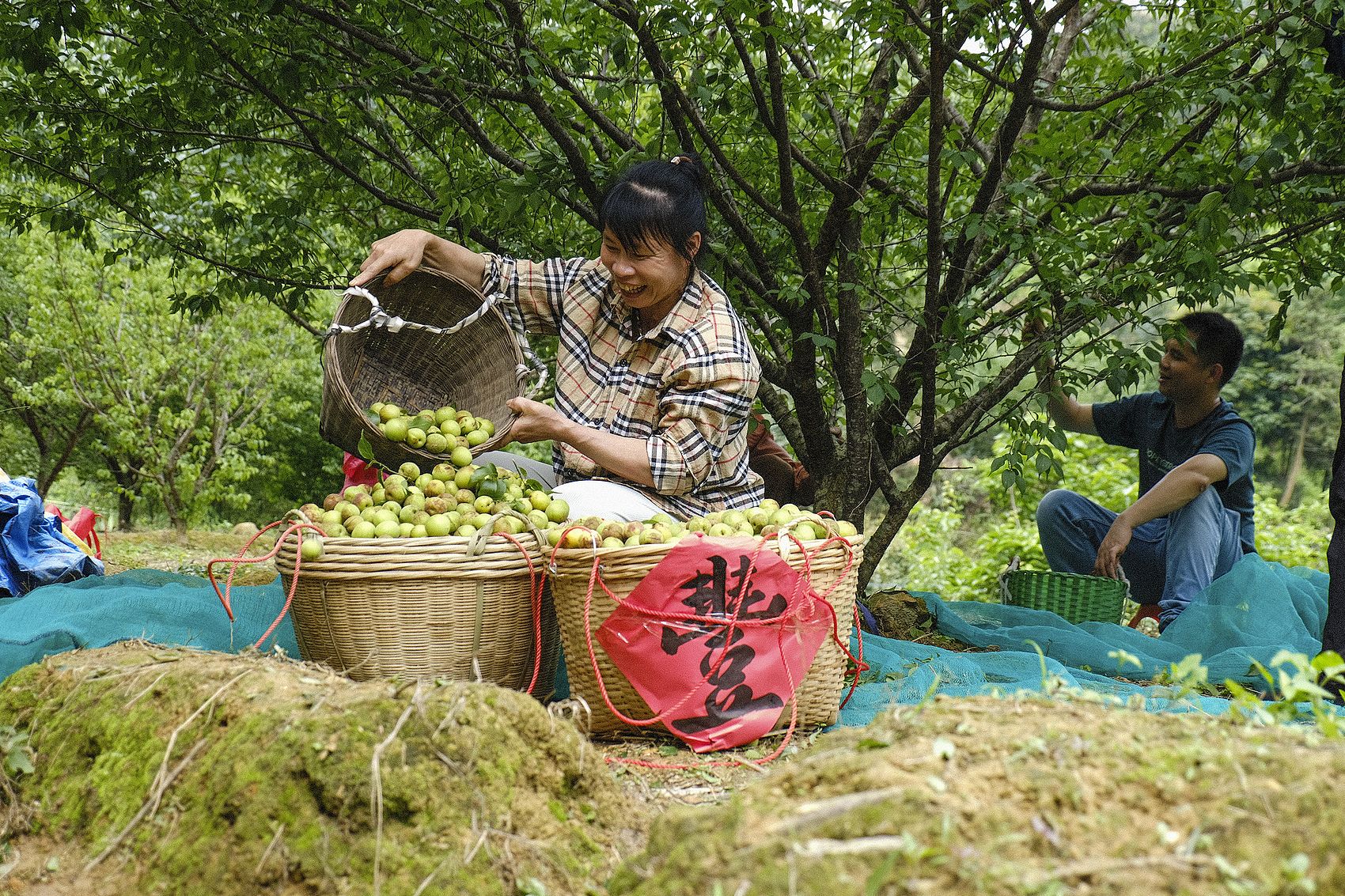
Green plums have become one of the major cash crops in Wuzhou, Guangxi (VCG)
In the Song dynasty (960 – 1279), plums again became a symbol of young love in Li Qingzhao’s (李清照) “Rouged Lips: After the Swing (《点绛唇·蹴罢秋千》).” The poem depicts a young woman who has just stepped off a swing when a male guest arrives. Shyly retreating, she pauses at the door to steal a glance at the handsome guest, pretending to smell a green plum. The tart fruit becomes a playful cover for the sweet feelings she is too shy to reveal.
The Song dynasty also saw the rise of an increasingly elaborate culture of preserved and candied fruits, including plums, winter melons, papayas, and more. Southern Song accounts even describe a mijianju (蜜煎局), a specialized bureau dedicated to supplying sugared and honey-preserved fruits for service at official and elite feasts. Moreover, these preserved fruits were intricately carved with ancient legends, flowers, and animals, giving rise to diaohua mijian (雕花蜜煎), a delicacy that blended exquisite flavors with elaborate craftsmanship.
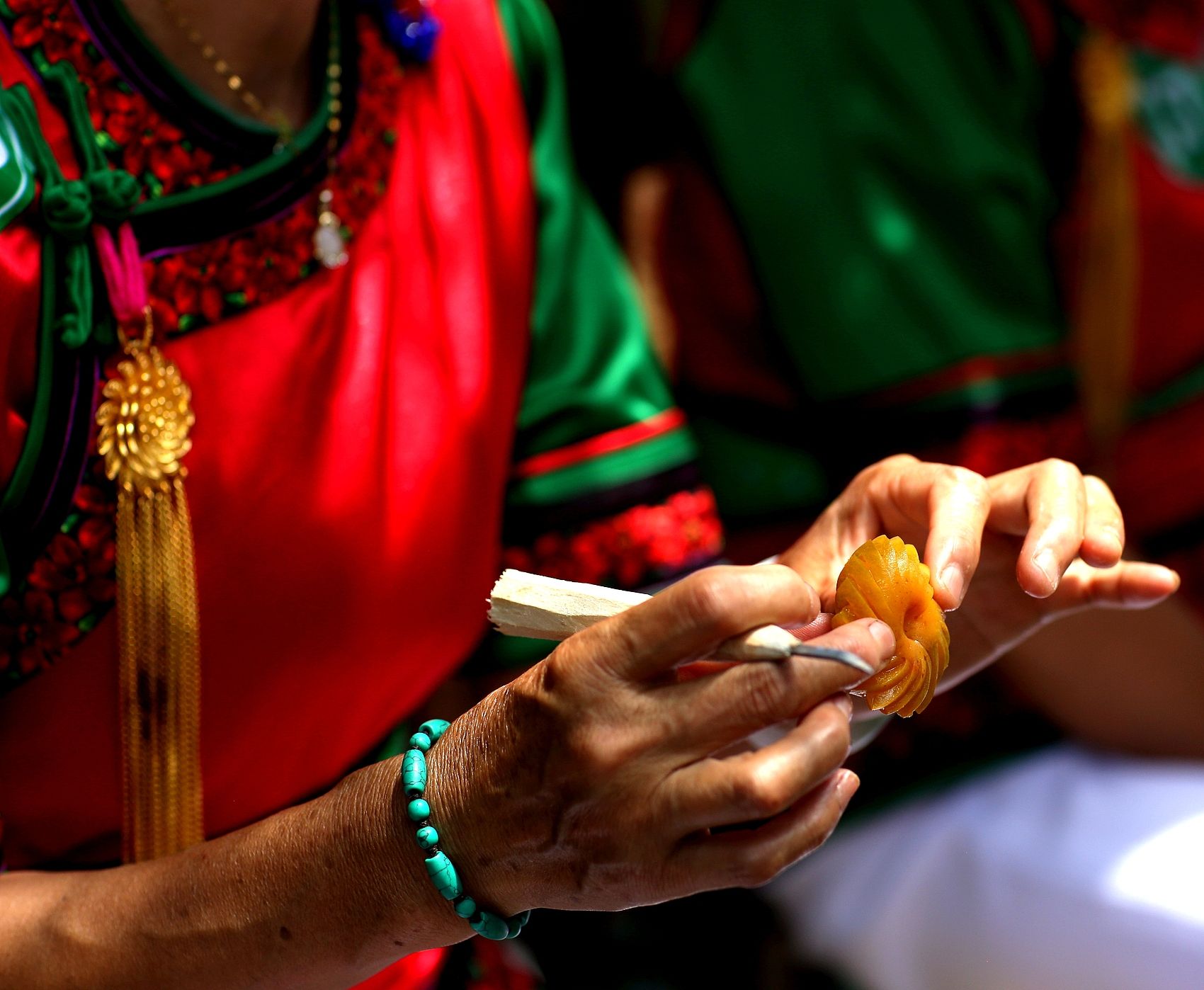
Diaomei (雕梅), or carved plums, are a traditional Bai ethnic specialty from Dali, Yunnan, dating back to the Tang dynasty (VCG)
As cane sugar became more available throughout the Song dynasty, it became a popular alternative to honey for sweetening and preserving plums. With competition high in urban markets, vendors became ever more creative with their plum preparations. Meng Yuanlao’s The Eastern Capital: A Dream of Splendor (《东京梦华录》), a portrait of life in the Northern Song capital Bianjing (modern-day Kaifeng), describes pickled plums and plum juice being sold around the city. The latter was an affordable and refreshing summer favorite among the city’s residents in wine shops. Further south in Lin’an (contemporary Hangzhou), Song diners encountered even more elaborate plum dishes: the Recollections of Wulin (《武林旧事》) records an imperial banquet featuring everything from peppery plums (椒梅) and plum cakes (梅肉饼儿) to plums with shredded ginger (姜丝梅) and elaborately carved plum balls (雕花梅球儿).

Sugared and honey-preserved plum products have become a popular treat and souvenir at tourist attractions across China (VCG)
According to a popular origin story, the classic plum snack huamei (话梅), literally “talking plum,” also has its origins in the folk culture of the Song dynasty. Professional storytellers, or shuoshuren (说书人), were said to keep a salt-preserved plum on their tongue during long performances to prevent their mouths from getting dry, allowing them to talk without stopping for extended periods. The name, so it goes, comes from the association with the stories, or huaben (话本), that were performed.
Today, green plums are primarily grown in China’s southeastern coastal regions, such as Guangxi and Fujian, where Liuliumei also operates its own plantation base. The subtropical monsoon climate and rich acidic soil in the region are ideal for cultivation.
“I am here no matter how heavy the rain is. If I don’t rush my hands, the plums would drop and rot,” says an auntie in a promotional video posted by Liuliumei on Xiaohongshu (RedNote) in May. “Everyone picks around 500 or 600 jin every day,” another uncle adds. Liuliumei claims that its plums can travel from forest to factory in as little as 24 hours, a speedy process the company credits as the secret to its products’ freshness.
However, Liuliumei has done more than popularize plum snacks in China; it has also brought the fruit into the mainstream of online culture. In a 2013 ad, brand ambassador and actress Yang Mi stood in front of the camera with a sweet and slightly awkward smile, repeating “Are you okay?” 10 times in a row. Each repetition came with a different tone and expression, before finally leading to the ad’s punchline: “If you’re fine, have some Liuliumei.”

Liuliumei’s commercial featuring actress Yang Mi was once ubiquitous across the country, appearing everywhere from elevator screens to bus stops. The image of Yang holding a plum has since evolved into a viral meme that remains widely used today. (VCG)
Broadcasted across the country, the ad quickly went viral and became a major pop culture meme in China, helping propel Liuliumei’s rise in popularity in the years that followed. To this day, the catchphrase—or the meme featuring Yang Mi holding a green plum—is used to express everything from exasperation and sarcasm to teasing and mockery, or simply to tell nosy people to mind their own business.
While Liuliumei’s stock price has cooled since its initial surge and the brand will need more than a 13-year-old advertisement to remain relevant, there is still reason for optimism. After all, China’s love affair with plums has endured for thousands of years. Perhaps the fruit’s lasting appeal lies in its unique balance of tartness and sweetness—an embodiment of a familiar Chinese belief that even the sourest experiences can eventually turn sweet.
Related Articles