On the first floor of a roadside building, a modest sign reads “Lanzhou Lamian,” often accompanied by a green halal sign. Inside, a man wearing a white kufi works a long strand of dough between his hands, pulling it into thin, springy noodles. In the kitchen, his wife tends to a wok, turning out simple stir-fried dishes. In a corner, there’s often a small child doing homework. It’s a scene that has become an almost ubiquitous and comforting presence across China’s cities. There may be only a few thin slices of beef floating in the broth, but for less than 20 yuan and usually within walking distance from home or work, the steaming bowl feels worth every penny.
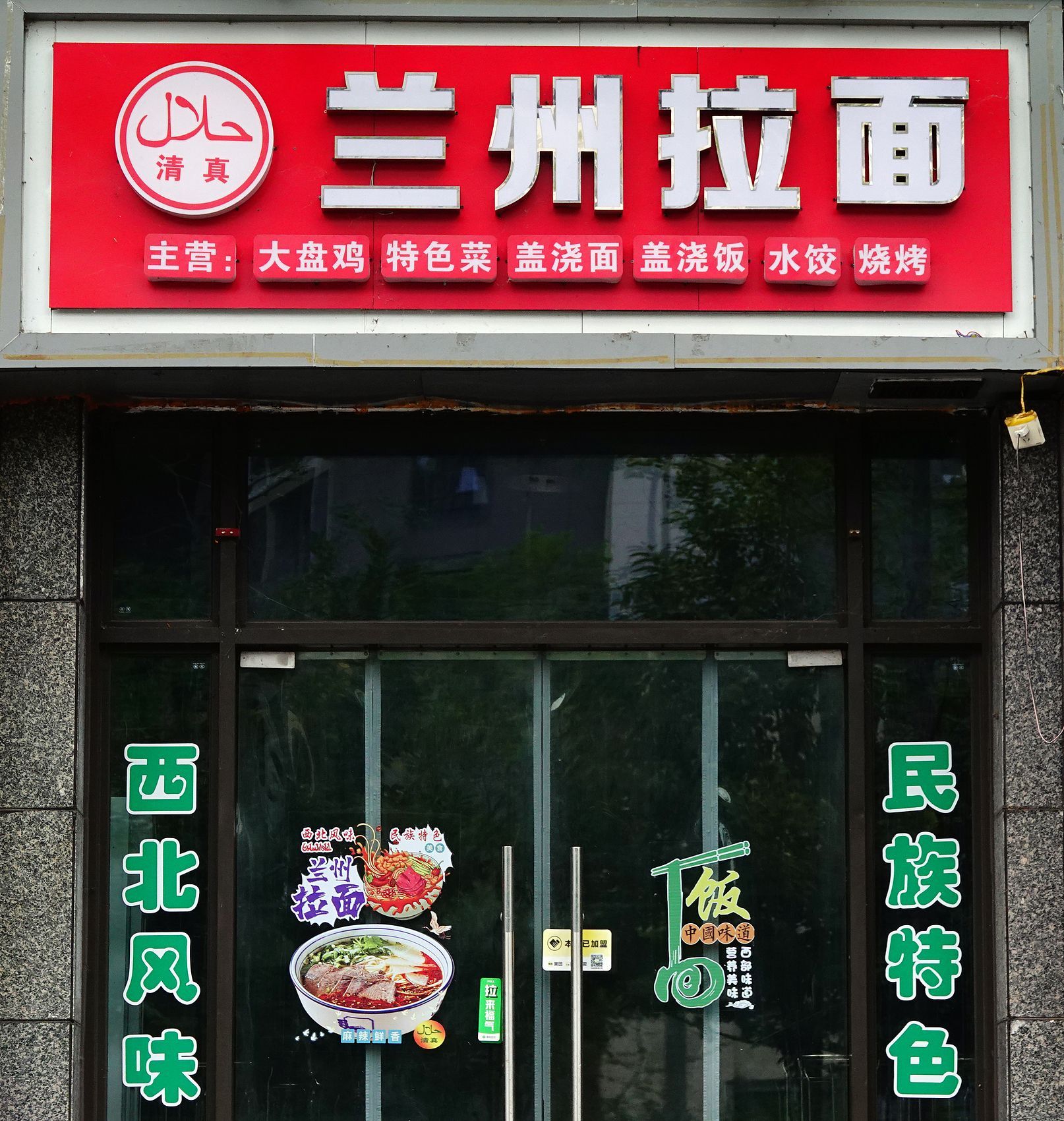
While Lanzhou Lamian storefronts are often small, they have long attracted a steady stream of customers who trust them to deliver a satisfying bowl of noodles every time (VCG)
But when many finally visit Lanzhou, the capital of northwestern China’s arid Gansu province, hoping to taste authentic Lanzhou “hand-pulled noodles,” or lamian (拉面), they often get a lecture from locals that there is no such thing—only Lanzhou beef noodles. The famous noodle shops the nation has come to love were largely founded and operated by people from Hualong county, home to around 200,000 people, mostly of the Hui ethnic group, in Gansu’s neighboring Qinghai province. But starting this year, a movement to properly reflect these restaurants’ origins has slowly begun to gain traction, with many Lanzhou Lamian shops rebranding to Qinghai Lamian. While the move may finally give the makers of this nationwide favorite dish their due, it remains unclear what the change will do to the businesses and the reputation they’ve built.
Read more about regional dishes from China:
- How Anhui “Banmian” Spread Across the Nation and Became Associated with a City Hundreds of Kilometers away
- The Ubiquitous Street Snack That’s Neither Noodle Nor Roll
- Mistaken Identity: The Chinese Cuisine with Misunderstood Origins
It is said that in 1988, a farmer called Han Lu left his poverty-stricken hometown of Hualong to open a lamian shop in the southeastern coastal city of Xiamen, one of the country’s earliest special economic zones and a hotbed for entrepreneurship, over 2,500 kilometers away. To draw in customers, he would hand-pull noodles at the restaurant’s entrance.
Seeing Han’s success, more villagers from Hualong opened up their own restaurants across the country, especially in more densely populated urban areas. Those who made money brought in relatives and friends, forming a family- and village-based business model that has also aided the growth of many of China’s domestic chains, including the ubiquitous, Fujian province-hailing Shaxian Delicacies.
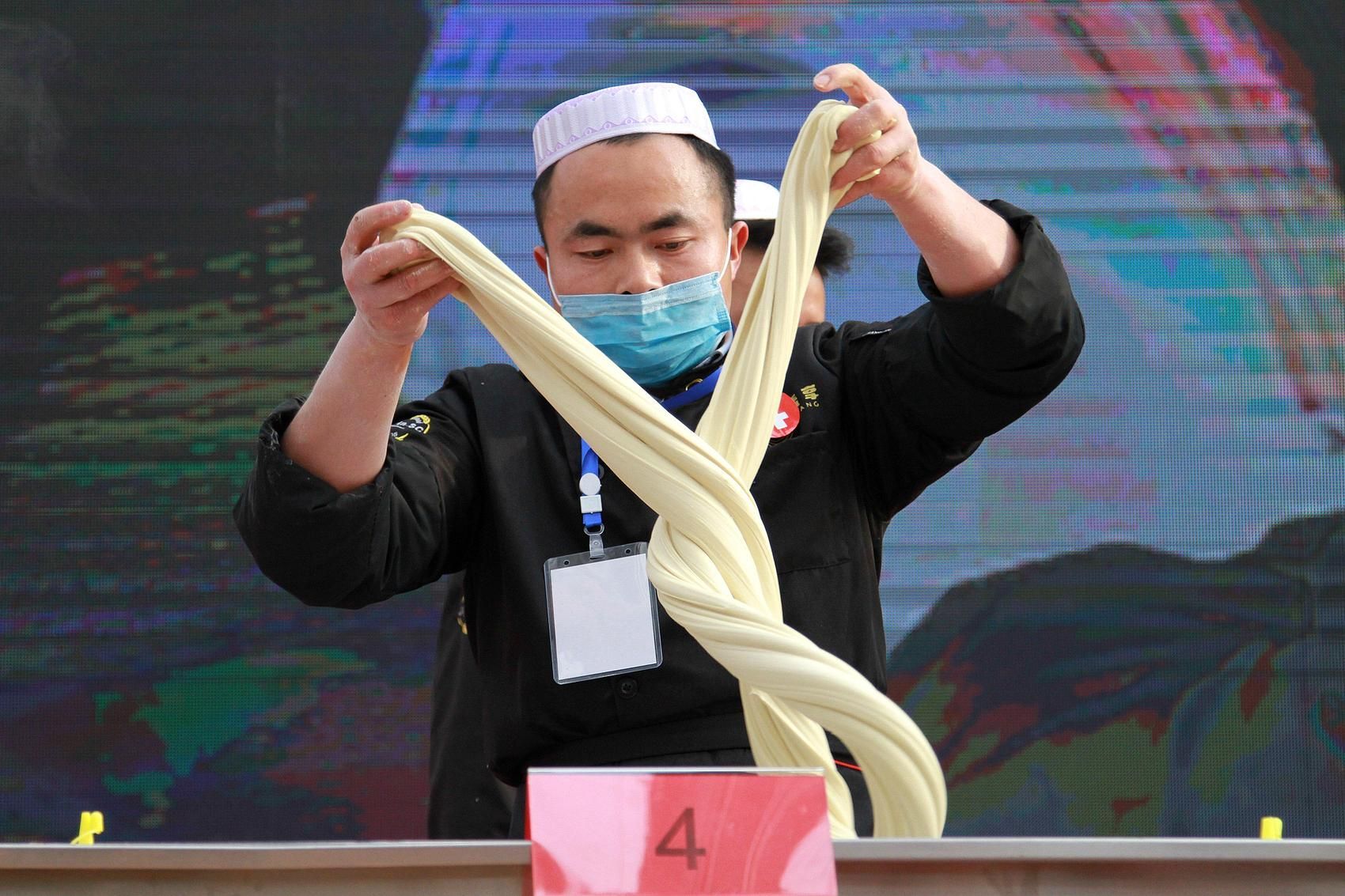
Hualong county hosted a lamian competition in 2019, showcasing the skills of local chefs (VCG)
“Back then, people in Qinghai didn’t really think about branding,” Ma Liping, president of the Qinghai Lamian Industry Association, told China Newsweek in August about the confusion around how hand-pulled noodles came to be associated with Lanzhou. “Few people had ever heard of Qinghai, let alone Hualong. Since Lanzhou [beef] noodles were already gaining popularity, and Hualong is close to Lanzhou, people figured, why not just brand [their restaurants] Lanzhou Lamian?”
Ma added that southern Chinese cities were more open to migrant workers at the time. To better help them set up shop, the Hualong government issued certificates requesting that local authorities provide assistance and tax breaks. With these “passage documents,” Hualong locals could obtain a business license for about 600 to 1,000 yuan less than those from other places. “That was a huge amount of money,” said Ma.
Fast forward 40 years, and more than 30,000 Lanzhou Lamian restaurants—mostly mom-and-pop operations—exist across the country, generating total annual revenue of around 24 billion yuan. The secret to their success may lie in their dedication to noodle quality, Ma said. Qinghai people’s “yin-yang” method involves preparing half the noodle dough in the evening, cooling or refrigerating it overnight, then combining it with fresh dough the next morning to create exceptionally chewy, elastic noodles, served in sumptuous beef bone broth. These shops also offer a variety of rice dishes, such as Kung Pao chicken and braised beef with potatoes, as well as lamb kebabs.
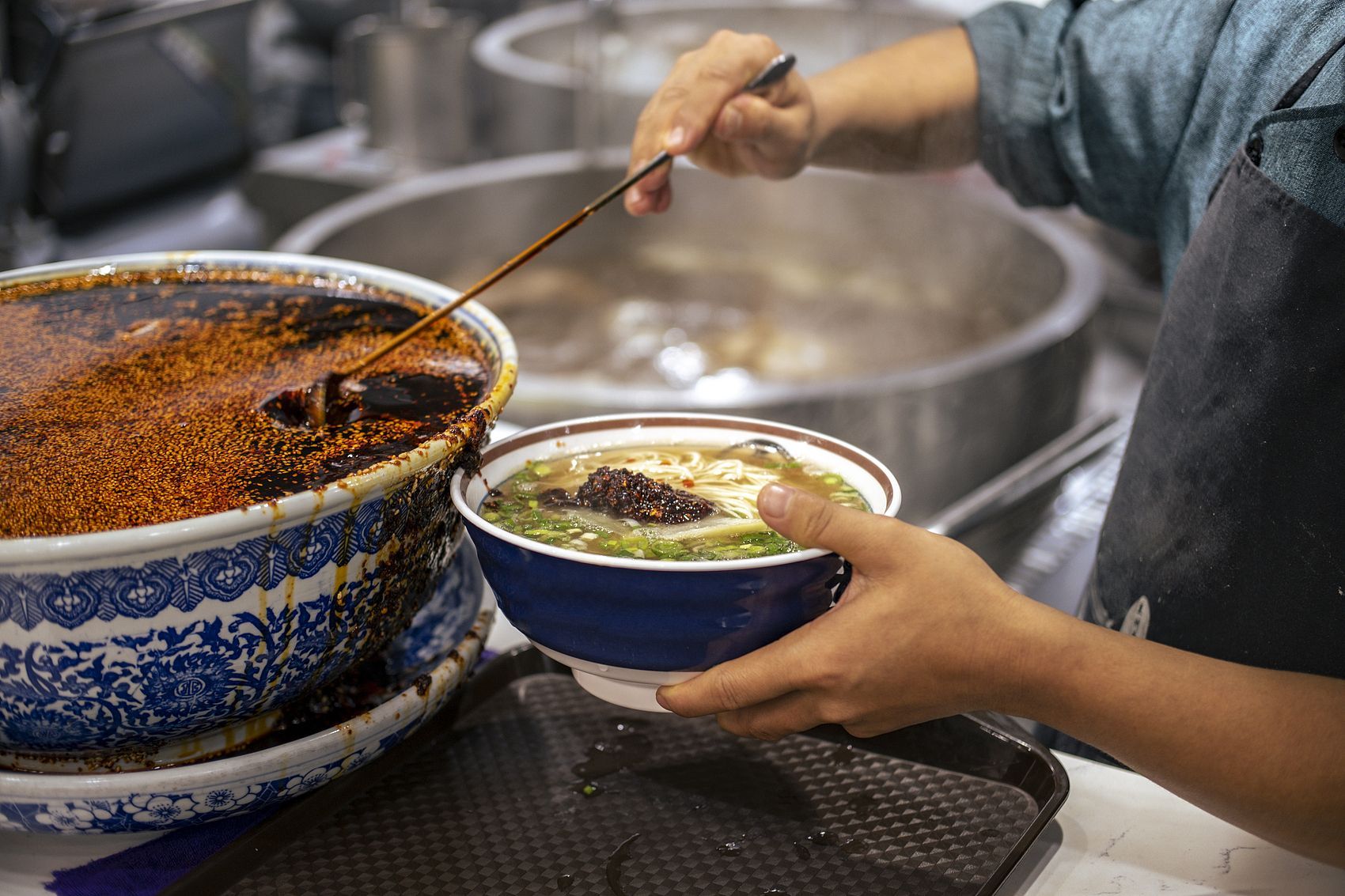
Spicy chili oil, chopped spring onions, and cilantro are added at the end to give the broth an extra layer of flavor (VCG)
And while some Lanzhou locals have voiced their frustration over Qinghai noodle makers using the Lanzhou name, little official action has been taken over the decades. In 2006, the Lanzhou Beef Lamian Industry Association, as reported by Beijing Daily, had tried to register the trademark “Lanzhou Lamian” under the food and beverage category. However, the association’s attempt failed as China’s Trademark Law prohibits the names of administrative divisions at or above the county level, or well-known foreign place names, from being registered or used as trademarks. Today, the only protected trademark indicating authentic Lanzhou Beef Lamian is the green-and-red stylized image of a person, with a crescent of noodles stretching across their chest, doubling as the horns of a bull.
However, this frustration over the mismatch may be coming to an end this summer, as a wave of Lanzhou Lamian restaurants are voluntarily changing their names to “Qinghai Lamian.” As part of the northwestern province’s campaign to combine lamian restaurants, Qinghai specialty product stores, and regional promotion under one roof, more than 1,000 stores across the country have changed their signage, according to Ma. Many are now also selling local products such as yak jerky and Tibetan lamb while installing LED screens promoting Qinghai tourism. A staff member from the Qinghai Lamian Industry Association told China Youth Daily that the program is voluntary and free, with government organizers providing participating stores with the necessary upgrades.
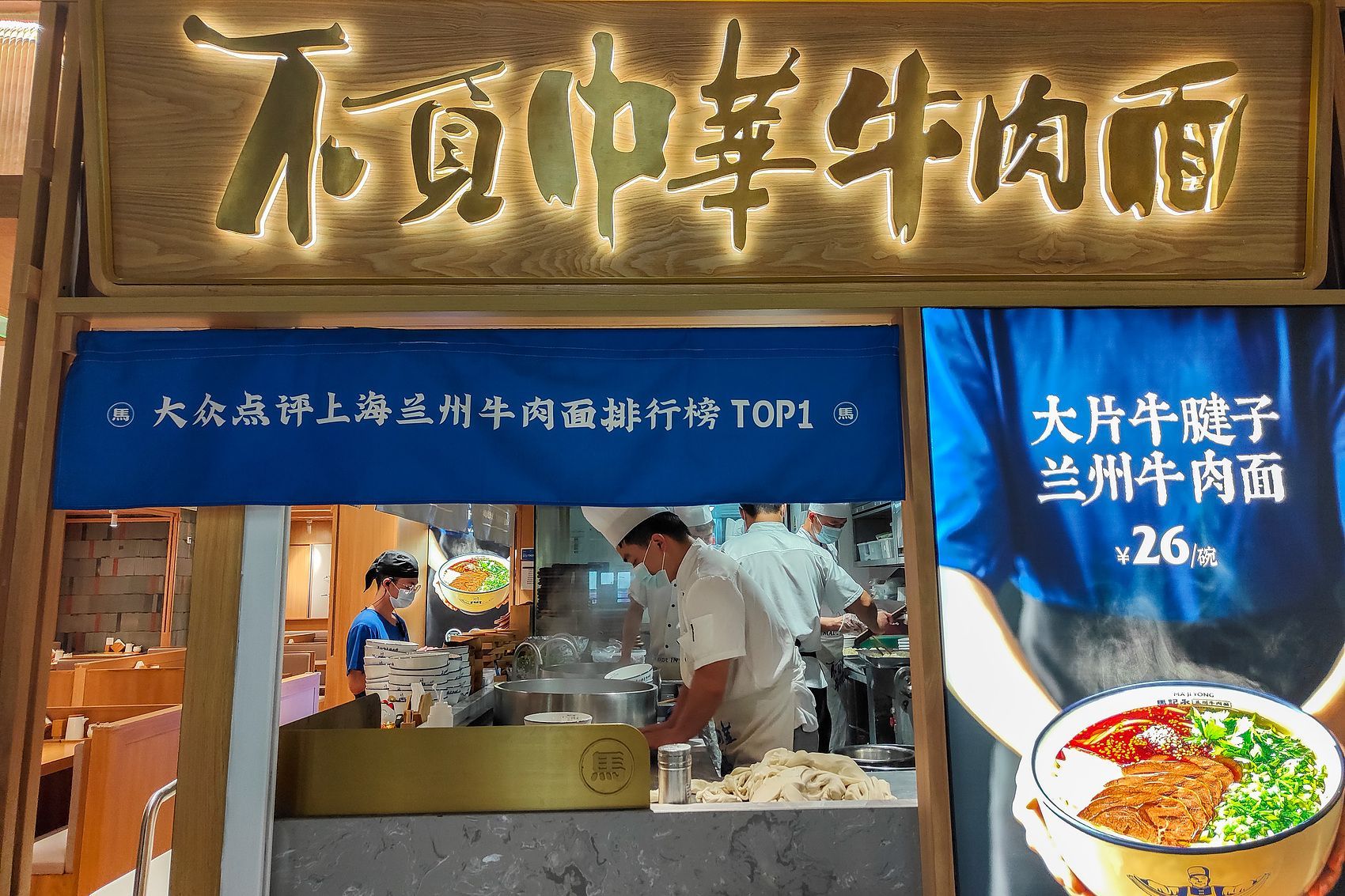
Lanzhou has also been promoting its own beef noodle brands in recent years, with the Ma Jiyong chain gaining popularity in major cities like Shanghai and Beijing (VCG)
While it looks like Qinghai’s noodle entrepreneurs will finally have the chance to tell their own story, it remains to be seen how effective the rebranding—after nearly four decades of name misalignment—will be. An August survey of netizens by state newspaper Farmers’ Daily shows that while some say that the switch may confuse consumers and hurt business, most of the more than 300 respondents felt that as long as the noodles remain “authentic,” the name matters little.
Ma, the Qinghai Lamian Industry Association president, is also relatively unfazed by the possible financial impact of the name change. “Whether they put up a Lanzhou or Qinghai sign is ultimately a choice made by the market and the shop owners. As long as they can make money, I don’t object to them using the Lanzhou name.”
Related Articles