

Laide Ajiboye and her friends could not enter one of Beijing’s top nightclubbing spots, the bouncer said, because it was too full—before waving another pair of women through. “Your white roommate can go in, but you guys cannot,” the doorman allegedly explained to Ajiboye, a Nigerian-American exchange student at Peking University.
When Ajiboye asked why, the response was “very direct and explicit,” she said. “It’s because you are black,” the bouncer told her. A source at the same establishment, a self-styled VIP club near Beijing’s Worker’s Stadium confirmed this policy to TWOC: “Black people cannot get in the club right now; this is a new rule that has been in place for a month.”
The right-of-refusal is a key part of any nightclub, which often stipulate dress codes, or gender ratios, as requisites for entry. And in China, many managers “think black people are less good-looking,” the source said on condition of anonymity. “It has to do with how dark you are; some black people who have lighter skin can still get in.” The same club also bars “girls [who] are not pretty” and “foreigners [who] are fat or ugly,” he elaborated.
Discrimination, of course, is as old as the nighttime economy: In 2015, two women went online to complain they were apparently “too dark” and “overweight” for a club in London’s West End. Laws that forbid such practices in some countries like the UK are necessarily ambiguous, allowing plenty of room for doormen to subjectively bar people they deem “undesirable.”
Yet rarely is wholesale racism so blatant than in the Chinese nightlife experience. During preparations for the 2008 Olympic Games in Beijing, several bar owners in the Worker’s Stadium area were allegedly told to ban black and Mongolian people from visiting their establishments. (Such policies are often the result of junior officials making ill-considered decisions, rather than following official edicts.)
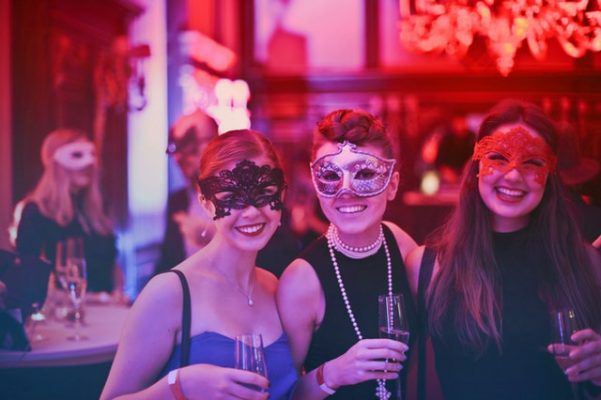
(pexels)
Cities likes New Orleans, Toronto, and Los Angeles have suffered similar scandals involving people of color; in July, another London club reportedly charged black women double their normal entrance fees.
When TWOC contacted the VIP club for a comment, a person who claimed to be the owner denied the allegations, and said anyone who wishes to may enter the club. Hearsay about racial discrimination and “white privilege” in Chinese nightlife (and other areas of life), though, are a dime a dozen.
Indeed, many in the industry believe that Chinese clubs actually thrive on such policies. Vera Madeira, a Beijing nightlife promoter who has been in the business for 10 years, explains that it’s about creating the “right environment.” Without “the right people, people are not going to stay,” she asserts.
The clubs’ target consumers are wealthy Chinese patrons. Nightclubs are “place[s] in which cosmopolitan Chinese ‘white collars’ access international cultural capital,” wrote sociologist James Farrer in a 2010 paper. Or, in Madeira’s words, “People with money…[go to] see these foreigners.”
In lieu of sky-high door fees and cocktail prices, Chinese clubs usually rely on promoters—middlemen, usually foreign themselves—to bring foreigners to the club to party and drink for free, which in turn attract Chinese patrons to pay for a table.
The vagaries of nightlife accounting make it difficult to study their business model exactly, but TWOC sources estimates that a single VIP club’s Chinese patrons spend 10,000 to 20,000 RMB per table per night. The annual gross profit for a single successful club in any major mainland city might hover around 75 million RMB, according to one study.
“The way that clubs think, it’s never been about benefiting the foreigners. It’s always a question of business,” Madeira insists. This means that Chinese patrons who are not on similar budgets can also feel shut out. “We had to change our names to Amy and Emma, or Emily; we had to fake being foreigners to get in,” complains Fang Jie, a former Beijing Language and Culture University student. “I feel like Chinese people think foreigners are superior…[or] maybe it’s a culture thing. Asian cultures value harmony, and we want to give the best to the guests.”
Skin color still matters, though. “Some club managers believe that white foreigners bring an ‘international’ atmosphere…If these white people like the club, then the club must indeed be good,” a club employee told a Shanghai-based listings site in 2015.
Meanwhile, ignorance and bigotry lead Chinese media to stereotype foreigners of color as untrustworthy, lazy, and even criminal. In 2017, a delegate at the Chinese People’s Political Consultative Conference proposed to “strictly regulate” certain black populations, claiming they “travel[ed] in droves” and posed a threat to health and safety. One recent viral article on WeChat attributed rising HIV rates to African students.
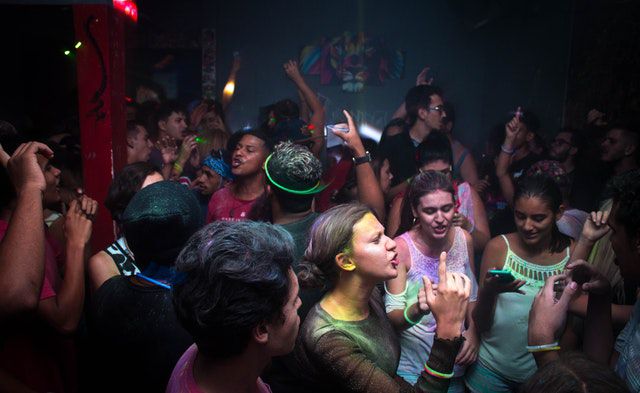
(pexels)
While deploring such attitudes, Fang says, “I’m not sure if we can call it racism…Chinese people think that Western culture is superior.” Madeira points out that dress codes and ladies’ nights (without corresponding gentlemen’s nights) also restrict people from nightclubs for various reasons.
Neither explanation, though, is likely to improve the evening for dark-skinned foreigners who went out looking to party, and found rejection. The media routinely boasts of “win-win” friendships with African states, but it seems China’s hospitality industry hasn’t got the memo.
Related Articles