On a drizzly August night in Shanghai, 18-year-old Zheng Chenggong steps up to the plate for his first at bat as a professional baseball player. He plays for the Changsha Want Want—one of six teams in China’s newly launched Chinese Professional Baseball League (CPB)—but has spent the first game and a half warming the bench. Tonight, with his team nursing a one-run lead in the seventh inning, he’s been called on to put away his hometown club, the Shanghai Orcas. “Let’s go, Adam!” Shouts a spectator from the stands, using the teenager’s English name.
Three swings later, it’s over. Zheng strikes out, trotting back to the dugout for perfunctory high fives from his teammates. Not long after, both teams retire, and the game ends early due to rain. The match’s electric beginning, cut short by an unexpected washout, could be seen as an account of China’s baseball experience writ small. Despite efforts in recent decades to get it off the ground, the sport has remained a niche endeavor in the country. But can the CPB, and a growing cohort of supporters, finally drive Chinese baseball home?
Humble beginnings
Despite its modest reach today, baseball actually has a long history in China. After becoming popular in the US in the 1850s, the first recorded China-side game took place in Shanghai in the 1860s, albeit by a small number of American businessmen and missionaries posted in the city. By the 1890s, three American missionary-founded universities in China had baseball teams: St. John’s College in Shanghai and Luhe College and Huiwen College in Beijing.
Read more about sports in China:
- Ready and Suited: China’s Buhurt Combat Culture is On the Rise
- The Olympic Pipe Dream of China’s Sports Majors
- Hype and Drama at China’s Viral Village Soccer Championships
Even China’s aspiring leaders at the time began to take part in America’s national pastime, with members of Sun Yat-sen’s underground resistance movement, the Tongmenghui, forming a baseball club in Changsha in the summer of 1911 to build physical fitness. According to A History of Baseball in China, published in the 1990s, the “Changsha Yeqiu Hui,” or “Changsha Baseball Association,” also served “to unite comrades, practice bomb-throwing skills, and prepare for an armed uprising.” Yeqiu (野球) was an early term for baseball borrowed from Japanese.

While baseball is not a popular sport on the Chinese mainland, the small town of Liancheng in Fujian has made baseball equipment a local economic lifeline, with most of its products supplied to businesses in nearby Taiwan province, where the sport is popular (VCG)
In the early 20th century, baseball’s popularity began to grow, buoyed by the sport’s greatest Chinese proselytizer, Liang Fuchu (梁扶初). Liang had picked it up as a young boy while living in Yokohama, Japan, with his father, and established a Chinese baseball team there. By 1941, Liang’s four sons helped establish the Shanghai Pandas, made up of players groomed from various neighborhood clubs in the then Japanese-occupied city. In 1945, Liang became the Pandas’ coach, and although they were amateurs, they were regarded as the best team in China, playing against American military corps and other Chinese clubs.
The sport’s growing popularity trickled down to the grassroots. “I really liked baseball,” Zhang Shizheng, a 95-year-old Shanghai native, tells TWOC. “Before 1949, many universities and middle schools in Shanghai had baseball teams. So it wasn’t strange to me at all.” Zhang started playing at 12 while attending Nankai Middle School in Chongqing, where his family had relocated due to the Japanese invasion. He continued competing as a young man, first at Hujiang University in Shanghai, then on the Dalian Shipbuilding Factory baseball team. “The team leaders liked me because I was left-handed, and left-handed pitchers are rare.”
Zhang also recalls Liang Fuchu once acting as a visiting coach at Hujiang. “He had us play until late at night even when it got dark, relying on sound to field the ball. You couldn’t see at all; you had to use the sound to judge which direction the ball was coming from. I broke two of my fingers,” Zhang says, chuckling. “He was the most famous coach in China at the time.”

In 1952, He Long became head of the National Sports Commission, helping lay the foundations of sports development in the People’s Republic of China. In 2022, a statue of He Long was erected at Datianwan Stadium in Chongqing. (VCG)
While it may be a common assumption that baseball, a quintessential American sport, fell out of favor following the founding of the PRC in 1949, the period from 1952 to 1960 was “unquestionably the golden era of baseball in China,” according to scholars Sean J. McLaughlin and Jie Gao. Prominent military leaders such as He Long (贺龙) and Liu Bocheng (刘伯承) embraced the sport and embedded it in training regimens for the People’s Liberation Army and the People’s Liberation Army Navy, giving it the nickname “military ball (军球).” Baseball teams from 24 provinces, cities, and military branches took part in the first National Games in 1959. The following year even saw the first National Baseball Regional Competition. Still, national financial difficulties and the political upheavals of the 1960s and 1970s brought the game to a prolonged standstill in China.
It wasn’t until the mid-1970s that baseball began its slow road back to popularity. After the normalization of diplomatic relations between China and Japan in 1972, baseball team exchanges between the two countries served as a bridge between their people. Assistance from America’s Major League Baseball (MLB) was also instrumental in rekindling it. Los Angeles Dodgers president Peter O’Malley was especially influential, making multiple trips to China in the early 1980s and inviting Chinese baseball coaches, including Liang Youde, one of Liang Fuchu’s sons, to Dodgers Spring Training. In 1986, he also funded the construction of one of China’s first modern-era baseball fields, located at the Tianjin Institute of Physical Culture.

Zhejiang province’s Xujiadai village is home to China’s first standard-compliant rural baseball field for children (VCG)
In the run-up to the 2008 Beijing Olympics, efforts to popularize the sport in China only intensified. In 2002, China launched its first attempt at a domestic league, the China Baseball League, or CBL. In 2003, the Chinese Baseball Association, the sport’s national governing body, signed an agreement with MLB to train China’s national team, umpires, and youth players. Then, in 2007, MLB opened an office in Beijing and sent Rick Dell, a veteran baseball coach from the College of New Jersey, who remained in Beijing until 2025 as MLB’s General Manager of Baseball Development in Asia.
“We were active at all levels,” Dell tells TWOC. “[At the U-12 level] we had our Play Ball program, which is now the MLB Cup, and that program is vibrant.” MLB has since opened three development centers for teenagers in China: in Wuxi, Nanjing, and Changzhou, and this year’s MLB Cup, held in August in Foshan, Guangdong province, hosted 62 teams from across China.
One of Dell’s proudest achievements was seeing families get involved in the game. “We have parents who are driving from Hangzhou; they’re coming up to Nanjing, and they’re playing in a tournament...And Beijing families will travel down to Shenzhen and play in a tournament. It’s pretty cool to see because that wasn’t happening in 2008.”
But today, MLB is perhaps better known among the ordinary Chinese people as an apparel brand. Its stores are a common sight in shopping malls across the country’s major cities. But stepping into these stores, you’d be hard-pressed to find evidence of baseball as a sport. There are no posters of players or mannequins dressed in team jerseys. Instead, the stores sell baseball as a lifestyle. Logos of glamor teams like the New York Yankees and Los Angeles Dodgers grace pastel-toned dad hats and platform sneakers. “It has become a fashion brand, the same as Gucci or Max Mara or Louis Vuitton,” says Dell.
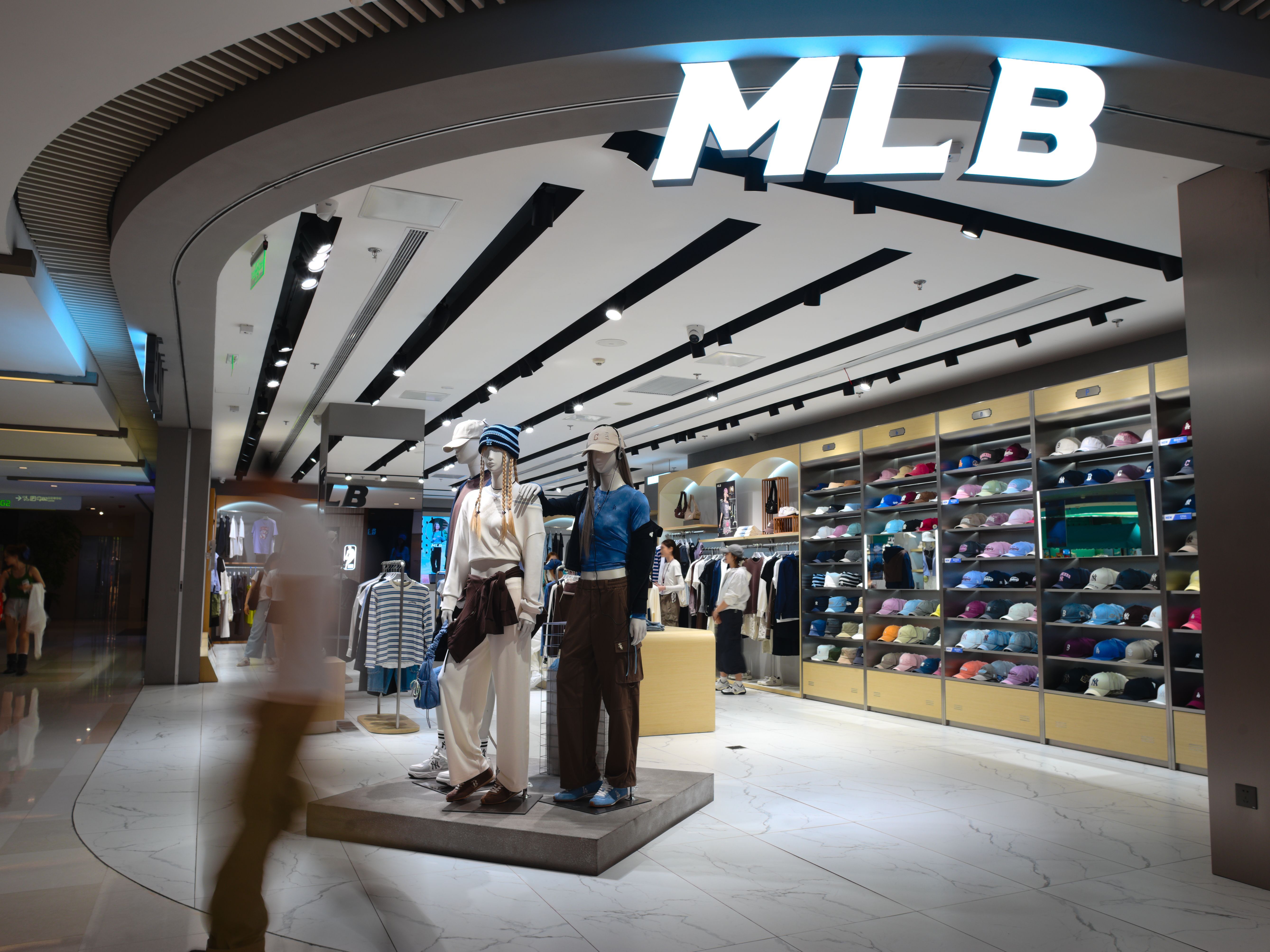
An MLB store in Shanghai’s trendy IAPM mall (Evan Taylor)
The CBL league has also floundered, shutting down in 2012 and 2013 due to lack of finances, and then again in 2017. In 2019, it temporarily rebranded as the Chinese National Baseball League before halting play due to the pandemic and then relaunching under its original name in 2023. Today, the league exists alongside the new Chinese Professional Baseball League, mainly acting as a feeder system for the Chinese national team.
Grassroot moves
While baseball remains far less popular in China than soccer and basketball, with fewer major commercial events and brand sponsors, grassroots teams, players, and fans have kept the sport alive over the years and are now starting to get more attention.
In 2005, after graduating from college, Pan Wang coached what he claims was Shanghai’s first amateur baseball team, the Homer. Made up of both Chinese and international players, often meeting through early-aughts web messengers such as QQ and MSN, they practiced at East China Normal University. “At that time, going on the internet and connecting with people to play baseball was a very modern thing,” he says. Born in the 1980s, Pan describes his generation of baseball fans as having learned the game from “external influences,” such as imported television shows, movies, Japanese anime, and video games.

Huang Fan, a member of the all-female team SSG, practices with the Shanghai Falcons in August (Evan Taylor)
Pan now coaches the SSG, an all-women’s team founded in 2013. They follow a three-times-per-week practice schedule and participate in games and tournaments around China and East Asia. Because female-only teams are rare, they often compete against, and beat, male teams. In recent years, some of their players have become online baseball influencers. One of their most popular players is shortstop Gong Anna (Xiaohongshu handle: aina5577), who started playing softball in college and joined SSG after graduating and moving to Shanghai in 2017.
Her road to being a sports influencer was accidental. “It started in 2019, when one of my batting videos went viral by chance. I didn’t mean to be a content creator at that time.” But she kept making baseball videos, and today she has over 19,000 followers on Xiaohongshu. This has led to team uniform and equipment sponsorships from Mizuno, the Japanese sports equipment giant. The team’s name reflects this growing trendiness. SSG, which originally stood for “Shanghai Super Girls,” now stands for “Sportivité, Sororité, Glamour.”

Aiden Yuan stretches before a practice for the Shanghai Falcons (Evan Taylor)
Social media has indeed played a part in helping grow the sport in China. “Influencers in China are translating more and more training curriculum videos from Tread Athletics and Driveline,” says Aiden Yuan, who, besides his coaches, has learned by watching online videos of these two American baseball development academies. Still in high school, he is now one of the best players on the Shanghai Falcons, an amateur team founded in 2016. “I can throw up to 84 miles per hour,” says the pitcher, making sure to emphasize that this is on flat ground, not a pitcher’s mound, which would add even more speed.
Going national
This spring, after graduating from IMG Academy, one of the US’s top athletic training centers, Zheng Chenggong tried out for the CPB, making the league as one of its youngest players. Now the Shanghai local’s face is on promotional posters on the side of the Shanghai stadium.

Zheng Chenggong of the Changsha Want Want features in the stadium advertisements (Evan Taylor)
“I always wanted to go pro in something I loved,” says Zheng, who played third base for the Chinese national team at the U-18 Baseball World Cup in Japan last fall. “The CPB and the MLB are two different things, but the CPB is the MLB of China.”
With more professional players like Zheng, CPB hopes to grow further in China with the help of brand sponsors and the power of social media. “It is a professional, fully commercialized league, with international players and coaches,” says Rae Wang, CPB’s brand marketing director. After an initial spring season in January 2026 in Guangdong, the league began summer play in August, expanding to Shenzhen and Shanghai. The league plans to gradually expand its gameday footprint to home-city stadiums.
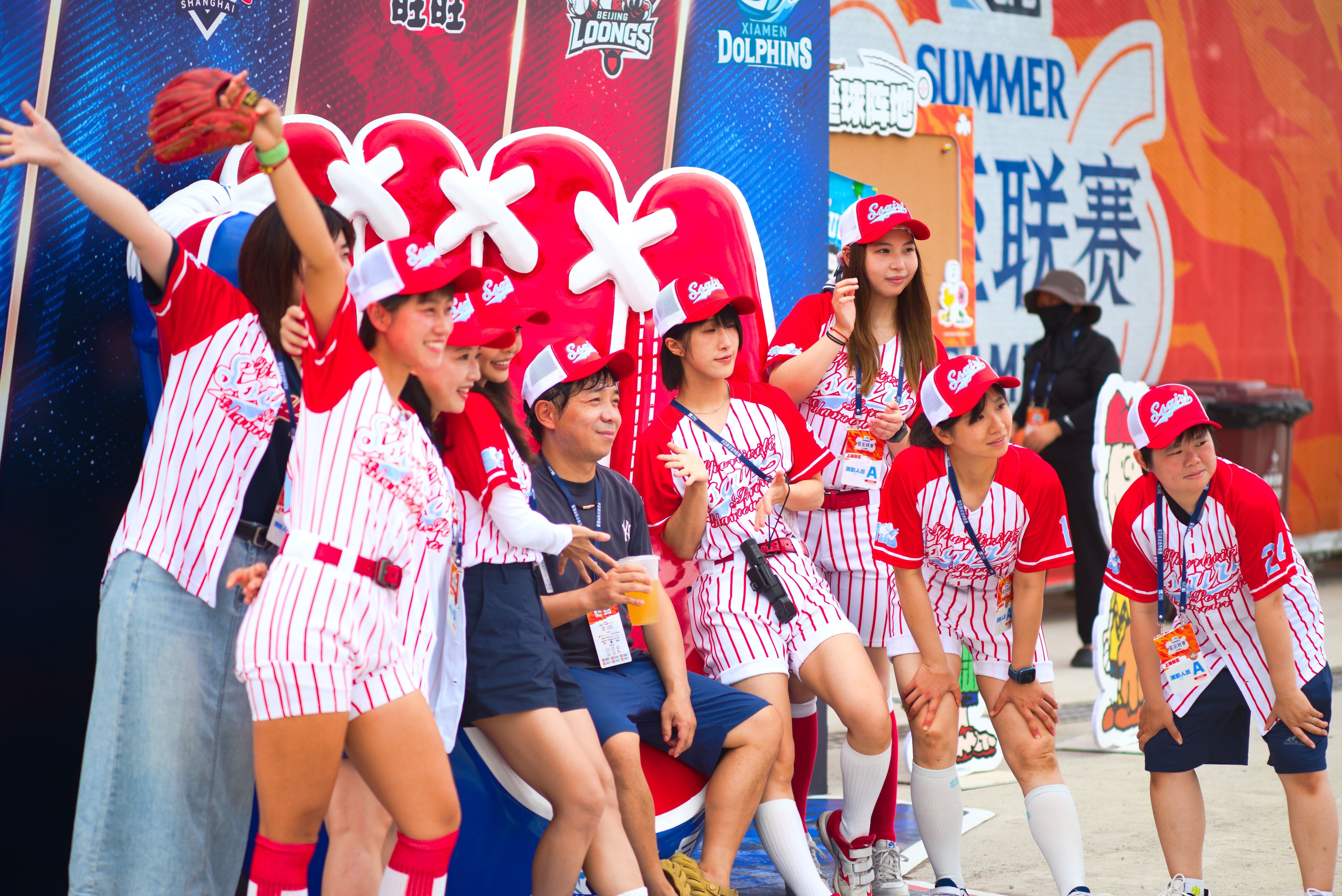
Members of the Shanghai SSG baseball team take a group photo outside a CPB game (Evan Taylor)
As for the gameday experience, the league has adopted the model popular in Korea: a raucous affair with cheerleaders and loud, constant music. For the CPB, this is a deliberate strategy to entertain fans who may be new to the game. “Because pure baseball competition has a relatively high barrier to entry—you need to understand complex tactics and rules—adding entertainment elements to the downtime lowers the barrier for casual fans to step into the stadium,” says Wang. “At our core, we are also creating a lifestyle experience that people can enjoy.”
On its mid-August opening weekend, the Shanghai West Bund Baseball Park, newly built by the CPB on the southern fringe of the city’s rapidly developing West Bund area, is bustling with young adults. Many of them sport baseball caps and jerseys from either the hometown Orcas or popular international teams like the Los Angeles Dodgers or Fukuoka Softbank Hawks. As the game stretches into the evening, the setting sun paints the boats floating down the Huangpu River behind the outfield wall orange. Fans line up at food trucks for hot dogs and lemonade, clap along to the cheerleader’s chants, and gasp in anticipation when balls are skied deep into the outfield.
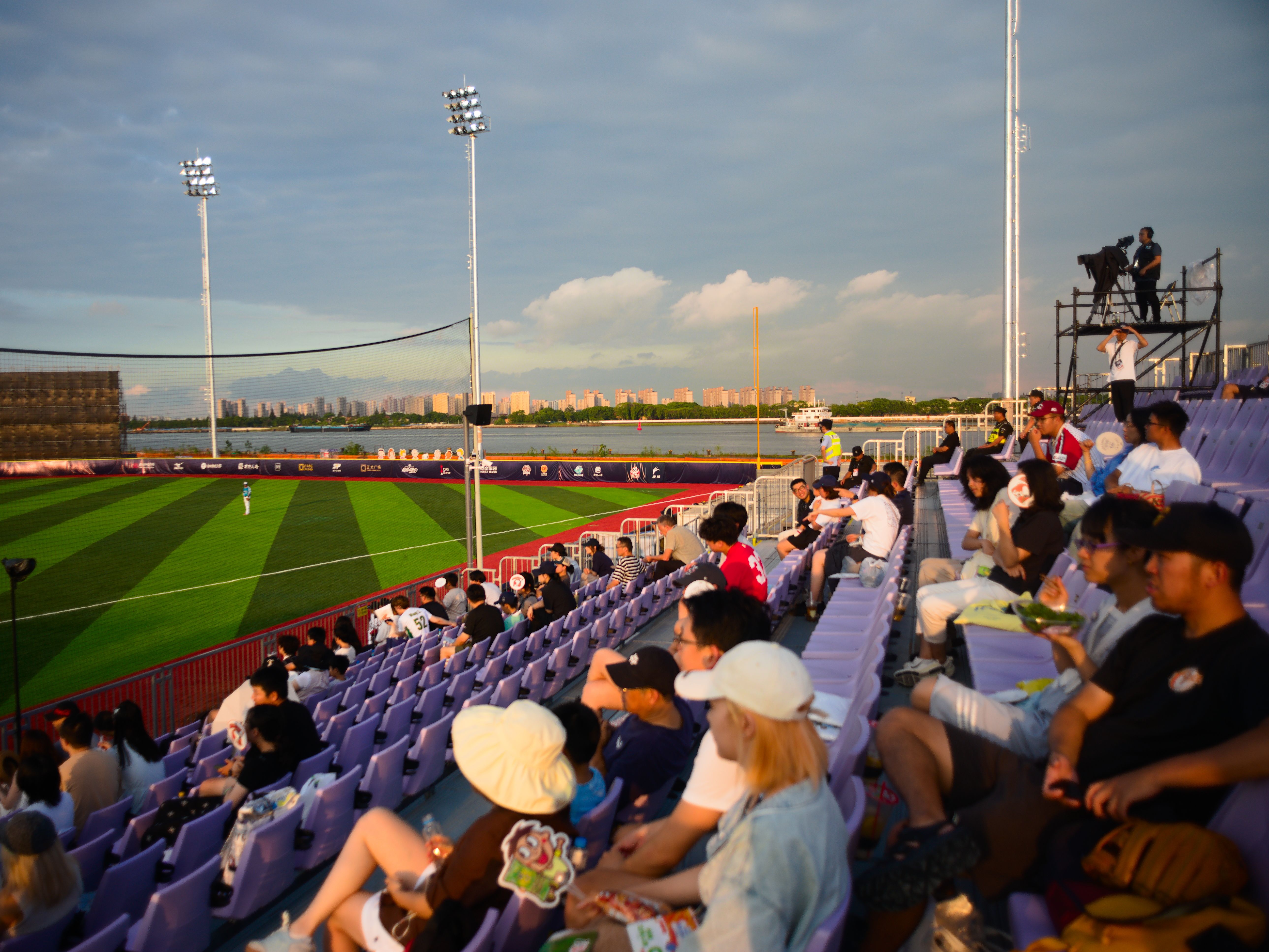
Fans watch the opening weekend of the CPB at the newly built Xuhui West Bund Baseball Stadium (Evan Taylor)
The CPB’s potential audience is huge. “Right now is probably one of the highest periods of baseball popularity in China,” says Steven Li, who runs the baseball news account “Buzz and Baseball” on Xiaohongshu. Li, in his 40s, primarily watches and posts about MLB, but also leagues in Japan, Korea, and Mexico. In the past, he paid some attention to the CBL, “but back then professional baseball in China wasn’t as well-developed.” But since the launch of the CPB this year, Li has increasingly taken note. “I think it’s the most successful Chinese professional baseball league to date,” he tells TWOC. “Its media exposure, broadcasting, and professional operations have improved a lot.” The media exposure is apparently paying off, with Wang reporting that over 100,000 watched the CPB’s inaugural summer game online.
A long road ahead
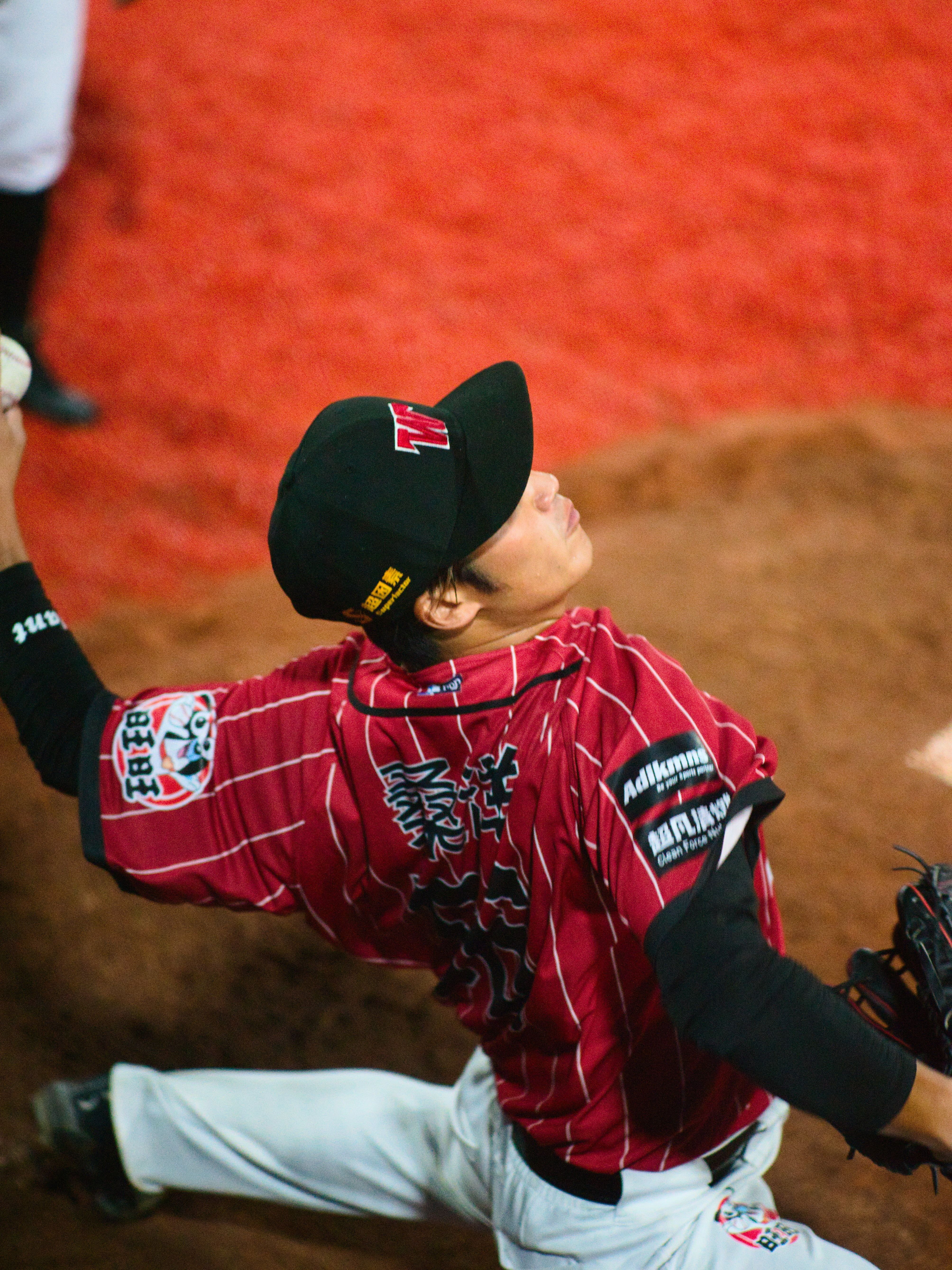
A pitcher for the Changsha Want Want practices in the bullpen (Evan Taylor)
But despite a promising start, persistent limits remain to popularizing the game in China. “Basketball only needs three or five players, but baseball requires nine per side. So it demands more people, specific gear, and a baseline level of skill, which limits its growth,” says Li. And that’s all before getting one’s head around the rules. “It’s a really hard sport to understand,” admits Zheng.
Baseball’s lack of consistent Olympic status was also a detriment, with the sport absent from the Games in 2012, 2016, and most recently, 2024. Li adds. “As you know, many sports in China are heavily influenced by their Olympic status.” According to Dell, the former MLB representative in Beijing, the biggest roadblock for players comes around age 12. “Where baseball in China is most vibrant is at the U-12 level…Then kids start to go into middle school, you need a bigger field [to play on], and academics become more of a challenge.”
These are all problems that the CPB faces on a larger scale. “The most foundational challenge is industry personnel—there’s simply a shortage of specialized talent,” says Wang. “This talent shortage trickles down to everything: not having enough players for the league, or enough cities ready to establish teams. Everything is interconnected.”
In the US, where baseball is a national pastime, love for the sport often runs in families. “A father might root for a Texas team, and then his son, and even his grandchildren, will keep supporting the same franchise,” says Cruze Zhou, captain of the Shanghai Falcons. He adds that it’s unrealistic to expect baseball to suddenly become popular in China overnight. “It takes generations, usually decades of consistent development.”

A member of the Xiamen Dolphins dives into third base on the opening weekend of the CPB (Evan Taylor)
But small changes are pointing in the right direction. After a practice session in August, Zhou’s team welcomed a new member who had played baseball in university. He had watched them practice before and came back the next week with newly purchased gloves and a ball in hand.
Meanwhile, Rick Dell was on his way down to Florida, where the Chinese national baseball team will take part in a three-week training block at the MLB-owned Jackie Robinson Training Center in preparation for the 2028 Los Angeles Olympics, where baseball will return to competition.
Closer to home, preparations are underway for next year’s U-18 Baseball World Cup, to be held in Pingtan, Fujian province. “I think China’s going to do a lot better [at this tournament],” says Zheng. A few days after striking out against the Orcas, Zheng got another opportunity at the plate. This time, after anticipating the fastball coming his way, Zheng lashed the ball to the wall for an RBI double, his first professional hit. Only time will tell if Chinese baseball will follow his success.
Related Articles