

Last July, 100,000 cooked crayfish from Hubei province boarded the Sino-Euro Railway and landed in Russia for the 2018 World Cup—baffling foreign media, but exhilarating Chinese spectators for whom this summer treat more than made up for the absence of their national team.
Crayfish is officially the country’s most popular dish, according to a 2017 report by the China Cuisine Association; the Chinese consume more than 90 percent of the annual global harvest. Soccer, beer, and spicy crayfish (麻辣小龙虾, “spicy little lobster”) are considered the quintessential combination for a Chinese summer evening.
Despite its ubiquity, though, this invasive species—also known kouwei xia (口味虾, “tasty shrimp”) and maxiao (麻小, “little spicy”)—is no ancient delicacy. In fact, it’s less than 40 years old: The crayfish was introduced to China from Japan in the 1930s as feed for another imported animal, the American bullfrog, and wasn’t widely consumed by humans until the 1980s. Its association with summer is likely due to its harvest season from late April to early October.
Hunan’s spicy crayfish recipe is the best known and considered a must-try dish in the provincial capital, Changsha. The locals are crayfish super-fans, reportedly consuming tons of the crustacean on the night Germany played Italy in the 2012 European Football Championships.
Crayfish is usually stir-fried with heavy spices, including chili and Sichuan peppercorn, to enrich its flavor and mask its earthy smell. Its preparation is labor-intensive: Fresh crayfish needs to be soaked in water for several hours or days in order to clean out the mud it burrows inside, and brushed to remove sand from the shell.
There is a long-standing debate over whether the heads can be eaten; this part hosts the roe (a yellow paste, considered even more delicious than the meat) but also the crayfish’s internal organs (which must be discarded before cooking). Shelling is another part of the fun—as pointed out by crayfish fans on Q&A platform Zhihu, it forces diners to put away their mobile phones. This makes crayfish ideal for midnight markets, where socializing is as important as snacking.
Spicy crayfish were introduced to Beijing’s “Ghost Street” (簋街) in 2002, and quickly became a signature dish of this late-night dining area. They are sold for 2 to 20 RMB each, depending on size. In 2017, the Huda Restaurant, one of the street’s oldest establishments, sold an estimated 70,000 crayfish (3,000 – 3,500 kilograms) every weekday, and over 100,000 per day on weekends and holidays.
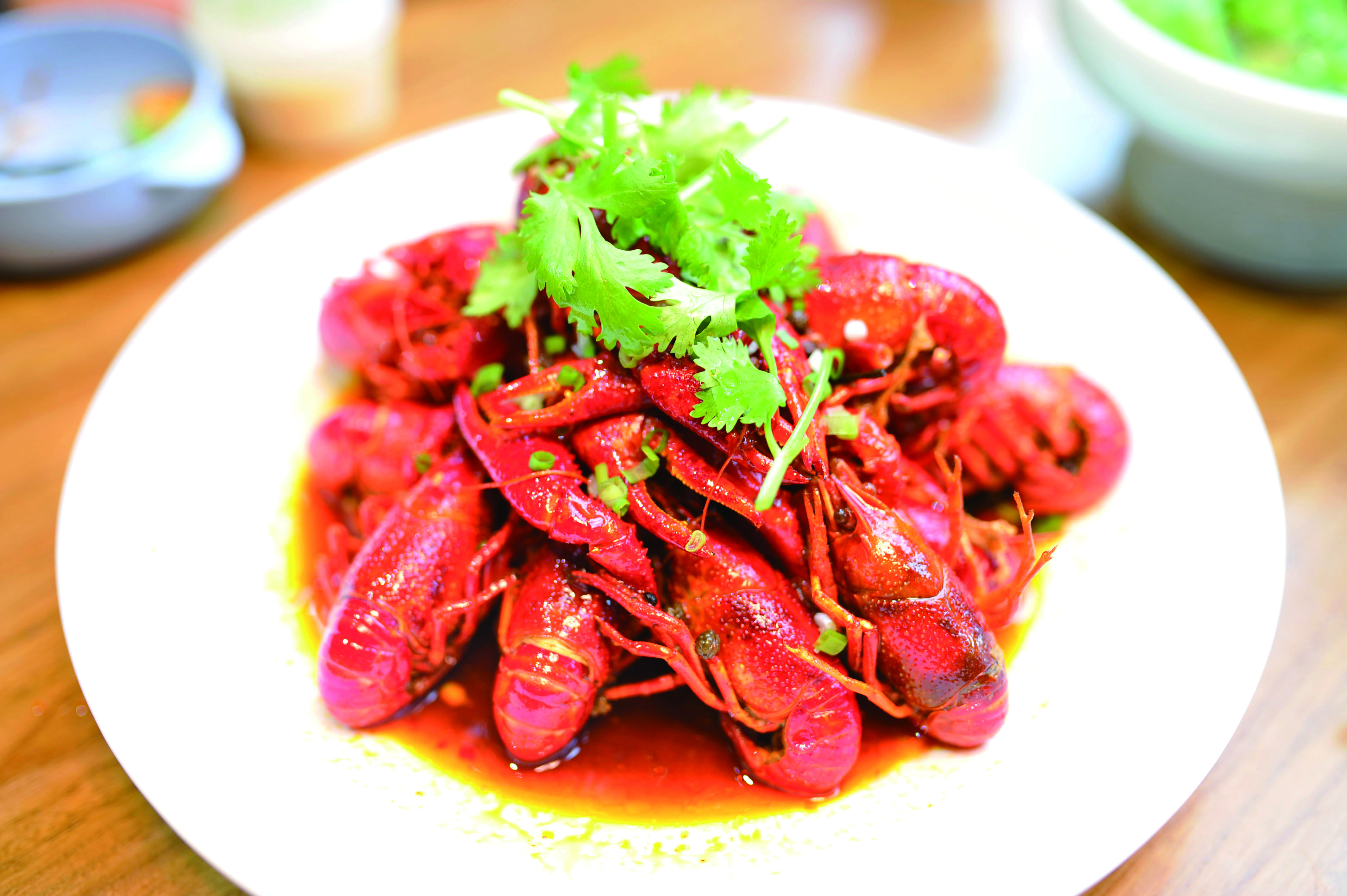
Steps:
- Clean the crayfish; chop the chili, leek, ginger, and garlic
- Stir-fry with oil and Sichuan peppercorn
- Add the crayfish; fry until it changes color
- Add baijiu, light and dark soy sauce, and white sugar; cook until aromatic
- Add star anise, cinnamon, salt, and 200ml clean water
- Braise for eight minutes over a medium-high heat
- Glaze on high, then serve, preferably topped with coriander, and paired with cold beer
Ingredients:
200g crayfish 小龙虾
5 cloves of garlic 大蒜
20g chili and Sichuan peppercorn 辣椒、花椒
2 stalks of leek 葱
4 slices of ginger 姜
1 star anise 大料
1 piece of cinnamon 桂皮
1 tsp dark soy sauce 老抽
3 tsp light soy sauce 生抽
30ml baijiu 白酒
8g white sugar 白糖
salt 盐
cooking oil 食用油
Claws Celebre is a story from our issue, “Wild Rides.” To read the entire issue, become a subscriber and receive the full magazine.
Related Articles