

Popular imaginings of Chinese breakfast may be dominated by the steamed buns, youtiao (fried dough sticks), and hearty soups of the North, but in the southeastern province of Zhejiang, there’s far more intriguing dishes to start the day with. In Zhejiang, the taste of the sea is rarely far away, and breakfast might just be the best meal to indulge in dishes made with the freshest ingredients.
A foodie’s breakfast tour of Zhejiang should surely begin in Zhoushan, an archipelago to the east of Ningbo. For Zhoushan locals, a typical morning starts with a bowl of crisp seafood noodles. Made from rice, these noodles are thin, long, tough, almost crunchy, and can be cooked for a long time without disintegrating.
But the real stars of the Zhoushan noodle show are the super fresh seafood within. From crabs to shellfish, yellowtail fish to cuttlefish, razor clams to squid and prawns, stalls prepare the day’s catch in the early hours for customers to enjoy. The noodle soup is also part of the treat, prepared with fish heads and bones, to make a delicious and nutritious broth.

Zhoushan, Zhejiang province (VCG)
Not every noodle soup shop in Zhoushan is identical, with each hawking its own specialty. Some are known for fish balls, crab roe, or dried eel, while others are proud of smoked mackerel with sugar and vinegar. There’s something for every taste in Zhoushan.
In Taizhou, further south, where important Daoist and Buddhist holy sites meet on the spiritual Tiantai Mountain, the breakfast shares in this fusion spirit through qiangao (嵌糕). The best thing about qiangao, a large rice roll and popular Taizhou breakfast, is that they can be filled with anything.
Roasted pork, shredded potatoes, radish, mung bean sprouts, dried tofu, celery, fried rice, and even the quintessentially northern youtiao—anything can go into a qiangao. The sticky rice cake roll makes for a chewy, flavorsome breakfast.

Qiangao (嵌糕) is a brakfast speciality in Taizhou (VCG)
In the 2020 documentary series Breakfast in China, an episode shows how a family restaurant prepares the city’s favorite breakfast snack. In the show, a Mr. Zheng recounts how he and his wife wake up every morning at 2 a.m., pour hot water on dough they prepared the previous evening, and then steam it. Zheng then hammers the cooked dough in a stone mortar to make it elastic, as his wife prepares all the fillings. They open at dawn, welcoming customers on their way to work with the white dough and fillings. One patron has been coming to the shop for qiangao every day for 30 years: “It’s been my love affair since childhood” he tells the camera.
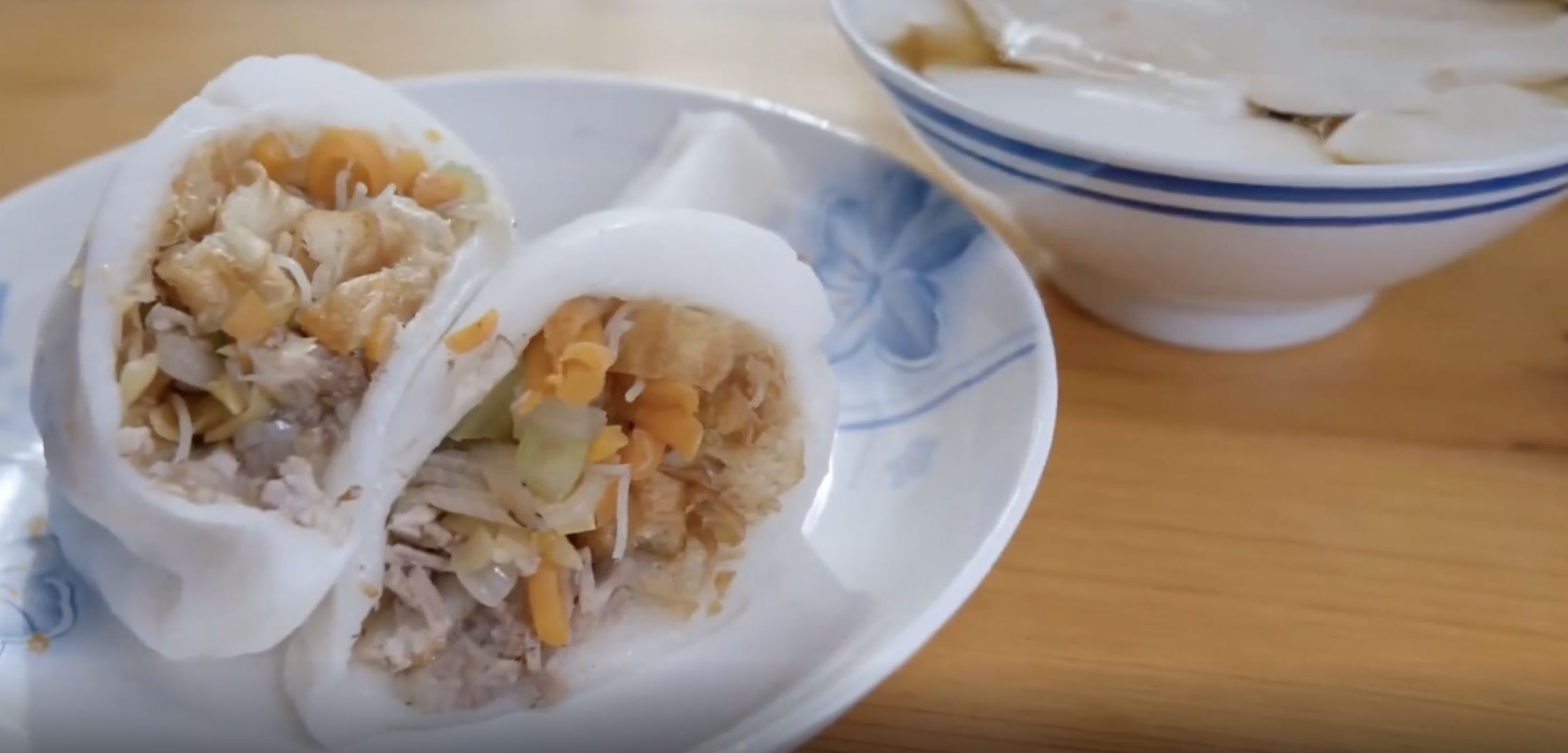
Mr. Zheng’s qiangao, from the documentary series Breakfast in China (screenshot from Breakfast in China)
The sea breeze and wet weather in Taizhou can make it chilly in winter, but there’s even a breakfast to counter that. Ginger noodle soup is another Taizhou classic. Ginger is considered a “hot” ingredient in traditional Chinese medicine; a natural way to rid the body of cool and damp brought on by the weather. Originally, the dish was made specially for women who had just given birth, as it is supposed to stimulate blood circulation and help them recover their strength. But it was also a favorite with guests who arrived to visit a mother and her new baby.
The ginger is prepared well advance. It’s sliced, cooked in yellow rice wine, and then dried in the sun. A few pieces are enough to give boiling water a mellow but delicious flavor, which then forms the basis for the soup. Favored additions to round off the dish include oyster mushrooms, wild rice stems, tofu skin, shrimp, clams, and crabs.
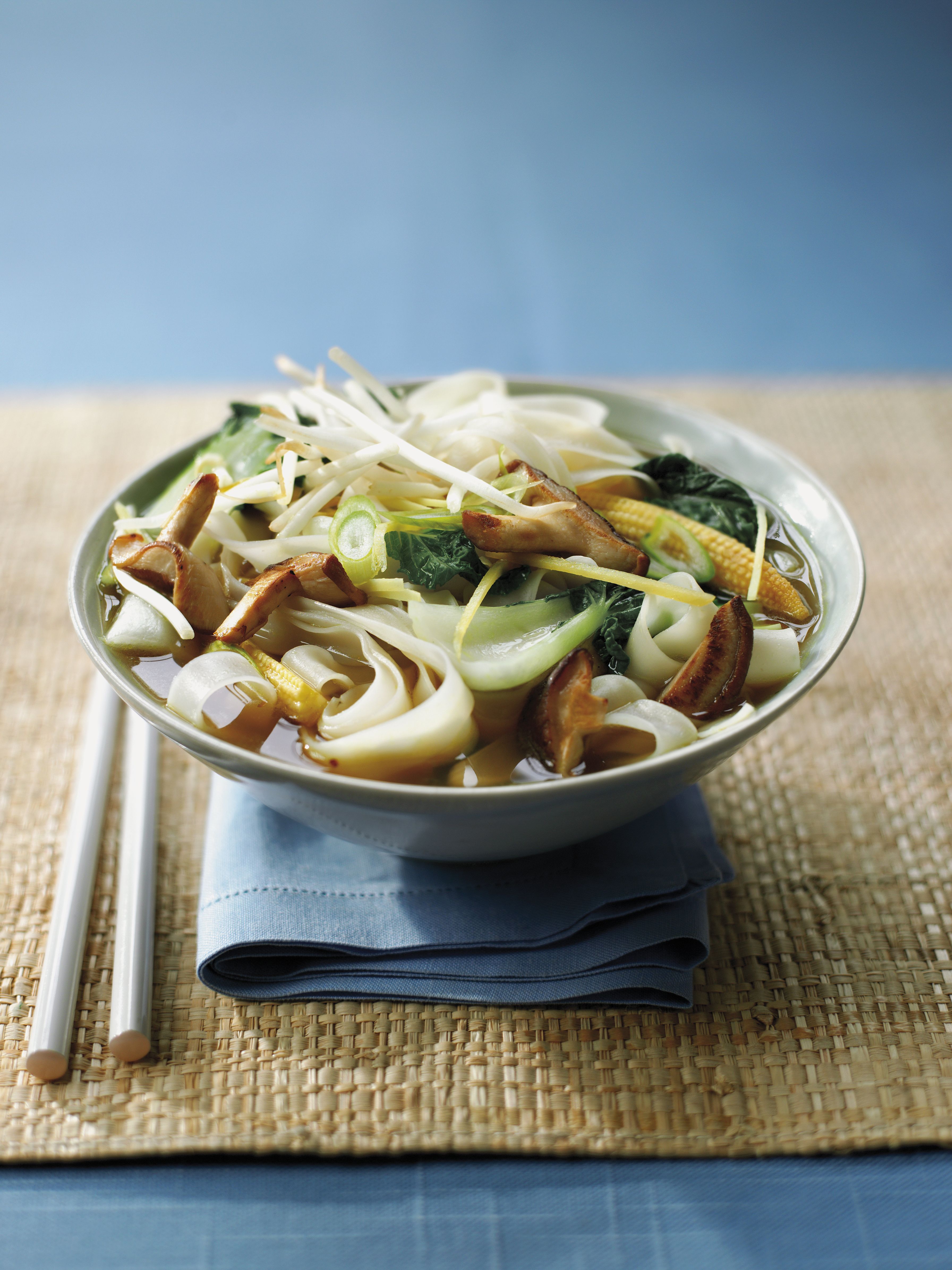
Ginger noodle soup with mushroom and cabbage (VCG)
In Ningbo, another coastal Zhejiang city to the north of Taizhou and east of Zhoushan, the love of seafood has even entered the local dialect: to be called a “dead crab” is to be lazy or idle. Crabs are indeed a favorite of Ningbo locals, including the salty-sweet taste of raw crab paste, made with fresh crabs, ginger, rice vinegar, yellow wine, sugar, and salt.
The crab paste goes perfectly with rice porridge, particularly on a summer morning when it can provide a cooling sensation. Locals love crab paste so much that it has been nicknamed the “rice hammer,” because it is so tasty that it can even make a bowl of plain rice tasty enough that one “hammers” it down one’s throat. Zhejiang locals would rather have that than a plain Northern steamed bun any day of the week.
Related Articles