

Every Tuesday evening for three months, Su Poman went home on the subway with a pleasant buzz. It’s not the remnant of a wild night partying, but the result of a captivating wine-tasting night class that offered the 29-year-old a temporary escape from work.
In April of last year, Su signed up for the “Wine and Beer Tasting” course at the Shanghai Citizen Art Night School simply to break the habit of working overtime. “If you have a 7 p.m. class, then you will try any means possible to leave work on time,” says Su, who asked to be identified by a pseudonym. In her last four years working as a video content creator in Shanghai, she regularly stayed in the office until 11 p.m. “Some people online say that they’d rather become farmers than work in an office because potatoes won’t call and yell at you at 2 in the morning [like your boss],” she jokes.
Though night schools, or yexiao (夜校), have existed in China for over a century mostly as a means for full-time workers and other non-traditional students to gain formal education or vocational skills, Su doesn’t perceive her classes as an asset to her career. Instead, the 90 minutes each week she spent learning about the impact of soil on grape growing, as well as other subjects like leatherwork and glassblowing, are a budget-friendly way of taking “a refreshing break from the daily routine,” she tells TWOC. A three-month course at Su’s night school, which is publicly run, costs just 500 yuan in a city where a meal for two can run to that same amount.

Most of Su’s classmates are around 40 years old and often turn up late for class after working overtime (Su Poman)
Night schools have become popular in major cities across the country, as hundreds of thousands of young Chinese like Su seek new ways to relax, explore new hobbies, and meet like-minded peers after regular working hours. With a diverse roster of once-a-week courses like street dance and tea ceremony, they are a low-cost and low-commitment alternative to traditional training schools and allow many to pursue interests they had to put aside during their academically focused childhoods.
Established in 2016 by the Shanghai Mass Art Center, an art gallery under the city’s Culture and Tourism Bureau, the Shanghai Citizen Art Night School caters to students aged 18 to 55. In the first year, their more conventional curriculum in subjects like calligraphy and magic attracted just 170 students to enroll, but soon the school spiced up their program with trendier offerings like pet communication, snack-making, makeup application, and vlogging. Last August, up to 650,000 people competed for 10,000 spots in 12 autumn term courses offered by the organization, which were fully booked online within 60 seconds of registration opening.
Working adults in China have driven the growing market in personal interests and hobbies. According to a report by American consulting company Frost & Sullivan, the adult personal interest learning market in China was valued at an astonishing 153 billion yuan in 2022 (financial management and video editing were the most popular subjects) and is expected to exceed 296 billion yuan by 2027. This is attributed to Chinese adults’ increased self-awareness and desire for self-improvement. Data from online review platform Meituan-Dianping shows a 980 percent increase in searches for “night schools” in 2023 compared to the previous year.
In an interview with local media outlet Xinmin Evening News, Xu Hao, vice curator of the Shanghai Mass Art Center, said that China’s art education sector has traditionally targeted only children and the elderly. The Citizen Night School was founded to fill the gap for adolescents, young adults, and the middle-aged. According to Xu, the majority of students for the night school are young workers from diverse backgrounds, ranging from white-collar workers to freelancers, and their courses reflect what these demographics are interested in most.
Night schools grew en masse in China in the 1910s as a form of public welfare to reduce adult illiteracy. In 1917, Hunan First Normal University in south-central China founded a night school to teach laborers to read. Students worked during the daytime and learned to write and do basic arithmetic for free at night. By 1964, these initiatives had spread nationwide and contributed to a decline in illiteracy rates from 80 percent of the adult population in the 1940s to just over 33 percent, according to the national census.
In the 1980s, after market reforms, “night universities” run by public universities became popular for ordinary people to learn technical skills or take academic courses to get a college diploma. However, their importance gradually faded after the expansion of college and university recruitment in the 1990s.
When Su’s mother first heard she was going to learn wine-tasting at night school, she tried to convince Su not to go. “For [my mom’s] generation, night school meant you were genuinely interested in learning skills, but to her, [my classes] look like an excuse to have fun.”
Su compares her school to an “adult nursery center.” She tells TWOC that as a child, she was delighted when her grandfather and other relatives would gather around to play traditional instruments like the erhu. However, she was never able to join in those moments herself because she had to attend academic cram schools when she grew older. “I just want to develop my hobbies,” she says.
Given the immense market potential, investors across the country have jumped on the bandwagon and established night classes. Beijing-based sewing teacher Tao Xin was one of them. Having already taught sewing classes since 2017 at the price of 8,800 yuan for over 36 hours of instruction, Tao began offering a night-school version of her class last November, charging 500 yuan for a package of nine one-and-a-half-hour courses. Participants have the opportunity of making two separate garments on their own before the end of the course.
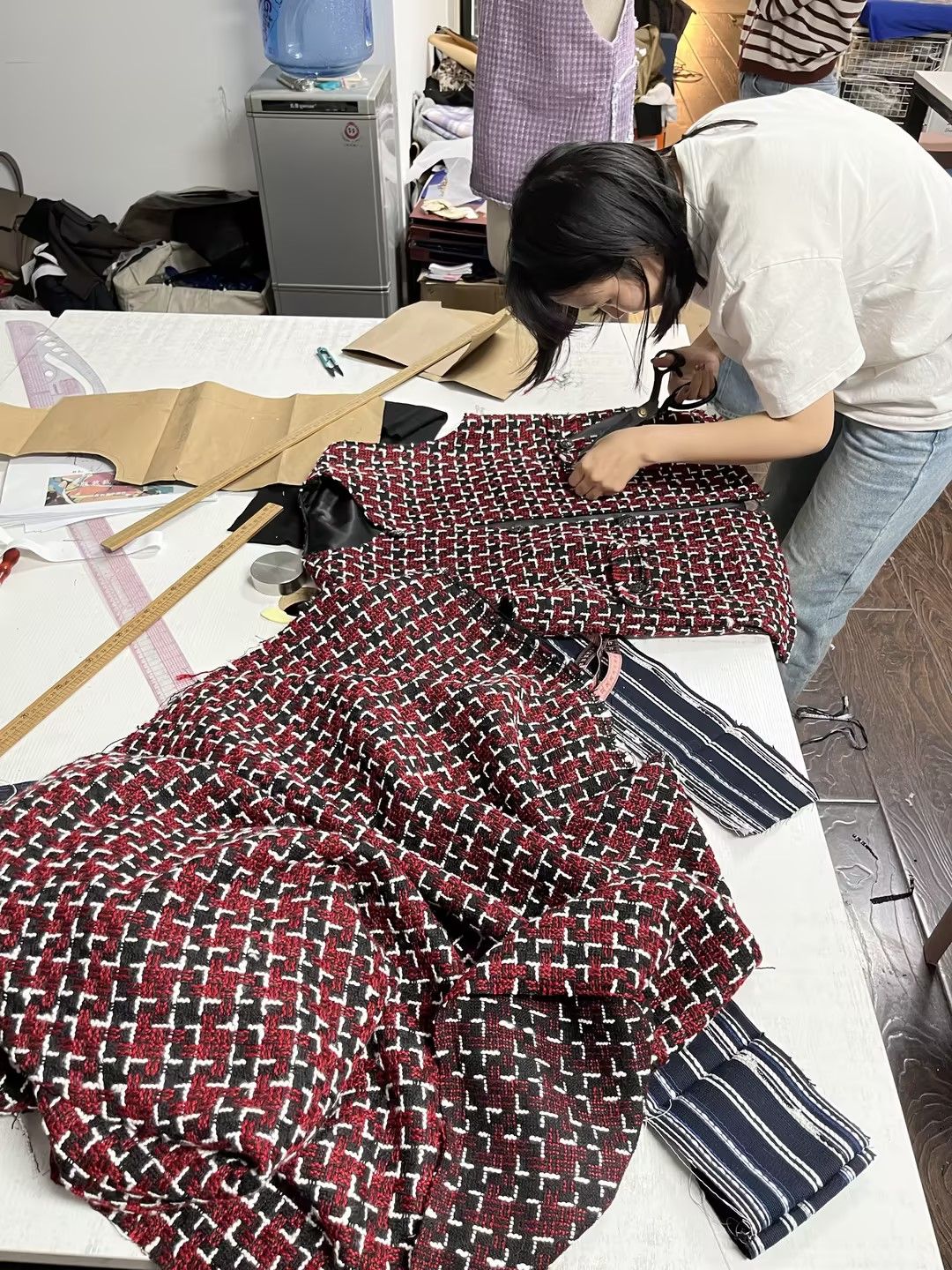
A student making a waistcoat in Tao’s class (Yang Tingting)
When TWOC arrived around 7 p.m. at Tao’s studio on a Tuesday night in January, three students were engrossed with their sewing machines. Their motivations for attending the class were unanimous—enjoyment and fun. One student in her 30s, who wanted to be identified as Yu Zhi, refers to night school as “a parallel space to working” and “a source of healing.” “When I’m having a busy period at work, I can switch gears and find solace here,” she says.
Like Su, the night class allowed Yu to fulfill her childhood passions. “I think [people in the classes] never went to any hobby classes as kids, so they’re making up for it as adults,” she says.
Others are taking their passions a step further, becoming teachers or founders of night schools themselves. Before she started her night school last year, 30-year-old Zhang Yang of northeastern China’s Liaoning province spent most of her evenings lounging on the sofa and scrolling on her phone. She began to reflect on her struggle to develop hobbies as a child from the countryside. “There were hardly any extracurricular classes for rural kids in the 1990s. The only teacher we had was a calligraphy teacher...I remember my grandmother had to give me two bottles of alcohol as a gift just to get me in,” tells Zhang Yang, who preferred to go by a pseudonym.
Last December, Zhang started her school and hired teachers to instruct in not just calligraphy, but also tarot card reading, jazz, and classical dance. She has started a WeChat group chat with over 100 potential students, including young office workers and homemakers.
Yet, the low thresholds for establishing night schools have triggered concern. An article by domestic media outlet Jiemian News last December noted that potential students who showed interest in night schools via social media would be added to a WeChat group, where they would be bombarded with relentless messages encouraging them to pay for courses. Many of the schools also lacked certified teachers, industrial standards, or even a fixed location, and were at risk of bankruptcy at any time due to their low profit margins.
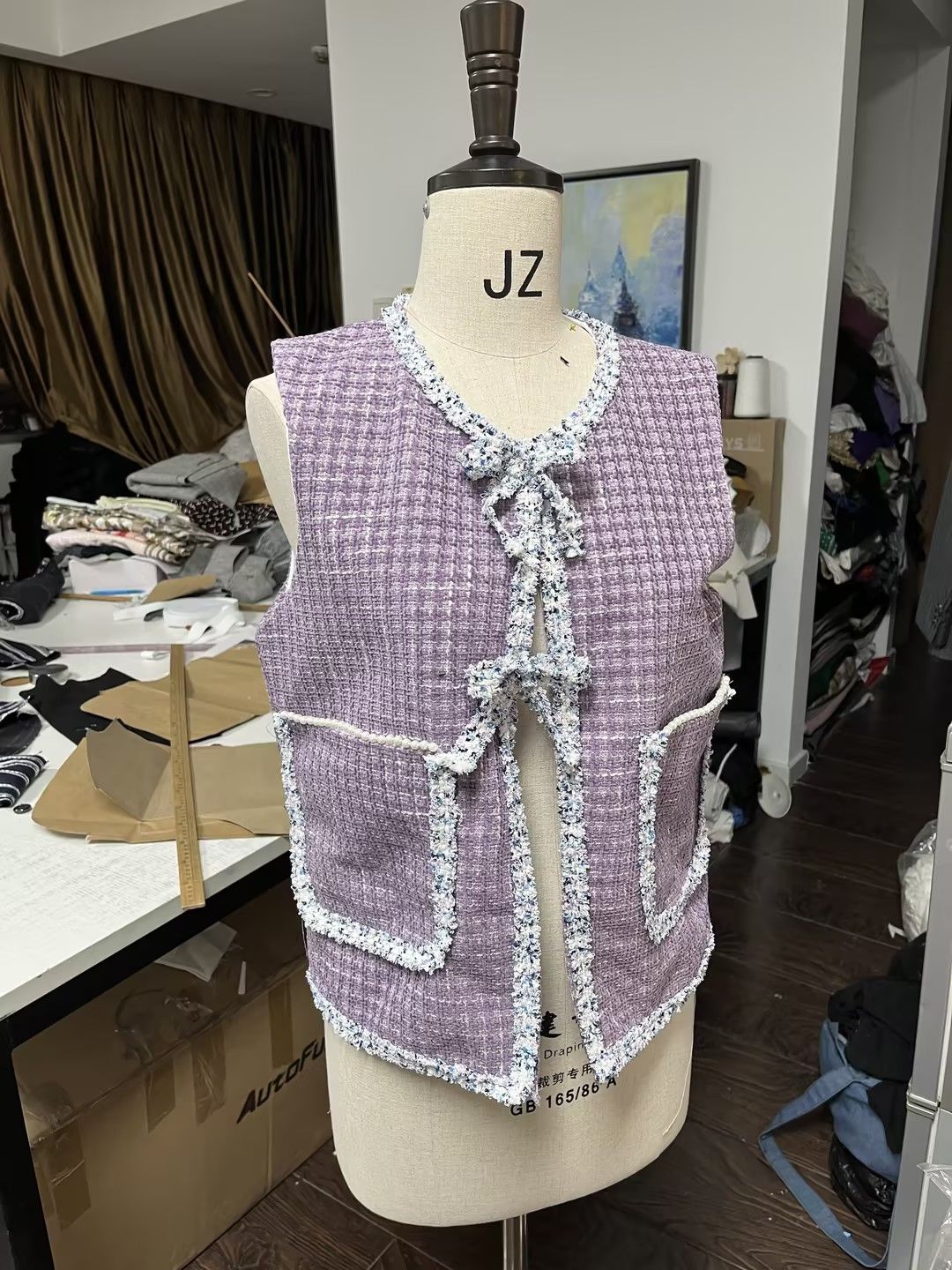
A jacket made by a student at Tao’s night school (Yang Tingting)
Su is skeptical about some of these new operations. “In a city where the consumption level is rather high, it’s hard to trust the quality of training when you pay such low costs unless the night school is funded by the government,” she says. Last year, she took a free trial Japanese language course she found online, and listened to the teacher spend over 30 minutes of the 90-minute lesson trying to sell her course.
On the flip side, schools are also worried about students’ lack of commitment, especially given the wealth of other entertainment options in major cities. “Taking 12 consecutive lessons every week for three months puts a strain on the fast-paced lifestyle of Shanghai,” says Su. “After becoming an adult, you rarely have a chance to devote so much time to learning.”
Entrepreneur Li Yan, who agreed to be interviewed under a pseudonym, agrees. Having received hundreds of private messages expressing interest in his night classes in keyboard, calligraphy, and dance, less than 200 students ultimately signed up. He tells TWOC it often takes him a whole month to recruit the minimum of eight students needed to make up a class, with many students losing interest and dropping out while they wait. “To learn a musical instrument, it’s crucial for students to follow the entire learning process instead of join midway,” he says. “The low cost means we can only offer big classes, instead of personalized instruction.”

A calligraphy class at Zhang’s night school (Zhang Yang)
Originally, Li’s training institution taught retirees in a small city in northern China’s Hebei province, and he started night classes to utilize vacant classrooms and help pay his rent after seeing the popularity of night schools in Beijing and Shanghai. Compared to these metropolises, though, the smaller population of young people in his city presents an additional challenge. “It remains to be seen whether the night school is just a fad or a sustainable market,” he says. “We are a private, for-profit company, and we can’t cover our expenses if we rely on low-priced courses.”
For consumers though, the freedom and low commitment of night classes are exactly the antidote they want for their busy and regimented daytime lives. Su says night classes have allowed her to rediscover the delight of exploration as a child. “I always wonder, whether in this era with abundant choices and information, the younger generation today actually has more or less entertainment options and hobbies than older generations did.”
Why China’s Young Urbanites Seek Refuge in Night School is a story from our issue, “Education Nation.” To read the entire issue, become a subscriber and receive the full magazine.
Related Articles