


When educational content creator Dong Yuhui livestreamed a lecture about the revered eighth-century poet Li Bai (李白) in June 2022, he was bemused to find the comment section flooded with viewers claiming Li was an assassin.
While Li is still best known by older generations as one of China’s greatest literary figures, the younger netizens on Dong’s stream knew him as a hero avatar from the video game Honor of Kings. In the game, which has over 600 million players in China, Li is one of over 100 characters players can select to fight against others in a battle arena. Historical records suggest that Li enjoyed bladework as a pastime, “but his swordplay was primarily for performance rather than combat,” Dong insisted during his livestream.
The controversy stirred debate online, with netizens pointing out other historical inaccuracies. “I was explaining some things about the female genius Cai Wenji [蔡文姬, a renowned second-century writer] to my little brother, and he retorted that Cai Wenji was a character in Honor of Kings,” read one comment under a video of the Li Bai controversy on video-sharing platform Bilibili. “I’m so sad about this...The Cai Wenji he has gotten to know is nothing but a game character,” the commenter continued. This was not the first time video games had appeared to warp people’s understanding of historical figures or events in China, nor was it considered a trivial mistake.
In August 2021, the state-affiliated Chinese Academy of History lambasted Canal Towns, a historical city-building mobile game, for its unfavorable depiction of Yue Fei (岳飞) , a famous Chinese general and military strategist from the Song dynasty (960 – 1279). “Using historical figures as game characters must never neglect the historical significance those figures embody,” the Academy, founded in 2019 to research and promote Chinese history, wrote on its Weibo account. “Games may be small, but they are significant.”
That is also true outside of China. Video games like Honor of Kings, Genshin Impact, Dynasty Warriors, the Japanese Romance of the Three Kingdoms franchise, and Europa Universalis IV shape how hundreds of millions of players worldwide view Chinese history and culture. But games like these, either set in the country or featuring it, often bend the truth or present oversimplified versions of complex historical events or cultural references.
Video games are primarily creative endeavors, but for ones with historical or cultural references, it can be hard to tell where the real lore ends and game makers’ imagination begins. Some game makers have made extra efforts to represent Chinese history and culture in their games accurately, while many players argue games can be an entertaining introduction to a culture or topic for further study.
Yet including all the nuances of history in a game about, for example, China’s role in global trade during the 17th century, or the effects of flood on people living during the Three Kingdoms period (220 – 280), is impossible for even the best, most well-funded franchises.
Total war, partial confusion
Take Total War for example. The critically acclaimed franchise of strategy games developed by British game studio Creative Assembly is known for its detailed historical settings. The most successful game in the series at launch is Total War: Three Kingdoms, released in 2019 and set in third-century China. It has been well received both outside and inside China, with players praising its interesting fusion of real history with action.
Aside from featuring real historical events and figures, the game also employs a color-coding system loosely based on the ancient Chinese concept of “Five Agents (五行)”—fire, water, wood, metal, and earth—to structure gameplay. Upon closer inspection though, Total War’s game mechanics are, in essence, an expanded version of rock, paper, scissors, with history fluff tacked on to give it the Three Kingdoms flavor.
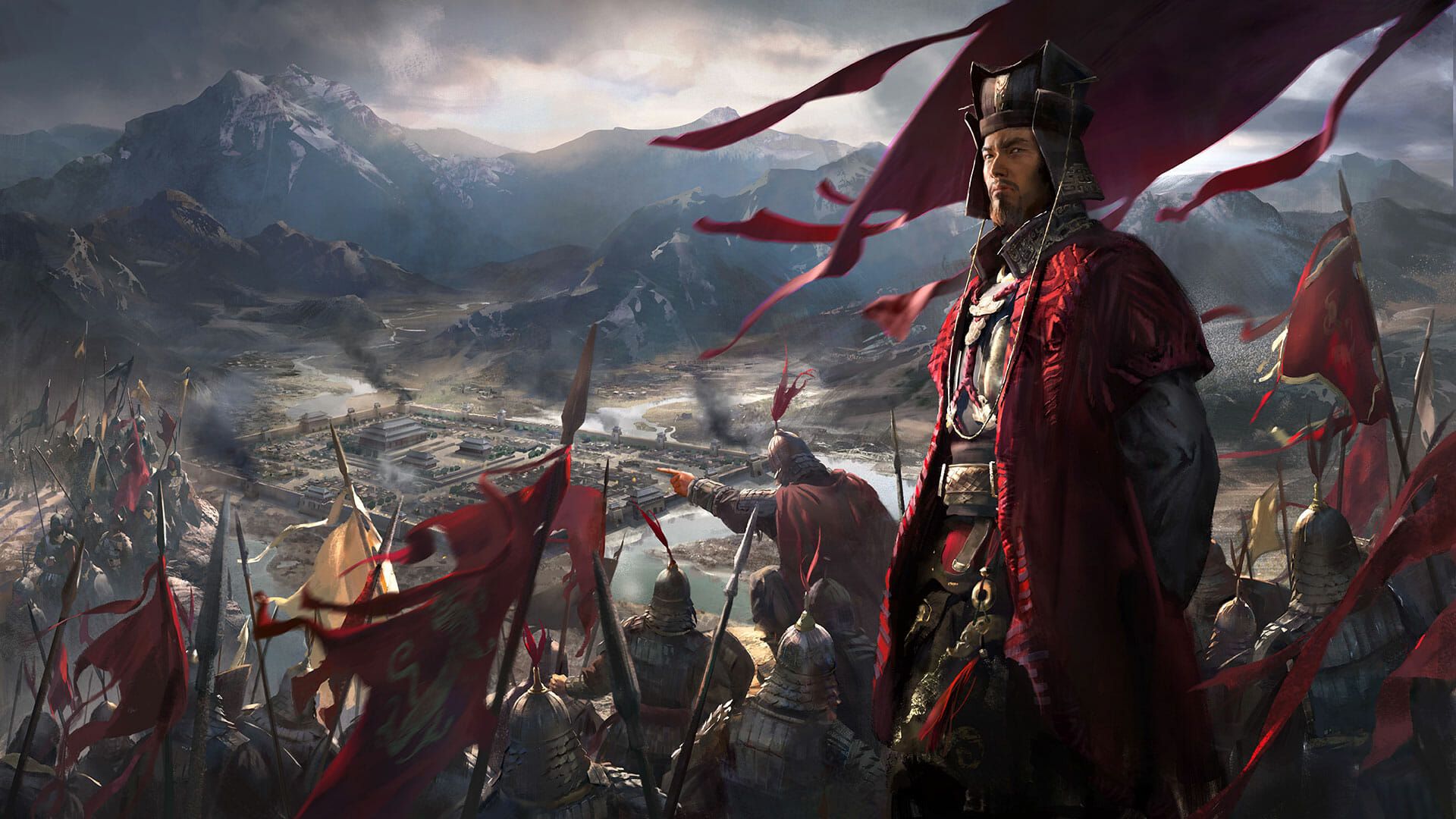
Games often advance an individualist model of history where the action of one hero has immediate macro-level effects, glossing over other factors that influence historical outcomes in the real world (Total War: Three Kingdoms)
Historian and video game researcher Andrew Denning from the University of Kansas argues that such game mechanics, primarily designed with fun and playability in mind, may distort our perception of the real history they appear to simulate.
“Video games (like films) follow narrative conventions and often advance an individualist model of history,” wrote Denning in a 2021 research paper published in The American Historical Review. “Narrative-driven video games therefore rarely explore one of the most foundational concepts of historical study—contingency.”
This is evident in the popular historical strategy game Europa Universalis IV, launched by Swedish company Paradox Development Studio in 2013, where players control a nation and develop and expand it from 1444 to 1821. In the game, various actions can trigger the collapse of the Ming dynasty—an outcome so common that it became known as the “Mingplosion” among players. This phenomenon reflects a sort of historical determinism hard-coded into the game, making it seem as though the collapse of the Ming was inevitable, glossing over the complex reasons that produce such outcomes in the real world.
Another example is the game’s trading system, with trade—including that from China—only ever flowing in the direction of Europe (because that’s where the “trade end nodes” are placed in the game), producing “a massive deterministic geographic advantage for Europe which just didn’t exist,” explains Bret Devereaux, a historian from North Carolina State University, in an analysis of the game on his blog. Playing a game like Europa Universalis IV may lead to “a particularly geopolitical view of history as a matter of territory and resources…that suggests, for example, that the US and China must come into conflict in the coming decades, or that Russia possesses certain justifiable incentives to invade and attempt to annex Ukraine,” Denning tells TWOC.
Europa Universalis IV and other games take on complex topics but reduce them to numbers on an interface impacted in binary ways by dice-roll mechanics. Slavery, for example, is included as a minor part of the game that mainly affects players’ revenue. Players can colonize “empty” regions in North and South America, Africa, and Asia, and select a policy toward the native population (ranging from trying to assimilate them harmoniously, or deliberately wiping them out). Ming China operates a tributary system and must ensure “harmony” in the empire by bringing neighboring states into its orbit, by force if necessary. The problem, according to Devereaux, is that “consequences of state action on real people are never brought meaningfully before the player’s eyes in direct response to that player’s action.”
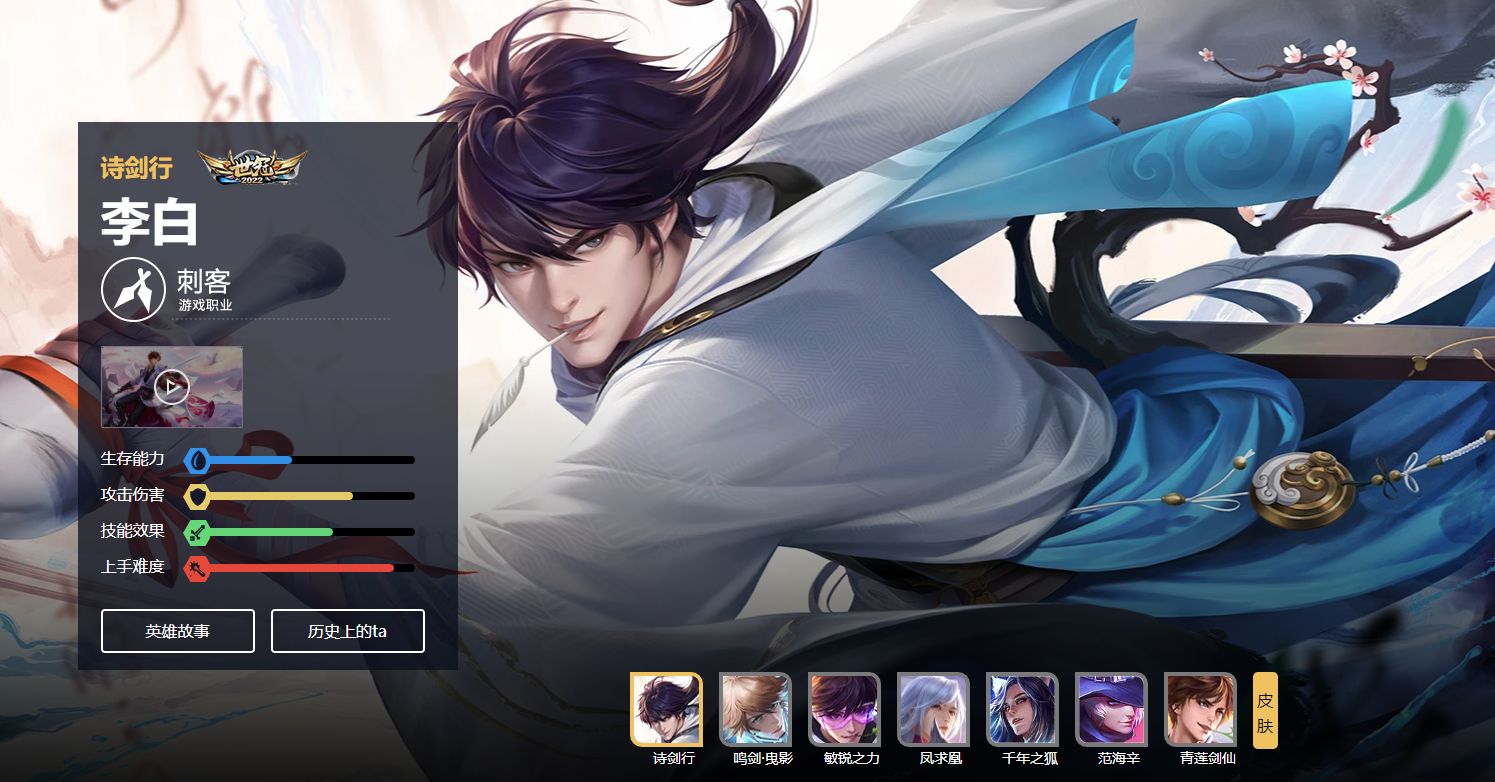
Hero pane for the Honor of Kings character Li Bai on the official site (Honor of Kings)
Learn to play, play to learn
Despite the oversimplification, games are an increasingly important way for millions to learn about China and its history. However, exactly how significantly they alter people’s views of history remains debated in academia. In 2023, when a team of researchers from Jiangsu Normal University asked university students what kind of effect they believed playing Honor of Kings had on them, only 16.5 percent thought the game had any impact on their understanding of history. However, the survey showed that players were more likely to link historical figures like Li Bai to counterfactual descriptors like “assassin,” especially those with less education in humanities, Lü Guangbin, one of the authors of the study, tells TWOC.
Many gamers are eager to learn more about the historical settings and characters after they play. A YouTube content creator who goes by the handle Serious Trivia launched a channel to educate players about the broader historical perspective behind games like Total War: Three Kingdoms. The Chinese-American in his early 30s has amassed over 34,000 followers since he started the channel in 2019. Players often leave comments under his videos asking detailed questions about how game systems and our perception of history can interfere.
“There are common questions like why was the city of Hefei sieged so often…or why didn’t the Kingdom of Shu Han try to expand to the west or the south. Most of these misconceptions stem from biases formed from playing video games...people do not realize the importance of rivers for supply transport in the case of Hefei and that land by itself does not magically produce resources without population—like in video games where you can just conquer and put a building down to generate resources,” he tells TWOC.
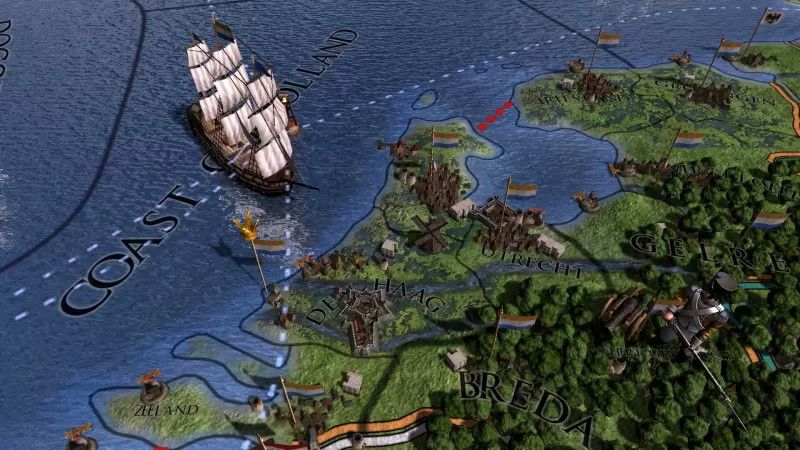
Europa Universalis IV gives Europe a geographical advantage for trading that did not exist in reality, possibly distorting players understanding of historical trade flows (Europa Universalis IV)
Serious Trivia’s channel features a whole video series dedicated to the history behind the Total War: Three Kingdoms game, with many players praising its educational value in the comment section. “It was a blast playing through...fully understanding the context and motivations,” writes one commenter on YouTube, suggesting that the extra content may help understand the historical complexity that the game alone fails to convey.
Some game makers focused on China have begun relying on third-party educators to enable better learning. Tencent has published a series of video lectures on Honor of Kings explaining the real lore behind in-game characters like Li Bai. And when Total War: Three Kingdoms was launched, the marketing campaign included partnerships with educational content creators like Serious Trivia and OverSimplified whose brief Three Kingdoms history has been watched over 34 million times.
Video game and literacy researcher James Paul Gee from Arizona State University believes games can be effective teaching tools because they allow a combination of practical problem-solving and subsequent theorizing passionate players tend to engage in.
“Many people think of history—as an academic discipline—as a factual story of what happened in the past. But history...is about not just description but explanation: Why did things happen as they did? Could things have been different? Was X the real cause of war Y? How do causes even work in history? This is where history games could make a difference,” says Gee. “They can put people into alternative histories.”
Games could also improve understanding of China, Gee believes. “If you consider the President of China...it is clear that there is a logic to many of his decisions based on his views of history, the Chinese people, and his past experience...A game could clearly show his logic as a set of strategies for solving problems many countries face now and have faced in the past.” The game could put these problems in a fantasy setting to remove any biases for or against China, it could offer players other choices and could show how different outcomes arise from many variables, including ones people have no control over. This way, “Learning about the Chinese might not require learning directly about the Chinese,” Gee says.
In the case of Honor of Kings, however, players have noticed that Tencent has stopped creating history-inspired heroes—probably much to the delight of Dong Yuhui, who lamented on his livestream that he would be upset if his future children grew up associating the likes of Li Bai with game characters.
“Making history-inspired heroes is just too risky, you never know who might get offended,” wrote one player on China’s biggest gaming forum NGA in January. Nevertheless, video games might still be the best way to get teenagers interested in a poet who lived 1,300 years ago.
What Video Games (Don’t) Teach Us About China is a story from our issue, “Viral Attractions.” To read the entire issue, become a subscriber and receive the full magazine.
Related Articles



