

On a sleepless night, Lin is once again trying to rescue a goose buried beneath a pile of steamed food. On the glowing screen, corn, steamed rolls, and stuffed buns stack into a chaotic puzzle as she clears them three at a time. Her thumb darts across the tiles, sometimes flicking upward as if tossing a wok to uncover what’s hidden beneath. If she fails, sharing her result on WeChat, which also hosts the game, unlocks another chance. For the 22-year-old college graduate from Zhejiang, playing Catch the Goose has become a daily ritual. Each round lasts under five minutes, but she’s racked up more than 200 hours total, as the mix of simple mechanics and social triggers repeatedly pulls her back.
Lin’s habit reflects a broader shift in China’s gaming industry. Seamless access through major social media and lifestyle platforms such as WeChat, Douyin (China’s version of TikTok), and even Alipay has made mini-games, or “xiao youxi (小游戏),” a fixture of everyday digital life. Built for quick play and light competition, mini-games are catnip for fragmented attention spans. Lin, who agreed to reveal only her last name, estimates she has spent over 1,000 hours playing more than 240 titles spanning RPGs to card games, drawn by their simple gameplay and integration with social media. “You can play them directly on WeChat without extra downloads,” she says. “And because it’s inside the social platform, it’s easy to bring friends in. Just share the mini game, and it becomes a group activity instantly.”
Back in 2017, when China’s mini-game boom began, Lin was among the format’s earliest fans. At the time, these games were often dismissed by hardcore players as barely “real games,” rather ad-heavy copycats of preexisting games. Yet these smaller titles have quietly become one of China’s largest gaming markets. According to marketing consultancy DataEye Research Institute, China’s mini-game industry was worth approximately 61 billion yuan in 2025 and is estimated to surpass 70 billion yuan this year. As both users and revenue grow, the industry has drawn developers, publishers, and gaming companies in droves. And as larger studios step in, mini-games are moving away from crude replication toward richer mechanics, tighter gameplay, and crafted design.
Read more about gaming in China:
- Let the Wind Take You: Inside China’s Latest Sprawling Wuxia World | Review
- The Fear Within: Can China’s Horror Game Developers Overcome Genre Malaise?
- Last Logout: The Memories Left Behind When World of Warcraft Ended in China
The start of China’s mini-game boom can largely be traced back to Jump Jump, a jumping game launched in 2017 to promote WeChat’s mini-program system, with its start screen brazenly declaring that “playing mini-games is the real thing.” Other major social media platforms followed suit, with Douyin releasing the self-developed tile-hop game Music Jumping Ball in 2019. The space has since expanded rapidly: mobile ecosystems are now packed with bite-sized, addictive titles, turning apps into all-in-one entertainment hubs, rather than simple message and short video platforms. The category has also drawn attention from global developers. When Finnish studio Supercell rereleased its 2016 multiplayer battle hit Clash Royale as an in-app game on WeChat in December last year, it won players over with its vertical format and short play sessions, while retaining the original version’s core competitive mechanics and social features.
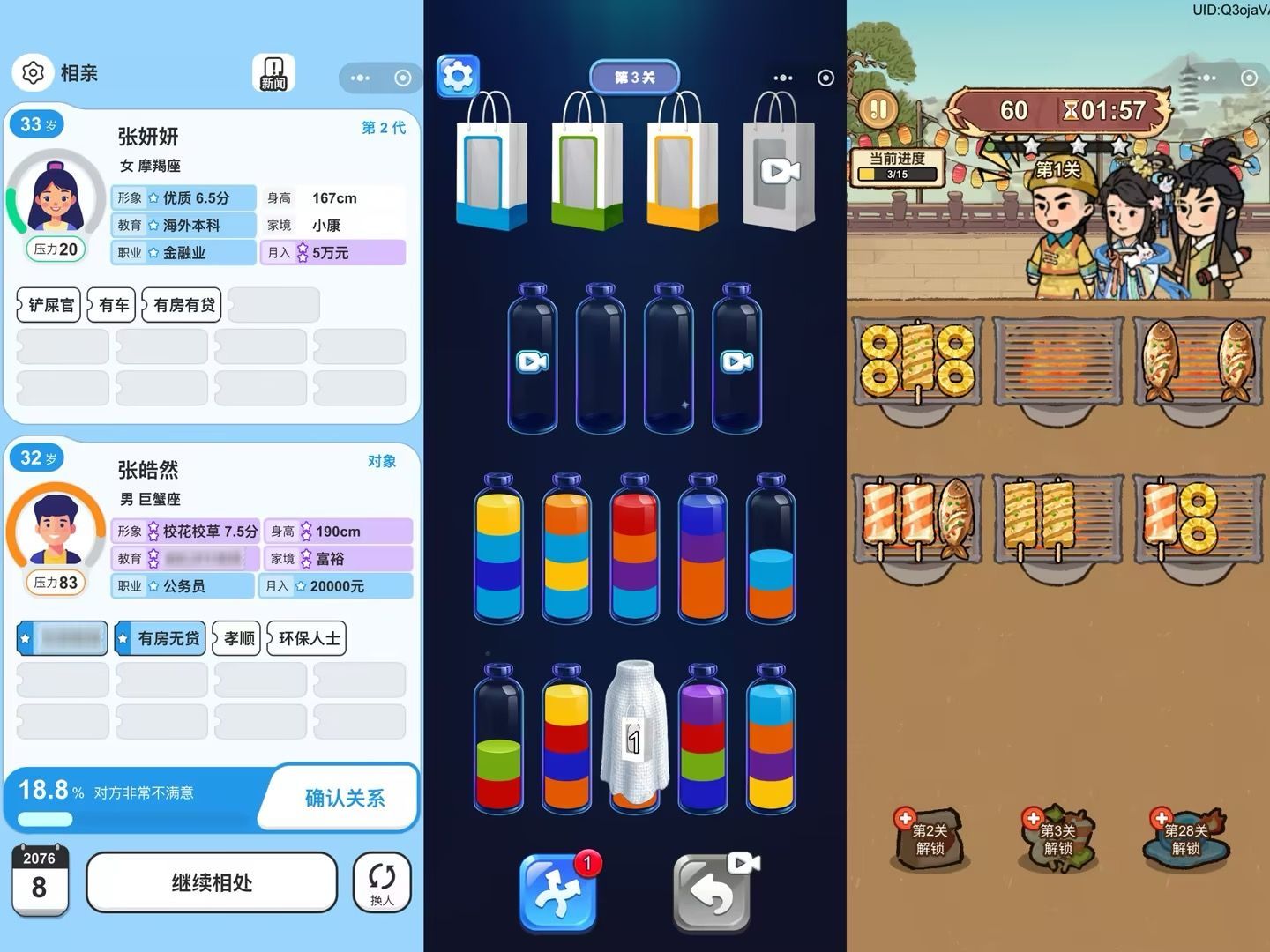
Driven by addictive gameplay and diverse themes ranging from blind-date stimulations to barbecue puzzle challenges, mini-games can easily keep players engaged for hundreds of hours (screenshot from Matchmaker on Paper, Relaxing Skewers, and Pouring Master)
While mini-games have evolved into more complex forms over the past decade, they continue to draw new adherents for their short-form, fast-paced gameplay, making them easy to grasp, hard to quit, and endlessly replayable. They now span genres as diverse as action-adventure, action role-playing, and massively multiplayer online games. Tens of millions of fans have turned to Sheep a Sheep (2022) for its comic-style visuals, catchy music, and deceptively punishing tile-matching gameplay; Nobody’s Adventure Chop-Chop (2023) casts players as a humble monster grinding toward immortality through light strategy and randomized gear drops; and Pouring Master (2025) strips things back entirely, tasking players to sort colored liquids into matching bottles.
For Song Dan, a 28-year-old who works in finance, mini-games offer a low-pressure alternative to traditional mobile titles. “In games like Honor of Kings, teammates might scream at you, and quitting mid-match will bring you backlash,” Song tells TWOC. “But with these casual mini-games, that won’t happen—most of them don’t require teaming up, so it’s your own solo game. Whether you win or lose, or if something suddenly comes up mid-game and you just bail, there’s no external pressure forcing you to see the match through to the end.”
Once a niche for small studios, China’s mini-game sector has rapidly evolved into a regulated, state-backed industry reshaping local economies and attracting major developers. Hainan’s Lingshui county has built a mini-game hub that hosts more than 100 companies and 200 developers, while Guangzhou issued a series of supporting policies for gaming and e-sports sectors, including an annual development subsidy of up to 200,000 yuan to selected small- and medium-sized game studios last December. In an attempt to build a leading national hub for the mini-game industry, Wuhan now offers a full first-year rent exemption to attract mini-game teams, companies, and service providers from across the country.
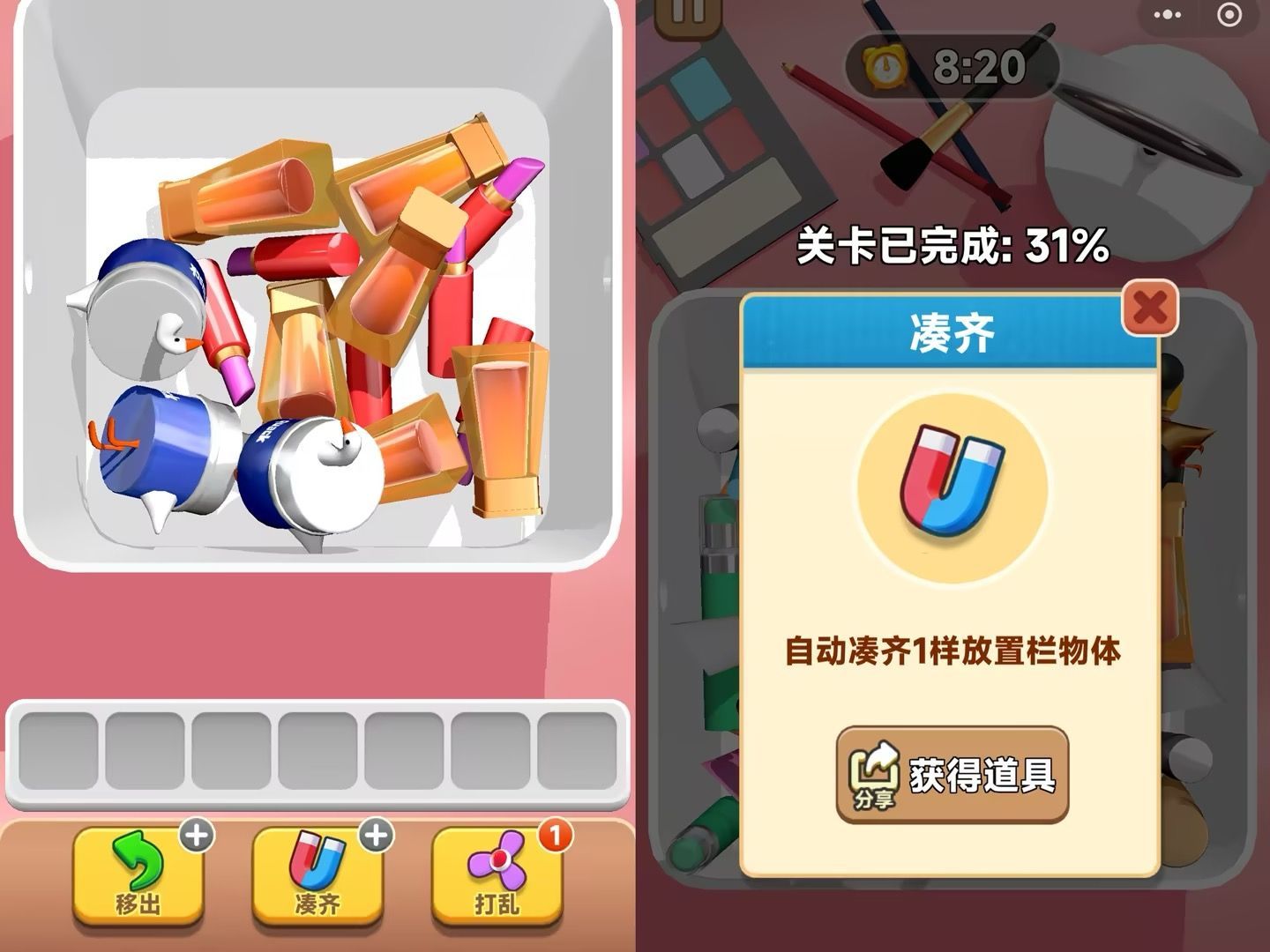
Despite boasting millions of users on WeChat, Catch a Goose has faced complaints over its intrusive in-game ads, which constantly push players to watch or click ads in exchange for extra lives or tools, rewards, and faster progress (screenshot from Catch a Goose)
Local authorities are also staging one-off collaborations, such as integrating Chongqing’s sprawling Hongya Cave shopping complex into Catch the Goose’s backgrounds, as well as a themed online event featuring limited-edition “hotpot-themed” characters, inviting millions of WeChat players to engage with the megacity’s local culture.
Meanwhile, industry giants such as Tencent, NetEase, Perfect World, and Century Games are testing the waters by launching mini-game versions of big-budget titles, such as Century Games’ survival strategy game Whiteout Survival, or reallocating teams to explore this fast-growing market. “As more major players and capital enter, competition has become much more intense,” says Yu Chaoxin, who started in the industry as a mini-game publisher in 2017. “That pressure forces developers to level up and focus more on quality.”
Yu says that, compared with other traditional mobile titles, mini-games are relatively developer-friendly. “The review cycle is shorter, platform support is stronger, and both development costs and technical barriers are lower.” The 31-year-old notes that publishing approvals for mini-games on WeChat can be as quick as two weeks—compared with months for traditional titles—and include platform services such as registration support and built-in traffic distribution.
These factors have helped to turn mini-games into an accessible alternative in China’s tightly regulated mobile gaming market. Game publishing has long been constrained by licensing requirements, with new titles, especially from independent studios, unable to officially launch or generate revenue without a game license. Mini-games, therefore, emerged as a low-cost, loosely regulated alternative that allowed developers to bypass these requirements.
According to Yu, unlike traditional mobile games, whose earnings rely on players making in-app purchases (IAP) for items or to unlock levels, mini-game developers primarily monetize through in-app advertising (IAA) to sidestep licensing restrictions that have long favored large companies.
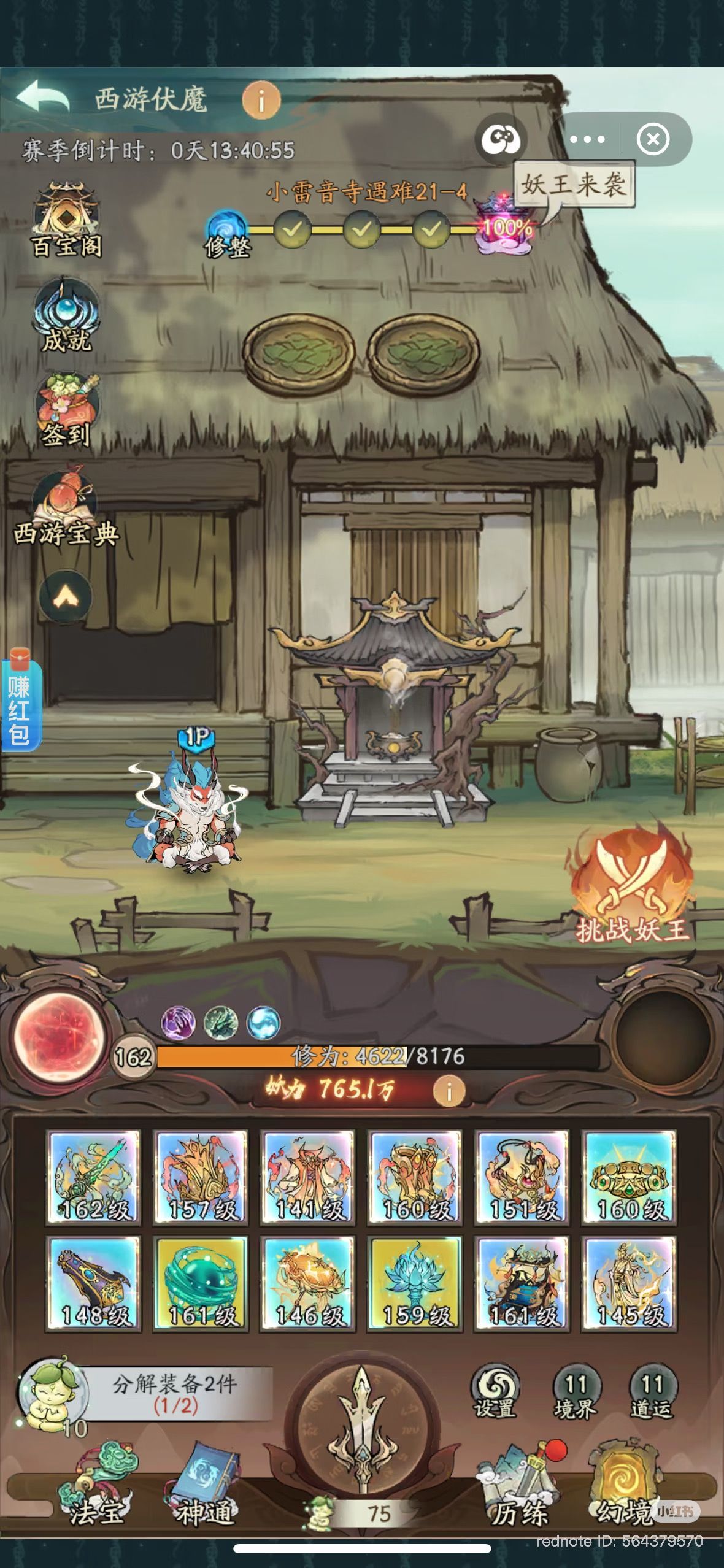
Nobody’s Adventure Chop-Chop, adapted from the blockbuster hit Nobody, has drawn tens of millions of players for its light strategy, classic ink-wash visuals, and random loot drops. Players can take the role of a humble monster on the path toward immortality. (Screenshot from Nobody’s Adventure Chop-Chop)
However, such tactics have also drawn their fair share of criticism. Players often complain about intrusive ads that disrupt gameplay, sometimes requiring forced viewing or sharing on social media to continue playing or earn rewards. Some ads even feature pornographic or scam-related content. In 2023, the Anhui Consumer Protection Commission conducted a three-month investigation into 40 mini-games on major platforms, including WeChat and Douyin, and found that over 90 percent featured ads, many of which contained violent or vulgar content, prompting calls for stricter regulation and removal.
Song recalls her frustration with playing the viral hit Sheep a Sheep in 2022, where ad-driven mechanics—requiring players to watch or click ads for extra lives, tools, rewards, or faster progress—dominated the gameplay. But she says the mini-game experience is improving overall. “In the past, you had to watch ads or share constantly,” says Song. “Now you can play freely as long as you remain within the daily play limit, and you only need to watch ads or share once you exceed it. I feel like that’s a step up from how things were a year or two ago.”
China’s low entry threshold for the mini-game sector also fueled a flood of copycats. An industry insider told tech media outlet 36Kr in 2024 that about 99 percent of mini-games were variations on existing hits, often built on shared mechanics with only superficial aesthetic changes. Yu says this reflects structural constraints rather than deliberate imitation. “[The industry’s] success rate is low and speed matters,” he explains. “Simple mechanics like rock-paper-scissors are widely reused and reduce risk when budgets are limited.”
He adds that the situation is shifting as AI tools become increasingly used. “With AI now helping in art, coding, and production, more resources can be focused on original design and creativity.”
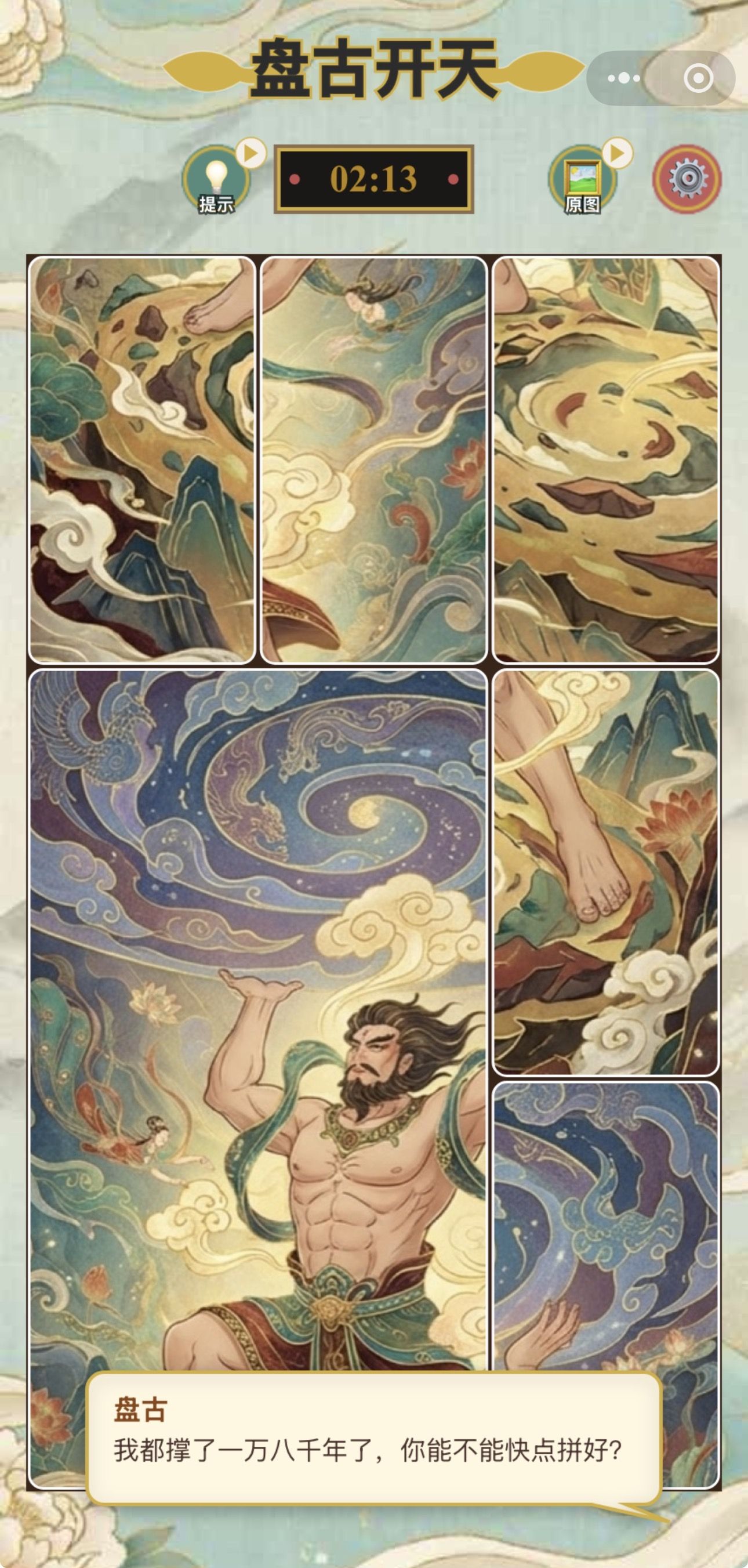
National Treasure Puzzle allows players to explore ancient dynasties and classical texts, including Dream of the Red Chamber, Romance of the Three Kingdoms, and Classic of Mountains and Seas, through its gameplay (screenshot from National Treasure Puzzle)
Yu has witnessed AI’s efficacy firsthand. This February, he released National Treasure Puzzle, a Chinese history-themed puzzle mini-game in which players match artifacts and historical elements while learning about dynasties, related chengyu, and classical texts. Using AI-assisted programming and design, he developed it in two weeks for just 1,000 yuan; far lower than the 100,000 yuan he estimates it could have cost otherwise. “I wanted players to have fun while learning something at the same time,” Yu says.
At the same time, he also remains cautious about overreliance on AI. For example, Yu spent nearly a week fact-checking the visuals, text, and code related to a chapter based on the Han dynasty (206 BCE – 220 CE) compilation of mythological geography and beasts, Classic of Mountains and Seas (《山海经》), in comparison to roughly a day for other chapters. “AI helps generate content, but you still have to check everything piece by piece,” he says.
Since its release this February on WeChat, Yu’s game has drawn more than 50,000 players, a modest figure that he partly attributes to early promotion via the platform in the form of articles and advertising on Moments and in other mini-games. “When early promotion works and the game’s content is inherently shareable, natural traffic picks up on its own,” he adds.
Yu’s approach mirrors a broader trend in China’s thriving mini-game ecosystem. Many developers rely not just on in-game virality but also on deliberate exposure through social media, including short videos, in-app links, and Moments shares. Data shows that advertising has become a major growth driver for the industry, with daily spending across major platforms such as WeChat reaching tens of millions of yuan in 2025.
Some, however, complain that the ads often overpromise and underdeliver. “It’s pure bait and switch,” Lin, the mini-game enthusiast, says. “When I click and see it’s not what’s advertised, I just quit. I won’t let them trick me.”
For Yu, the key to keeping players engaged remains compelling gameplay. “At its most fundamental level, it comes down to whether the game is just plain fun...When someone plays a game, they always come to it with their own motivations and needs. Some want to socialize, some want to relax, some are looking to escape real-life pressures and immerse themselves in something different,” he explains. “The best way to retain players is to make sure they’re enjoying themselves, and, almost without them realizing it, are picking up something new.”
The Rise of China’s Mini-Game Industry is a story from our issue, “I, Humanoid.” To read the entire issue, become a subscriber and receive the full magazine.
Related Articles