

In Walovi’s pre-World Cup marketing campaign, Norway and Manchester City striker Erling Haaland is a character in a fever dream. The chaotic minute-long ad starts out normally enough, with the Norwegian star striking balls on the pitch. But in the blink of an eye, there he is, wielding foot-long barbecue skewers and breathing fire outside a Georgian country house, quenching the flames with a refreshing can of Chinese herbal tea that fortuitously materializes in his hand.
Behind the surreal video is a song already familiar to soccer fans worldwide. Remixed and reworked in the Walovi ad, the fan-made chant was originally adapted from the 1979 Eurodisco classic “Moskau,” the lyrics replaced by tales of Haaland’s career history and on-field exploits. The irresistibly catchy beat turns the striker’s name into a DJ-style electronic loop, with a Mandarin-friendly refrain that has seen it go viral across China’s short-video platforms: “Ha ha ha Haaland, hey!”
Haaland’s memeability, combined with his goalscoring prowess for Manchester City and Norway, has earned him a reputation in China that now stretches far beyond the sport that made him famous. The 26-year-old has become a fixture of the country’s digital life, with his iconic blond bun and easygoing personality helping transform him from a soccer star into a viral internet icon.
Learn more about Chinese fans at the FIFA World Cup:
- Talk Like You Care About the FIFA World Cup
- Remembering China’s Fleeting Moment in World Cup History
- China’s Team Didn’t Make the World Cup, But These Fans Did
Even before the World Cup began, Haaland-related posts had amassed hundreds of millions of views on Chinese social media. Clips of his exaggerated expressions—wide-eyed stares, awkward smiles, and dramatic gestures—along with his nonchalant goal-scoring style have been quickly repackaged into stickers, memes, and short videos, with fans comparing him to everyone from the Dragon Ball Z villain Majin Buu to the Mona Lisa. Along the way, his inimitable personality has drawn many young Chinese closer to the sport.
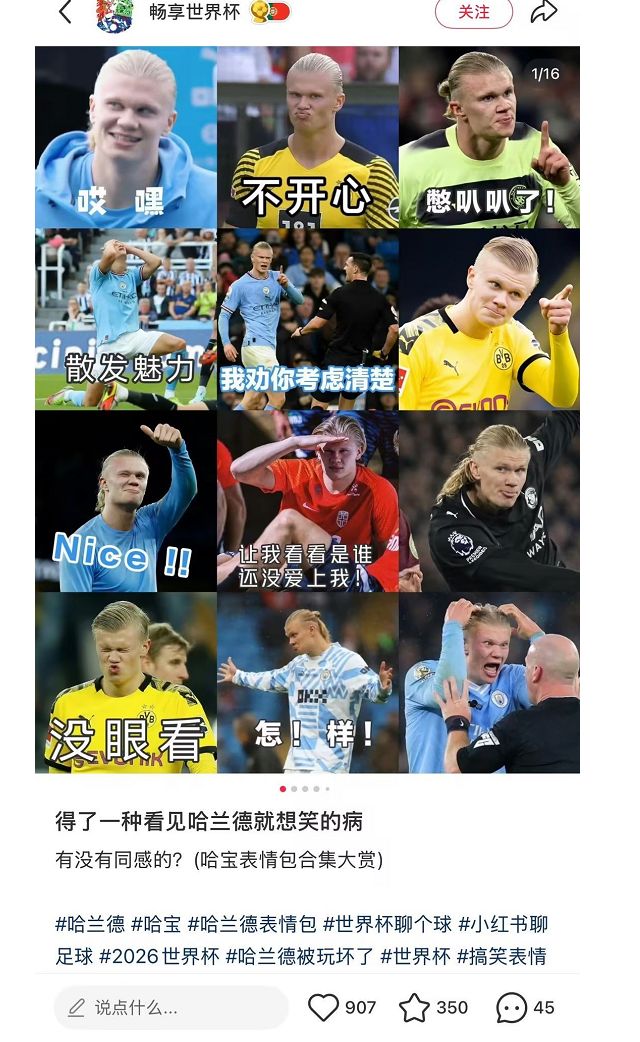
Many fans have turned Haaland’s iconic facial expressions and impressive on-field moments into a flood of funny memes, with even major state media accounts such as China Media Group joining the craze (screenshot from Xiaohongshu)
For fans like Eileen, an elementary school teacher in her 20s from Guangxi, the attraction began with humor but has deepened over time. “The first time I saw him, I thought he was funny and a bit goofy,” she says, recalling the many humorous moments she has seen online. “But the more I learned about him, the more I realized he is much more than the memes; he’s a really likable guy.”
Looking back on his career over the years, Eileen recalls one particular moment that has stayed with her. After the 2021 German Super Cup game against Bayern Munich, when Haaland was still playing for Borussia Dortmund, a child in the stands held up a sign asking for the striker’s jersey for his birthday. Instead of simply tossing it toward him, Haaland acrobatically vaulted over three advertising boards to hand-deliver his shirt to the boy. “On the pitch, he is a top-level striker. Off it, he feels remarkably approachable,” says Eileen.
Approachability is central to Haaland’s appeal: a rare example of an elite global sports star who always seems to be in on the joke. In a widely shared clip from Norway’s group-stage match against Senegal, he casually drinks from the opposition goalkeeper’s water bottle during a break, before pausing to offer him a sip. His sense of humor inspired a wave of comments online. “Such a considerate guy, Haaland never forgets to check in, even while taking a drink,” read one of the most liked.
The meme cycle has only expanded Haaland’s reach. After launching his Douyin account in early June, he posted a video of himself meditating against the backdrop of a Norwegian fjord, eyes closed, to the Chinese rock classic “Norwegian Wood” by Wu Bai. The clip quickly went viral, with many netizens joking that his ancestry had been awakened by the song. Within three days, his account had racked up over a million followers. In another post, after his hairband became an online sensation during his World Cup debut, Haaland shared a tutorial on Douyin demonstrating how he ties his hair, which received over 1 million likes in a week.
Haaland’s willingness to embrace China’s meme culture firsthand has further endeared him to the country’s fans, with many affectionately calling him “Habao (哈宝)” or “Ha Baby,” a nickname that contrasts his physical dominance with his amenable charm. When Chinese fans jokingly urged him to “eat the Chongqing monorail” as part of a viral trend, he responded with a video in which he theatrically performed the act while letting out a burp. This exchange blurred the line between fan culture and player participation, turning meme culture into a collaborative creative exchange between idol and fan.
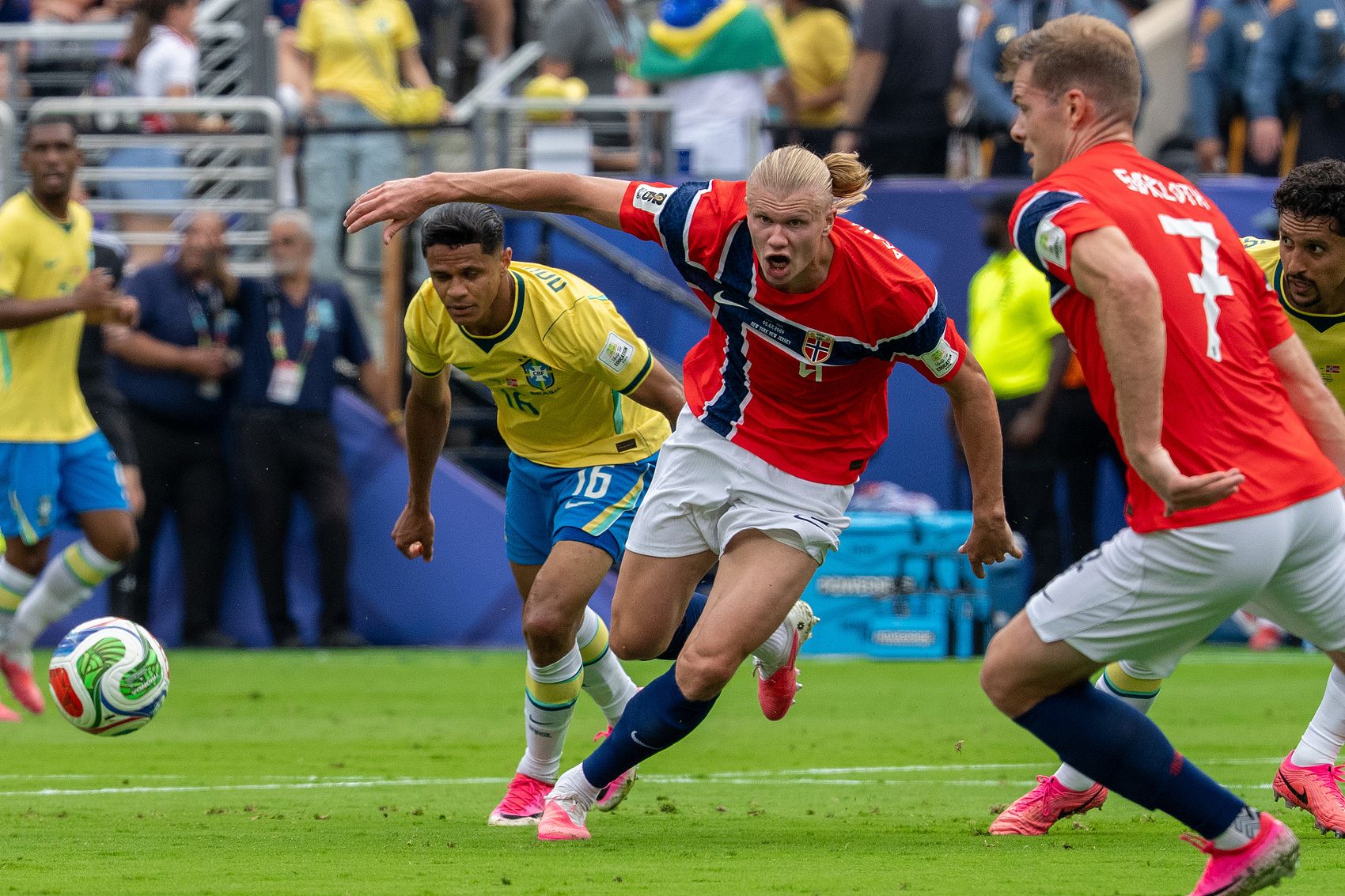
Dubbed a goal-scoring machine, Haaland has scored seven goals from just 18 shots at this year’s FIFA World Cup, tying Kylian Mbappé and Lionel Messi for the tournament lead while helping Norway reach the quarterfinals for the first time (VCG)
These interactions have fueled a surge in creativity among his followers. A software engineer who goes by the pseudonym Tudou now spends hours creating and sharing AI-generated art depicting Haaland on Xiaohongshu (RedNote), from reproducing his iconic meditation pose to cartoon-style emojis inspired by his tournament performances. “His funny moments are the perfect material for fan creations,” says the 35-year-old, who finds joy in making content that resonates with fellow Haaland enthusiasts.
For Eileen, these memes are a fun way for people to express their love for him. “The contrast between his fierce on-pitch image and these playful edits is off the charts—and it really bridges the gap between him and his fans,” she says. “As long as it’s good-spirited and doesn’t cross into mockery, this is exactly what great fan culture should look like.”
Haaland’s unique appeal to his Chinese fans hasn’t gone unnoticed by the country’s advertisers, with Walovi, the nearly 200-year-old herbal tea brand, just one of many to have drawn him into a wave of absurd, surreal, and tongue-in-cheek marketing efforts that lean into his larger-than-life persona. In a campaign for the Chinese home appliance brand Midea, he bench-presses a washing machine while running on a treadmill. Another Clear Men Shampoo commercial shows him dramatically whipping his iconic long blond hair in slow motion. “It’s so funny and impressive,” says Eileen, who enjoys sharing clips of his ads on Xiaohongshu, where they garner thousands of likes and comments.
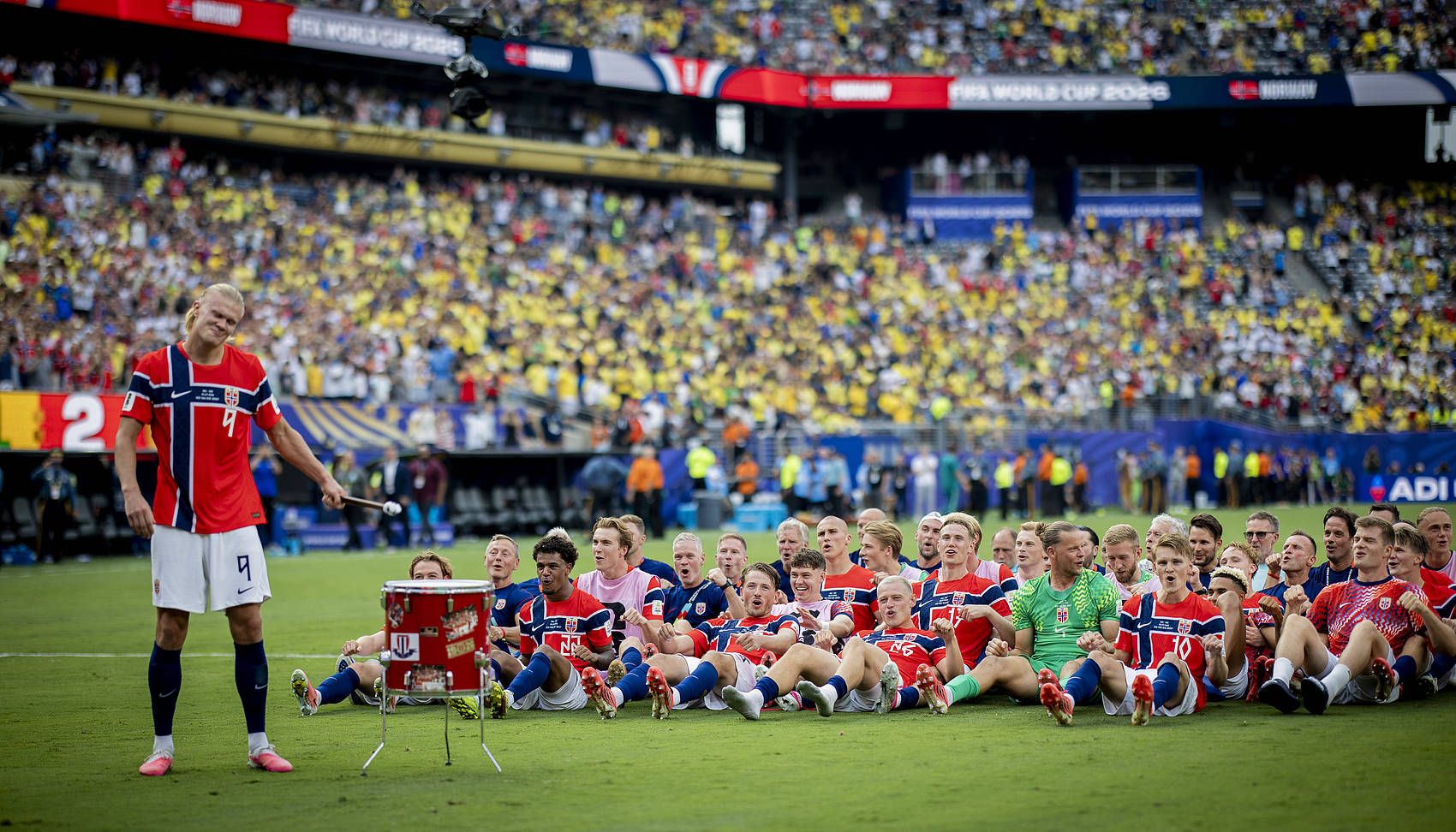
Accompanied by a pounding beat, the now-iconic “Viking row” has become the signature celebration of Norway’s remarkable run at the World Cup (VCG)
Beyond the exaggerated and self-referential humor, many fans see in Haaland’s sporting achievements a source of genuine inspiration. In the second game of Norway’s long-awaited return to the World Cup knockout stages, Haaland delivered a historic performance, scoring two late goals in a stunning 2-1 win over Brazil to send his country into their first-ever World Cup quarterfinal. The victory represented not only a milestone for Norwegian soccer but also a memorable upset against one of the tournament’s giants.
Yet even here, Eileen says, his appeal goes beyond the on-field numbers. In his post-match interview after Norway’s group-stage game against France, Haaland openly admitted his opponents were the better side, and after their win against Senegal, in which Haaland scored two decisive goals, he used the moment to praise his teammates rather than accept the plaudits himself. “He always speaks frankly and honestly,” says Eileen, “he’s very genuine and down-to-earth.”
This sense of authenticity resonates strongly with young Chinese audiences, who are increasingly drawn to athletes who feel genuine and relatable, rather than detached icons with polished public personas. Haaland’s fan, Tudou, readily admits that the athlete’s personality is what first drew her to follow the tournament more closely. “I wasn’t really a soccer fan,” she says, “but I kept seeing clips and memes about Haaland online, and something just pulled me in. I still don’t really understand the game, but I can tell immediately that he’s a goal-scoring machine. Now, whenever I see him, I find myself looking forward to his next goal and wondering how he will pull it off.”
For Eileen, Erling Haaland’s appeal lies as much in his personality as in his performances. Even after Norway’s World Cup journey ended with a 2–1 loss to England on July 12, she and countless other Chinese fans remain glued to his every move, ready to celebrate his next moment of brilliance with another wave of memes and fan edits. “Haaland defies belief—he’s written a new chapter in his national team’s history,” she says. “Win or lose, it won’t change how much I like and support him.”
Related Articles