



While the southwestern province’s fermented soup has grown in popularity over the past several years, businesses still face challenges promoting it as a debate over “authentic flavors” continues to simmer
Sandwiched in a row of old gray one-story houses, the Guizhou Sour Soup Fish Hotpot is hardly distinguishable from other casual neighborhood eateries and grocery stores. Even the name sounds unremarkable, yet this 10-table Guizhou-native-run restaurant in Beijing’s southwestern Fengtai district has been attracting residents from around the city since opening last March for its “authentic” sour soup hotpot, featuring the province’s signature tangy broth.
When TWOC arrives—after finding it tucked inside the entrance of a supermarket—at noon on a Sunday this February, half of its tables are occupied by a mix of young couples, friends, and a family with their elders. One lady in her 30s is telling her companions about a recent trip she and her family took to the southwestern province, the reason why she chose to meet here. “If not for social media, how would we be able to find this place?” she exclaims.
The scene echoes how the mostly unsung mountainous province has, in recent years, entered the public consciousness. That popularity has in part been buoyed by viral grassroots sports competitions such as the 村BA (Village Basketball Association) and 村超 (cunchao, or Village Super League), attracting waves of tourists to the hosting Qiandongnan Miao and Dong Autonomous Prefecture from around the country.
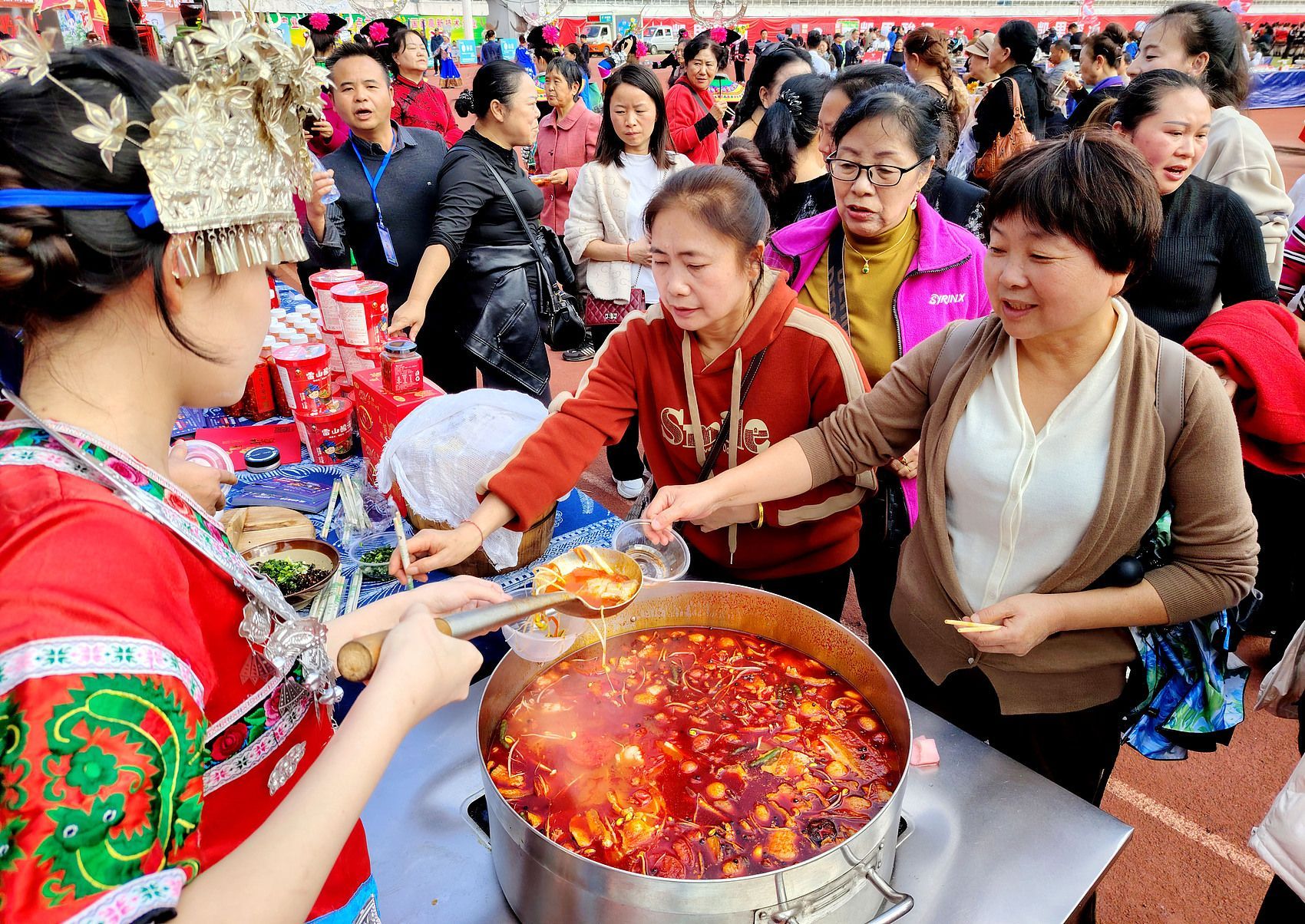
A sour soup festival featuring over 80 varieties, held in Kaili, Guizhou, in 2023, attracted thousands of visitors (VCG)
Such events have also helped shine a light on the region’s cuisine. According to a report by China Restaurant Insider last October, the number of Guizhou sour soup hotpot restaurants nationwide increased to around 9,000 in 2025—roughly 2.5 times more than in 2022—while the market value of Guizhou restaurants totaled over 15 billion yuan, nearly double 2023’s total.
However, businesses in this growing market still face challenges balancing local flavors with “public taste” regarding an acceptable level of sourness, alongside the debate over what constitutes “authenticity,” especially as this centuries-old cuisine becomes increasingly industrialized.
Explore more sour flavors in China:
- Beyond Seasoning: The Story of Chinese Vinegar
- How “Sour Stuff” Helps Guangxi Locals Beat the Summer Heat
- A Bite of Hainan
A rising appetite for Guizhou sour
In his 2020 book On Sour Food, food writer Yao Yun points out that compared with Shanxi, the northern province well-known for its vinegar production and consumption, “The place where sourness truly serves as the most essential everyday taste is actually Guizhou in southwest China.” It’s estimated that there are over 100 kinds of “sourness” across the province, such as salt sour, shrimp sour, and stinky sour—typically achieved through fermentation, with ingredients and techniques varying from region to region. For example, in the southeast, fermentation typically uses maolaguo (毛辣果, a local wild tomato variety) and chili peppers—which arrived from the Americas, initially for ornamental purposes, during the Ming (1368 – 1644) and Qing (1616 – 1911) dynasties—to produce red sour soup. In contrast, shrimp and stinky varieties are more prevalent in the south.
Though the exact origin of sour soup is untraceable, one popular theory holds that early Miao people first discovered it over 1,000 years ago, probably by accident. The story goes that a cook placed an earthen jar of surplus water used to wash rice by the stove, and after days of heating and fermentation, the water was found to be refreshingly sour with a sweet aftertaste. This formed the base of what is now known as white sour soup, named after its half-transparent color.
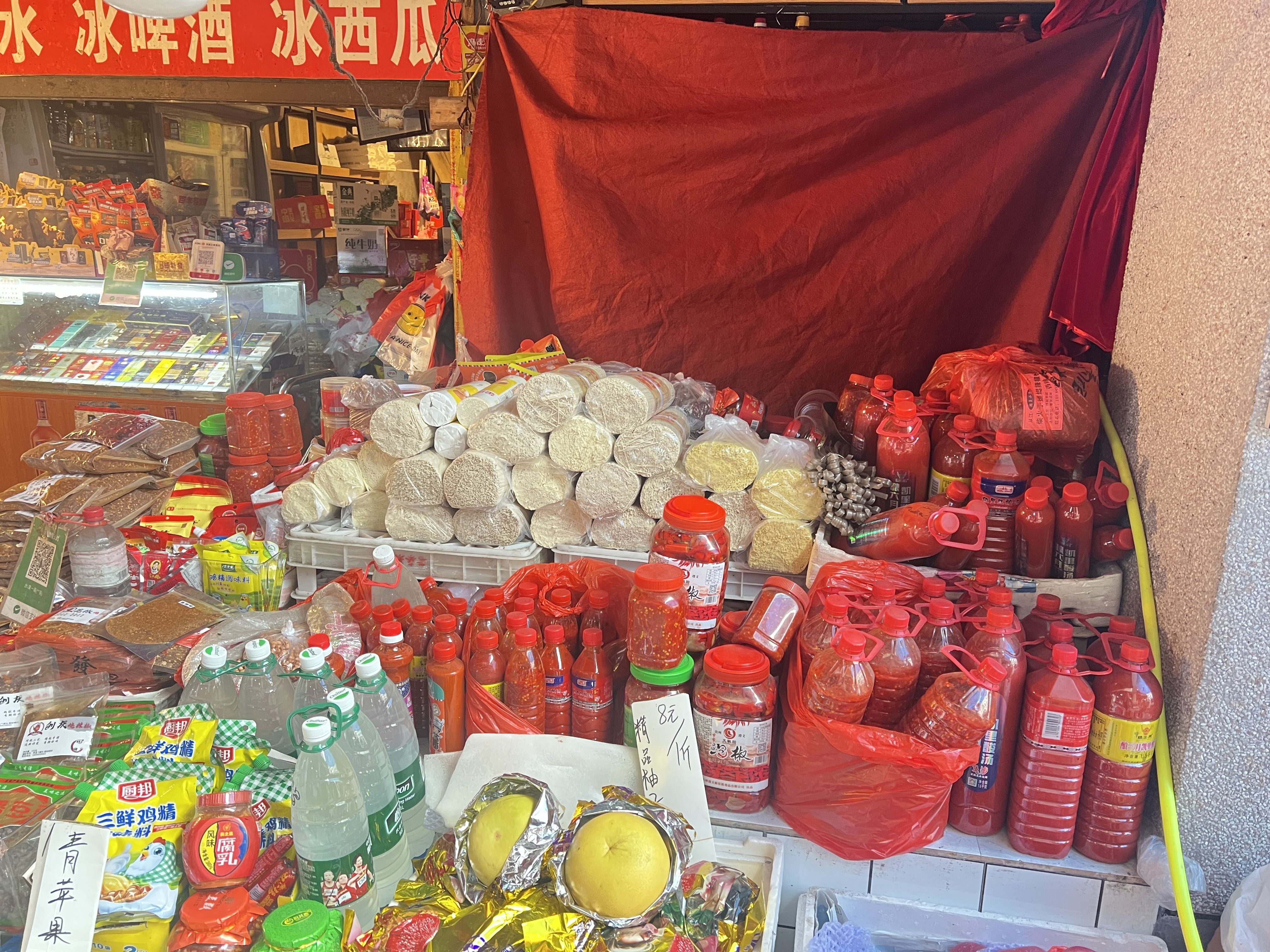
Bottles of sour soup base and fermented chili pepper are common commodities at local food markets and grocery stores in Kaili (courtesy of Yang Jieling)
For centuries, such broths have served as a substitute for salt, which was little produced and hard and expensive to obtain in the province until modern times. They also acted as a relief for dysentery and other sicknesses commonly experienced in the region due to high humidity. As one local saying goes, “Miss sour for one day and you’ll yawn all day. Miss it for two days, and you won’t want to eat. Miss it for three days, and you’ll stagger.”
Even nowadays, rural households in the province’s southeastern Qiandongnan Miao and Dong Autonomous Prefecture commonly keep several large earthen jars to cater to the family’s annual sour soup consumption. Urbanites, meanwhile, who may not have the time or space to make it themselves, can readily purchase soup base in local food markets. Apart from pairing fermented broth with almost everything, including fish, meat, and vegetables, in a hotpot or with rice noodles for daily meals, locals often have a bowl of white sour soup to relieve the summer heat or dispel the effects of alcohol.
In Kaili, the prefecture’s capital and considered one of the soup’s best-known birthplaces, “You can buy a bowl of the most traditional ‘sour soup dish,’ namely sour soup with cabbage, mung bean sprouts, and sometimes tofu, for the price of two or three yuan at food markets,” Yang Jieling, a PhD student in anthropology, tells TWOC. Intrigued by the food and its rise in popularity nationwide, the native of southern China’s Jiangsu province has spent the past year living in Kaili to research the topic.
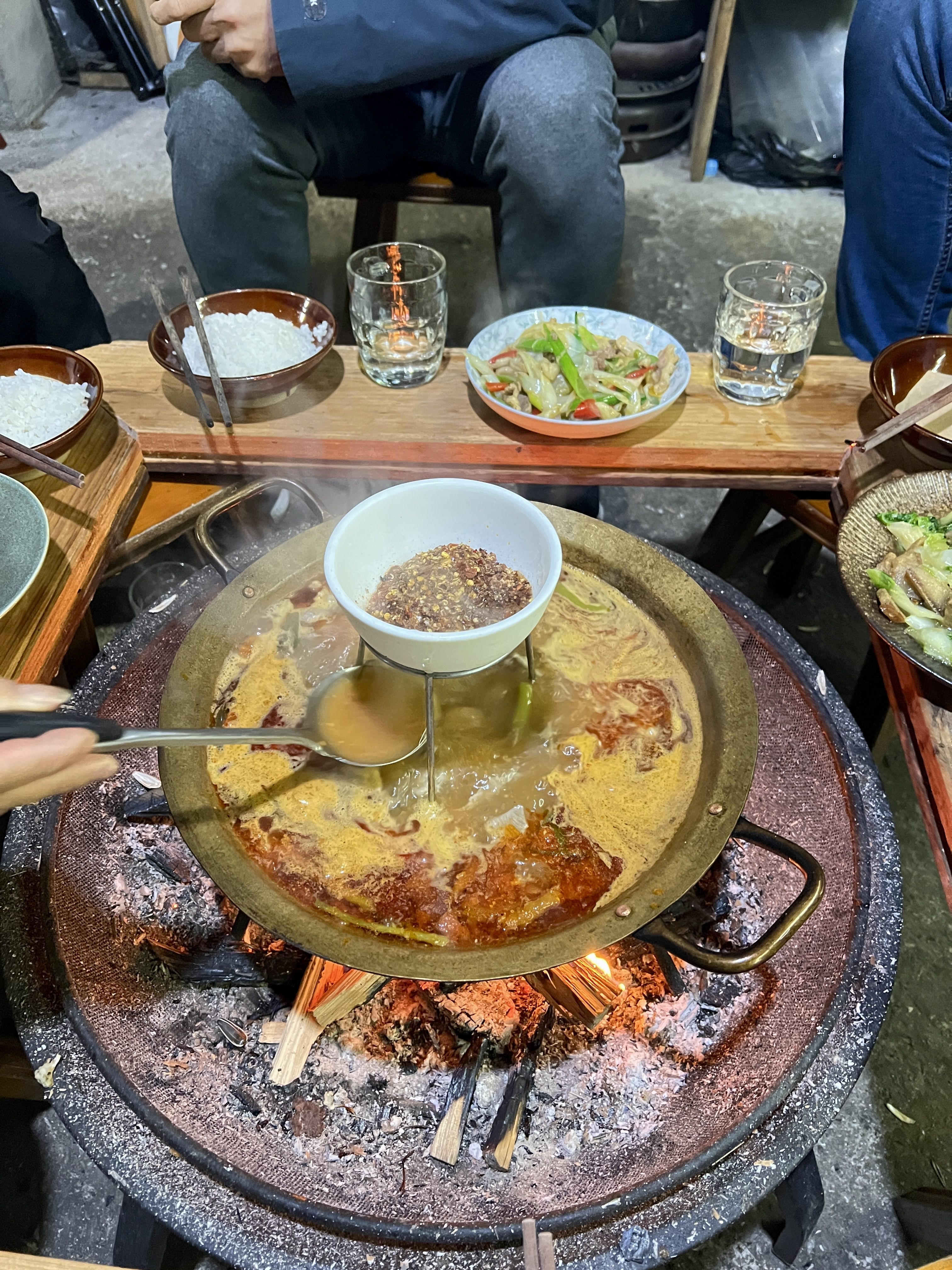
Qiandongnan locals use whatever ingredients are available to make sour soup hotpot, a staple of their everyday meals (courtesy of Yang Jieling)
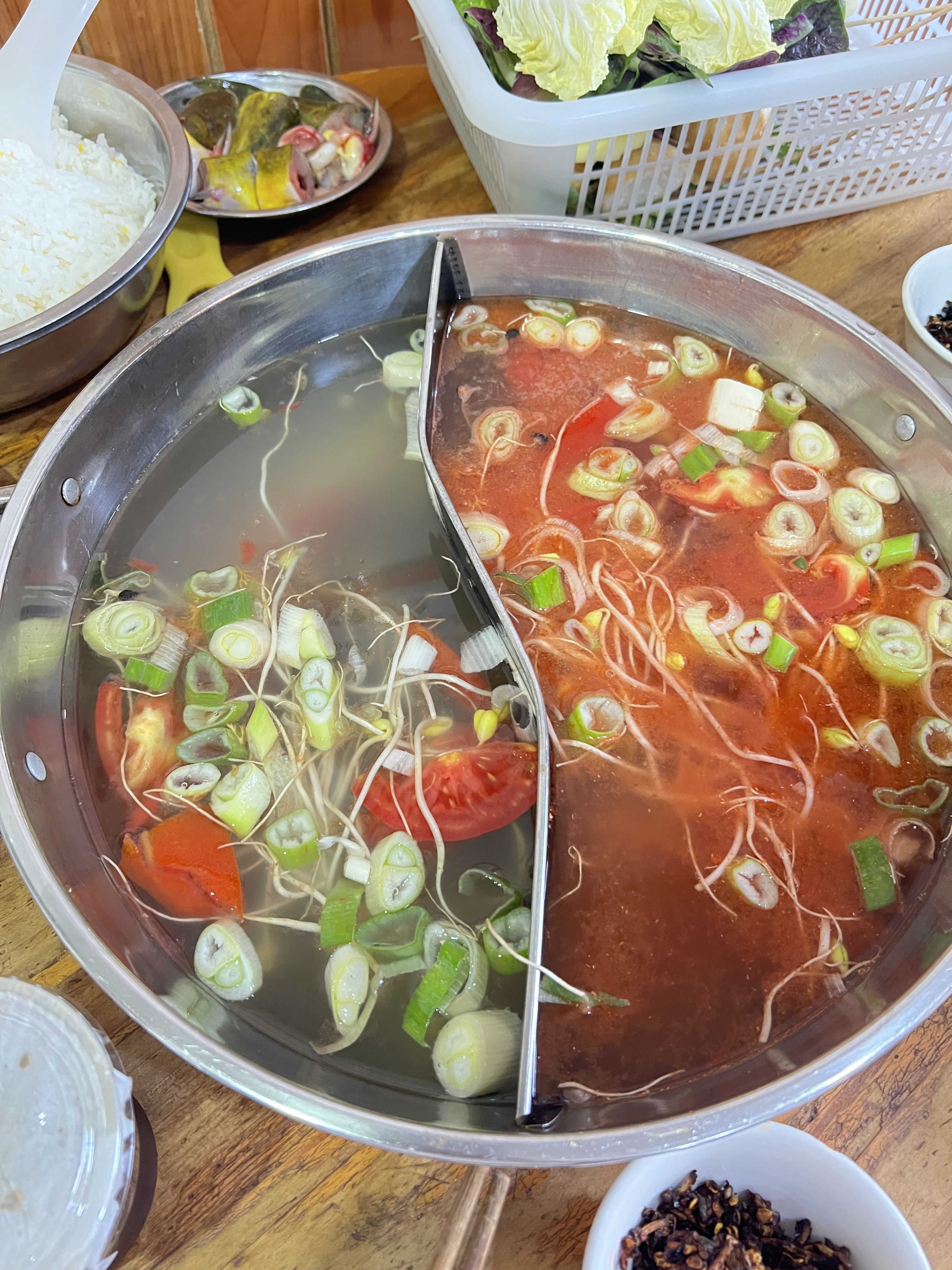
There’s also the option of a two-flavor hotpot for richer tastes in one meal (courtesy of Yang Jieling)
“The flavor is unlike anything I’d tasted before,” Yang, who is currently studying in Shanghai, recalls of her first sour soup hotpot eaten at a rural household in Qiandongnan’s Congjiang county in 2020. “It’s a very distinctive sourness—not like the aged vinegar or Zhenjiang aromatic vinegar we use [in Shanghai and Jiangsu], which has a slightly aggressive edge to it. This sourness is clean and bright, almost alive.”
Yang was also impressed by the dipping sauce, called zhanshui (蘸水) in southwestern China, made by mixing litsea cubeba oil, grilled chili powder, and fish mint, with a few scoops of the boiled sour soup. The grilled pepper, source of the dish’s signature hot flavor, “is not pungent, but offers a mild and lasting taste,” she adds.
With such ingredients, Guizhou sour soup dishes can hardly taste bad, many consumers claim. Because of its adaptability, mostly working with whatever ingredients are at hand, Guizhou’s soup is also fast becoming a favorite for many health-conscious consumers, especially those trying to lose weight.
From good-looking meals to “authentic” tastes
For many, Guizhou sour soup is more than a dish—it’s the province in a pot, with rolling mountains, cascading rivers, terraced fields, and vibrant ethnic culture. As indicated in the China Restaurant Insider report, 36 percent of respondents rank “authentic taste” as the top reason for choosing a sour soup eatery, followed by 25 percent for lower prices—a turn from the fad of “checking in (打卡, daka)” at Yun Gui Chuan bistros, higher-end southwestern-themed restaurants often featuring fusion or “Westernized” regional dishes that helped lay the groundwork for Guizhou cuisine’s rising popularity.
However, compared with the more traditional, widely consumed white sour soup in Guizhou, red sour soup dominates the market outside the province. It appears more “pleasing,” while “white sour soup looks bland, unappetizing, and does not meet public expectations about what hotpot should be,” Yang reasons.
Meng Jun, owner of a Guizhou white sour soup restaurant in Beijing, agrees. “White sour soup may not provide as much ‘emotional value’ for young consumers, or stimulate their desire to take photos [and share them on social media],” he says. As a compromise, he adds a little red soup to the base to give the dishes a crimson hue. Meanwhile, they’ve reduced the soup’s sourness to appeal to most diners’ palates, adding additional sourness for those who request it.
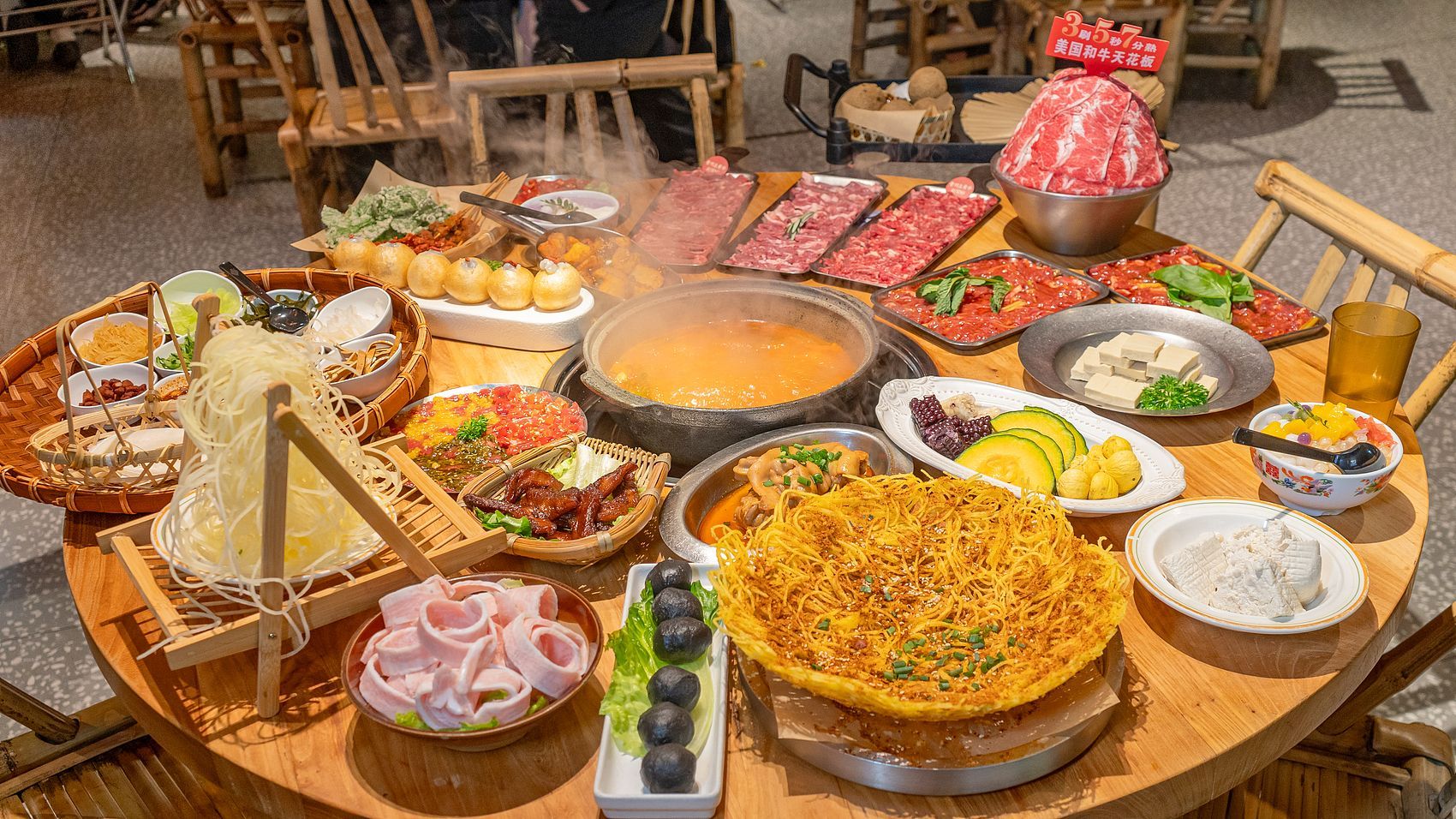
Guizhou sour soup hotpot—especially the red version—has become a popular piaoliangfan, or “good-looking meal,” favored by consumers who love snapping and sharing photos (VCG)
In addition, fermenting the perfect white sour soup requires precise control of water quality, temperature, and humidity—conditions that are difficult to replicate outside Guizhou. Meng, the 32-year-old native of Kaili, only succeeded with repeated tests and the help of his mother, who had come to assist him.
Nevertheless, the popularity of Guizhou’s fermented soups has attracted the attention of food associations, researchers, and local governments, who are working to modernize the product and develop related industries.
As early as 2013, Kaili red sour soup was granted protected status by the State Administration for Market Regulation, establishing provincial and national production standards. Food production companies have also begun to collaborate with universities on new technologies and techniques to shorten soup fermentation periods from months to days and stabilize product flavor.
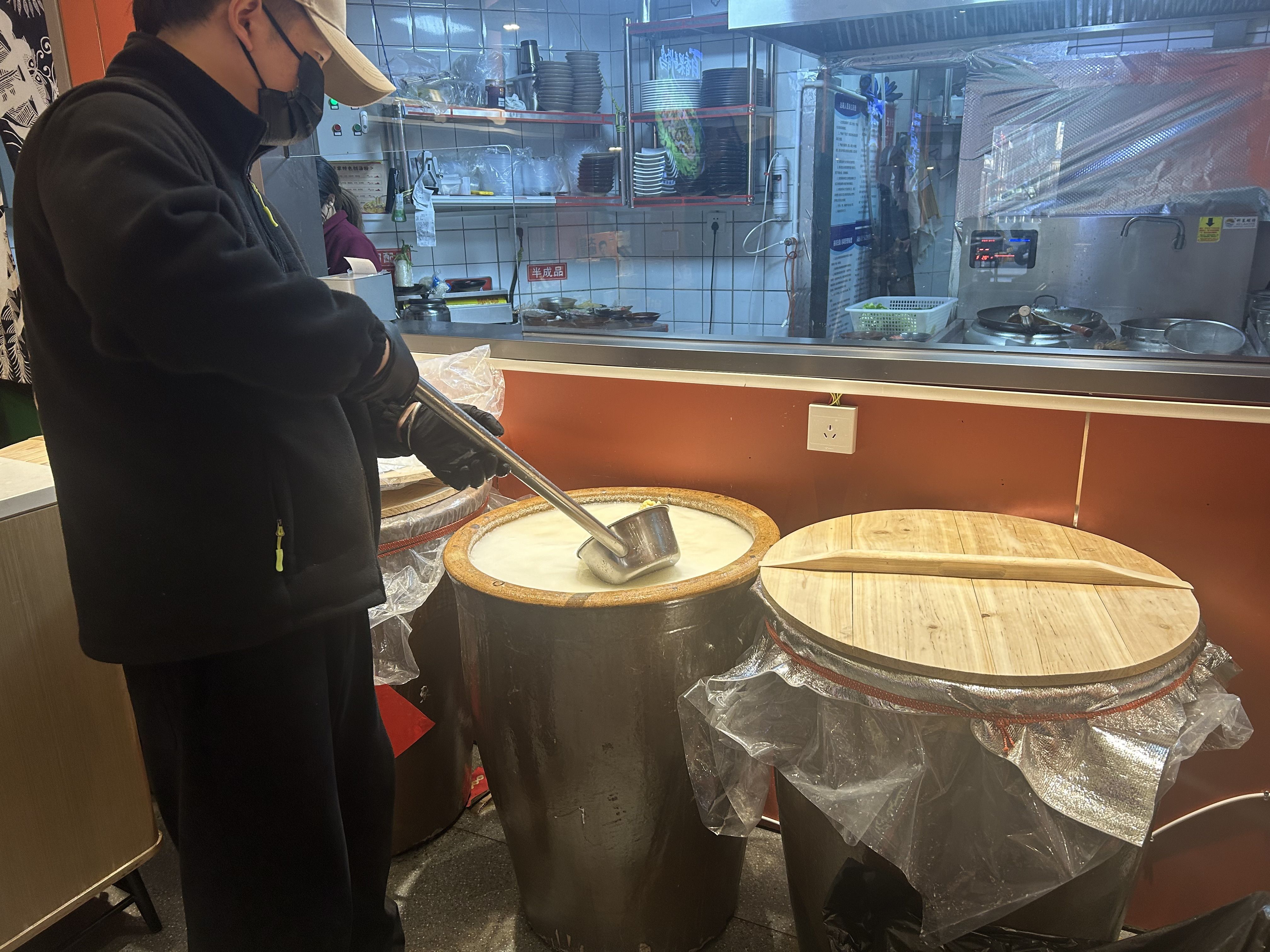
Meng puts on a mask and gloves before accessing the white sour soup urn to prevent any contaminants, like drops of oil, from polluting and ruining the broth (Tan Yunfei)
However, for seasoned fans, the charm of sour soup lies in its variability—flavors differ from jar to jar, depending on fermentation time, location, and ingredients—setting it apart from the market-dominating, often fiery, and heavier hotpot bases of Sichuan and Chongqing. As Meng points out, every household in his hometown has its own special flavor. “In my hometown, you cannot say that one sour soup is more ‘authentic’ than the other; instead, you say which type you prefer—sourer, or spicier. There is no standard,” he says.
Outside Guizhou, sour soup remains a niche product. Combined with Yunnan varieties, it accounted for only 2.5 percent of the hotpot market as of last May, according to a report by catering platform Canyin88. Meng says he often has to explain to customers what sour soup is and how it differs from more familiar hotpot styles—much like other producers who educate consumers how to cook different types of sour soups at home via social media. Local authorities and businesses have also taken measures to promote sour soup culture, especially the white version, such as launching sour-soup-flavor beverages , according to researcher Yang.
Despite the learning curve, Meng is confident the market will grow. Two months after opening, he had already turned a profit and had seen steady revenue growth since. As if to prove his claim, several groups of diners file into his modest restaurant at 5 p.m., just as we wrap up our conversation.
Related Articles



