

Prioritizing value over status, young consumers are embracing rentals, from designer toys to electronics, yet challenges remain in trust, regulation, and platform safeguards
On a windy morning by Qinghai Lake, Lin Xi is filming an unboxing video for a small white drone on her hotel balcony. The drone doesn’t belong to her.
Three days earlier, the 28-year-old office worker from Shenzhen had rented the device on e-commerce platform Taobao for a trip with friends, paying 150 yuan for three days. It was shipped and waiting at the front desk of her hotel when she arrived.
According to a 2025 white paper released by the State Administration for Market Regulation, China’s consumer rental market grew by 110 percent in 2024, driven largely by demand for 3C electronics (computers, communications, and consumer electronics). The report estimates the sector could reach 104 billion yuan by 2026 and expand to 613 billion yuan by 2029—a 40-fold increase from 2023.
Track the latest consumption trends shaping China:
- Emotional Economics: Why China’s Adults are Playing With Plushies Again
- A Second Life: Why Young Chinese Are Turning to Thrift?
- How China’s Malls Are Rewriting Themselves
Wang Liang, founder of rental platform Linglingxiang, a one-stop rental platform, tells TWOC that the platform now has more than 40 million monthly active users. Their total transaction value reached around 11 billion yuan last year, while the number of merchants has climbed to roughly 30,000.
“What we’re seeing is a shift from ownership to access,” he says. “Renting is no longer just a cheaper option. In many cases, it’s becoming a substitute for buying and a different way of consuming.”
A low-cost way to consume
Wang believes the boom in the rental market is driven by a deeper shift in consumer attitudes, with people increasingly prioritizing value over status. “In the past, people liked to show off what they owned; they would compare who bought the most expensive sneakers. Today, young people are more likely to compare who spent less and got the best deal,” he says.
But market trends suggest the picture may be more complex. Alipay, one of China’s largest digital payment platforms, has introduced rental services for popular Labubu collectibles, suggesting that renting may also be a low-cost way to access high-status goods and keep up with trends.
The rapid pace of product upgrades is another key factor, Wang adds. With smartphones, cameras, and other electronics updating frequently, purchases can feel risky. “You might spend tens of thousands of yuan on a device only to use it a few times before a newer version comes out,” he says. “Renting allows people to try new products without that pressure.”
This was the case for Lin, who was curious about drone photography but unsure whether she would use drones often enough to justify the cost of buying one. After her Qinghai trip, she realized that a drone demanded more time and effort than she had expected. She hasn’t rented another since.
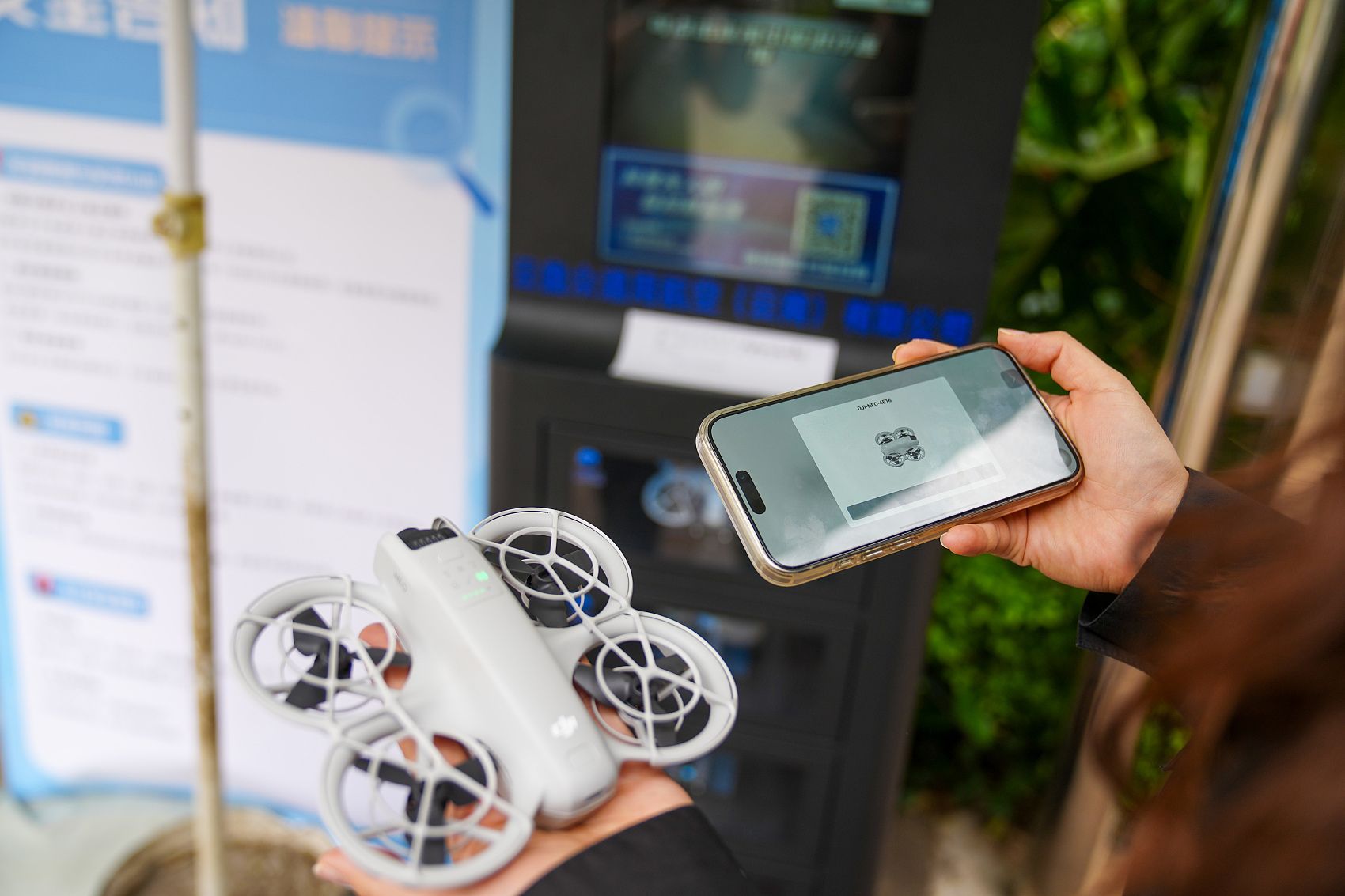
A park in Kunming, Yunnan, recently began offering drone rentals, allowing visitors to enjoy aerial views and take photos (VCG)
“If I had bought one, it would probably just sit in my closet,” she says. One of her friends, however, was impressed by the aerial footage and went on to rent another drone on her next trip.
Huang Lei, a 29-year-old digital marketing professional in Beijing, has drawn a similar conclusion. She began renting gadgets in 2024, particularly the DJI Pocket 3, a compact camera popular among vloggers.
This particular model retails for around 3,000 to 4,000 yuan, but renting it costs just 100 to 200 yuan a week. “You get the good image quality when you need it,” Huang says. “And you don’t have to spend several thousand yuan on something that would just sit at home most of the time.”
Their experiences reflect a broader trend. China Consumer Reports magazine found in a survey that over 38 percent of respondents said renting helps them spend less, while 33 percent noted it prevents impulse purchases. For young consumers, renting has become a low-cost way to test whether a gadget is worth owning, without committing to an expensive purchase.
A trust deficit
Yet the convenience of renting also comes with risks.
Huang recalls an unpleasant experience when renting a DJI Pocket 3 ahead of a New Year’s trip. Trouble began after she returned the camera, when the merchant claimed the gimbal was damaged and demanded more than 400 yuan in compensation.
After the merchant provided only a blurry screenshot as proof of repair costs, Huang contacted DJI’s customer service to check the device’s serial number and discovered the camera had never been repaired. Instead, it had been replaced under warranty, meaning the merchant had not paid any repair fees.
Confronting the merchant, Huang learned that the screenshot actually showed another customer’s receipt, and she ultimately received 50 yuan in compensation. “It was the first time I’d encountered something like this, and the whole process was exhausting,” she says.

A camera rental shop in Jinan, Shandong, has attracted young customers with a wide selection of models that typically cost just a few dozen yuan per day to rent (VCG)
The rapid growth of the consumer rental market has also created challenges for lenders. Wang Ying, a 17-year-old high school student from Wuhan, experienced this firsthand. In December 2025, she rented out her camera on a rental platform for four days. “I only earned 100 yuan in rent but lost a camera worth about 4,000 yuan,” she says.
After the rental period, the renter failed to return the device and repeatedly ignored Wang’s requests. Despite multiple complaints, the platform only deactivated the renter’s account without offering further support. She ultimately reported the case to the police in January 2026, and the matter is still ongoing.
Liu Shimeng, an associate professor at Jinan University’s Institute for Economic and Social Research, believes that while risks differ across participants, they often originate from the same underlying issue: trust.
For consumers, this can mean concerns over hidden fees or product quality. For lessors, the risk lies in potential loss or damage. For platforms, it centers on managing disputes and enforcing accountability. “Ultimately, it all comes down to the credit system between the three parties,” Liu says.
Need for a robust credit system
With the demand for a fully developed credit framework, platforms are beginning to introduce their own safeguards. In March 2026, Alipay introduced a merchant credit scoring system for the rental sector, evaluating sellers based on their business conduct. Scores affect access to marketing support and platform incentives, while violations such as misleading descriptions, failure to deliver products, or hidden fees may result in penalties.
Founder Wang Liang said his rental platform, Linglingxiang, has strengthened its risk control systems. Users must complete real-name registration and facial recognition before signing rental contracts to ensure accountability, according to him.
Huang, who has rented devices through Alipay, suggests such safeguards are not an unusual practice. On Alipay, users need facial recognition to share their Sesame Credit score, a credit rating system that allows platforms to offer deposit-free rentals to users deemed trustworthy. She doesn’t need to pay a deposit because of her high credit score.
For high-value items such as smartphones, computers, and electric vehicles, Linglingxiang offers optional mobile device management software that can restrict usage and track location.
It also provides insurance for accidental damage or losses, with merchants typically able to file claims within about 15 working days. According to Wang Liang, one lesser was able to claim back 90 percent of the 50,000 yuan he risked losing last year from products not returned by renters.
Wang Ying, the 17-year-old who is still trying to recover the camera she rented out, argues that such safeguards can reduce risks but are not a perfect solution, as they put the burden on individual users of the platform to protect themselves. “These measures help with prevention,” Wang said. “But if you don’t buy the insurance and the device is lost, there are still limited ways to recover the losses.”

Launched in late 2025, China’s first robot rental platform, Qingtianzu, now operates in over 50 major cities (VCG)
Professor Liu believes a well-functioning rental market largely depends on a robust credit system. A mature framework, he notes, typically requires multi-dimensional credit data, cross-platform recognition, risk-based pricing, and mechanisms for both penalties and credit repair. However, Liu argues that without clearer legal obligations, platforms may lack sufficient incentive to invest resources in such dispute resolution and risk management.
In China, renting is a civil transaction primarily governed by the Civil Code. Li Zhaohua, a lawyer and member of the Guangdong Economic Law Research Association, tells TWOC that for established, large-scale rentals such as housing leases, China has added regulations to protect both tenants and landlords.
However, Lin notes that consumer rentals, a relatively novel type of transaction, still lack specialized regulation and procedures. Under existing laws, rental platforms generally bear legal responsibilities such as verifying and registering user identity, maintaining and providing information, and establishing dispute resolution mechanisms.
Despite the risks, Huang is combing listings for another DJI Pocket 3 camera to rent for her next trip to Dali, in southwest China’s Yunnan province. “I’ll probably just be a bit more careful next time,” she says.
Related Articles