While China’s domestic film market has slumped in recent years, this Labor Day holiday still set a record as the busiest in history, with 18 films released. However, upon a closer look, the box office totaled 758 million yuan, only a 1 percent uptick from last year. Opening day revenue even fell to a four-year low, and several films were pulled from theaters midway through the holiday, reportedly due to disappointing performance.
But the lackluster revenue doesn’t seem to reflect the quality of the films. On the contrary, many, especially domestic productions, have received both audience praise and critical acclaim. Dear You, a low-budget family drama spanning three generations of a Chaoshan family, became the breakout hit of the holiday period and continued gaining momentum afterward, grossing 543 million yuan as of this writing. Industry analysts attribute the low box office total to a drop in ticket prices, which hit a four-year low, while attendance has risen by nearly 10 percent.
With many cities in China still offering movie ticket incentives, here are the films TWOC finds worth the trip to the theater this May.
Dear You 给阿嬷的情书
Troubled by millions of yuan in debt, young Chinese man Xiaowei (played by Zheng Runqi) travels from eastern Guangdong’s Chaoshan region (comprising Chaozhou, Shantou, and Jieyang) to Thailand in hopes of seeking help from his supposedly wealthy grandfather, Zheng Musheng (Wang Yantong), using an address from letters sent home more than 40 years ago—only to discover that he had passed away nearly two decades before the last letter was sent. It was Xie Nanzhi (Li Sitong), a hotelier’s daughter and Zheng’s student, who had corresponded with Xiaowei’s grandmother, Ye Shurou (Wang Xiaohui), in his grandfather’s name, sending the family money and essential items such as food and bicycles.
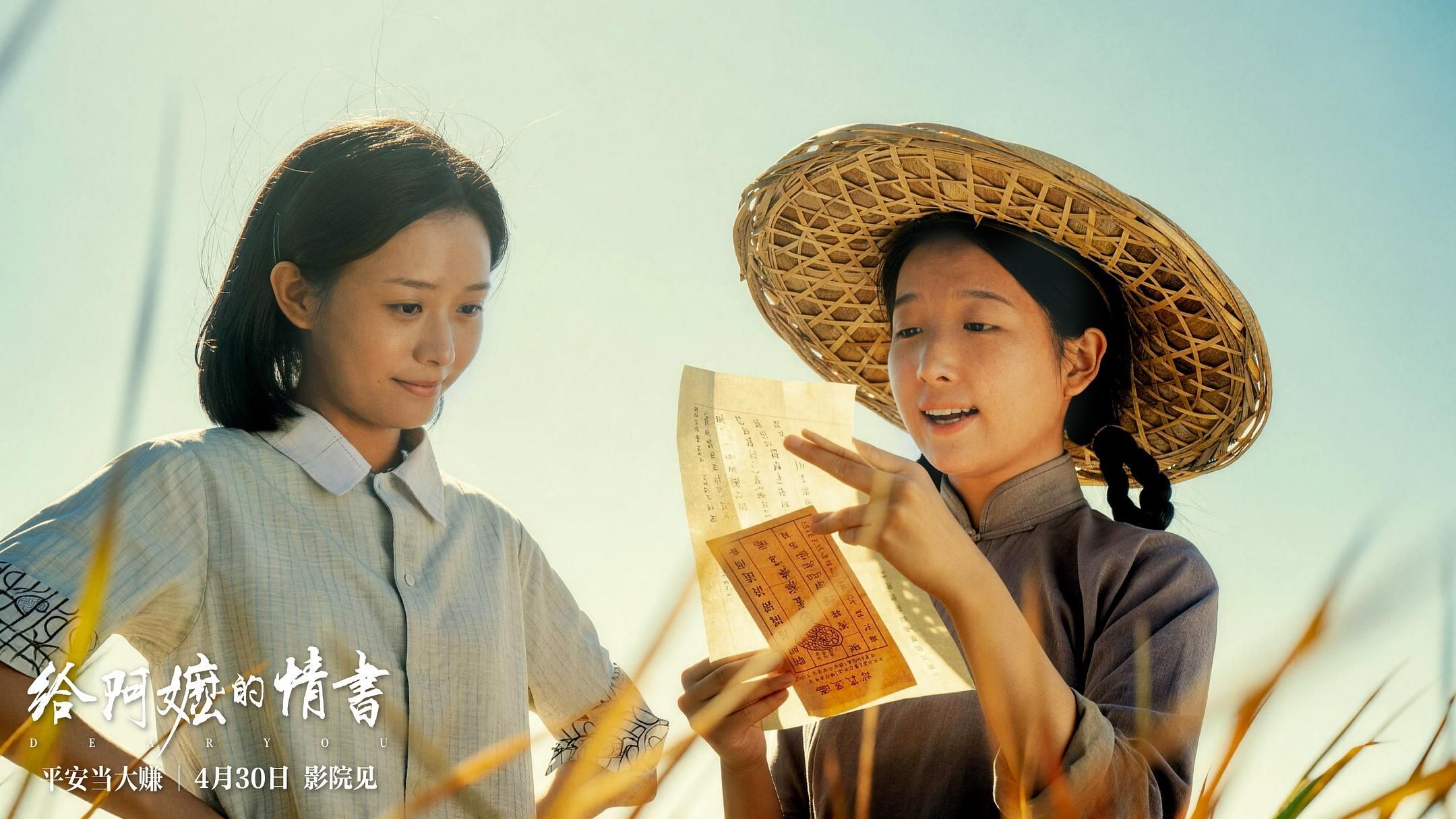
Despite its mostly novice cast, dialogue delivered almost entirely in the Chaoshan dialect, and a modest 14 million yuan budget, the indie film became an unexpected hit in Chinese cinemas, earning the year’s highest Douban rating of 9.1 within three weeks of its April 30 premiere. Many viewers were moved by the film’s portrayal of family bonds, friendship, and diaspora communities, as well as the charisma of its characters—especially the two strong-willed and resilient female leads, Xie and Ye.
The film, whose Chinese title literally translates to “Love Letters to Grandma,” sheds light on the history of millions of Chinese migrants—mostly from Guangdong and Fujian—who traveled to Southeast Asia in search of work and opportunity in the 19th and 20th centuries. Despite struggling to survive overseas themselves, many continued supporting their families back in China through qiaopi, the letters and remittances they sent home, which were added to UNESCO’s Memory of the World Register in 2013.
The third movie by screenwriter and director Lan Hongchun, a Shantou native, Dear You is the latest installment of the “Chaoshan family trilogy,” alongside Proud of Me (2018) and Back to Love (2022), all of which center on Chaoshan families and are filmed in local dialects.
A Chinese language and literature major in college, Lan relied heavily on personal experience to make up for his lack of professional filmmaking training. About 90 percent of the story was drawn from the real experiences of hundreds of overseas Chinese people his team interviewed around the world while filming a Chaoshan food documentary between 2019 and 2023. “The personalities of Ye Shurou and Xie Nanzhi were largely based on my grandma, mother, sister, and other close female relatives. Whenever I’m unsure how Nanzhi would react in a situation, I think about what my grandma would do,” Lan wrote on Douban in April.
This touch of authenticity and the production team’s profound understanding of Chaoshan culture and its people moved many viewers to tears in theaters. Some even joked that it’s not a film to wear contact lenses to, because you’re bound to cry them out at some point.
Vanishing Point 消失的人
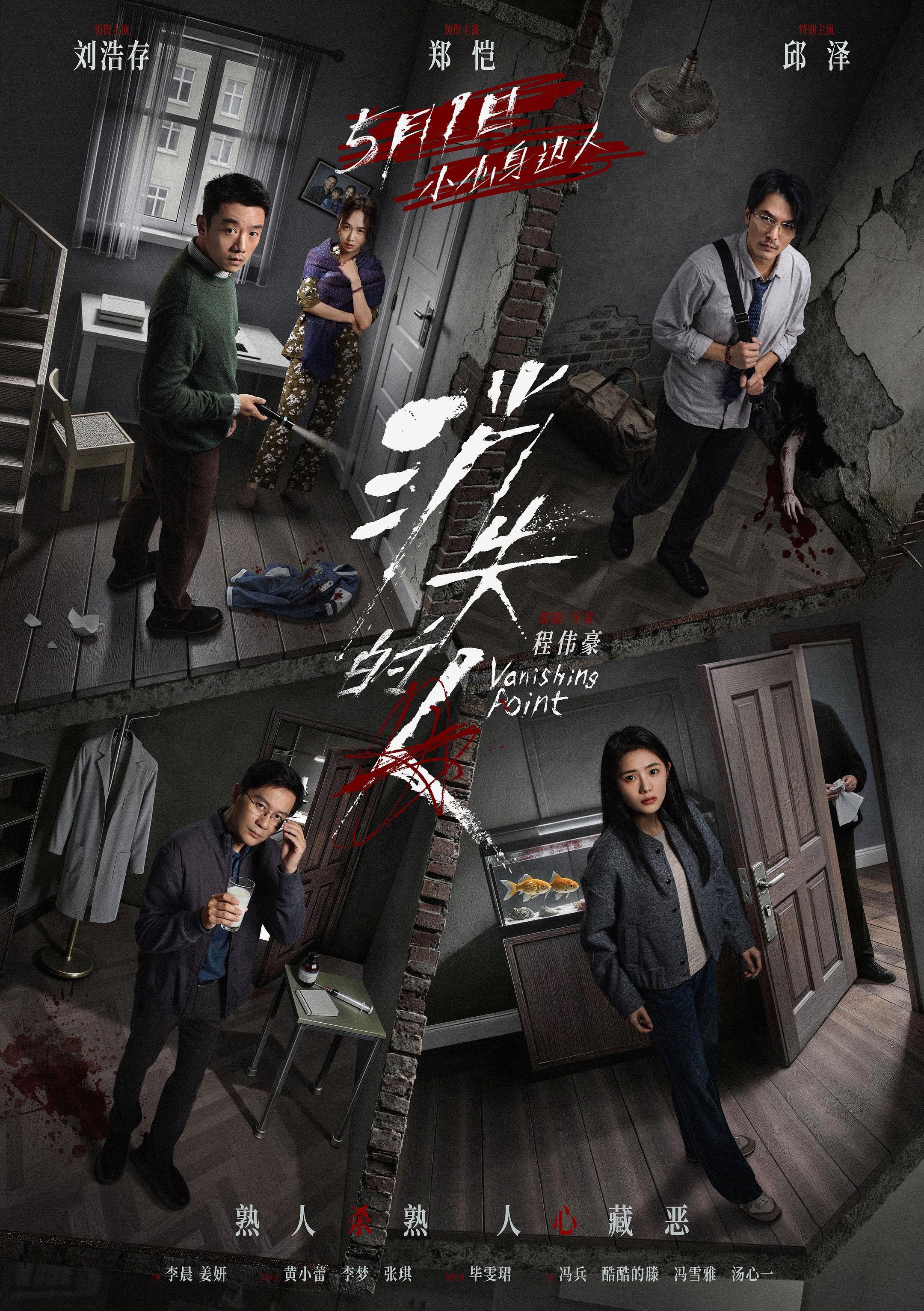
A young boy disappeared from the stairwell of an old apartment building. In the neighboring unit, a young woman living alone was assaulted in her sleep. A gambling-addicted tenant, covered in blood, fabricates an alibi while hiding a corpse. This Labor Day’s top earner, crime thriller Vanishing Point—adapted from the novel Sea Anemone by Bei Kebang, first published on Douban in 2019—follows three seemingly unrelated threads that ultimately converge into one.
As a realist drama, the film touches on a range of social issues, including the safety of women living alone, crimes committed by acquaintances, education for children with ADHD, the protection of minors, and family trauma. These controversial themes helped the film rake in 264 million yuan over the five-day holiday, accounting for more than a third of the period’s total box office. Over 85 percent of ticket sales are from cities outside the major metropolitan areas.
While the film has been praised for its suspenseful plot and eerie atmosphere, it has also been criticized for relying on cheap tricks, such as jump scares and a setting in Chongqing, a city known for its smoky, mysterious ambiance. It has also been criticized for insisting on the use of the Chongqing dialect, while most of the main cast are not fluent in it, resulting in an awkward viewing experience for local audiences. The plot at times falls short in portraying the motives behind characters’ behavior: Instead of calling the police when danger arises, characters often take it upon themselves to investigate.
But for audiences just looking for something to stir their emotions during the holiday, the film is worth the price, as its final box office is projected to exceed 500 million yuan. It currently holds a 7.4 rating on Douban.
Cold War 1994 寒战1994
The third installment of the blockbuster police thriller series, Cold War 1994, serves as a prequel to the earlier films and features two intertwined storylines: In 2017, M.B. Lee (Tony Leung), Hong Kong’s former organized crime superintendent, mysteriously disappeared and was believed to have been abducted; meanwhile, the police revisit a classified case from 23 years earlier, when the young and upright Lee (Terrance Lau) accidentally uncovers the politically sensitive kidnapping of a local tycoon’s brother-in-law and heir apparent. He soon finds himself on the run from multiple parties, including British authorities, the police, powerful businessmen, and criminal networks.
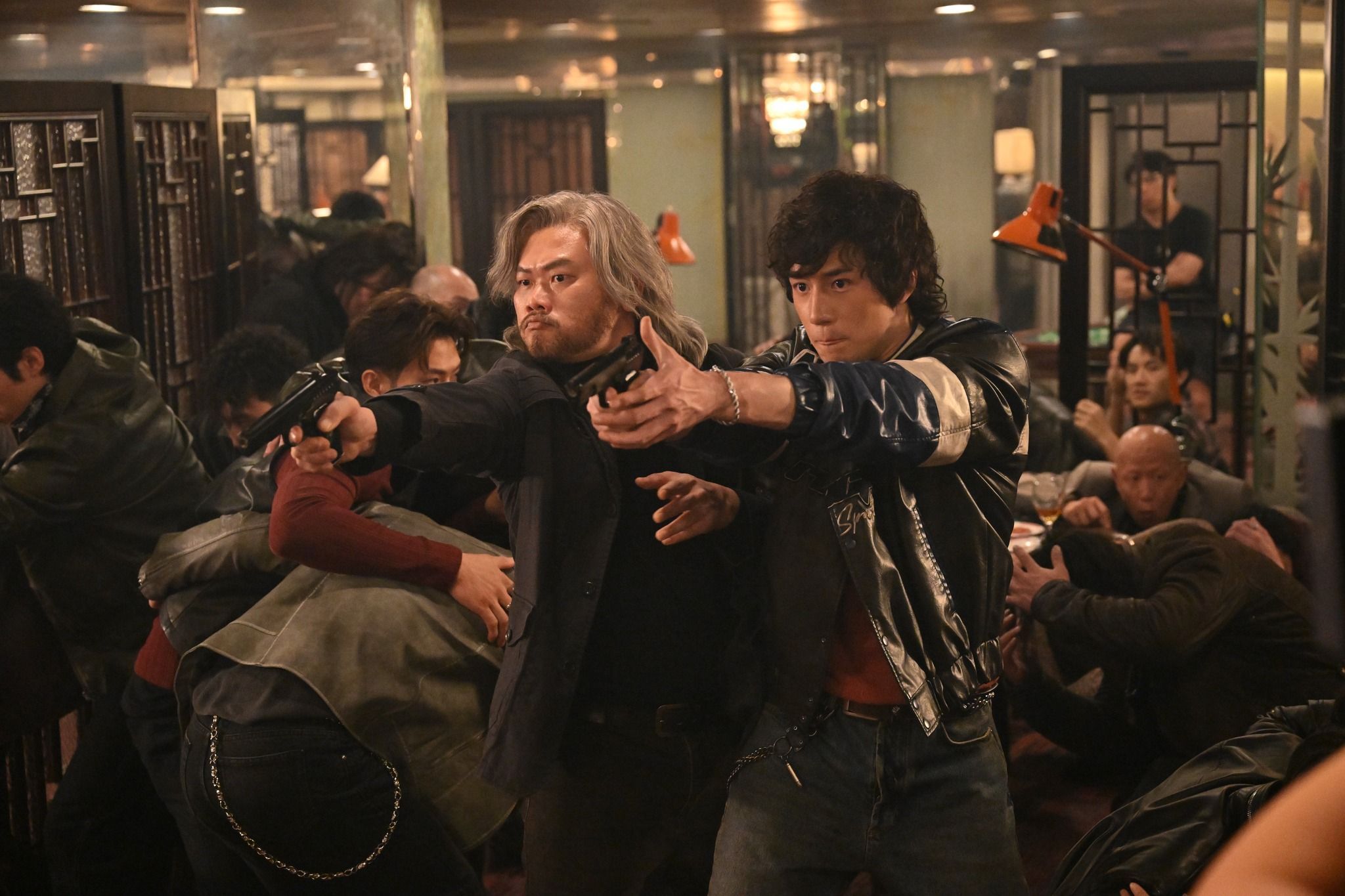
The series has been regarded as one of the most successful Hong Kong thrillers over the past decade or so, often being compared to the classic Infernal Affairs trilogy (2002 – 2003), which later inspired the 2006 Academy Award-winning film The Departed.
However, building on the success of the first two installments—Cold War (2012), which won nine awards at the 2013 Hong Kong Film Awards, and Cold War 2 (2016) together grossed over 900 million yuan—the long-anticipated Cold War 1994 has drawn polarized responses.
While many fans praise it for offering a broader political and institutional backdrop, others criticize its weak script, citing underdeveloped plots and characters, and argue that writer-director Longman Leung has failed to match his ambition in execution, even in the classic action scenes. Despite its star-studded cast, including Daniel Wu, Louis Koo, and Aaron Kwok, the film had grossed only 276 million yuan since its premiere on May 1 and received a mediocre 7.2 rating on Douban. Still, if you’re a fan of the series or just enjoy Hong Kong police thrillers, it’s worth seeing in theaters.
Once a Thief 纵横四海
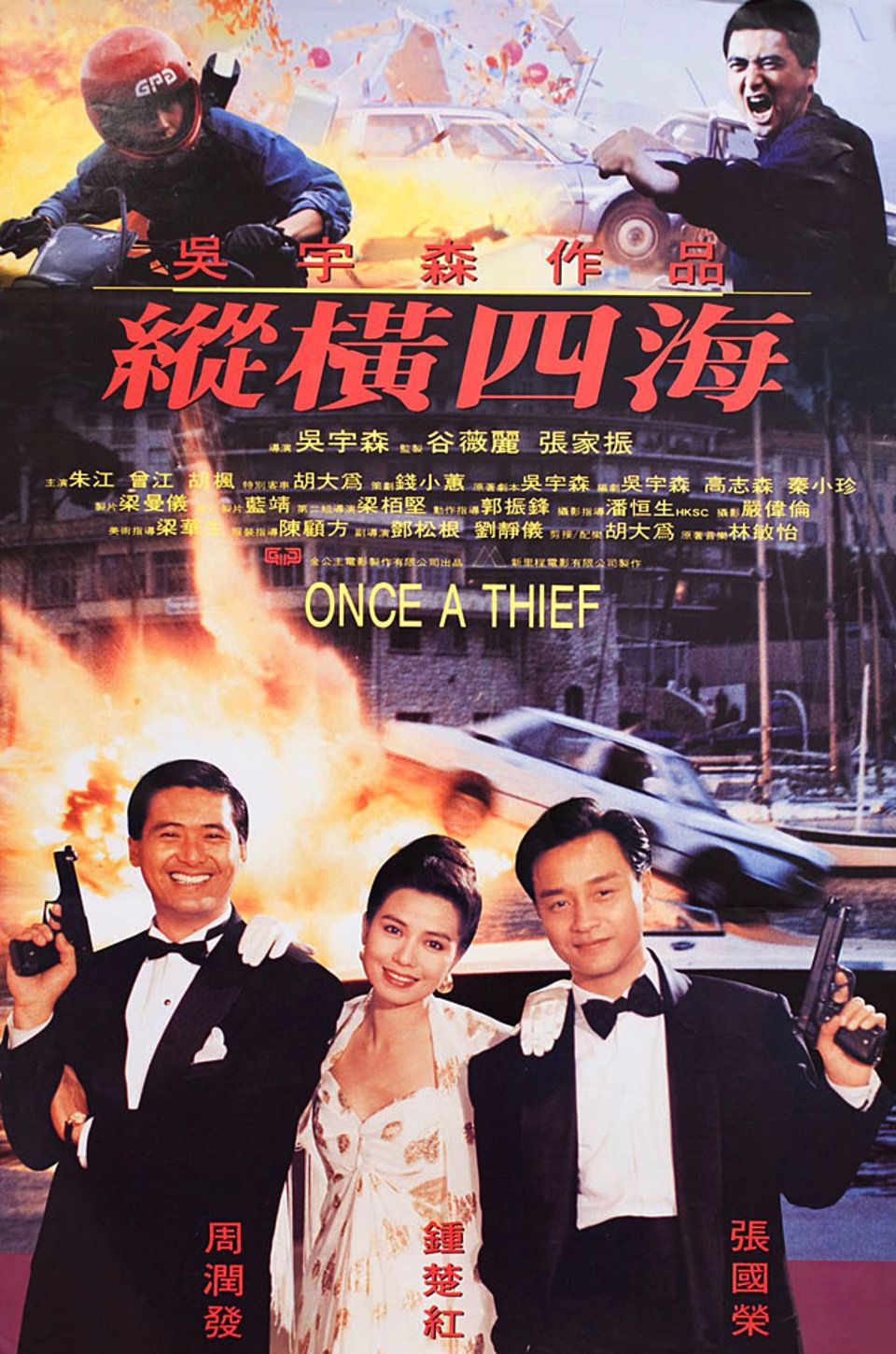
Thirty-five years after its first release, Once a Thief still embodies the golden era of Hong Kong entertainment. Featuring some of the Sinosphere’s most iconic 1990s stars—Chow Yun-fat, Leslie Cheung, and Cherie Chung—at the peak of their careers, this action comedy follows three art thieves as they carry out heists across Paris and Hong Kong while entangled in a love triangle. It marked a rare, lighthearted, and playful turn for action master John Woo, signaling a return to popularity after his gangster-war epics and the box-office failure of Bullet in the Head the previous year.
Shot in just two and a half months, this low-budget, fast-paced pop comedy was a commercial success in 1991 and has since become a nostalgic classic for many millennials. This May, the 4K-restored version of the film is released in the Chinese mainland for the first time—part of a broader trend of reruns of Hong Kong golden-era films in mainland theaters. Countless viewers had already watched it via other channels. On Douban, more than 480,000 users have rated the film, giving it a strong score of 8.8 out of 10. In the comment section, fans frequently quote Chow’s character Joe, especially his reflections on love: “I like flowers—does that mean I have to pick them just so I can smell them? I like the wind—does that mean you can make it stop for me?”
A stylish fairytale filled with European charm, humor, and the warmth of friendship, alongside Woo’s signature gunfights, car chases, and explosive set pieces, Once a Thief remains a memory of a simpler cinematic era.
It’s OK 我,许可
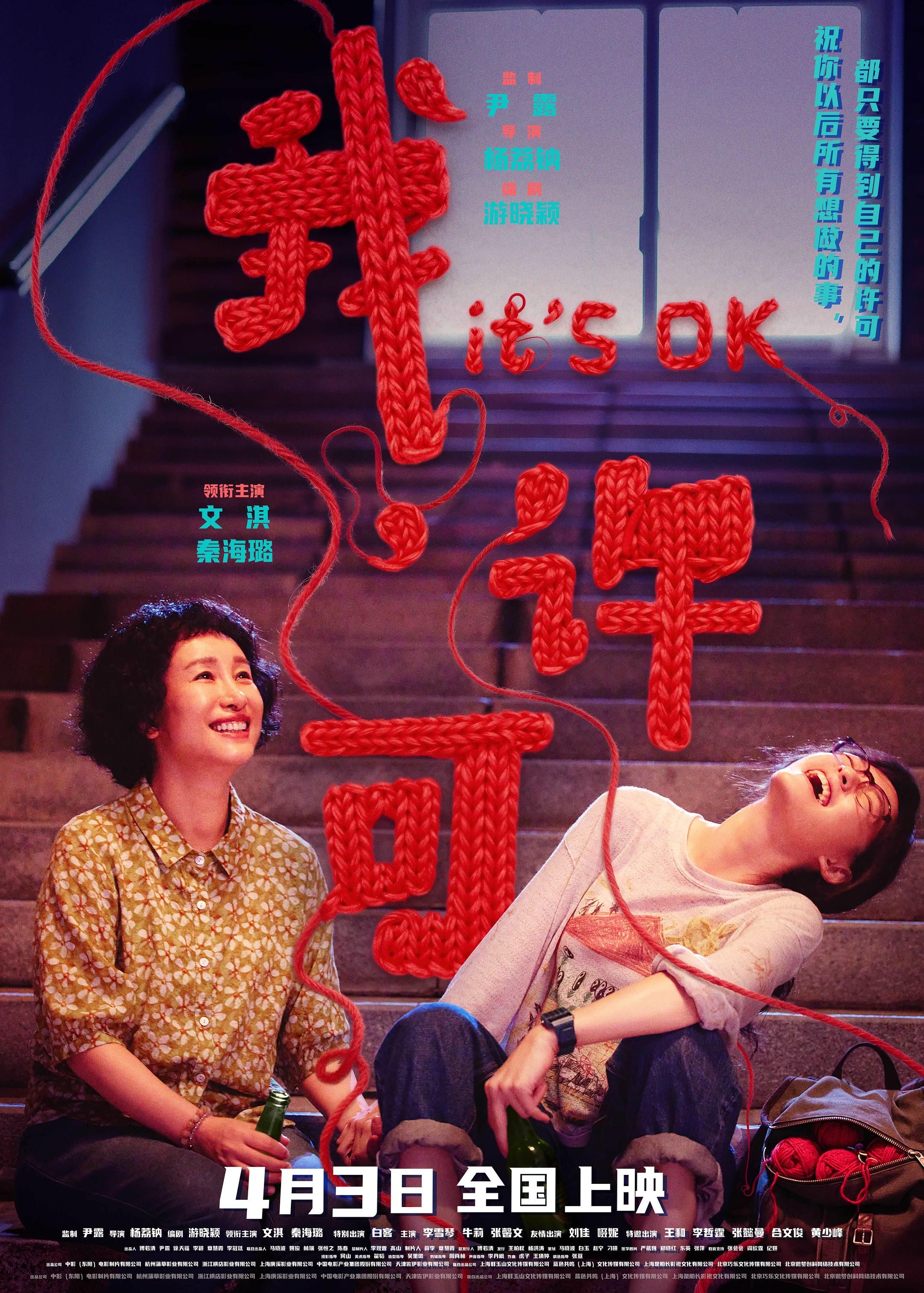
Released on April 3 during the Qingming Festival, with its screening extended to the Labor Day holiday, It’s Ok is the latest exploration of the complicated mother-daughter dynamic by feminist director Yang Lina, known for her intimate depictions of family relationships and boldly exploring female sexual desire.
In It’s Ok, 25-year-old elementary school teacher Xu Ke (Wen Qi) is denied an invasive gynecology procedure because she has no prior sexual experience, while her mother refuses to consent, arguing that what Xu really needs is to get married and have children. The two women begin living under the same roof after her parents had a fight, leading to an awkward coexistence in which Xu’s modern lifestyle and views gradually challenge her mother’s conservative beliefs—Xu even gives her mother a sex education lesson, similar to those she teaches at school.
The film does not shy away from uncomfortable topics: invasive gynecology exams, sex toys, sexual harassment, and candid mother-daughter conversations about sex. Some viewers have criticized the film, comparing the viewing experience to “sitting on a needle mat,” claiming the film tries to attract attention by mashing together sensitive subjects but treats them superficially. Others, however, argue for greater representation of such topics in Chinese cinema before judging it harshly. “Let’s make feminist films a common theme in Chinese cinema first,” one comment on Douban reads. It’s OK currently holds an 8.3 rating on Douban.
Being Towards Death 10间敢死队
Centering on hospice care and terminally illness, Being Towards Death follows Zhang Xiaobing (Jiang Long), a young man who survives a suicide attempt after losing his only family member to cancer. Burdened by debt, he reluctantly takes a job in a cancer ward, where he offers psychological support for terminal patients, from a girl abandoned by her biological parents to a hospital elevator operator trapped in a miserable marriage. Initially detached, Zhang gradually forms bonds with the patients as he witnesses them supporting one another, refusing to be defeated by life, and racing against time to fulfill their final wishes—eventually even turning an ambulance into a makeshift “dream tour bus” for the community.
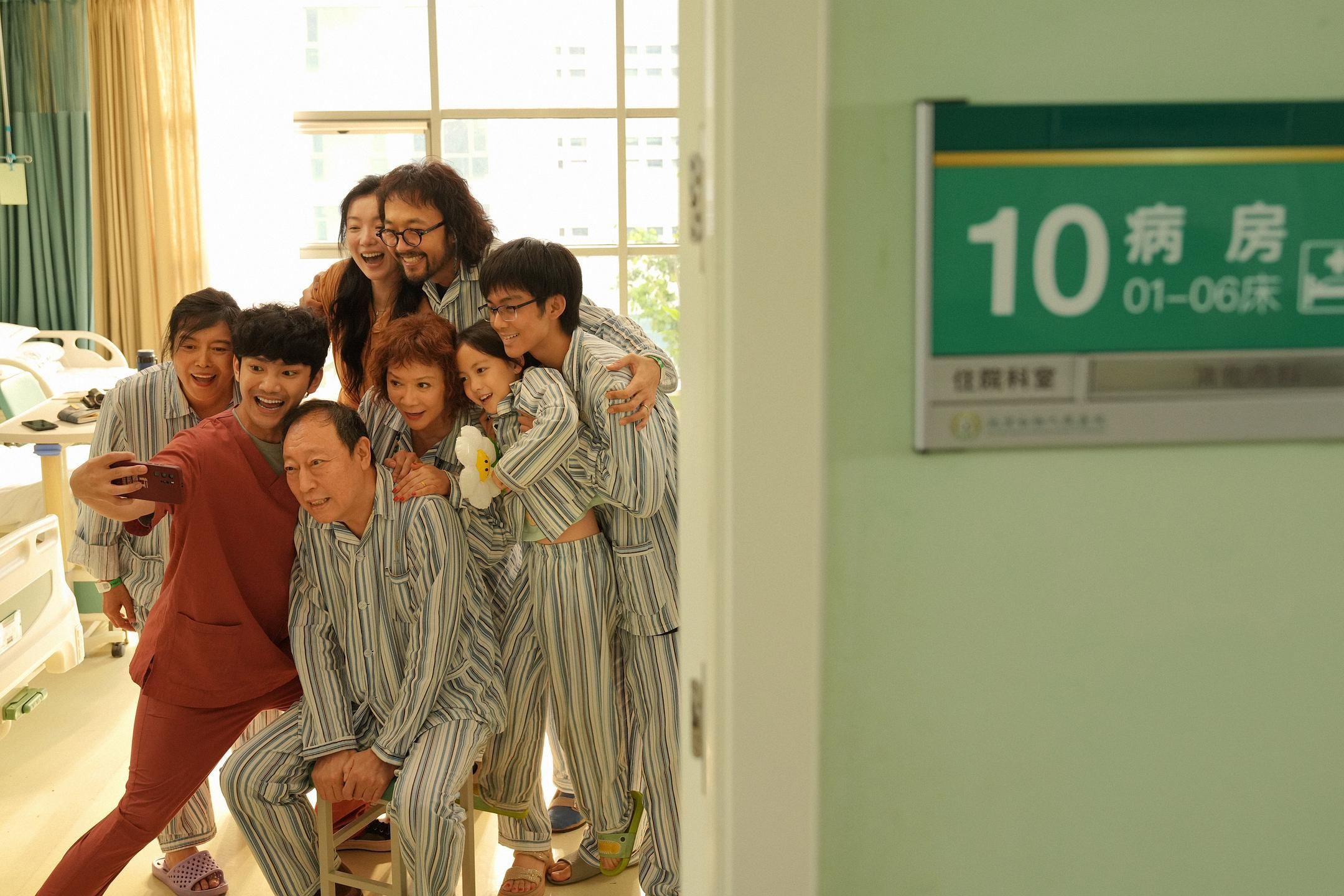
Instead of dwelling solely on suffering, the film blends laughs and tears, offering a warm portrayal of resilience in the face of death. Directed by Chen Sicheng, the film is believed to be a shift from the commercial spectacle of his Detective Chinatown series, toward a more restrained exploration of loss and courage.
Despite its modest 6.8 rating on Douban, many viewers have praised the film for using comedy to lighten grief without trivializing the pain behind it.
Silent Friend 寂静的朋友
A co-production between Germany, Hungary, France, and China, this arthouse feature offers a new way of seeing trees. Set in a botanical garden at a German university, it revolves around a ginkgo tree and its three silent witnesses over the course of more than a century. Through three interwoven stories, the film explores different attempts to connect with the natural world.

The story opens in 2020, when neuroscientist Tony (Tony Leung) was left stranded on an almost empty campus during the pandemic and turned to electronic sensors to test whether the ginkgo tree was trying to communicate. The film then shifts to earlier eras, following Grete (Luna Wedler), the university’s first female student in 1908, and Hannes (Enzo Brumm), a rural student who initially dislikes plants in 1972, as they each seek a deeper connection with nature’s rhythms.
Each timeline adopts a distinct visual style, from black-and-white for the early 20th century to high-definition digital for 2020, with some scenes even told from the tree’s perspective.
Rated 7.8 on Douban, the film particularly appeals to viewers interested in botany, neuroscience, and slow cinema. Its portrayal of plant signals and human brain signals, especially the shifting light spectra, creates an immersive sensory experience.
Related Articles