

1
That summer, I was living Los Santos hours instead of Beijing Time.
Whatever someone was in their everyday lives—an office drone or a laborer, a petty entrepreneur or a manager, a father, son, or grandson, or nothing-in-particular—Los Santos allowed them to become gangsters, robbers, architects of vast conspiracies, confidence men, heroes, geniuses, tycoons, and even gods. Some operated alone; others formed groups. Some robbed and killed; some set out to save the world—all of them doing things impossible in their own lives, impossible in their own time zone. When I was in Los Santos, I preferred to indulge in things that violated the spirit of the game; I did things that defied the logic of causality: sometimes I went out of my way to sabotage the magnificent schemes that other players came up with, or I simply climbed onto a rooftop and watched the sun set. I didn’t want to wait twenty-fours for a respawn, so my goal was to stay alive as long as possible. I was one of those players abused by the serious gamers as a slug, a noob, and a griefer.
2
One morning—Los Santos Time—I stole a plane.
I flew off the east coast of Los Santos out to the bay in the north, then spent the entire morning doing absolutely nothing, just monitoring things, like I was on a Coast Guard patrol. Around noon, I set it down hard on Jack Ave., wrecked a couple of buildings, and left the wrecked plane belching black smoke in the road. Once I was done slapping around a few overenthusiastic Good Samaritans, I ripped off a Cheetah Classic and decided I’d steal another plane.
Outside my window, I could see the expressway filling with cars. Beijing Time: eight or nine o’clock, the sun rising overhead. Rush hour. But I was on Los Santos Time: as I took off in my stolen plane, night was falling on the city. As I flew out over the North Bay and turned back over the city, I noticed black smoke puffing out from the back end. Somehow, I’d managed to steal the same plane twice. I set a heading for the setting sun, looked down on the city, and flicked on the radio. They were playing a song by a Southern hillbilly crooner with a warm, tough voice. It made everything seem hazy and dreamlike.
Just then, another player appeared, climbing into the cockpit from the back seats.
“Who are you?” I asked.
“I fix these things for the whales—the guys with money. I was working on getting this plane airworthy again, but then I had to leave to take a piss,” he said. “When I got back, you were already up here. Pass me the controls.”
“You think I’m going to crash it?” I asked.
“I just don’t want you to wreck into my boss’s property,” he said, climbing into the pilot’s seat.
“He’s one of the whales. Spent real American dollars to buy it.”
I glanced down at an estate far below us. “What are the odds I’m going to smack into the side of his mansion?” I asked.
“He owns everything—everything you see...”
“Must be nice to burn dollars like that. The guy must be loaded.”
“He works at a hardware factory. He spends his entire check on Los Santos. He’s one of the whales now. He pays me in dollars for fixing his planes, his cars, and his yachts.”
“You think we’re going down?” I asked.
“We’ve already lost lift,” he said.
“I’m far from a whale,” I said. “I just fool around on here. I didn’t think anyone was in here.”
He took the microphone from the dashboard and called out: “All right. We’re in range.” He glanced out the window. “They might have to blow this thing to bits, but at least we won’t damage any of his homes.”
“Our lives are worth less than some whale’s mansion?”
“In Los Santos, a stack of American dollars is worth more than your life.”
“I’m sorry,” I said. “I guess we’re going to die together.”
“Don’t say that,” he said. “There’s an ejector seat.”
“Perfect. What do I press?”
“Only the pilot’s seat has one, not the co-pilot’s,” he said, and in an instant was gone. I saw the trail left behind by the rocket in the seat and then...
“Hurry up!” my mom yelled. “You’re going to be late. You won’t have a chance to say goodbye to your great-uncle.”
I stared calmly at the screen. Vicious bang. Wall of flames. Forced reboot.
When we got to the hospital, we found my great-uncle lying in bed, looking as if he didn’t have much time left. I barely remembered him. But my mother and my great-aunt talked about what he’d been like when he was younger. He joined the army. He fought heroically against the enemy. He fought with the strength of ten men. His bravery was astounding. His wife said that when she’d given him his sponge bath the night before, he had blearily wheezed, “Fight, fight...” My mother motioned for me to say a few words.
“He was probably saying, ‘Right, right,’” I said.
After that, I wasn’t called on to speak again. Since I couldn’t get a word in edgewise between my mother and my great-aunt, there was no way to make an excuse and get out of there. My great-aunt insisted that we stay for lunch. But just then, my great-uncle had to be rushed into intensive care, so my mother and I spent the rest of the afternoon sitting in the hallway. “Now, don’t worry,” my great-aunt said, “he’s been in and out of the ICU three times already.”
Night came without relief from the heat of the day. Soon after, my great-uncle was dead. “So, we can ditch this place, right?” I said.
“I don’t expect you to cry for your poor uncle, but the least you could do is keep your mouth shut,” my mother said.
That was how I ended up being present for the final moments of the life of an old man I barely knew.
Sometime during all of this, I tapped out a message to Xiaoyue: If you marry me, I’ll buy you a condo with a view of the ocean.
I didn’t believe my own promise. Xiaoyue didn’t reply. For the rest of the day, I was trapped in one of those inexplicable rituals people stage for each other.
I spent the rest of that miserably hot evening—Beijing Time—at the rundown pool, chatting with a not-particularly-talkative caretaker about the asteroid discovered ten years prior that was scheduled to obliterate the Earth within a couple of months. I went on to cover the tiny human fossils found in Antarctica, which had destroyed Darwin’s theory of evolution. Our sun was entering middle-age, and within a couple of dozen billion years would die out, too. The old man mumbled back, preoccupied by running his mop over the deck, “Right, right... It’ll all be over soon.”
3
One day, I found myself following a dog around.
I couldn’t keep up, so I decided to rip off a Havana dirtbike. The driver tried to grab it back from me. When I got in the saddle and wrenched the throttle, I sent him tumbling to the ground. He started giving me a rather scholarly lecture about human civilization and morality, concluding, “Without morals, we’re no better than beasts. And we’ve got morals in Los Santos, too! Quit acting like a cow!”
I typed out a nasty response, but none of it appeared in the chatbox. There were rules about language; the only reason he’d called me a “cow” was because “pig” and “dog” are forbidden.
The dog sprinted down an alley, and I took after it on my Havana. The bike had a decent system installed, so I cranked up the music and rode fast, ignoring every stop sign along the way. Sometime around early evening—mid-afternoon Beijing Time—the dog slowed as it reached a riverside dike.
When I got closer, I saw that I had stumbled into a meet-up of gangsters.
“What were you chasing me for?” one of them asked.
“I thought you were a dog,” I said. I had somehow mistaken his scooter for a stray mutt.
“You’re a dog,” he shot back.
I rushed to apologize, then tried to excuse myself.
The gangsters drew guns. “Not so fast,” the man on the scooter said. “Rules are rules: if you see the faces of any of the Masked Bandits, you die.”
“I’m blind,” I said. “I mean, I’m actually blind—in real life.”
“You think we’re blind, too?”
“I’m not a bad guy,” I said.
“But I am,” he said.
“I can be a bad guy, too,” I said.
“Your choice: carbine or AK?”
Joining a gang seemed pretty convenient. “I’ll take the AK,” I said.
“All right,” he said. He handed me the carbine.
“What’s going on here?” I demanded.
“Get out of here,” he said. “We’ll call you when we need you.”
I thanked the gangsters, turned, and walked away—but when I was about a hundred meters away, I heard the guy I’d mistaken for a dog say, “Okay, you can stop there.” He turned back to the group and said, “I want to see if I can get a headshot with an AK.”
And then—phwah! phwah! phwah!—the bullets came flying in my direction.
My phone rang as the volley of bullets continued. It was my third uncle calling. He wanted to know when I was going to get off my ass and show up at the job interview he’d lined up for me.
I stumbled out into the muggy afternoon.
My mother had asked him for help finding me a job. He’d called in a bunch of favors with his dubious buddies and eventually found me a job as a clerk for a food delivery company. It didn’t need to be so complicated—I could have just called one of the numbers posted up on a utility pole.
The interviewer’s seriousness caught me off guard. He asked me to introduce myself, then wanted to know about my career goals. He rattled off a bunch of questions after that: Did I have any views on brick-and-mortar versus online retail? Was I willing to work a three-shift system? I offered him a cigarette. I was stuck on the introduction. I figured I could talk about my uncle, but when his blurry face swam into my mind, I decided it wasn’t worth it. I excused myself and left.
I cooled off in my lounge chair beside the pool, trying to figure out what kind of lie Xiaoyue might actually fall for, but coming up with nothing.
The whole place was shabby and dimly lit. The water was as flat as the skin on my belly. I studied my appendectomy scar—the only blemish to disturb that smoothness. I noticed the caretaker mopping in my direction. I let out a breath and fingered the scar. “You ever hear about that case we had here a few years back?” I asked. “He was ruthless. Didn’t talk much. An arrogant, cold type of guy. Vicious. Robbery, murder…—he did it all. His signature move was the Soul-Severing Stroke. If he wanted you dead, nine times out of ten, he’d get you. I tangled with him once, myself. He pulled out the Soul-Severing Stroke, too. But I managed to cut him. He ran off. I didn’t go after him. I sometimes wonder where he ended up.” I paused and tried to come up with something to make the story more convincing. “They called him the Griefer. You ever heard of him?”
The caretaker nodded absentmindedly. “Oh yeah,” he said.
4
One day, I got lost.
I was walking in a nice part of town and wandered into a park, then out across a stunning beach, through an amusement park, and then up a little hill. I was thinking to myself about the beauty and freedom of Los Santos—and I completely forgot where I’d been headed in the first place. All of a sudden, I heard sirens all around me and saw a helicopter circling overhead. A robotic voice came through the screen: “Surrender now. Surrender now.” I had no idea what I’d done to attract the attention of so many of Los Santos’ finest. I stood there, stunned, unsure of what to do. The voice came again: “Surrender now. Surrender now.”
“I thought I was surrendering,” I pleaded. “Just get it over with.”
The voice had more orders: “To surrender, you must place your hands on the back of your head and get down on your knees.”
“I don’t even know how to do that.”
“Hold the Shift key and press F. Stop resisting.”
“My Shift key doesn’t work,” I said. “I can’t press it.”
“Stop resisting,” the voice commanded. “Hit his legs!”
A gang of cops swarmed in and beat me to the ground, then dragged me off to the station.
“You were trespassing on private property,” one of the cops explained. “The sentence is fifteen days in jail.”
“I didn’t go on private property!” I said.
“Although it may have looked like public space, it’s all privately owned.”
“Even the roads? What about the park? The beach? That hill? None of that is public space?”
“Right,” the cop said.
“But there were lots of other people there. Why don’t you arrest them?”
“We can’t arrest them.”
“But they were just standing there—all around me! Why don’t you go and arrest them?”
“They paid a bribe,” the cop said.
“You’re admitting you’re corrupt!”
“You got something against in-game purchases?” the cop said.
“The whole point of Los Santos is freedom. You can do whatever you want here! That’s the idea of the game, isn’t it?”
“In Los Santos, everything’s legal, as long as you don’t get caught. That is the idea of the game.”
“Fine, so throw me in jail, lock my account for two weeks,” I said.
“Give me two hundred yuan, and you’re free to go,” the cop said.
“I’m not spending money to play a game. Just lock my account.”
“Make it twenty. We’ll do it this way: you make a run for it, then jump off the building when I come for you. You’ll respawn tomorrow.”
I thought it over and paid the twenty yuan. The cop pointed out where I should jump from, then he went downstairs to wait for me. Suddenly, I decided to turn and run the other way. I figured there wasn’t anything wrong with using a bit of skill to get away with something.
Pretty quickly, I realized that all of the stairwells in the building were dead ends. The cop called up to me: “Don’t feel like jumping, just stay up there as long as you like.”
“Fine,” I said. “I’ll watch the sun go down and come up again.”
My mother’s voice interrupted: “Beijing! Your cousin was accepted! The pride of the family. Hurry up! They’re waiting for us.”
That’s when I jumped.
Los Santos came drifting down before my eyes like falling snow.
That evening, as a deluge poured down outside, I attended my young cousin’s university-admission banquet. Dozens of tables of guests were there to celebrate the young man’s acceptance to a university in Beijing that most of them had probably never even heard of. They chatted and toasted as if they were all old friends. I grabbed a Coke and drifted between tables of long-lost friends and distant relatives, mumbling the appropriate pleasantries. A vaguely familiar middle-aged man clapped me on the back: “One look at you, I knew you were a smart boy.” I guessed he probably dropped out after middle school. “Your cousin must’ve learned a thing or two from you!” I’d heard plenty of meaningless compliments that night, but nothing quite like that. I wasn’t sure how to respond. I lowered my head and spotted some untouched hairy crab and sea cucumber soup.
As I polished it off, my mother, no stranger to meaningless pleasantries, answered for me: “Please! He didn’t learn a thing from my boy. He did it all himself.”
If I’d had anything to teach my cousin, I wouldn’t have ended up like this, I thought to myself.
The middle-aged man confidently went on: “I believe with a bit of training, you could learn to drink me under the table. You’d manage two pints of the hard stuff like nothing!”
I sent a message to Xiaoyue: Tell your parents I’m going to buy you a beachside condo. We get the marriage certificate in the morning, and I buy it that afternoon. Same-day service. I knew she wasn’t going to reply, anyway.
Later that night, I fell asleep in the lounge chair beside the pool. When I woke up, the place was empty. The old caretaker appeared with a towel. “The Griefer seemed invincible,” I said, picking up the story. “Nobody could touch him. He was quick and deadly with the blade. He came and went like a ghost. I could say he was standing right over your shoulder—but he’d cut you down before you could even turn around. My reflexes were extremely quick, so I only got half of what he had for me. I blocked the rest. I’m probably the only one that managed to get away alive. We both walked away with scars. He had a signature move... What was it called? Quite deadly, whatever it was.”
“The Soul-Severing Stroke,” the caretaker said.
5
One day, I picked up a six-barrel minigun.
I spent a while pondering what I would use it for. I wasn’t interested in killing and robbing. Finally, I decided to go into the central square of Los Santos and spray a giant heart into the pavement, with Xiaoyue’s name and mine written inside. I’d take a screenshot and send it to her. It was the next best thing to a beachside condo.
When I got to the square, I figured the statue in the center would be the best position to fire from. I grabbed the minigun and started climbing. When I was astride the neck of the statue, I took the gun out again and prepared to take my shot. But just as I was about to pull the trigger, a large crowd appeared below me. My screen flashed: DESECRATION OF THE GREAT LORD IS PUNISHABLE BY DEATH AND A PERMANENT BAN. I repositioned the minigun and leaned in closer to the Great Lord’s face. “You got me all wrong,” I called down to the crowd. “I’m just dusting up here.”
“You’re sitting on the Great Lord’s neck,” the leader of the mob called up to me.
“I can sit somewhere else,” I said. I stepped out onto one of the statue’s broad shoulders.
“You do know that climbing on the Great Lord is punishable by death, don’t you?”
“Standing on the shoulders of giants is the best way to see further. You never heard of Einstein?”
“We don’t believe in Einstein. We believe in the Great Lord,” the leader said.
For a moment, I wasn’t sure what to say, so I told them to call the police: “Let them deal with it.”
“This isn’t a police matter,” the leader said. “We’re going to shoot you ourselves. With golden bullets. Permanent kill. Permanent ban.”
The crowd opened fire all at once. I heard the shots pinging off the Great Lord’s chin as I twisted left and right to avoid them. By the time I was hit, the Great Lord’s cheeks were pitted with holes. I lost my balance and was left dangling from the Great Lord’s neck, feet kicking, struggling to hang on.
That’s when my mom came in, spoon in hand. “That Xiaoqin isn’t asking for much—she doesn’t care that you don’t have a house or a car. She’s decent, pretty, keeps a steady job... A girl like that doesn’t come around very often! Do not make her wait.”
I jammed on the keyboard. I dangled for three seconds longer, then the neck of the statue snapped, and I fell to the square, along with the head of the Great Lord.
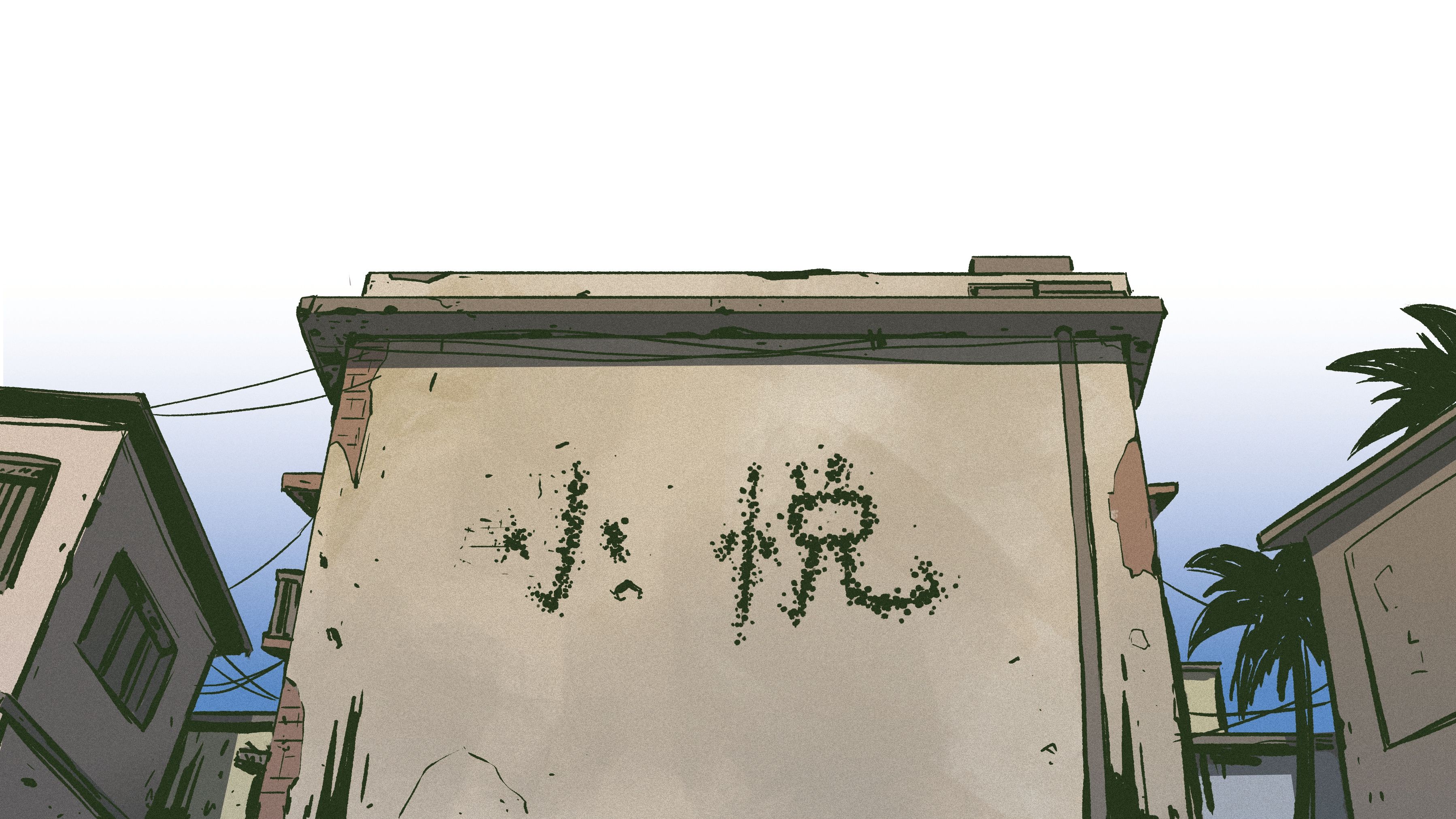
I met up with Xiaoqin at a cafe. She asked what my interests were. I studied her face. She was decent. “Contemporary Western philosophy,” I said. That prompted her to begin a lecture on analytic philosophy, beginning from Wittgenstein. I didn’t have the heart to tell her that my understanding of contemporary Western philosophy didn’t go much further than knowing there was something called “contemporary Western philosophy.” When she got to Saussure’s structuralism, I cut her off: “I’m kind of a foodie, too. I can tell you where to get a good roast-chicken-leg-on-rice.” She praised me for my broad interests and asked what I did for a living. I didn’t want to admit that I was unemployed. “I’m an entrepreneur,” I said. When she asked about my income, I said, “I’m still in the break-even phase.”
I went home and registered a new account for the game, then went to sit in the lounge chair beside the pool. I was trying to figure out whether I should go for Xiaoyue or Xiaoqin. Neither of them were replying to my messages, but that didn’t stop me from thinking about them.
I passed a cigarette to the caretaker. He could tell something was bothering me. After he lit up, he said, “You don’t even see that kind of skill on TV shows. The way he can move a blade. The speed. The power. Stronger than bullets. I think he must have used some ancient martial art to cultivate his internal power, the way he can strike so hard and so fast... One look at your scar, and I knew it wasn’t left by an ordinary man.” The caretaker looked at my confused expression. “I’m talking about the Griefer,” he said.
6
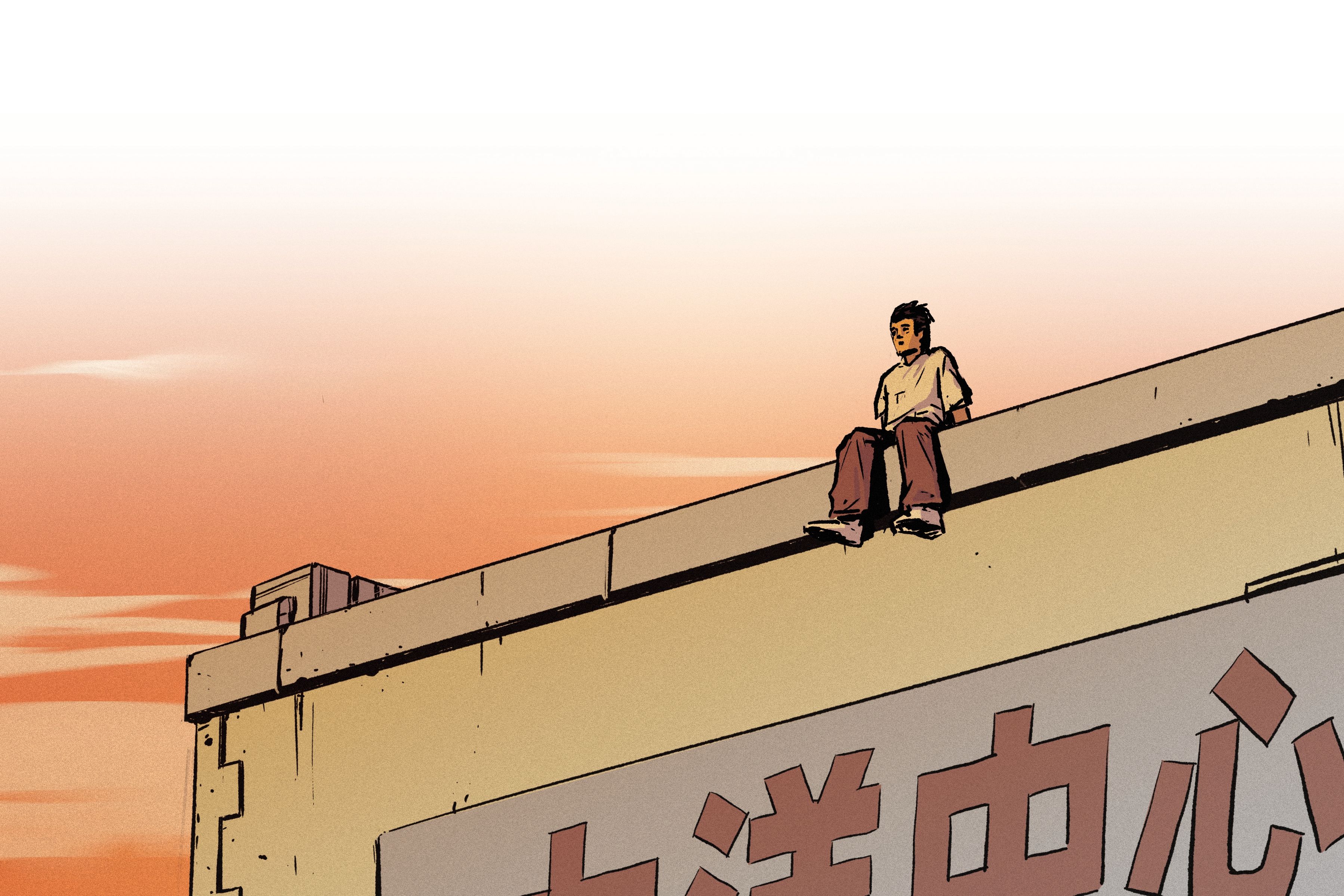
One day, I decided to go watch the sunset.
Since I was playing on a new account, I was, as always, completely broke. I planned to go up to the rooftop of Pacific Center Bank, the tallest building in Los Santos, and watch the sun go down. But when I stepped into the lobby, a security guard stopped me. I told him I wanted to use the restroom. He said he’d escort me. Once we got inside, I grabbed a flowerpot and slammed it over his head. I stripped him of his uniform and stepped back out of the restroom, dressed as a security guard. In the elevator, a man in a bank uniform nodded and sent me a message: Go to the thirty-fifth floor. I ignored him and rode the elevator to the top floor. A moment later, I heard gunfire and explosions coming from below. I had no idea what was happening. I sat back and watched the world below descend into chaos.
Just as the sun was about to set, the man in the bank uniform ran up to me and said, “We did it—we robbed the bank!” I stared back at him blankly. Finally, he explained that I was supposed to be the leader of the heist. Nobody knew what the other members of the team looked like, but all of the security guard uniforms had chips sewn into them, so they could recognize each other and coordinate the robbery. I just happened to knock out and steal the uniform of the head robber.
“The cops are already down there. They’ve got us surrounded,” he said. “I’ll take you to an emergency exit.” He led me down to the lobby, where a group of cops immediately surrounded us. “He’s the leader of them,” the man in the bank uniform said. “You’ll find the chip in his uniform.” He turned to me apologetically: “Sorry about that. I’m actually an undercover cop.”
Once again, I was dragged to the police station. The commanding officer slipped the chip out of my security guard uniform and said, “Sorry about that. I’m undercover, too. I take orders from your boss. Congratulations on the heist.”
My mind went completely blank. “Can I leave now?” I asked.
“Now, I’m going to wipe out every witness, including you,” he said.
“I thought we were on the side,” I said.
“In Los Santos, there are no sides. There are only missions.”
“I’ll respawn tomorrow, right?”
“You’re not going to die. You’re going to be thrown in a private prison. That way, you can’t create a new account. As soon as you log in, you’ll spawn in your cell. Always. Until you give up on Los Santos.”
“Is that even part of the game?” I asked. I decided that I needed to take one final shot at fighting back. On the way to prison, I’d take any chance given to run.
Suddenly, I heard a voice coming from below: “Fire! Evacuate now!”
The commanding officer showed me to a door. “This is the private prison,” he said. “See you later.” He pushed me in and closed the door.
I pushed open the door and looked out into the hall. There was no smoke yet. I couldn’t tell which unit was on fire. I thought for a moment, then decided to go back for my laptop. I didn’t have time to get dressed, so I evacuated wearing nothing but a pair of shorts. I took the stairs down, since I remembered that you’re not supposed to take the elevator when there’s a fire. When I burst out of the stairwell at the bottom, half-naked, clutching my laptop, a man holding a megaphone gave me a startled look. “You from Building Seven?” he asked.
I nodded, still panting.
He lifted the megaphone and hollered through it: “Why are you evacuating? The fire drill was for Buildings One through Five! How many times do we have to say it?” He looked me over: “But you did make the drill a little more convincing!”
Hot again. I headed straight for the pool and spent most of the day lying around. This time, the caretaker offered a cigarette. I lit it absentmindedly and said, “Can you keep a secret? The Griefer was mighty powerful and slippery as can be, but the fact is: he’s dead. You would have heard something about him lately, right? Anyway, I know it for a fact...Keep this to yourself. I was the one that killed him. Matter of fact, he didn’t run from me that day. He wanted to finish me off. So, I pulled my pistol and shot him dead. But remember—don’t tell anyone.”
The caretaker leaned on his mop. “So, you’re a murderer?” he said.
7
One day, I experienced Los Santos’ annual Disaster Day.
At the time, I was sitting in the private prison, trying to figure out a way to escape. All of a sudden, the whole building began shaking, and cracks appeared in the walls. Very quickly, the entire structure began crumbling down. Everywhere I looked, people were running away. Floating above us were the airships owned by the whales. Dangling down from the blimps were countless ropes, each loaded with people scaling upwards. From time to time, people scrambling up the ropes were hit by bullets and fell to the ground. There were explosions going off and shots ringing out from every direction.
That’s how things worked on Disaster Day—Reboot Day, as some people called it. The whales needed to drag as many people as possible onto their airships because once the server was reset, all property was taken and redistributed based on how many people they rescued and brought aboard. It wasn’t enough to simply save people; to come out ahead, you needed to stop other whales from rescuing people. To stop the event from becoming an uncontrolled slaughter, the whales had a strict agreement forbidding the use of deadly weapons to block access to rival airships. The agreement did not say anything about hiring people to do just that, however. This meant that everyone was split into rapidly shifting gangs. Nobody was ever sure who belonged to which group. Some people were doing their best to escape the disaster; some people were fighting their way onto the whales’ blimps; and some were trying to gun down the people climbing onto rival airships.
As for me, I was just trying to get away. The ground was shaking, so I thought the central square would be safe. When it started flooding, I scurried up the flagpole. An instant later, a super-rope dropped down from one of the airships, wrapped itself around my waist, and hauled me aboard. Someone on the airship handed me a rifle and a bulletproof vest, then sent me down again. My orders were to shoot anybody climbing up into the two blimps floating above me. I didn’t feel guilty. I had a gun to my head. I ran to position and aimed my rifle up at the airships. Immediately, a dense rain of bullets came down towards me. Before I had time to worry about whether I was going to live or die, a crowd surged around me. “If you come with us, you might be able to save yourself,” a man in the crowd shouted to me. “Start shooting at that one!“ I looked up. It was the airship that I had been hauled up to a short time before and given a rifle. There was no time to hesitate. I followed the crowd to a position under the airship, raised my rifle, and made ready to fire. I didn’t get off a shot before another group arrived.
“Hold your fire!” a man shouted. “We’re together now. We’re taking down the airship to the east.”
The crowd shifted, quickly but without much order, toward the new target.
“Shouldn’t we shoot them first?” someone asked.
“Who?” another person asked.
“They’re with us now.”
Multiple voices called out: “Who’s with us?”
The earth was still shaking, and the floodwaters were still rising. The crowd was confused but thrilled. Someone—it was impossible to say who, in the confusion—fired the first shot, and everyone else started shooting. I ran as fast as I could, firing the whole time. I was picking up weapons I’d never seen before in Los Santos.
It was the most fun I’d ever had in the game. I pounded the keyboard and wrenched the mouse so hard I thought I was going to damage them.
I forded flooded streets and leapt over fissures opening in the ground. I was making my way to the Los Santos Hills.
Beijing Time: late afternoon. The fan whirred beside me. Sweat ran from my messy hair and across my taut cheeks.
And I kept running, firing aimlessly.
I was halfway up the mountain when the fan, the lights, and the computer all switched off at the same time.
I could just see through the hair hanging over my eyes, my hazy reflection in the blackened screen.
No power in the apartment. I went out to the barbershop. I couldn’t put off a haircut any longer, and I suddenly had no excuse not to go.
When they saw me coming, the barbers drowsing in their doorways perked up. They pitched me ion perms and wave perms, side parts and off-center parts, the latest styles from the States and South Korea, treatments and ointments, and so on. One barber offered me a styling and treatment package that cost 998 yuan, discounted from 2,899. I agreed to thirty yuan for a cut. While the barber worked, I snapped a few pictures to send to Xiaoyue.
Back in the dim swimming pool, I managed to swim fifty meters, then dragged myself back onto the deck, gasping for breath. The caretaker was seated nearby, a cigarette dangling from his lips. He passed me one from his pack. “He comes and goes without a trace,” the caretaker said. “A master without equal. Beyond comprehension. It’s hard to imagine someone like that living in our society.”
As I lit my cigarette, I realized what he was driving at. “Yeah,” I said. “Pretty incredible.”
The caretaker looked down into the water and frowned. “And you killed him,” he said.
I took a drag off the cigarette. “Right,” I said. “But keep that to yourself, huh?”
The caretaker lifted his head and looked at me. “I wouldn’t tell a soul,” he said. “Well, I did let something about it slip—but just to the boss.”
I held the cigarette between two fingers and looked back at him. “What’d he say?” I asked.
“The boss knows all about the Griefer. The boss said he wants to meet you.”
8
One day, all of Los Santos tried to hunt me down.
I managed to escape on Disaster Day. I didn’t wind up being rescued by one of the airships. I survived. But then everyone came looking for me, trying to kill me for the weapons I’d picked up. I tossed the guns, and they kept coming for me, anyway. But they didn’t manage to shoot me. I used every manner of transportation to flee. I was on the other side of the city when I found a walled garden to hide in. I jumped the wall. Everything was quiet. I took a drink of water. The garden was breathtaking. And there was a big villa attached.
I took a stroll around the villa, then went inside through an open door. The interior was luxurious and deserted. I went up and down the stairs a couple of times, then paced between rooms, until it was dark outside. The interior lights came on automatically.
Beijing Time: six at night.
I took out my phone and snapped pictures to send to Xiaoyue. I told her it was the sort of place I was going to buy her.
I studied my avatar on the screen. I thought, suddenly, about what Xiaoyue and I might chat about while sitting on the sofa in the living room, and tried to decide which room we might sleep in. I went out to the garden to stroll under the night sky.
I saw that the gang of monsters that had been pursuing me were waiting right outside the gate.
When they saw me, they raised their weapons, ready to gun me down. Their leader motioned for them to wait. “Put your guns down,” he said. “Hold your fire. You know we can’t shoot him here!“ He called out to me from the other side of the gate: “Come on out. You’ve got no other choice.”
“Go ahead and kill me,” I said. “I can respawn tomorrow, anyway.”
“If we kill you, how are we going to find out where the rest of the weapons are?”
“I haven’t got them.”
“If you want to survive in Los Santos, you can’t trust anyone that easily.”
“What would it take to make you believe me?” I asked.
“In Los Santos, you can’t trust anyone!”
“Just shoot me, then,” I said.
Before the leader of the mob could react, I was shot from behind. The leader jerked around and shouted, “If anyone finds out we opened fire on a whale’s property, we won’t be able to survive anywhere in Los Santos—or outside of it. Let’s get out of here!”
When they were gone, I lay down in the garden.
Everything was peaceful until my phone started ringing. When I answered, the caller explained that he represented the Civil Rights Commission. He informed me that I was trespassing on private property and needed to report to the Commission’s office immediately.

It made no sense. In Beijing Time, I was alone in my cramped, messy room. But the Civil Rights Commission was nothing to be toyed with. I headed for their office as soon as I hung up.
As I sat in the brightly lit office, an official informed me that trespassing on private property in Los Santos was against the law. His colleague explained that they had reviewed my account history and discovered prior offenses for trespassing on private property.
“But Los Santos only exists on a server,” I said. “It’s just a game.”
“Assets in Los Santos are purchased with American dollars,” one of the officials said. “Violations are still punishable.”
“So, what’s the penalty?”
“According to the Los Santos legal code, these sorts of disputes can be handled through a negotiated settlement. In this case, the property owner is willing to settle for ten thousand dollars.”
“I’ve seen plenty of crime in Los Santos. Does everyone get charged?”
“Each case is handled differently,” the official said. “Some are dealt with on the server, and others are handled by our office.”
“I got shot in that garden,” I said. “Are you going to charge whoever did it?”
“You haven’t made any in-game purchases,” the official said. “Your life is free-to-play. In other words, it’s not worth anything. Killing you doesn’t constitute a crime.”
“Ten thousand dollars is a bit steep,” I said.
“If you can’t come up with the money, you’ll be detained for fifteen days.”
“So, I can’t log into my account for two weeks?” I asked.
“No, you’re going to be locked up for two weeks.”
“So, there’s no distinction between the virtual world and the real world?”
“There’s only one world,” the official said. “Virtual, real—none of that matters.”
“Can I make payments on the ten grand?”
“The regulations allow that, but you will be charged interest.”
One of them slid a sheet of paper across the desk at me. I tried to make sense of the payment schedule and interest rates, but I started getting sleepy, so I decided to just sign it.
It was close to midnight, Beijing Time, when I stepped into the changing room of the old pool. The caretaker was there, sweeping the floor. “There you are,” he said.
“Where’s your boss?” I asked.
“On the deck.”
We headed for the pool together. The lights were lower than usual. I turned and saw that the old man was undressing.
“So, where is he?” I asked.
“Let’s swim a couple of lengths,” he said.
“You swim?” I asked.
“It’s been twenty years.”
That was when I noticed the scar across his belly. It looked a lot like mine. “Same as me, huh?” I asked.
The caretaker shook his head: “Nah, mine’s from getting my appendix out.”
Tropical Assassin | Short Story is a story from our issue, “I, Humanoid.” To read the entire issue, become a subscriber and receive the full magazine.
Related Articles