The shrine in Sanbao, a Dong village in the tree-clad mountains of southeast Guizhou’s Rongjiang county, remains locked and quiet for most of the year. Instead of the stone tablets or statues found in many of China’s shrines and temples, the altar here contains a more unusual object—a half-open black umbrella.
That umbrella represents Sama (萨玛), the supreme deity of the Dong, an ethnic group that lives primarily in the remote hills along the borders of Guizhou, Guangxi, and Hunan. Just as an umbrella shelters those beneath it, “Sama is the protector and the spirit of unity for the Dong villages,” Yang Chaojin, a Sanbao village elder, told Guizhou Daily in March last year.
According to legend, Sama, meaning “great grandmother” in the Dong language, was a heroic woman who led her people against invaders before leaping from a cliff to her death, allowing her followers to escape. She is hence revered as the “Mother of All Things,” the embodiment of the Dong’s ancient, once-matrilineal society.
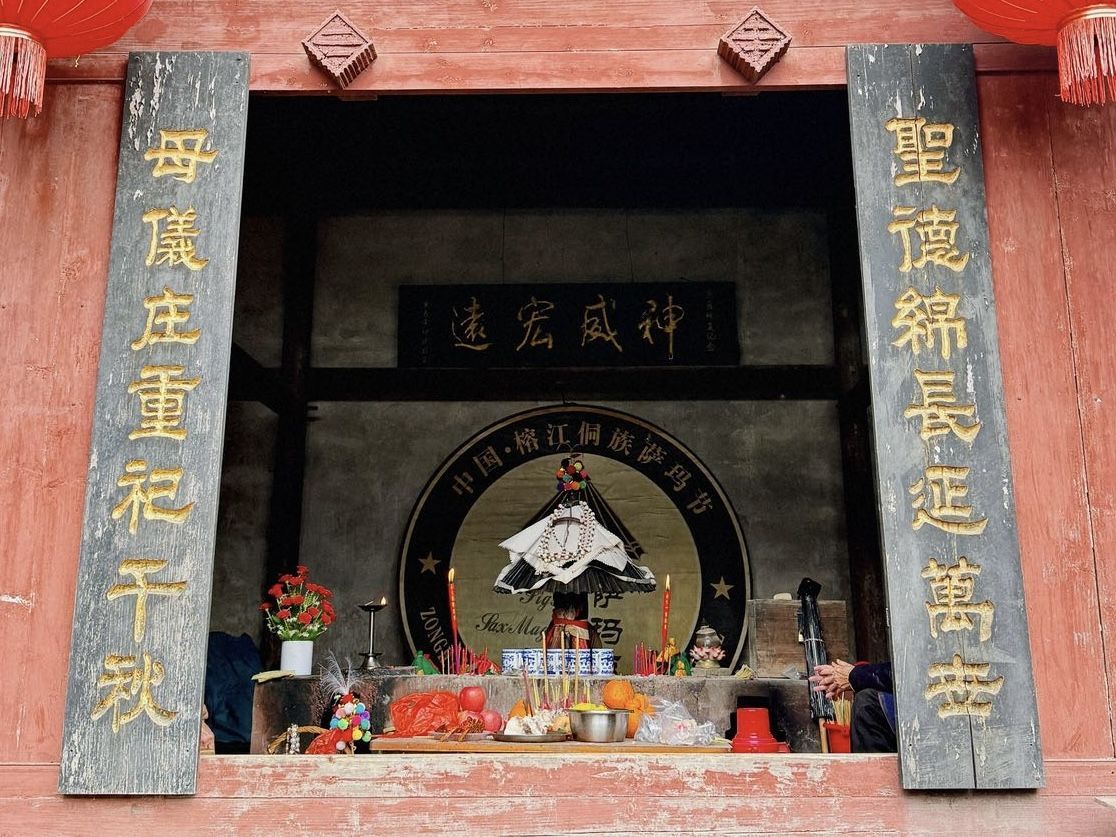
When a new shrine is established, villagers make a special journey to bring back soil from the site of her sacrifice in a ritual known as “invoking Sama (接萨).” The shrine itself is known as “grandmother’s house.”
While the Dong no longer follow their traditional matriarchal social structure, some of its customs have endured, including the Sama Festival. In the first or second lunar month, before the start of spring plowing, the quiet shrine in Sanbao is transformed as Sanbao villagers, mostly married women, converge for the largest celebration of its kind to pray for harmony, abundant harvests, and the flourishing of both people and livestock. The festival was inscribed on the UNESCO Intangible Cultural Heritage list in 2006 and has been hailed as the “Women’s Day” of the Dong. In recent years, participants from surrounding villages have increasingly come together to celebrate the occasion, with 13 villages joining this past April and helping raise awareness of the unique tradition.
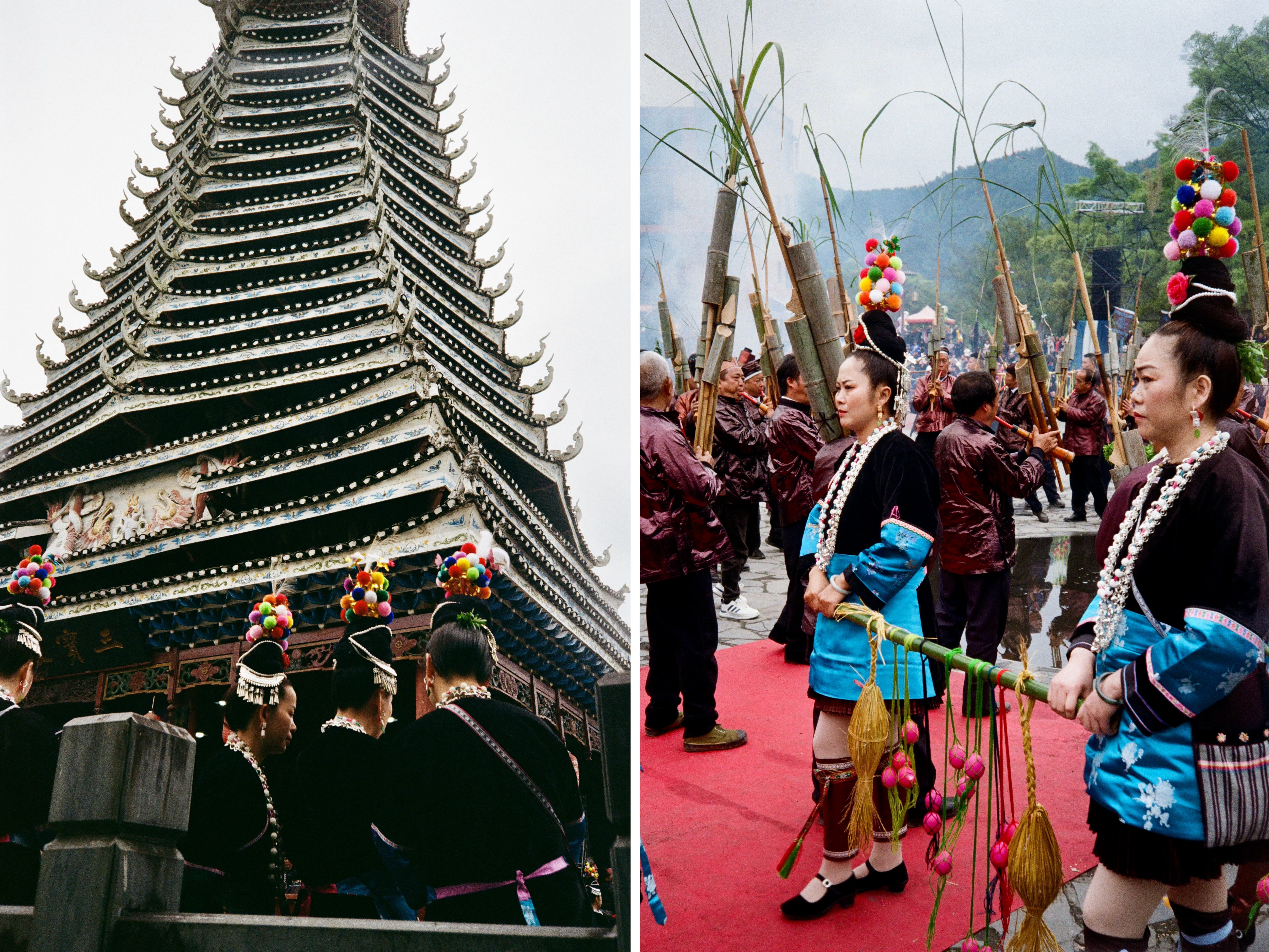
Women gather beneath the drum tower in Sanbao village, waiting to pray for blessings from Sama
The morning ceremony begins at nine. Devotees, bedecked in their finest attire with an array of silver ornaments, gather at the Sanbao shrine, where the shrine keeper serves “grandmother’s tea.” The women would tuck a small sprig of boxwood, a symbol of longevity, into their hair.
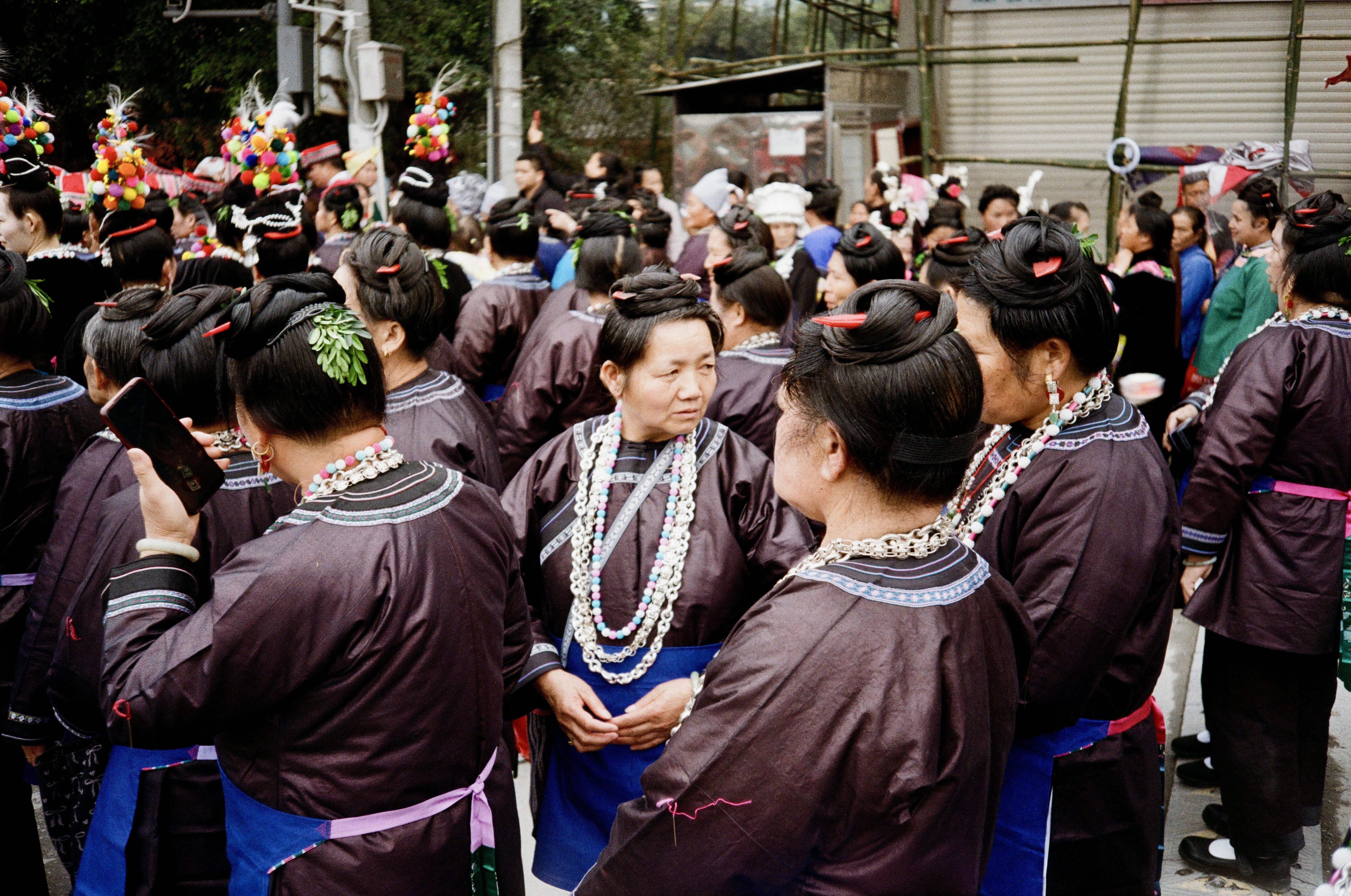
On the day of the Sama Festival, local women would tuck a small sprig of boxwood, also known as “ten-thousand-year green (万年青)” in Chinese, in their hair as it symbolizes longevity
The shrine keeper, or den sa, then takes over. A position passed from mother-in-law to daughter-in-law, den sa is Sama’s representative on Earth and the most senior woman in the village. Holding the black umbrella, she leads the group in procession around Sanbao, a ritual known as “treading the path.” Wherever the procession passes, Sama’s protection follows.
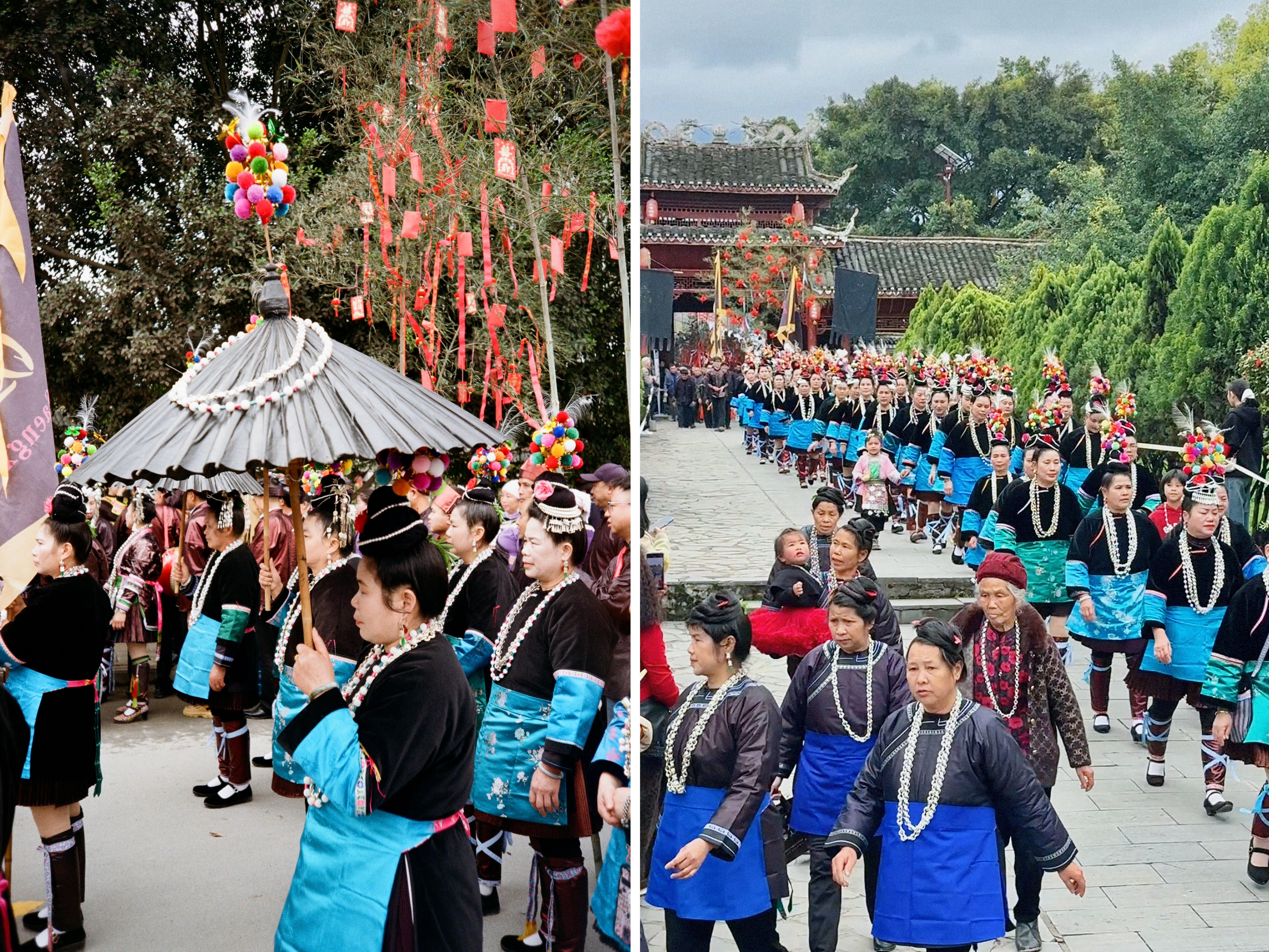
The den sa of each village, carrying a black umbrella, leads a procession in honor of Sama
In the afternoon, the 13 shrine keepers, one from each of the villages, lead their all-female delegations into the ceremony ground. The ritual master, or sangh daengc, a hereditary position passed from father to son and one of the few male roles in the ceremony, rings a bell and chants sacred songs praising Sama’s deeds in founding the village and defending her people. He recounts the Dong’s legendary origins and ancestral migrations, while calling upon Sama to descend and inhabit the den sa.
In the outermost ring of the parade, male musicians play lusheng—a wind instrument made of bamboo—accompanying the procession and communicating with Sama through music. Firecrackers signal the end of the prayers, and the ceremony grounds come alive with “dos jeeh,” a vibrant tradition of singing and dancing. Thousands join hands, forming five great circles that expand layer by layer, with grandmothers, younger women, and girls moving together in song and dance. The event now draws thousands of visitors to Sanbao each spring, welcoming women of all ages and backgrounds to watch from the sidelines or join the dance circles.
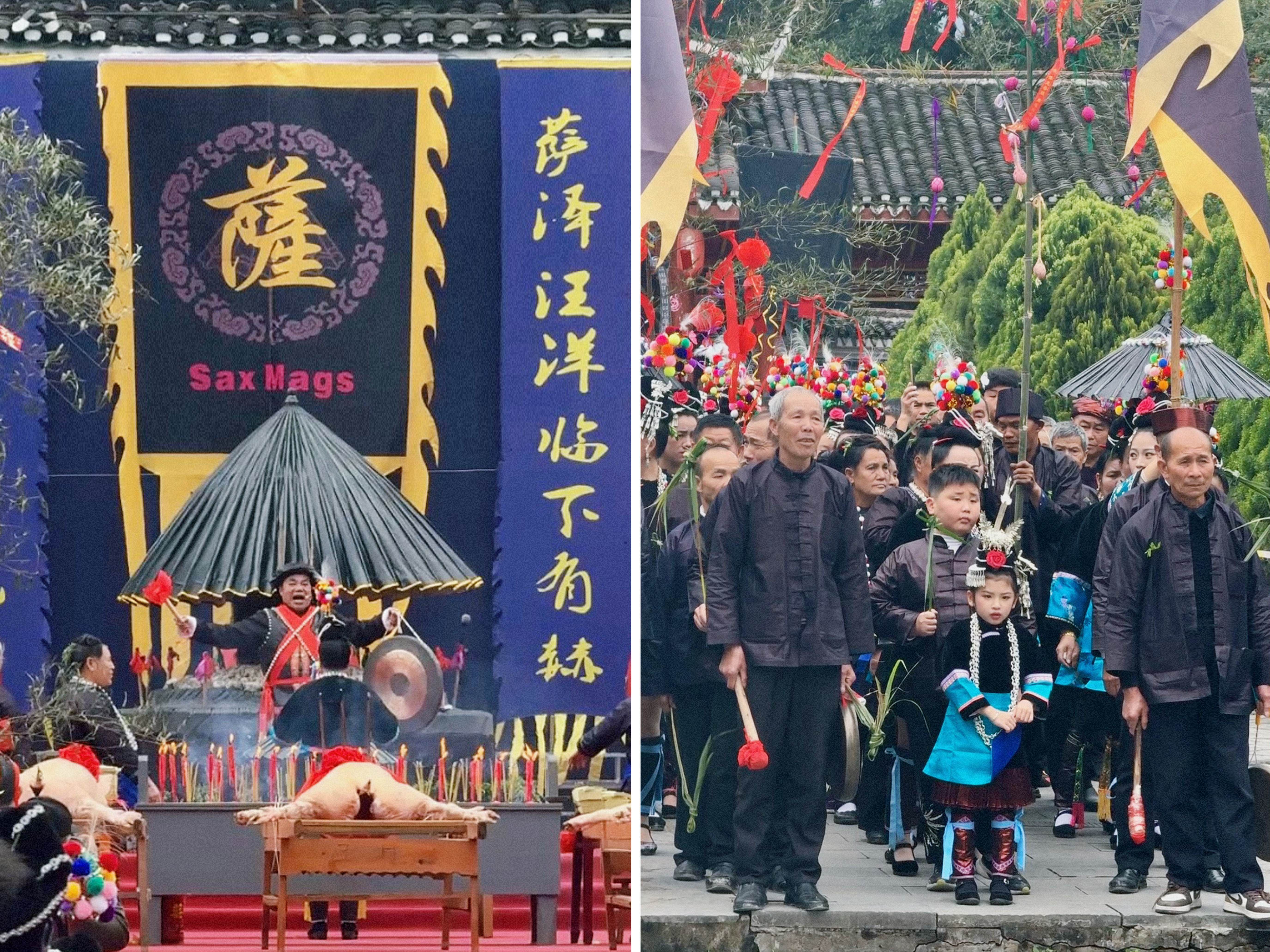
The ritual master leads the mostly women gathering in prayer, though a small number of highly respected male elders are invited to take part
In recent years, media coverage has increasingly emphasized the festival’s theme of female agency, framing it as a celebration of womanhood and female empowerment. Yet for Wu Yinglan, a millennial woman who grew up in neighboring Congjiang county, her memory of the festival is more nuanced.
“A lot of visitors see Sama Festival as the Dong version of Women’s Day. But that’s a modern narrative, shaped by cultural tourism,” she says. “When we held the Sama rituals in our village, everyone was solemn and fearful. It felt uncomfortable, tense.”
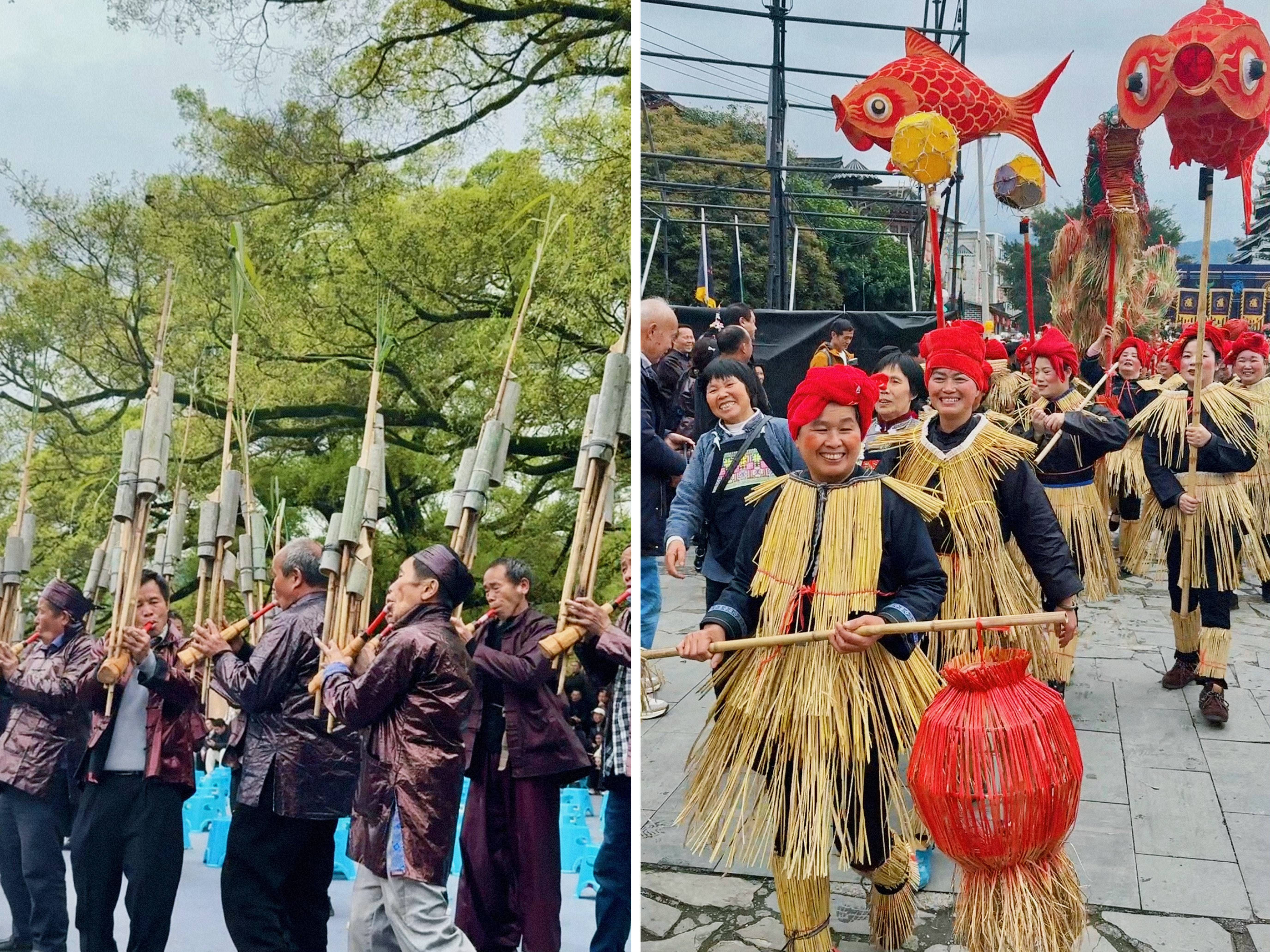
Women dressed in straw skirts and red turbans parade with straw dragons and fish lanterns, praying for favorable weather and a bountiful harvest, while men in the outer ring of the ceremonial procession play the lusheng—a traditional bamboo reed instrument—to communicate with Sama
In Zhanli, the village where she grew up, the festival came with strict behavioral prohibitions for women. Unmarried girls were not permitted to enter the shrine. Neither were menstruating or pregnant women, who were considered ritually impure and potentially harmful to the sacred space. Children, too, were forbidden from making noise or moving freely around the shrine.
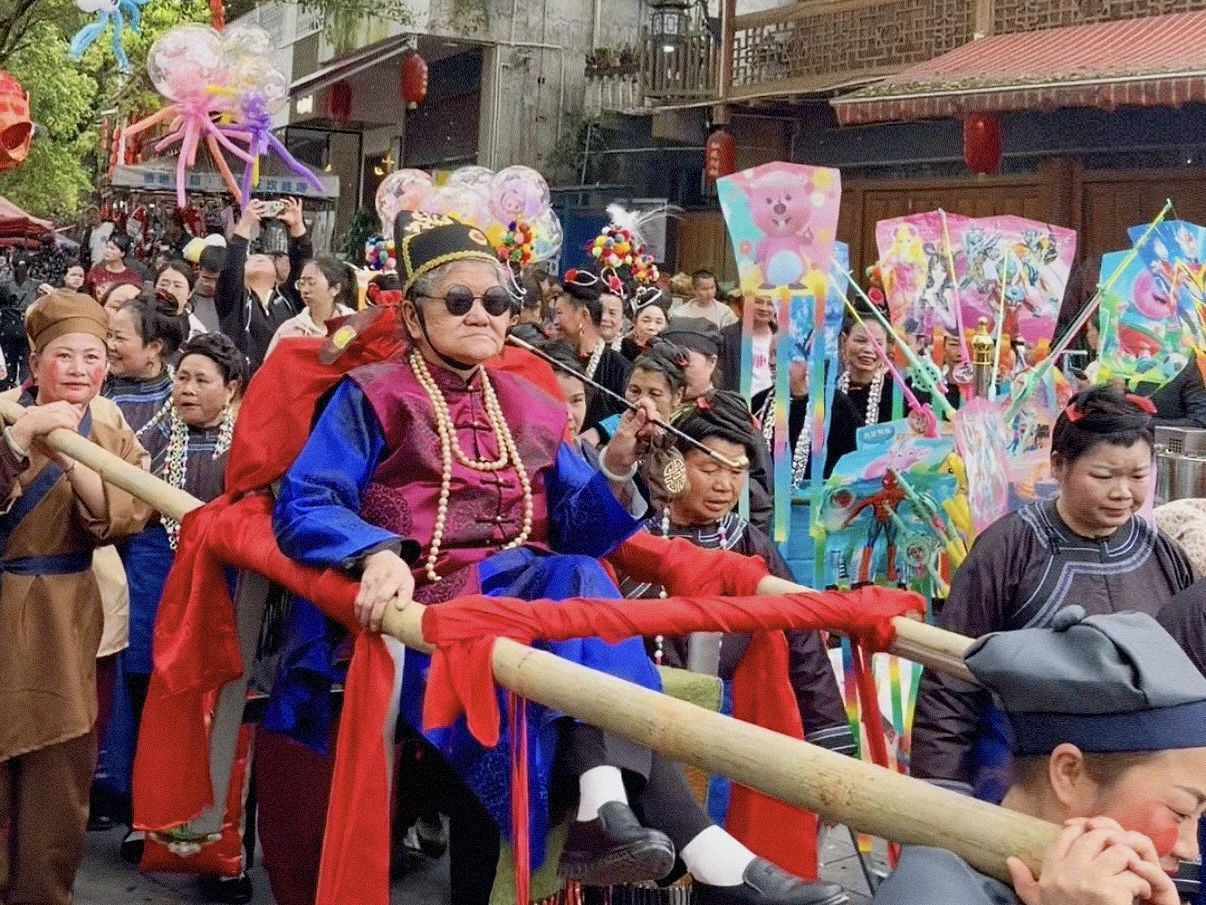
An elderly woman plays the role of an official, riding in a sedan chair and tossing candy to the crowd. She is accompanied by characters playing guards and beggars, who make comic expressions and gestures at the crowd.
While the Sama Festival that Wu and other Dong women grew up celebrating may not fit neatly within the framework of the modern Women’s Day movement, the festival itself appears to be evolving alongside contemporary social values. Recent iterations have become more inclusive, adding new attractions alongside their traditional rituals, such as cultural heritage performances and fashion shows featuring Dong ethnic dress. These additions have also helped generate additional income for local residents.

Cultural heritage performances, such as singing in traditional dress, have become a major tourist attraction in Sanbao
Some in the community, including the village elder Yang, welcome these changes: “The more people who participate, the better; it is meant to be joyful and full of life. This is different from the past, when each village held its own festival. Today, everyone—men, women, the elderly, and children—can join in.”
Like all myths and religions, Sama’s legend varies from village to village, place to place. Perhaps there is space for both narratives, old and new, to coexist, especially without a statue to look upon, or a fixed face to imagine. With the umbrella both half-closed and half-open, everyone is free to carry their own version of Sama.
Related Articles