What ties a modern Supreme Court legal battle, an office worker trapped in an unexpected meeting, and a 19th-century sailor pressed into service aboard a vessel bound for the Far East together? They are all connected by a single, evocative verb: to be shanghaied—forced, tricked, or hijacked into a journey or task they never chose.
Today, Shanghai is a city people do actively choose. Tourists stroll the sunlit riverfront promenade, entrepreneurs seize opportunities in one of the world’s greatest economic engines, and expatriates raise families amid world-class schools and hospitals. Visitors who come for a week often find themselves extending their stay, reluctant to leave. It is a metropolis that beckons rather than repels.
Yet a century and a half ago, the name Shanghai came to mean something entirely different to Americans—not a destination people dreamed of reaching, but a nightmare from which there was no waking. The word “shanghai” entered English not on a travel brochure, but as a warning whispered in dimly lit bars along the US West Coast.
The story of how a historic Chinese port city became an American slang term, and eventually a globally recognized English verb, reveals how language preserves the scars, economic shifts, and social realities of the past. Behind this particular tale lies a dark chapter of 19th-century maritime commerce and labor exploitation amid the expansion of global trade.
The dark origins of “shanghai”
Nowadays, the term is used casually across boardrooms, military barracks, and suburban living rooms—whether referring to a colleague forced to host an unexpected meeting, a soldier unexpectedly reassigned, or a dinner guest roped into an impromptu speech. But the answer to how “shanghai” became an action rather than merely a destination lies in the American West during the turbulent mid-19th century.
Explore more about language and history:
- Gung Ho: How a Linguistic Misunderstanding Became an American Catchphrase
- Two-Way Communication: How China Adopted Japanese Terms to Discuss Modernity
- How China Adopted Western Punctuation
The California Gold Rush transformed sleepy Pacific ports like San Francisco into booming maritime hubs virtually overnight. More than a thousand merchant vessels sailed into San Francisco Bay, many of them promptly abandoned by their crews, who jumped ship to seek fortunes in the Sierra Nevada foothills. Ship captains found themselves stranded with hulls full of cargo and few hands to man the sails.
Because long-distance voyages in the 19th century were extremely hazardous and physically punishing, few ordinary men were willing to volunteer for the sea. Compounding the situation was strict federal legislation dating back to 1790, which made it a punishable crime for a sailor to leave a ship before the end of his contracted voyage. Although originally intended to maintain order in the merchant marine, the law effectively created an inescapable trap. Once a sailor signed a ship’s register, he was legally bound to the vessel under pain of imprisonment, regardless of how his signature had been obtained. Desperate sea captains, in urgent need of crews, were prompted to secure men by any means necessary—even if it meant resorting to outright kidnapping through brute force, liquor, or drugs.
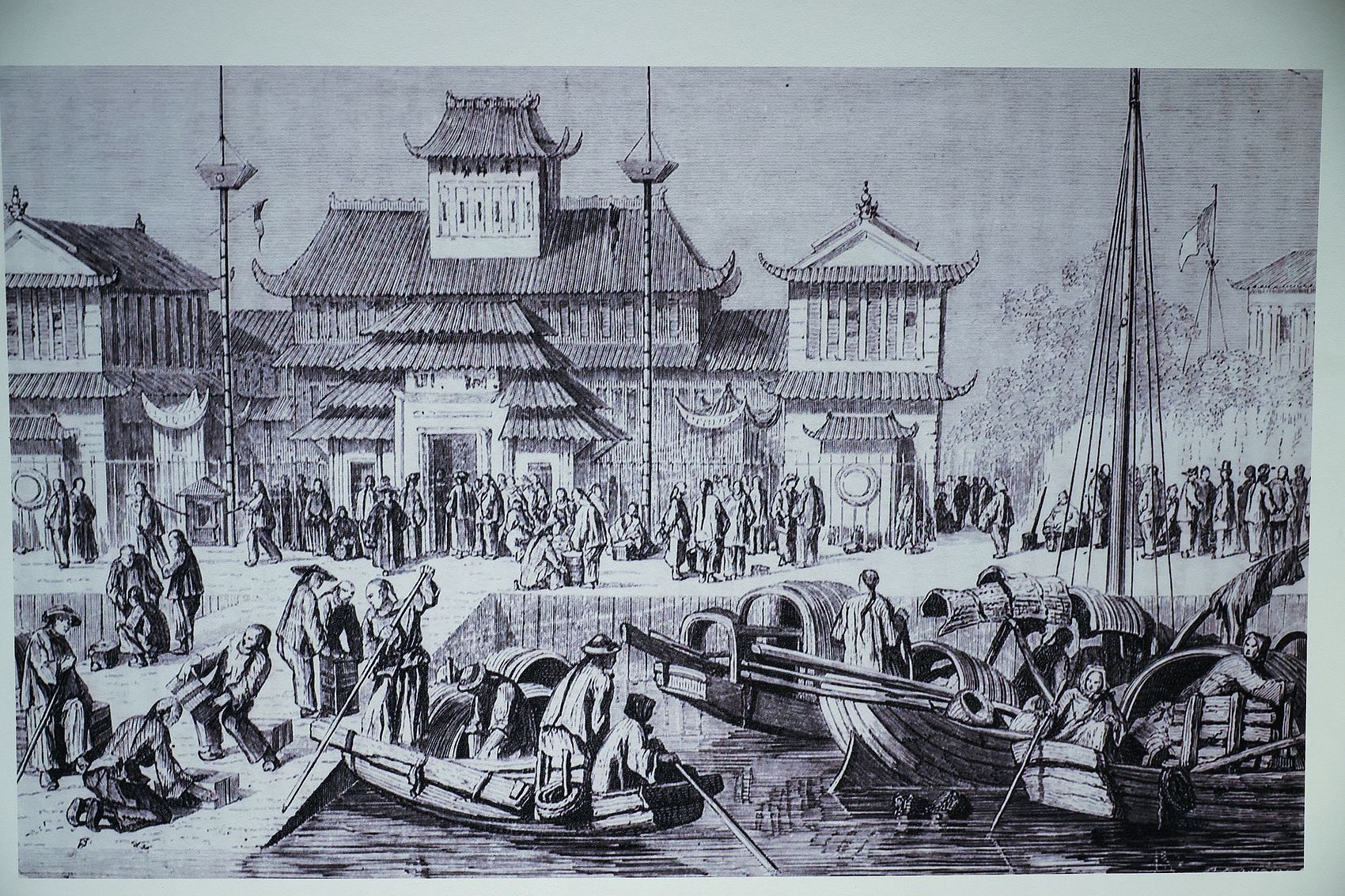
An illustration of Shanghai’s Customs House in 1861 by an artist accompanying the Prussian diplomatic mission (VCG)
Into this labor deficit stepped crimps: predatory boardinghouse keepers, saloon owners, and underworld figures who capitalized on the crisis by supplying sailors to captains by the body. Waterfront parlance called the payout for this coercive human trade “blood money.” Unsuspecting victims, often drunk, drugged, or knocked unconscious in waterfront saloons, would wake up miles out at sea aboard an outbound vessel. A forged signature would appear on the shipping contract, and the crimp would have pocketed a substantial advance on the sailor’s future wages.
As Merriam-Webster notes, this unscrupulous practice became inextricably linked with one particular Chinese port: Shanghai, newly opened to foreign trade after the Opium War of 1840, was a far-flung and dangerous destination for American shipping, and an unpopular one among seamen because of the difficulty of securing return passage. Because of the scarcity of willing men for these voyages, many kidnapped sailors ended up on ships bound for China, and “shanghaiing” became the universal name for the act itself regardless of the destination.
The prevalence of shanghaiing sparked decades of legal battles. Congress passed the Shipping Commissioners Act of 1872 to prevent coerced signatures, followed by the Dingley Act of 1884 to eliminate advance wage payouts. Ultimately, legal reform and technological progress combined to eradicate the practice. By the late 19th century, steamships were rapidly replacing sailing vessels, favoring smaller, specialized crews over indiscriminate recruitment by crimps. Then came a 1906 Act that formally outlawed shanghaiing. The Seamen’s Act of 1915 delivered another major blow to the crimping system by expanding protections for maritime workers and dismantling many of the exploitative practices that had allowed crimps to thrive.
A verb that outlived its era
This dark maritime trade left an indelible mark on lexicography. The Oxford English Dictionary (OED) defines the verb with stark precision: “To drug or otherwise render insensible, and ship on board a vessel wanting hands.” The term’s historical roots are preserved in the OED’s citations, the earliest of which appear in an edition of the Sacramento Daily Union from January 10, 1856, reporting with matter-of-fact brutality: “A man is drugged and shanghaied on board a ship.”
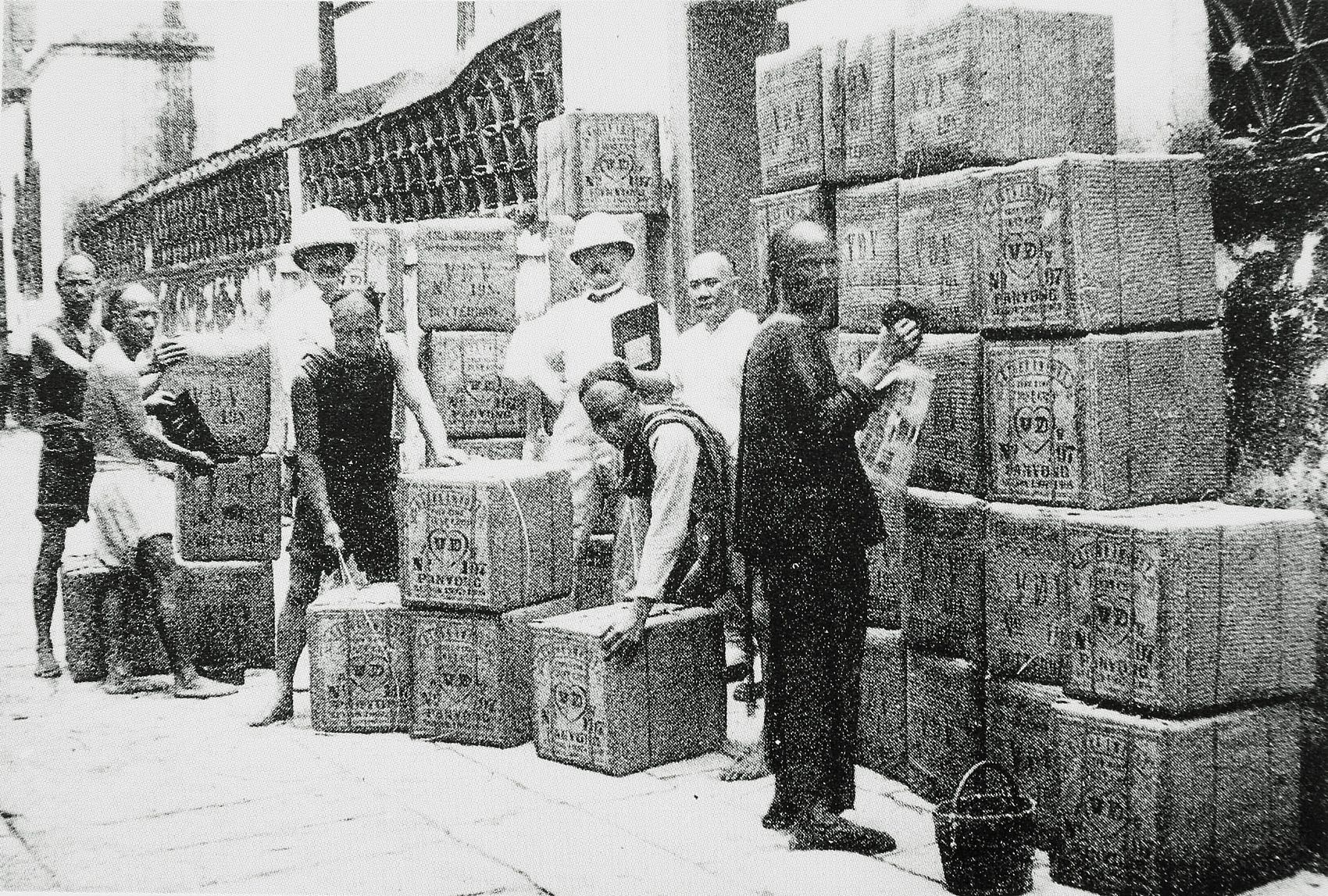
Chinese labourers moving tea awaiting export at the docks along Shanghai’s Bund in the mid-19th century (VCG)
According to the dictionary’s lexicographers, the verb entered American military slang after World War I to describe servicemen forcibly reassigned to undesirable posts. In Joseph Heller’s classic 1961 satirical novel Catch-22, a Harvard cetologist is memorably described as having been shanghaied ruthlessly into the Medical Corps by a faulty computer.
Beyond the military, the OED also records how law enforcement has adopted the word to describe tricking a suspect into entering a jurisdiction where they could be lawfully arrested. It is a meaning that echoes the term’s coercive origins—luring someone across a threshold from which there is no return—while translating that maritime violence into the bureaucratic language of modern policing.
Discover Shanghai’s history and culture:
- Our Gang’s Food: The Mixed-Up Cuisine of the Magic City
- The Enduring Allure of Old Shanghai
- Sing-song Shanghaiese
In contemporary journalism, literature, and popular media, “shanghai” has largely shed its literal maritime chains, evolving into a versatile verb used to describe various forms of physical coercion, social entrapment, or sudden hijacking. Writing in The New York Times in 2014, Jeffrey Gettleman depicted a Nairobi scene in which “glassy-eyed conductors shanghai hapless passengers from the curb into shuddering minibusses.”
The notion has also proven irresistible to media critics. In 2023 television critic Robert Lloyd recalled a show whose characters are “shanghaied by Witchiepoo...to Living Island.”
Perhaps the clearest testament to the term’s endurance in English is its appearance at the US Supreme Court. In the landmark 2018 case Janus v. AFSCME, state employee Mark Janus sued one of the largest public-sector labor unions after being required to pay fees despite not being a member, arguing that the payments compelled him to support speech he disagreed with. Deep within the petitioner’s argument was a vivid and familiar historical metaphor: Janus objected to being labeled a “free rider”—someone benefitting from union representation without paying—arguing that he was “more like a person shanghaied for an unwanted voyage.” The court eventually ruled in Janus’s favor, deciding that such payments violated his First Amendment rights.
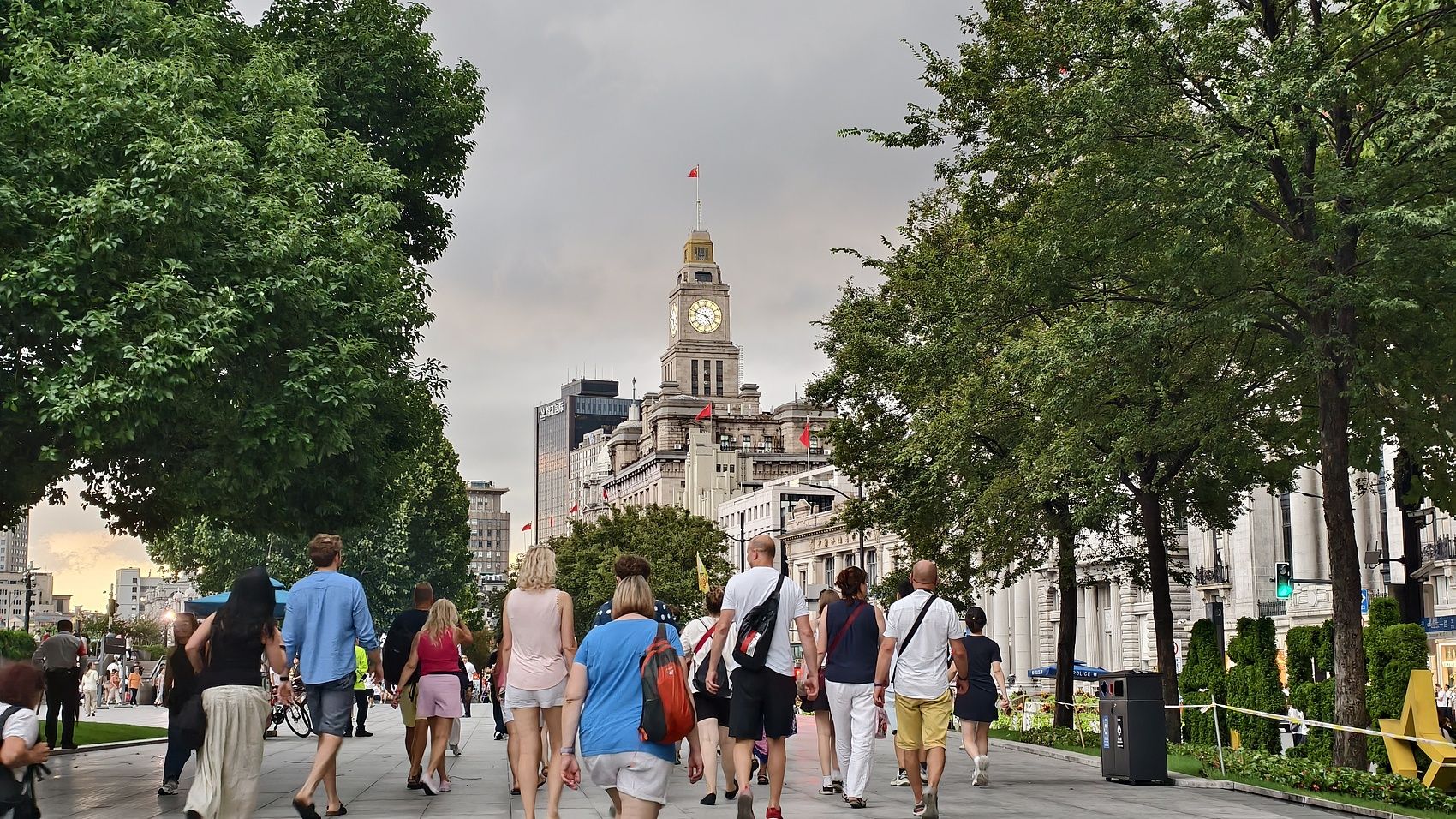
Today, Shanghai continues to be one of the most popular tourist destinations for overseas visitors (VCG)
English has a long history of turning proper nouns into memorable verbs. Speakers of the language use verbs coined from names like “boycott” (after the ostracized 19th-century land agent Captain Charles Boycott) and “gaslight” (from the eponymous 1944 film, itself adapted from a 1938 stage play) to capture social dynamics through cultural reference points. Yet even among these examples, “shanghai” occupies a special category as a true toponymic verb—a word born directly from a geographic location. It captures a universal human experience: the sudden realization that one has been tricked or forced into something they never intended.
Modern Shanghai is a futuristic global metropolis of more than 24 million people. Yet tucked away in English dictionaries, news reports, and judicial opinions, its name retains the quiet echo of its other 19th-century waterfront past, serving as a monument to the unregulated days of Pacific commerce and reminding us that long after historical practices end, the words they forge continue to sail on.
Related Articles