


At around 07:00 a.m., Puxiong station’s platform is already lined with passengers. They are waiting to board the 5633, a train that departs from the small town in Liangshan Yi Autonomous Prefecture for Panzhihua, a city over 370 kilometers away to the south in Sichuan province. Some carry with them chickens, ducks, and geese, cargo usually forbidden on the country’s public transport network due to health and hygiene concerns. Pigs, sheep, and even cattle are also a common sight on board, especially around the Torch Festival and New Year celebrations of the local Yi ethnic group, which are held in the sixth and tenth months of the traditional lunisolar calendar.
Traveling at an average speed of around 40 kilometers per hour, the 5633 runs through 25 stations during its nine-hour journey (around one stop every 20 minutes) and has long served as a lifeline for rural residents traveling to schools, workplaces and hospitals, or to see friends and relatives in nearby cities. Each weekend, the train shuttles hundreds of students between their homes and boarding schools in towns and counties along the route, while on market days the carriages are filled with villagers and their agricultural produce.
As Huang Jingrong, a 22-year-old college student and amateur photographer visiting from Guangzhou, boarded the train at Puxiong on July 6, a routine off-season Monday, she was quietly ruing the fact that she was missing the bustle of the two important festivals. She needn’t have.
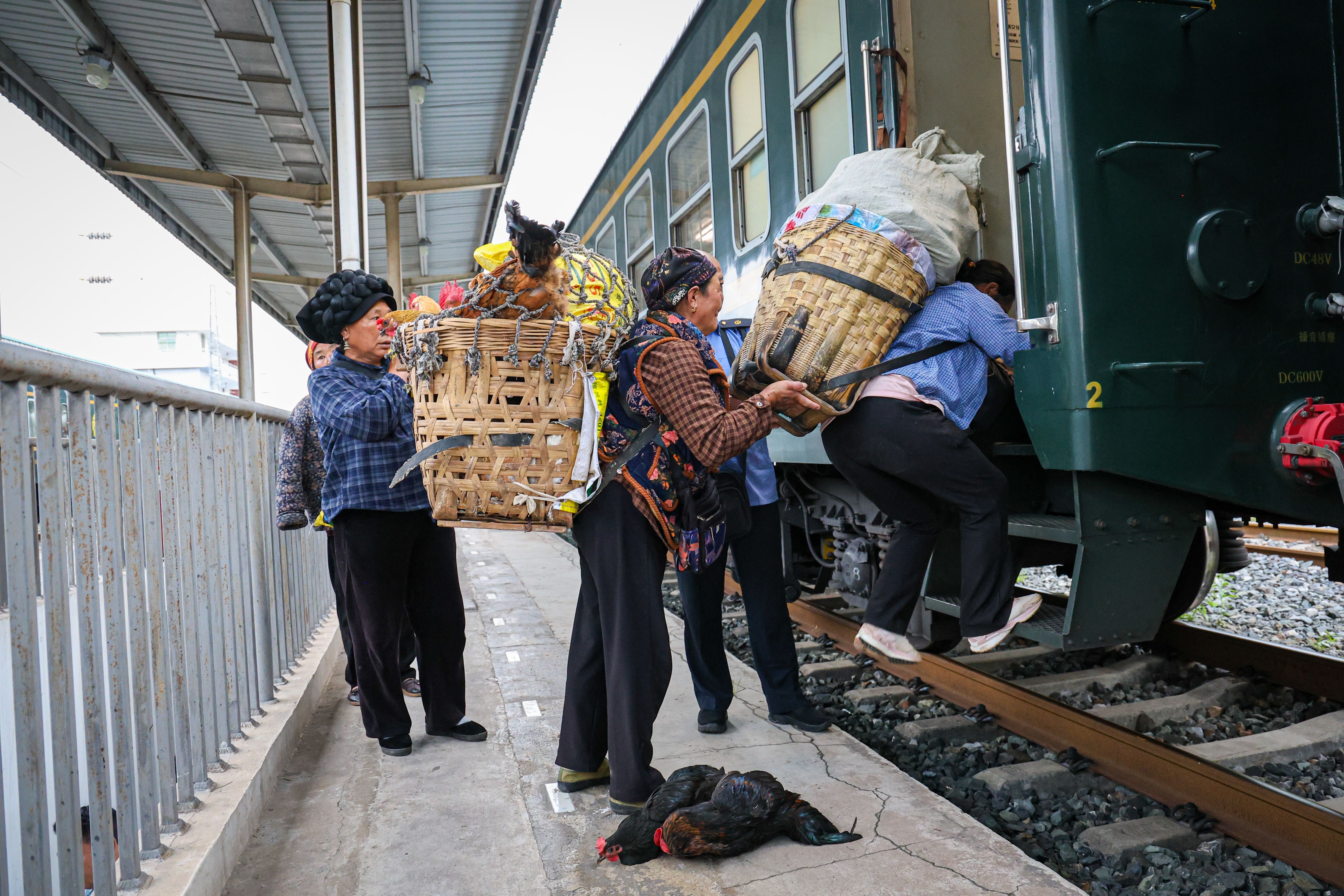
Many villagers in Puxiong regularly take train 5633 to sell poultry and other agricultural produce in neighboring towns and counties, each of which may hold its market on a different day
After a few stops, “the aisles were packed with bamboo baskets, woven sacks, and plastic buckets. The train was around 80 percent full and walking from one end to another felt like passing through a narrow street in motion, with vendors peddling everything from fruit and snacks to Yi handicrafts,” she recalls.
Huang had visited the day before, only to find the station closed. She later learned that heavy rains had limited the train to just three days of operation in June. Monday marked its first run in July.
Read more about train travel in China and beyond:
Amid the rapid development of China’s high-speed rail network over the past two decades, many slower trains operating at speeds under 100 kilometers per hour have been phased out. Yet some slow services, like the 5633, are growing in popularity. The “moving market” atmosphere of these trains, with their unusual passengers of poultry and livestock, is piquing interest online, enticing more tourists like Huang to step aboard.
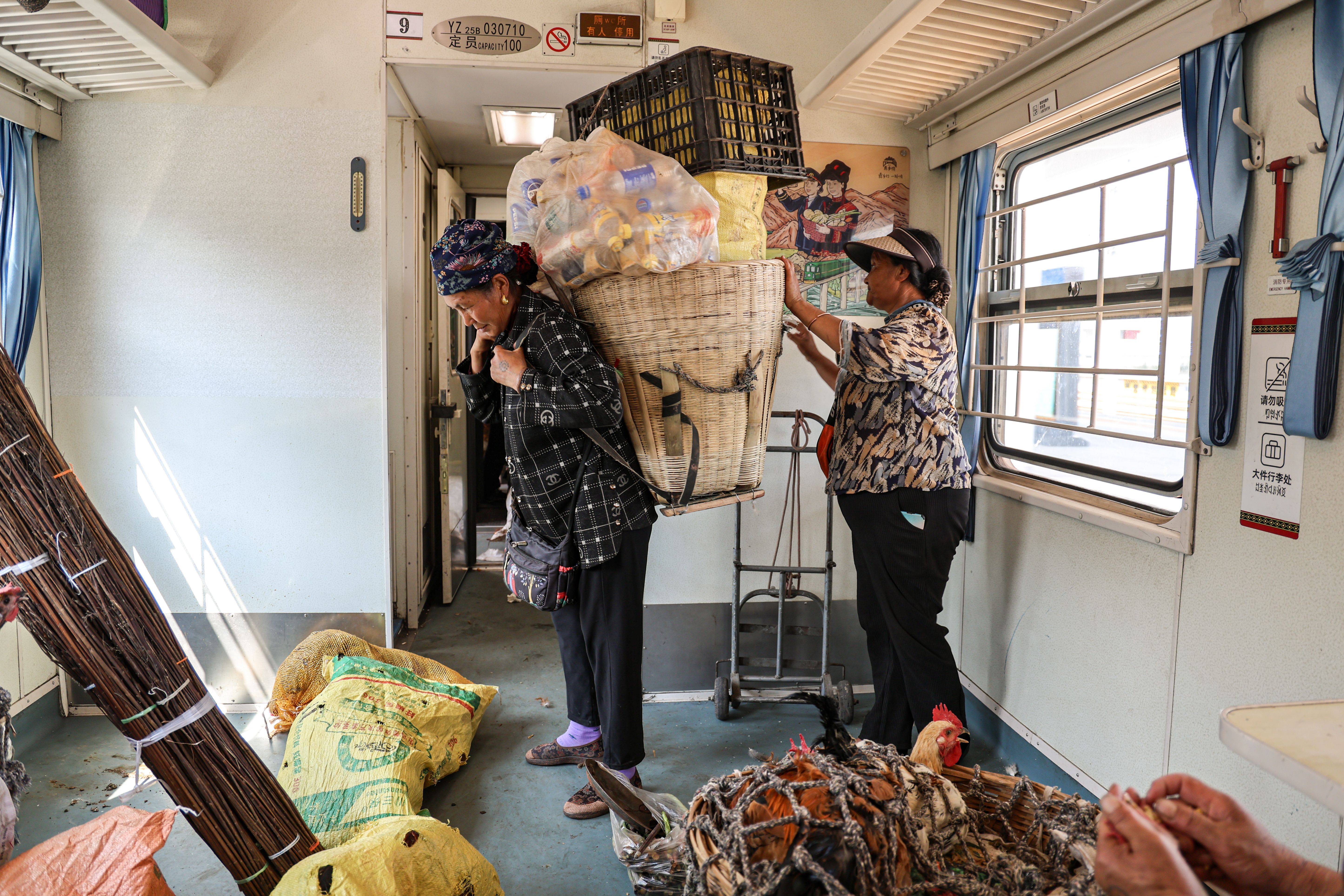
Since 2017, seats at both ends of the train carriages have been removed to make more room for luggage.
With a history that dates back to 1970, the 5633 and its sister service running in the opposite direction, the 5634, might seem outdated. They have no air conditioning, dining cars, sleeping berths, or first-class seats, and traveling from Puxiong to the prefecture’s capital, Xichang, takes four hours. Yet for the mostly Yi communities that live in this rugged mountainous region, these trains are irreplaceable.
Keqi Niuniu Mo, a 47-year-old villager from Puxiong and frequent passenger on the trains, told local media Sichuan Daily in February that, thanks to the service, her family has been able to send four family members to university by selling chickens and eggs in Xichang. According to the report, the two trains serve hundreds of thousands of passenger journeys each year, including many for locals like Keqi Niuniu Mo, who take the 5633 one way to county towns or the prefectural capital to sell produce before returning home on the 5634 in the afternoon.
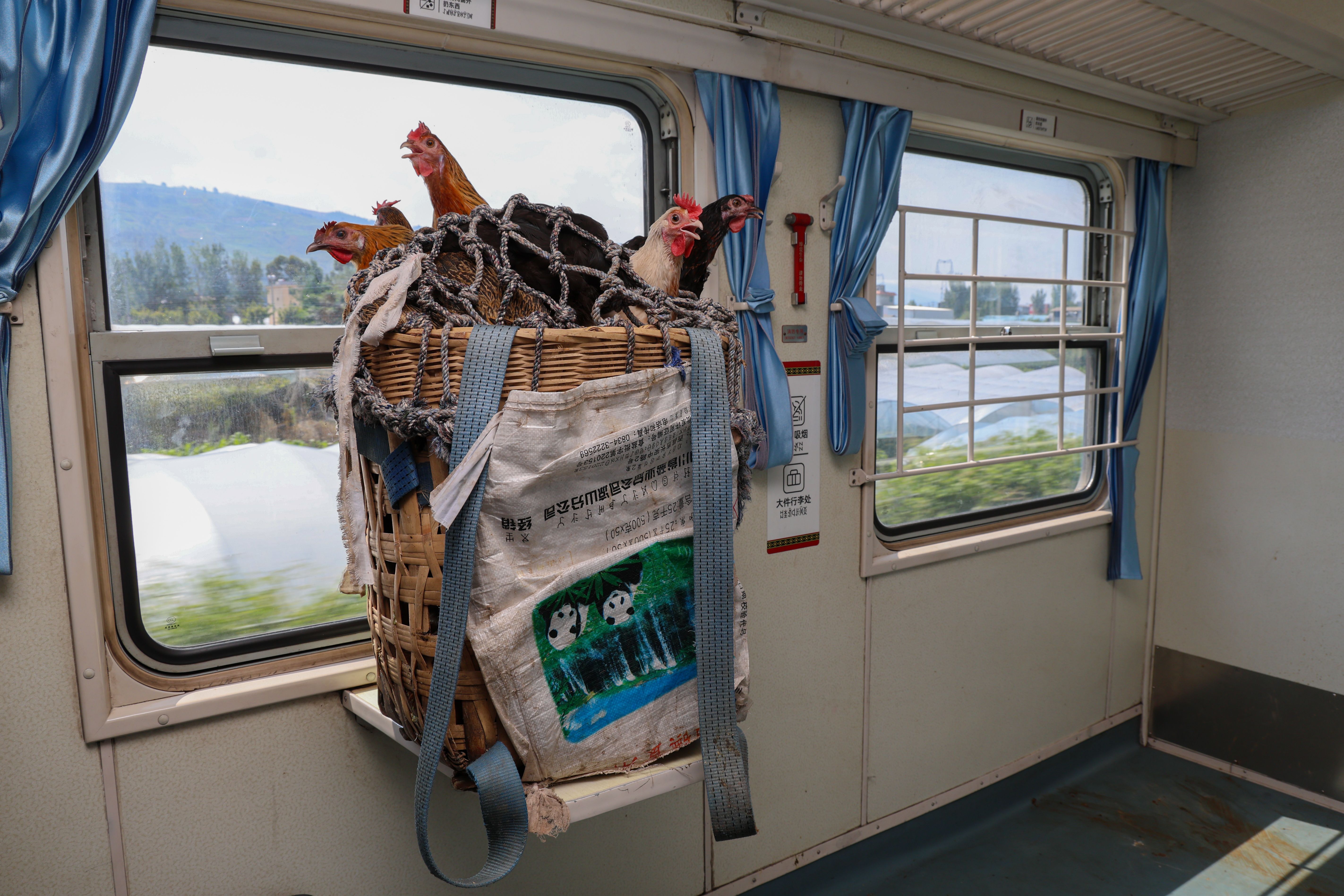
The train, which has no air-conditioning, relies mainly on its windows for ventilation and cooling in summer
For the last three decades, ticket prices on both trains have remained unchanged, ranging from 2 to 26.5 yuan depending on the distance traveled. Coach transportation, meanwhile, can cost many times more, often with extra charges for livestock if they are allowed on board at all. Besides the price, many also prefer the relative safety of the slow train to driving on the steep, bumpy roads that traverse the mountainous prefecture, which can be dangerous for livestock.
In recent years, railway authorities have also upgraded the trains to provide a better service for passengers. In 2017, a dedicated livestock carriage was redesigned with more space, better ventilation, and drainage holes to accommodate over a hundred large animals, while others had seats removed at both ends to make room for poultry and other luggage. In 2023, a designated “study carriage” was equipped with a library corner and larger desks to give commuting students a better place to do schoolwork.

Poultry such as chickens and geese are often carried in plastic bags or bamboo baskets to keep them from roaming around the train. Their calls, however, can still be heard in neighboring carriages.
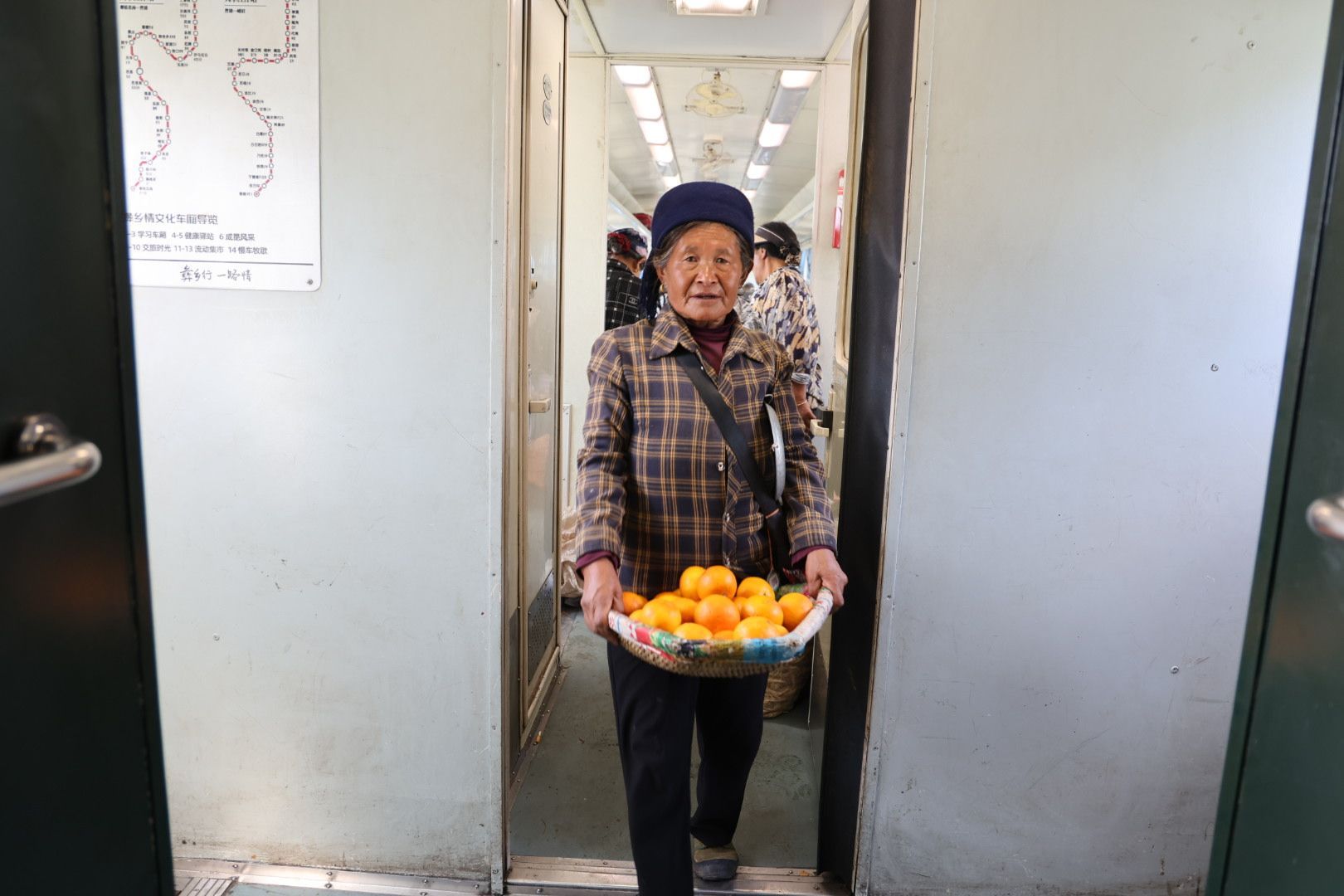
The train also serves as a moving market, with vendors peddling their goods
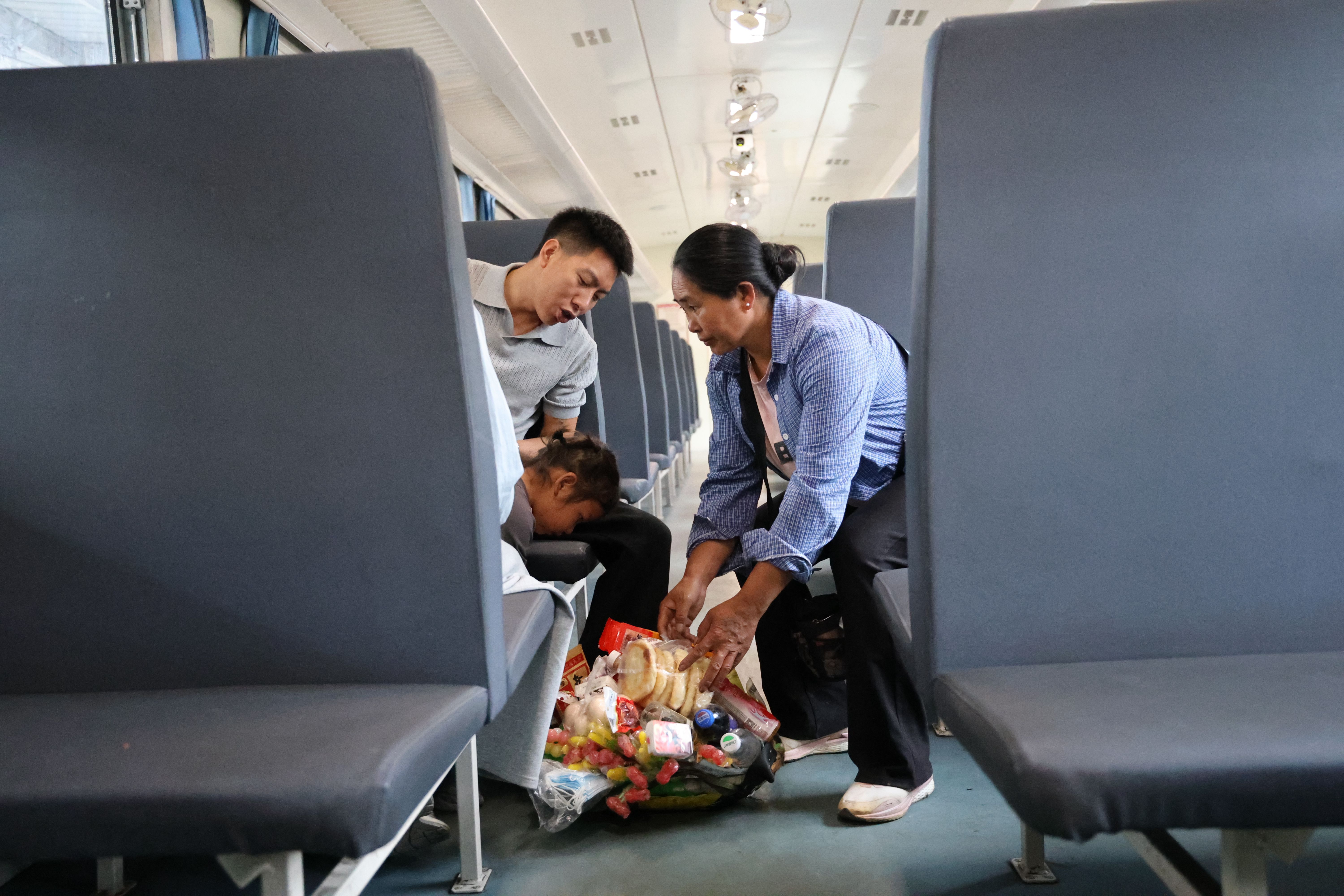
A little girl browses a peddler’s snacks, searching for her favorite
More than 80 pairs of “public-welfare slow trains” remain throughout China. These state-supported, low-cost services stop at more than 530 stations across 21 provincial-level regions to facilitate the livelihoods of people in some of the country’s less developed regions. Many allow passengers to bring live animals aboard free of charge.
Like the 5633 and 5634, other market trains across the country have attracted national media attention in recent years, drawing tourists keen to experience the unique atmosphere on board. Among them are the 7272 and 7271, a service that shuttles passengers between Huaihua, a city in western Hunan, and the border regions of Guizhou and Chongqing, mainly supporting the local trade in fruit and vegetables.
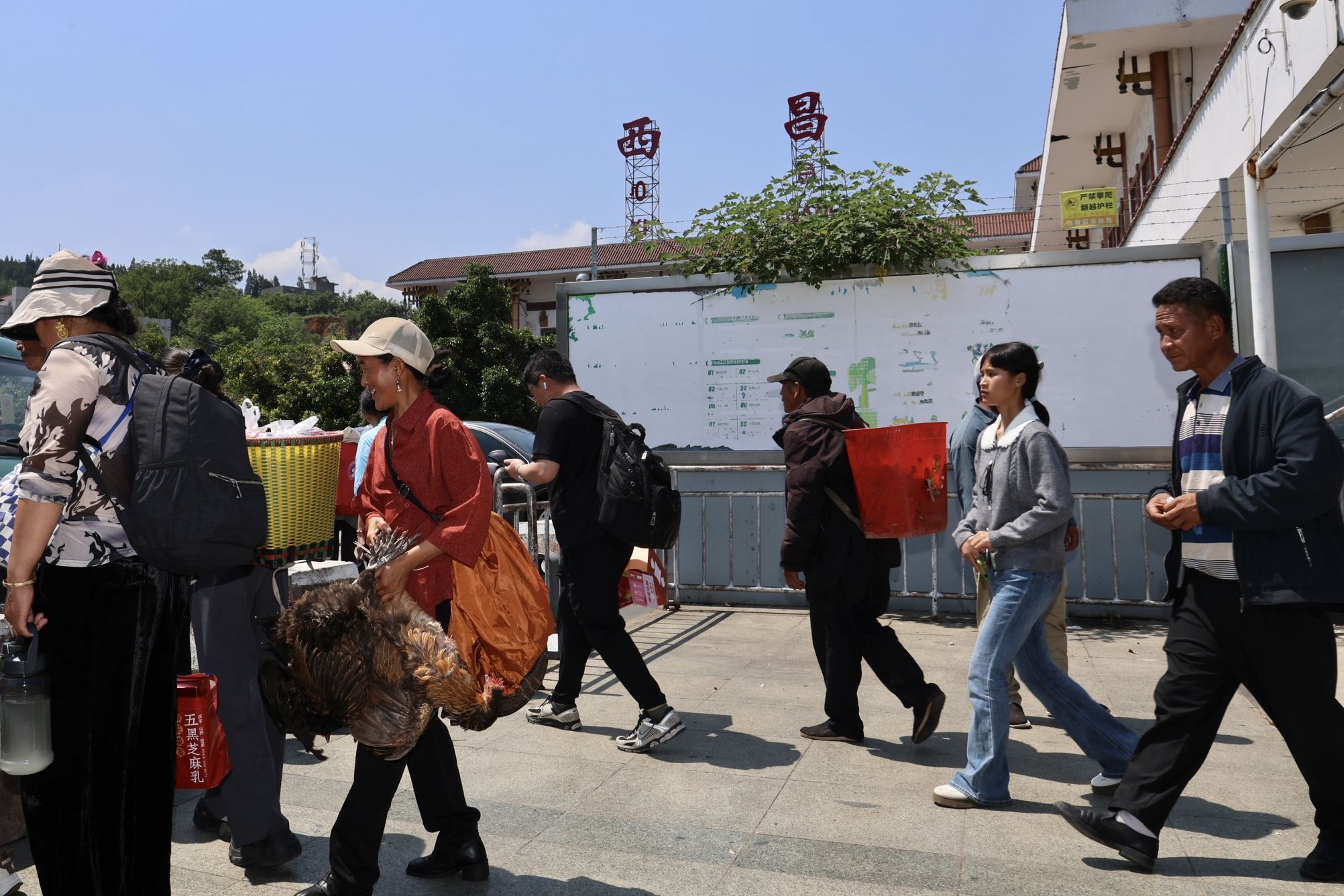
Xichang, the capital of Liangshan prefecture, is one of the most popular destinations along the route. Residents from surrounding towns and counties travel here for education and jobs, or to get better prices for their agricultural produce.
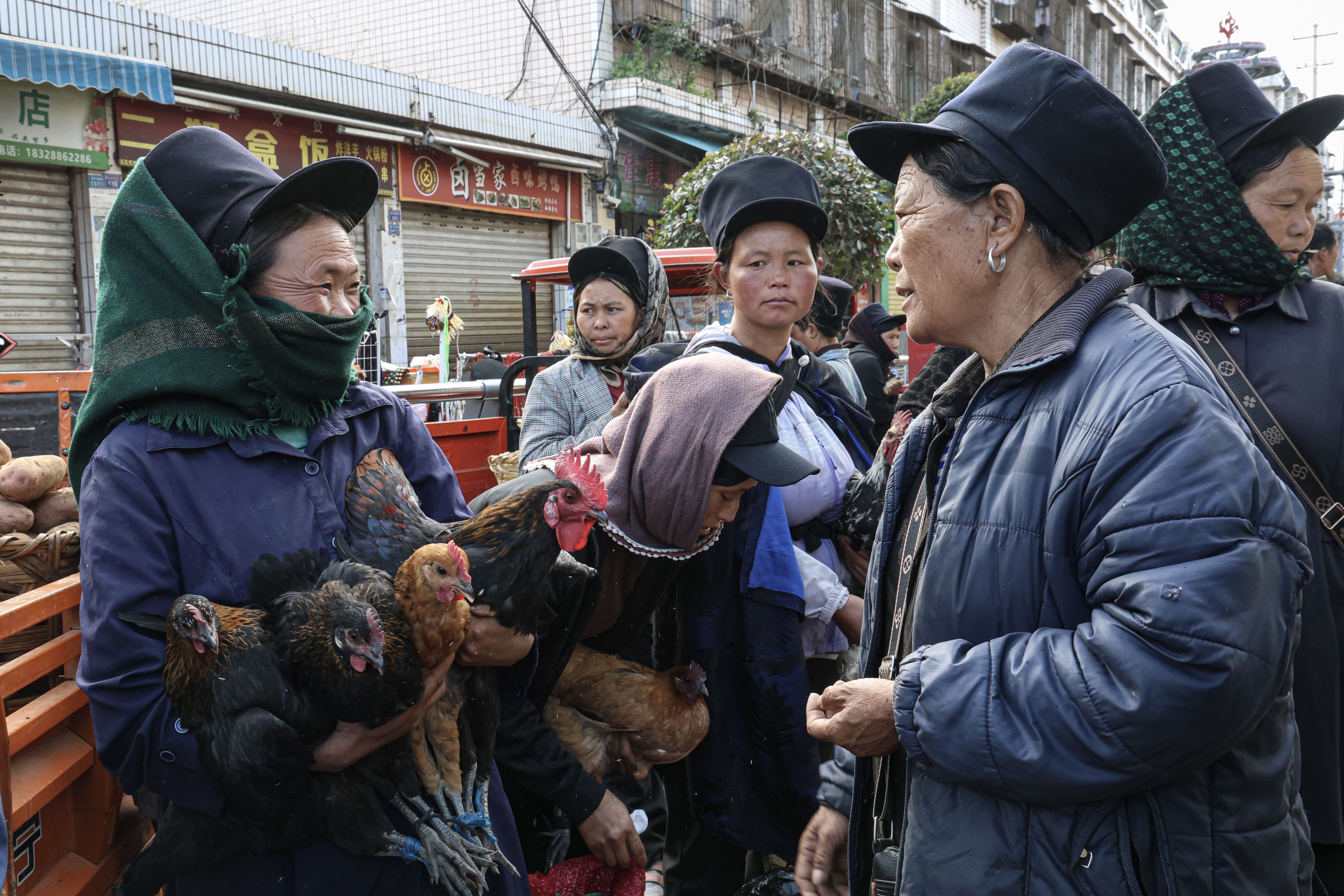
Different counties and towns in the region hold their markets on different days, drawing vendors from neighboring areas
On the day of her train journey from Puxiong to Xichang, Huang didn’t encounter many other tourists, most of whom timed their journeys to coincide with the major Yi festivals. Despite visiting during the off-season, Huang found some of the experiences and impressions she took away from the trip more valuable than the photographs she captured. Many passengers, especially the elderly unfamiliar with online ticket platforms, still paid their fare with cash just before or after boarding, while attendants, some of whom work on the train for years or even decades, knew the regular passengers, chatting with them and offering help with their luggage.
Huang plans to document more rides on China’s slow trains, which differ so much in tempo and atmosphere from the modern high-speed journeys—whether by air or rail— that she’s used to. “They don’t exist for the sake of efficiency, but to connect people and their livelihoods,” she says.
Related Articles