
In some parts of China, Lantern Festival is celebrated with a rather special lantern variety—edible ones. Weifang in Shandong province is home to a unique green radish. Even apples and pears, another two Shandong produce, cannot compare with this jade green root vegetable, since its vitamin C content is five times higher. It’s sweet at first, with a spicy kick at the end. Locals enjoy it raw, shred it into a crisp snack—and use it to make edible lanterns.
The radish is cut and carved into a bowl shape. A cotton wick is added with some peanut oil to light it, exuding a fresh radish smell. Lanterns in traditional red color can be made from water radish, a variety with a red exterior, sometimes with auspicious characters like fu (福, blessing) carved on it.
Upon nightfall, farmers light the radish lanterns, asking for favorable weather in the new year, whereas children carry the radish lanterns to friends and neighbors who treat them to a bowl of tangyuan, glutinous rice balls with nuts and sesame inside.
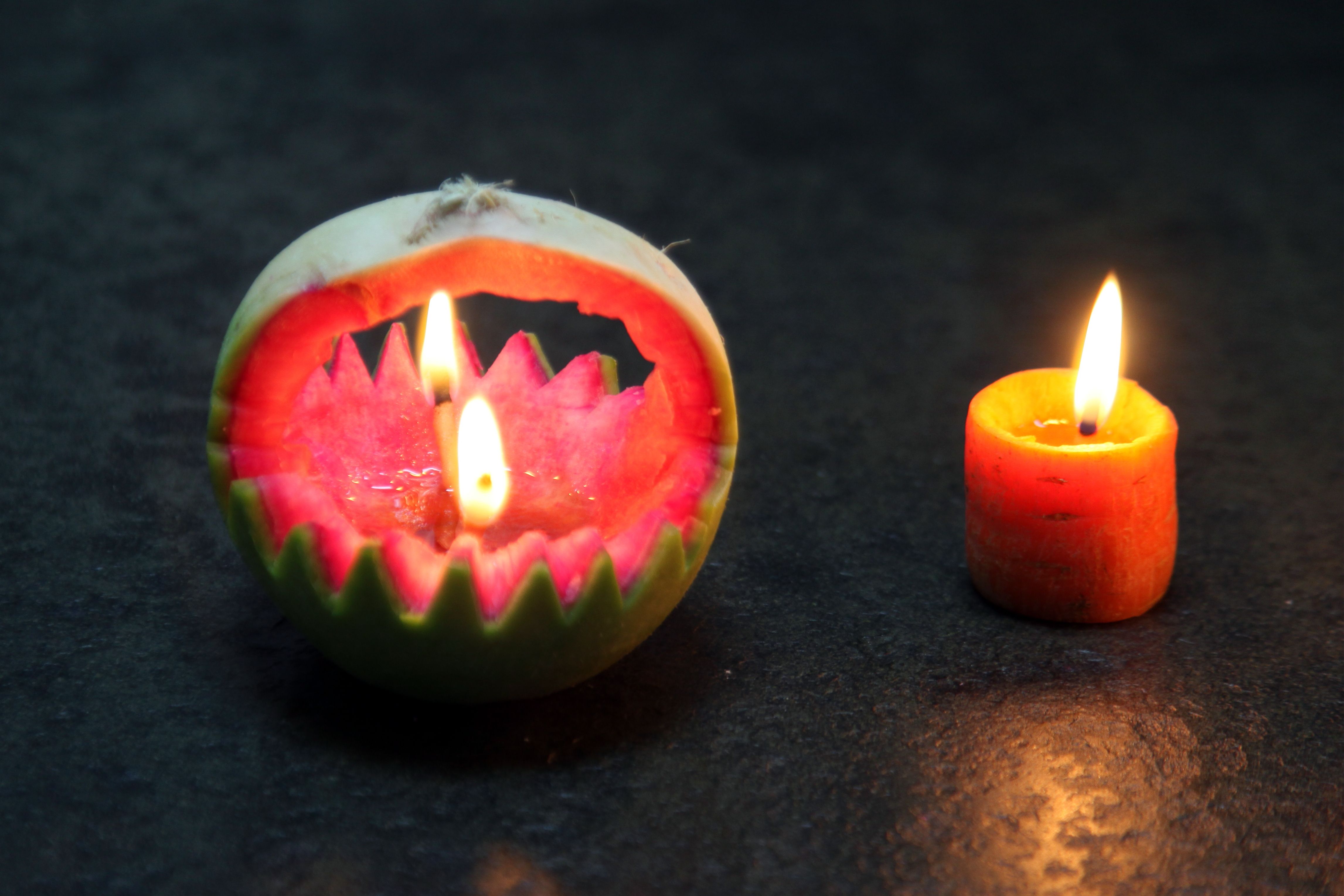
A Lantern Festival custom from Shandong includes making radish lanterns (VCG)
On the Jiaodong peninsula in Shandong, people grind soybeans into dough for both buns and lanterns. The dough is kneaded until it is soft and elastic, then pinched into the shape of various animals with little pits on their backs or bowls in their arms, as places for oil and wicks. Black beans are embedded as eyes and rice grains as teeth—all using improvised tools like combs, scissors, and toothpicks. After steaming the dough for half an hour, the lanterns are ready to be lit.
On the night of the Lantern Festival, these dough lanterns are lit and placed in different areas of the house, for example in the kitchen for good fortune from the kitchen god. According to folktales, the kitchen god hides in the oven to collect gossip from every household and reports it to the heavens at the end of the year. It is said that bribing the kitchen god with dough lanterns, together with some wine and sugar makes him tipsy and sweetens his mouth so only good words can be passed on to the heavens.
Depending on the shape and placement of the dough lanterns, people can use them to ask for different blessings: A lantern in the shape of a dog outside the door is meant to protect the family; a chicken lantern near the coop shall bring more eggs; and a fish lantern floating on a pond shall grant success in the new year.
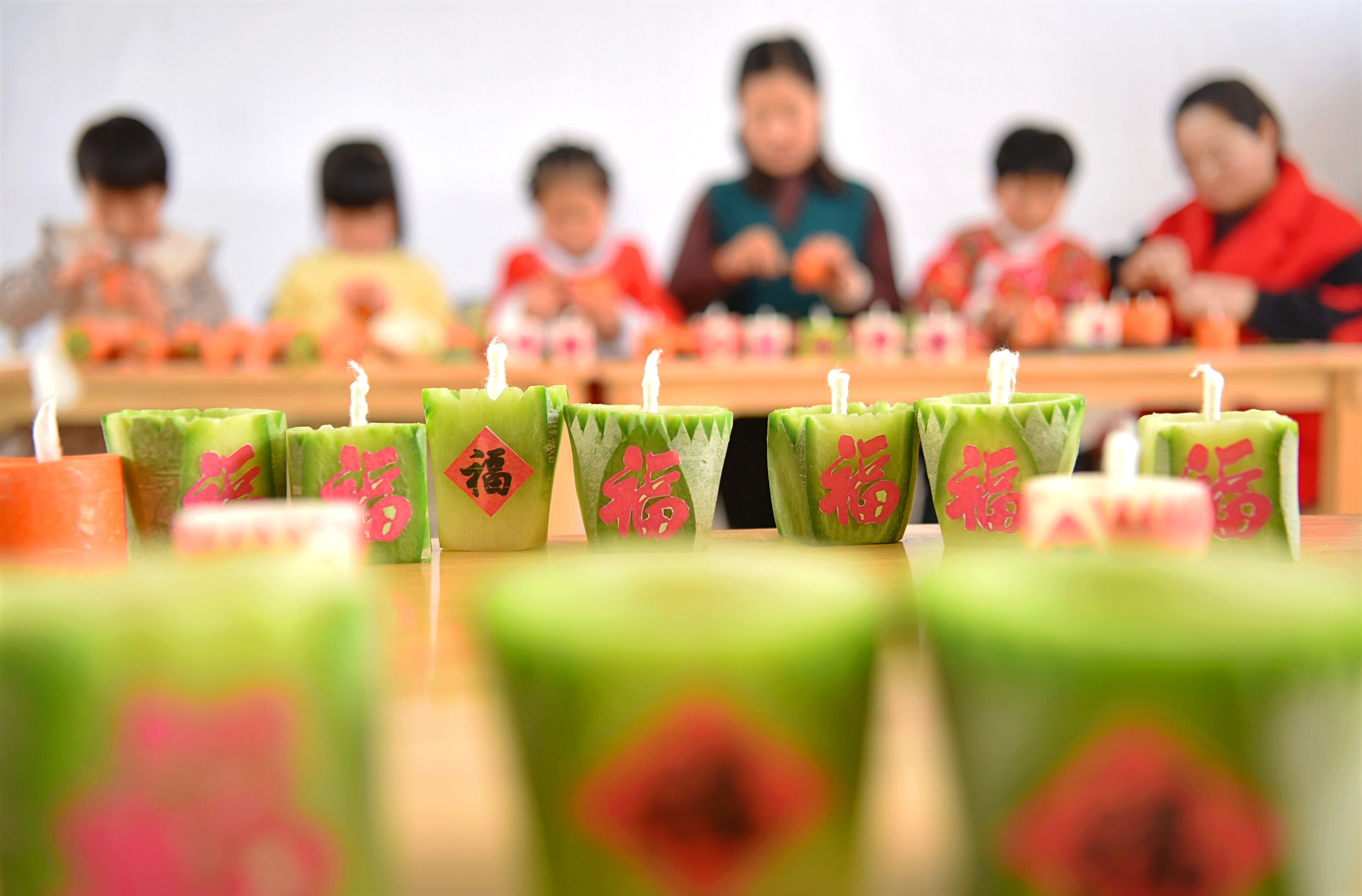
Students making radish lanterns in Zibo, Shandong (VCG)
In some Jiaodong fishing villages, fishermen place lanterns in the shape of slipper lobsters, crabs, octopuses, and scallops on their boats, wishing for a good catch in the new year.
Families often sit together and light lanterns based on their Chinese zodiac. If someone is born in the year of the rabbit, they would light a rabbit-shaped dough lantern for good fortune.
Peanut oil is added to the lanterns not only to help them burn longer, which symbolize a bright new year, but also to help them taste better as the dough soaks up the fragrant oil and takes on a special smoky flavor. Later made into a stew with radish, cabbage, vermicelli, and clams, these dough lanterns turn into a mouth-watering Shangdong delicacy to commence the new year.
Related Articles