

Wandering through the 214 rooms and 42 courtyards of what was once southern Yunnan’s largest private residence, located in Jianshui county, Honghe prefecture, one is reminded that there was a time when visitors and businesspeople did not only flock to Kunming, Lijiang, and Dali to seek thrills or fortunes in China’s southwest.
The vast mansion is known as the Zhujia Huayuan (朱家花园), the “Zhu Family Garden,” or “Grand View Garden of Southern Yunnan” after mansion in the classic Qing dynasty (1616 – 1911) novel Dream of the Red Chamber. It is a testament to Jianshui’s former glories, and the wealth that trade and business here generated for one family in particular.
The extravagant house and grounds, completed in 1910 after more than three decades of construction, are full of splendid courtyards, colorful orchards, and magnificent gardens containing all manner of exotic flora. It is easy to understand why many connect the lavish residence to scenes from the novel. The style of the residence is a combination of the flowing gardens of Suzhou in southeastern China and the romantic courtyards of Shanxi in the northwest. The vast complex is a monument to the riches amassed by a clan who became some of most influential traders in southwestern China during the late Qing dynasty.

A hand-drawn map of the Zhu Family Garden complex
Jianshui, or Lin’an as it was known at the time, was already prosperous in the Ming dynasty (1368 – 1644). A folk saying, “Golden Lin’an, Silver Dali,” heralded Jianshui’s status as the premiere economic hub in the region during the Ming dynasty. Jianshui witnessed continued growth during the Qing dynasty, when it became a magnet for merchants from the eastern part of the empire looking for economic opportunities as the Qing gradually expanded its control in the southwest and erased the last remaining loyalists to the Ming in the mid-17th century.
The region was rich in tin, lead, silver, and copper, and already had the infrastructure to drive trade: ornate bridges crossing the Lujiang and Tachong rivers into the city, plentiful water from hundreds of wells, proximity to the Dai kingdom and other frontier states in China's southwest, and a prime location on the trade route from Kunming to Vietnam.
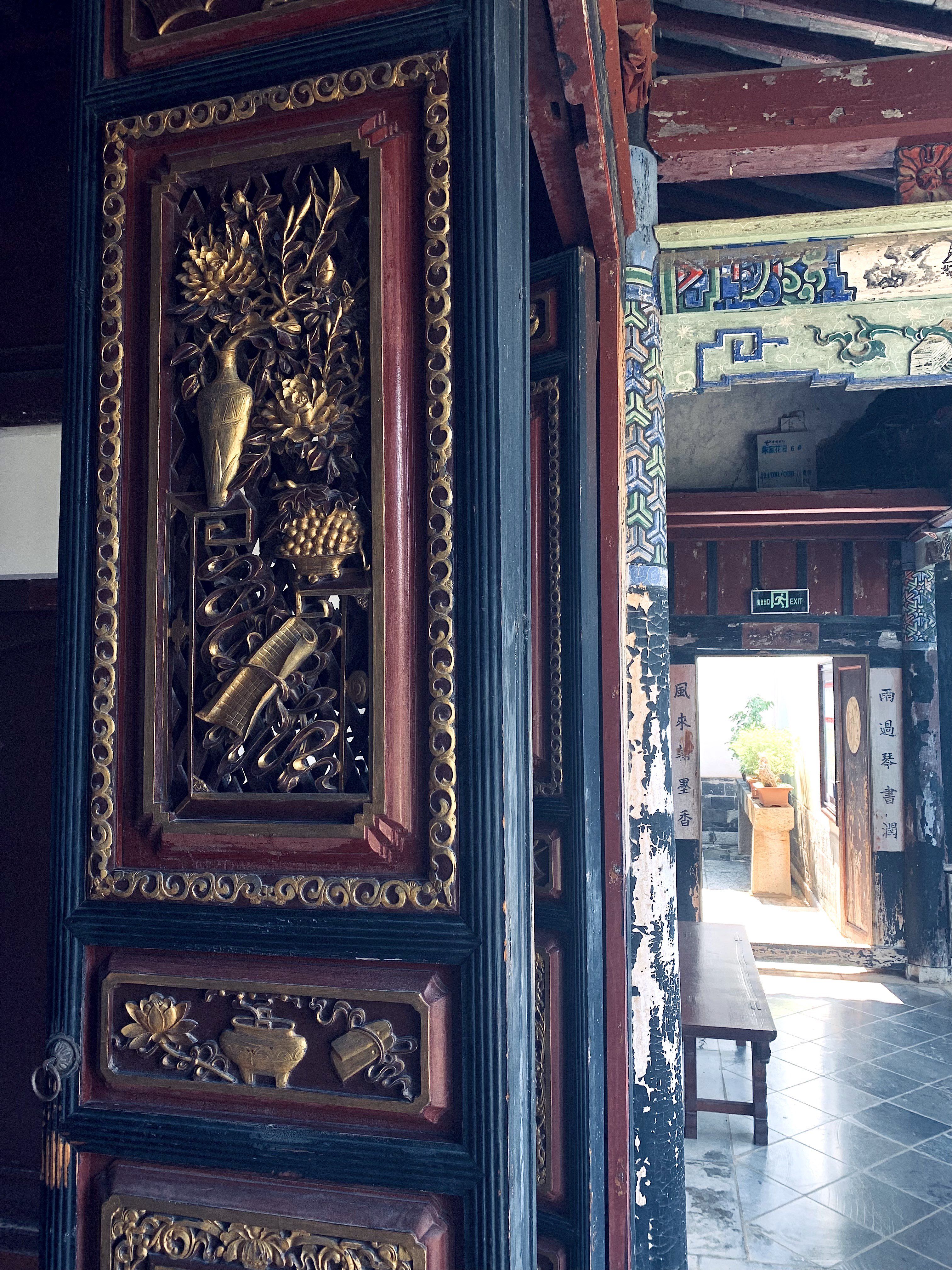
Intricate floral designs and symbols are carved into many of the doorways of the Zhu Family Garden
The family’s fortunes began when a young businessman named Zhu Guangfu (朱广福) moved to Jianshui from either Kunming or a nearby county in 1821, and married and raised children there. Zhu’s clan traced its roots to Huguang (now Mayang county), Hunan province, and his ancestors may have already been Yunnan during the reign of the first Ming emperor, participating in the tea and silk trade. The family had made significant money through real estate in Hunan, but began their business endeavors in Jianshui in the 1870s by selling wine and operating flour mills. The family also invested in tin mines in the mountains at nearby Gejiu city—this would become one of their most valuable industries. The Zhus shipped tin ingots via the customs office at Bisezhai in Mengzi, along the Red River to Vietnam, Japan, and Europe.
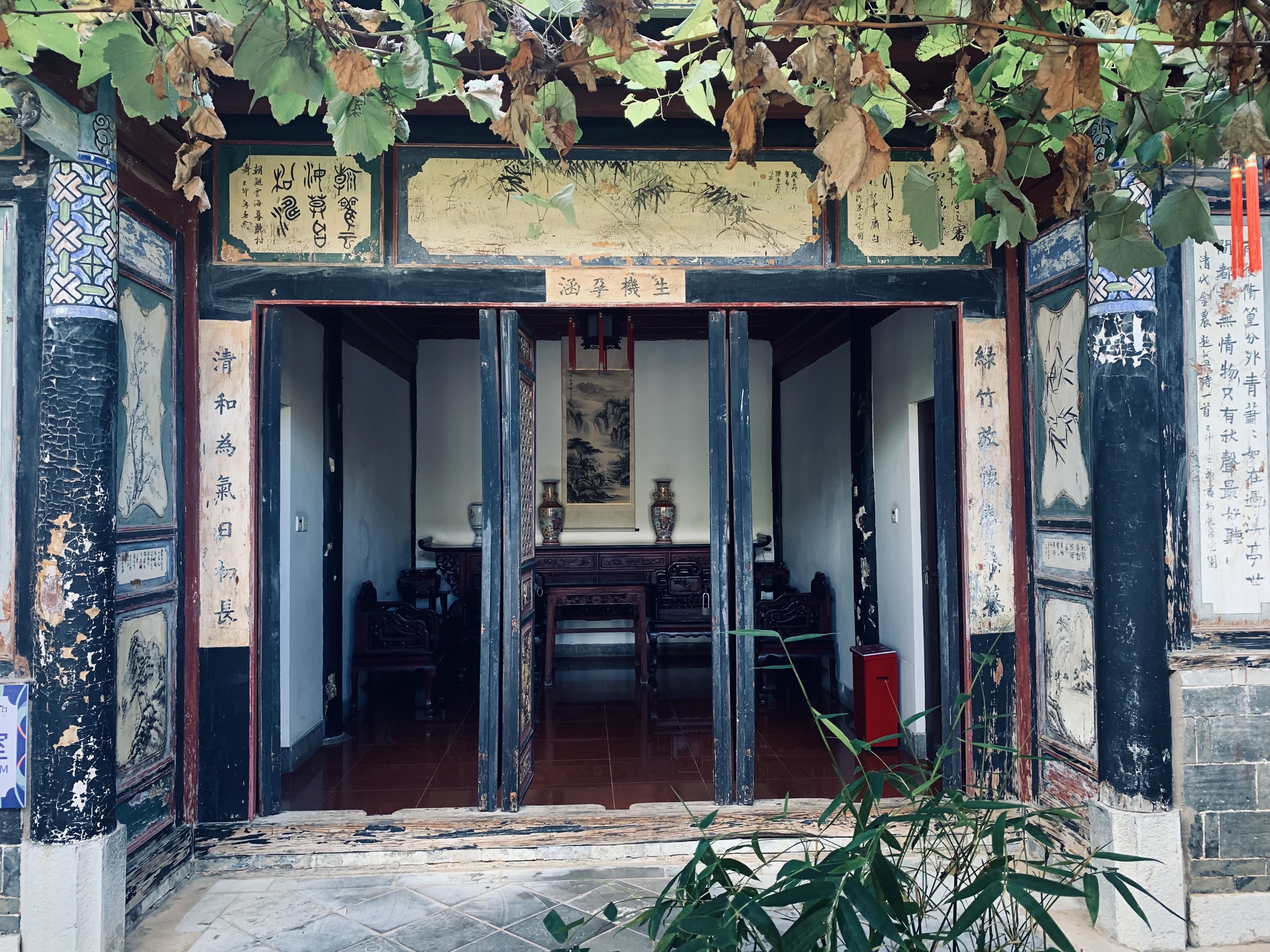
A courtyard decked with grape vines at Zhujia Huayuan
The family’s business influence extended into the highly-populated province of Sichuan to the north, and to the bustling ports in Guangdong to the southeast. With offices established in Hanoi and Hong Kong, the family firm, Zhu Heng Tai, had become one of the top trade companies in Yunnan by the last decades of the 19th century, selling textiles, opium, cotton yarn, and daily provisions.
The Zhu family also gained political power, with some members passing the imperial examinations to become officials in the local county. Their political clout was significant in the region at a time when instability reigned. Zhu Guangfu’s grandson Zhu Chaoying (朱朝瑛), also known as Zhu Weiqing (朱渭卿), was a Qing government official who later financed an anti-government uprising among tin miners in Jianshui in 1903. He fled to Japan after the Qing government sent troops to Jianshui to put down the rebellion. Zhu Chaoying returned to Jianshui five years later, and when a new wave of uprisings began against the empire, which would eventually result in the overthrow of Qing rule in the Xinhai Revolution of 1911, he became an important leader in the local Lin’an Uprising and recruited soldiers into the revolutionary movement to fight against Qing troops.
With their status and wealth secured, Zhu Guangfu’s sons Zhu Chengzhang (朱成章), Zhu Chengcai (朱成彩), and Zhu Chengzao (朱成藻) began constructing the family mansion in the center of Jianshui on Shantiang Street (today’s Hanlin Street) in the late 1870s. The project went uncompleted in their lifetime, and was finally finished under the management of their sons, including Zhu Chaoying, in 1910.
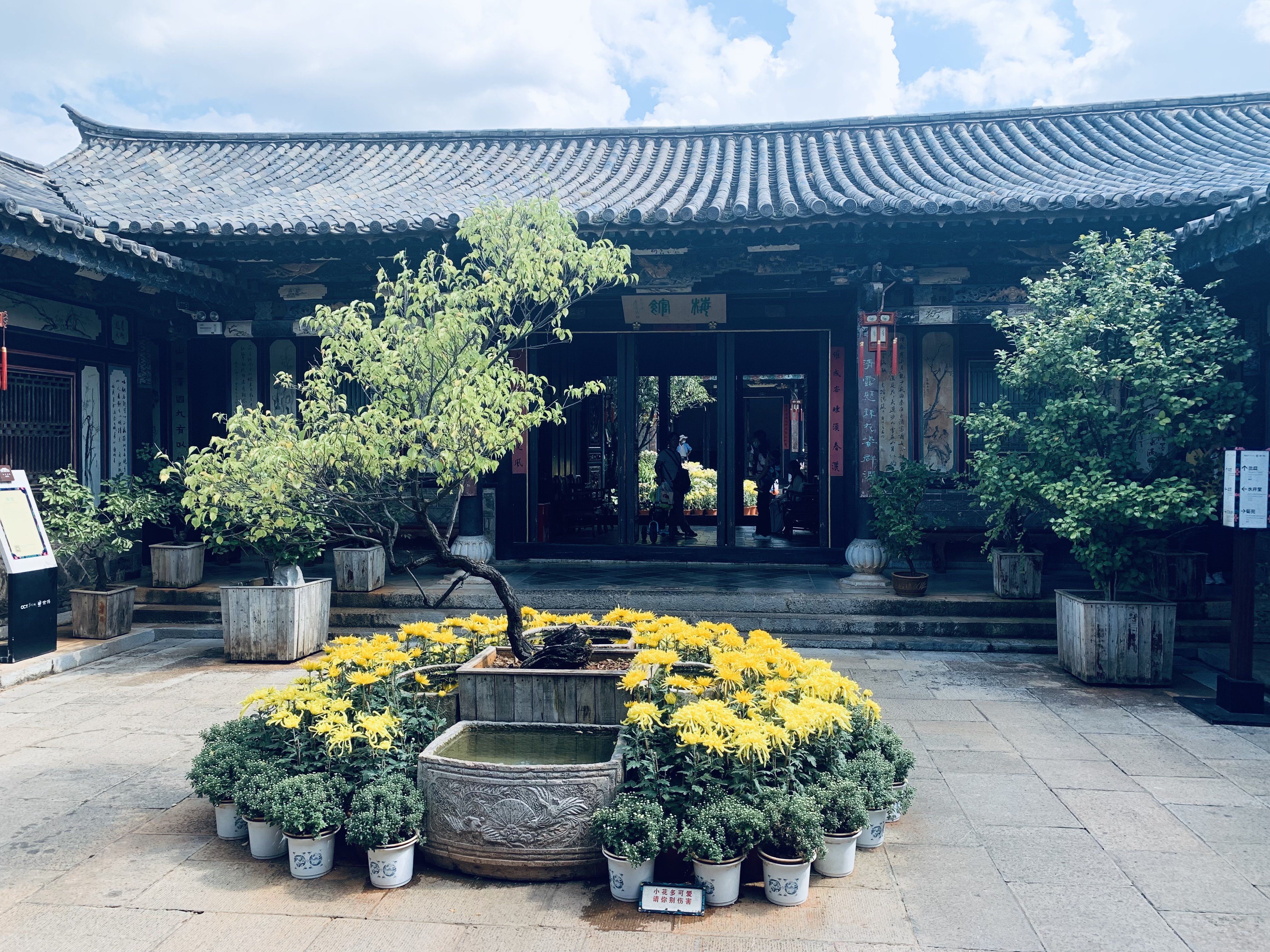
The Chrysanthemum Courtyard of the mansion
Now open to tourists, the grounds of Zhujia Huayuan are full of Zhu family symbolism. Four of the courtyards—the Plum Pavilion, Orchid Garden, Bamboo Garden, and Chrysanthemum Garden—represented four plants commonly used in Chinese poetry, as well as the family’s love of flowers. Meanwhile, the living quarters housed different members of the Zhu family according to their standing in the clan.
Among the old wisteria trees, orchids, and grape vines that fill the courtyards today, elegant calligraphy adorns the many arches and doorways, recording family virtues and sayings. At the entrance to the first courtyard, for example, is the phrase 循规蹈矩, or “Act according to convention,” while the opposite side of the doorway reads 谨言慎行, or “Speak and act cautiously.” On another doorway is the phrase 四水归堂, “Four waters returning to the hall,” which was likely a reference to a desire for wealth to flow into the home.
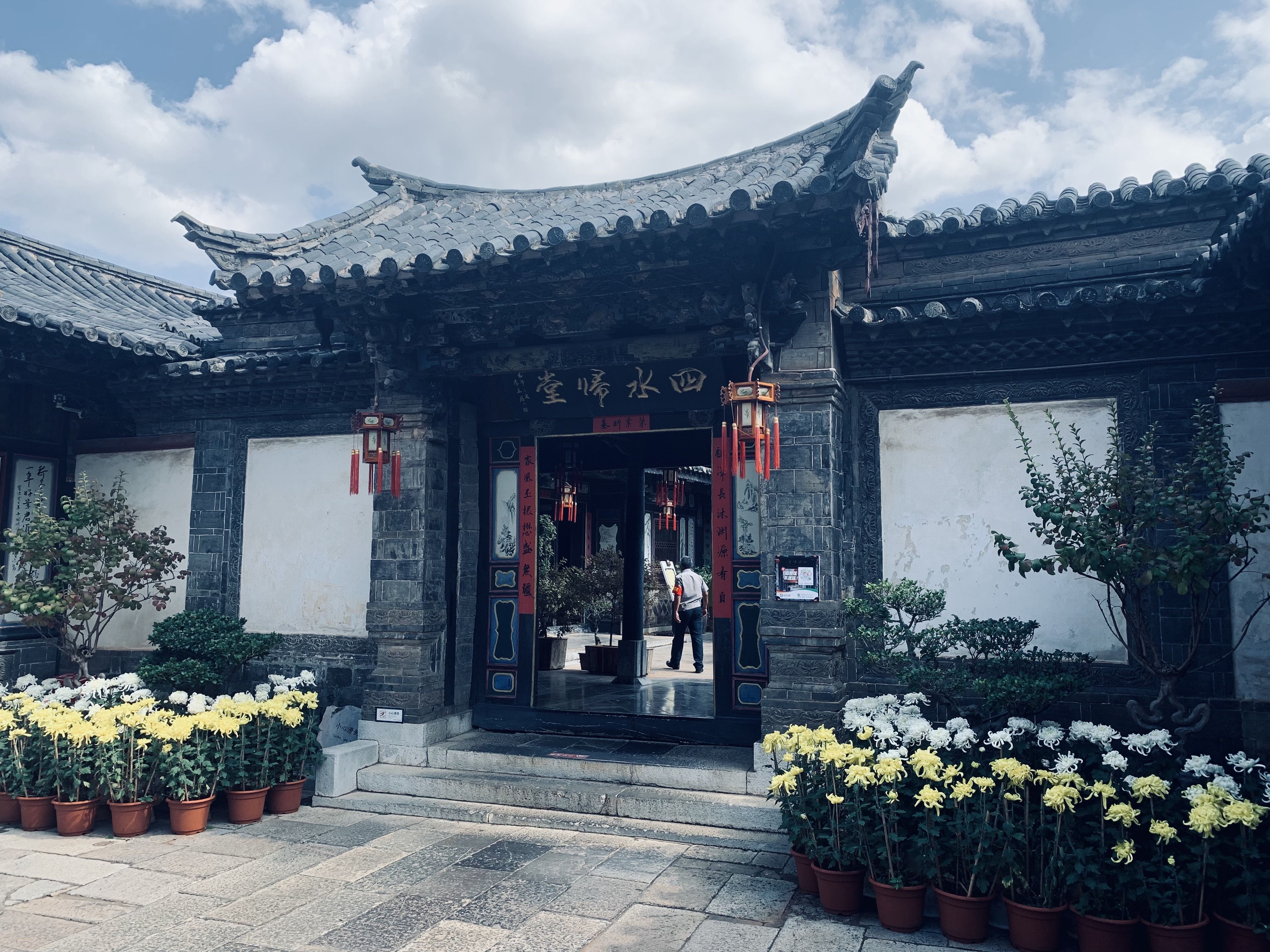
The entrance to a courtyard displays the words “四水归堂”
Inside the residence and in the courtyards, beams of sunlight peep through the intricate wooden walls, shining on tables and chairs that would have once hosted intimate family gatherings, strategic business meetings, and discussions with local officials during the tumultuous politics of the late Qing dynasty.
But amid this chaos, the Zhus struggled to hold onto their influence and their home. The mansion was seized by the state when the military official Yuan Shikai (袁世凯) proclaimed himself the Hongxian Emperor in 1915, though it was returned to the Zhu family in 1922 by Tang Jiyao (唐继尧), then the warlord-governor of Yunnan province. But Tang was overthrown in 1927, and the new leader of the province, Long Yun (龙云), was antagonistic toward the Zhu family’s influence in the region. Zhu Chaoying was imprisoned, and died of illness soon after his release in 1929. His nephew Zhu Yingchun (朱映椿) was executed in 1927.

In the grounds of the mansion is a theater on a pond know as “Little Goose Lake”
Eventually, the Kuomintang-led Republican government seized the mansion, before the Communist Party took over in 1949. The Party used the mansion as a schoolhouse, field hospital, and exhibition hall at various points, until the local government of Jianshui decided to open it to the public as a tourist site in 1990.
That year, the city government used over 1.8 million RMB to restore the residence, and spent another 8 million RMB in 1998 to repair the picturesque courtyards. As visitors come and go, snap pictures to share on social media, and experience the rich life of a Qing merchant family, one has to admire how deep the Zhu family’s legacy has been imprinted in the region. As Jianshui tries to regain its influence in the province, this time as a tourist hotspot to compete with cities like Dali and Lijiang, the Zhu family and their elegant residence are once again playing an influential role in the local economy.

The lake and pavilion in the gardens of Zhujia Huayuan
Photography by Anson Zong-Liscum
Related Articles