Zhou Xiaoyan never liked studying from books, until she took a cocktail class in college. “The teacher would talk about the origin of the wine or spirit, its development and craft,” she tells TWOC over the phone. It was merely a history class, Zhou says, but she was hooked.
Now 28 years old, Zhou is a professional bartender in Chengdu, Sichuan province, with about five years of experience. She has attended and won cocktail competitions—including the 2022 national New Generation of Chinese Baijiu Super Bartending Competition, where she was runner-up. But even though many women in China have been drawn to the profession for various reasons—for Zhou, it was the cool moves of a female bartender she saw on Douyin (China’s version of TikTok), and the potential of a creative outlet—bartending can still look like a man’s world.
Data on gender in bartending in China is sparse, but last year, Dahe.com, an official news outlet of Henan province, estimated the ratio of male and female bartenders in China to be 7 to 3. Though women who tend bar, like Zhou, have striven to bring creativity to the field, with some rising to managerial positions, they often have to endure discrimination, harassment, and misunderstanding.
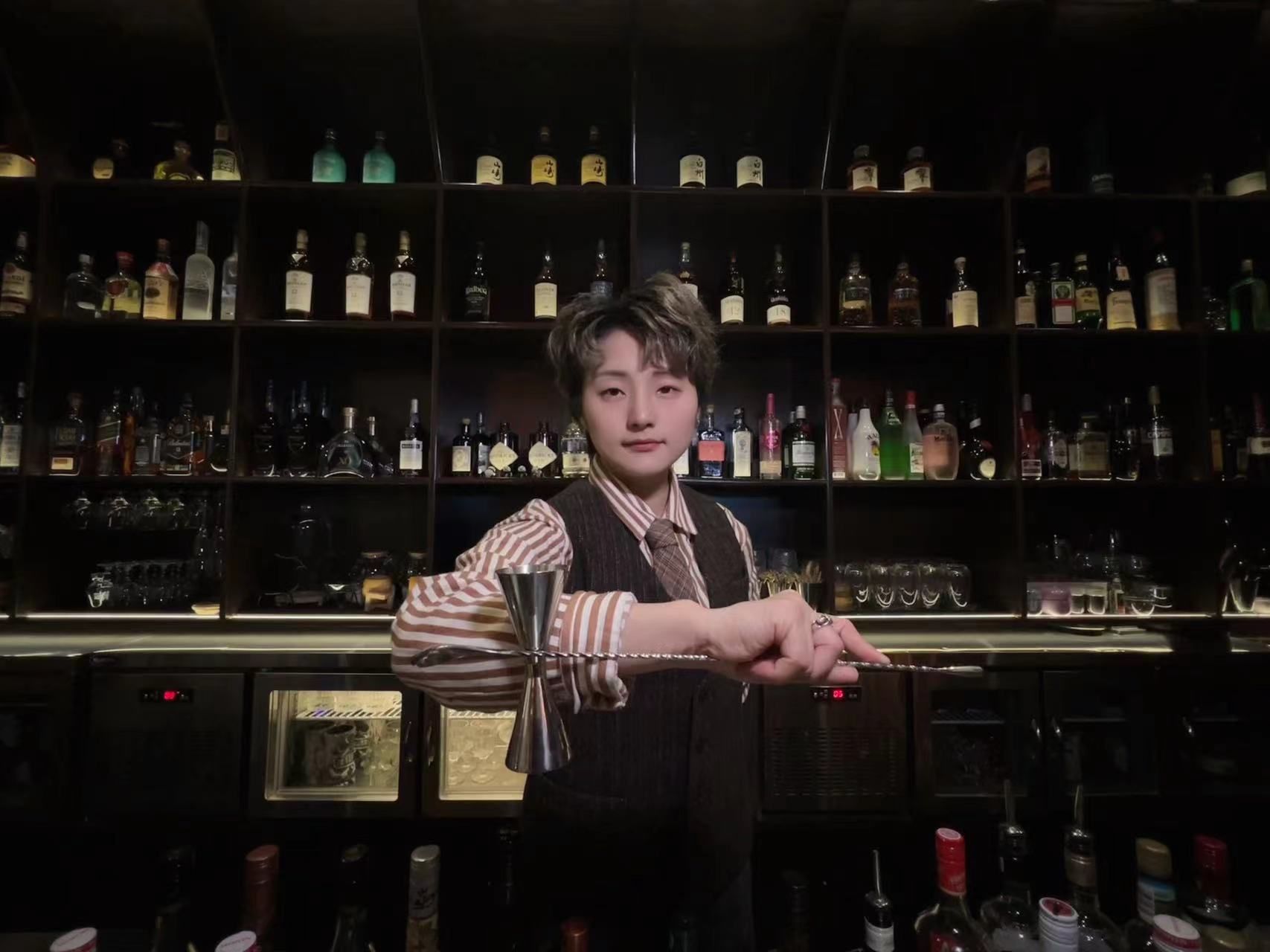
Zhou Xiaoyan posing at a bar (Courtesy of Zhou Xiaoyan)
Xu Zihua, a 27-year-old woman from Hangzhou, Zhejiang province, discovered her interest in bartending through hosting house parties while studying at University of California, Berkeley. “I just really enjoyed communicating with people,” Xu tells TWOC, “I am very open to conversation.”
After graduating with a degree in Economics and Psychology and interning at a food media outlet, in 2017, Xu got her bartending license in San Francisco. Two years later, she opened her own bar in her hometown.
Xu sees her bar as a platform through which she can both meet people and “tell stories through drinks,” she says. During the Covid-19 pandemic, she designed a menu called “Supermarket,” with drinks named after daily items. For example, one smoked drink is called “Cigarette,” while other intriguing offers include “Children’s Toothpaste” and “Peanut Butter.” Xu conceived this idea during the frequent lockdowns when accessibility to even basic daily necessities could not be taken for granted. “[This menu] is a reminder of what we experienced....It [makes us] reflect on what we need the most in our daily lives, what our labor is for,” Xu says.
Female bartenders, though fewer in number, seem to be popular with customers. Xu even believes they might have an “advantage” over male colleagues. Xu believes it might be because women are more adjusted to and better at service, and thus generally more welcomed by both male and female customers. The latter, especially, “would think, ‘oh, a woman can do this too,’” speculates Xu.
Zhou points out that a bartender’s success ultimately depends on professional ability, and knowing how to converse with customers and create a relaxing and happy atmosphere is part of the job.
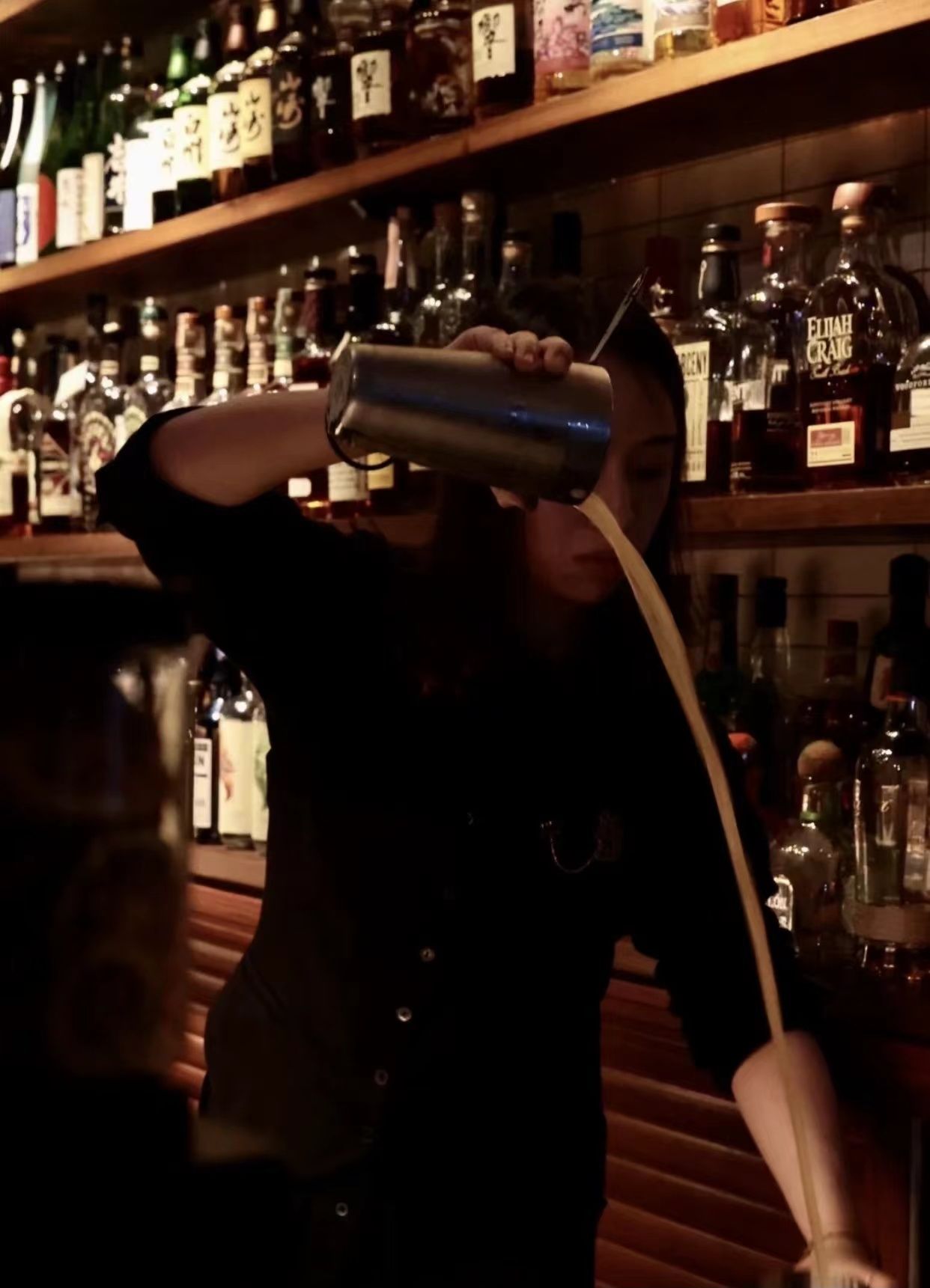
Xu mixing drinks at her bar in Hangzhou (Courtesy of Xu Zihua)
In some other countries, women shaking cocktails or managing bars is already normalized. For example, Zippia, a US-based career services company, estimates that in the US, 60.3 percent of all bartenders are women. In China, some practitioners attribute the gender disparity for bartenders to societal stigma against the profession in the country. “None of my family supported me, especially with my sister being a teacher,” says Zhou, who felt pressure due to her sibling’s respected profession. “The older generation all thought bars were rough and licentious...But I think that a person should do what they like when they are young,” she adds.
On the job, women bartenders also face discrimination. “People doubt whether women really ‘know’ about drinks or whether their popularity is solely because of their looks and gender,” says Xiaoqi, a 26-year-old bartender who preferred to go by a pseudonym. She recently quit her white-collar job at a real estate rental agency and started working at Tiaohai, a popular bar chain originated in Beijing.
“Once, a customer looked doubtful after I recommended a drink, but when my male colleague did the same, he instantly made the order,” Xiaoqi recalls. “[Traditionally] men often drink in social settings, while women don’t...This in turn creates a culture that believes women don’t know anything about alcohol.” She also observes that male customers who violate house rules (by being rowdy, for example) are less likely to pay attention to warnings from female bartenders than male ones.
While Tiaohai’s women bar workers pride themselves in being attentive to female customers’ needs by, for example, providing women in need with menstrual pads or tampons, bars are also a hot spot for sexual harassment. Though statistics for harassment of bartenders in China are sparse or nonexistent, a 2021 national survey by One Fair Wage, an advocacy group for restaurant workers in the US, found over 70 percent of women who work as bartenders, servers, or in other roles in the industry in the US reported having experienced sexual harassment from employers, coworkers, or customers.
Xiaoqi witnessed a customer in his 30s or 40s trying to grab the arm of a young female staff member and a few other female customers during one of her shifts. But “if [a customer] feels harassed, [she] can ask us for assistance,” she says. She remembers once letting a customer in her early 20s stand behind the counter to dodge unwanted advances from an older man until the staff could get her a taxi to go home.
As a profession, bartending isn’t perceived as a stable or sustainable career, particularly for women. A married woman might face extra scrutiny if she misses, for example, dinners with her family for a night shift compared with her male colleagues. “It is especially difficult when a woman bartender has to carve ice during her periods,” says Zhou, referencing a common belief in China that menstruating women should stay away from ice and cold temperatures to avoid bad health consequences
“Many people are confused, or even feel pity due to my choice [to be a bartender]. They think it is a form of Western culture, and meaningless, and one must be doing it because they can’t find a job, or simply rebelling,” says Xu.
But she feels quite the opposite: “Creating a cocktail requires a lot of energy, even experiments. It’s just like creating a Michelin dish,” Xu says proudly. For a recent creation called “Reborn,” she combines her grandmother’s favorite red tea from Hangzhou, which has a note of osmanthus flowers, with spices like cloves, cardamom, cinnamon, bourbon, and other ingredients for touches of sweet and sour.
This drink, intimately connected to Xu’s personal story, got her shortlisted as one of the top three bartenders in the 2023 edition of The Wonderful Race, a national cocktail competition. Xu was, however, the only female participant from her province. Last week, she went on to take home the championship.
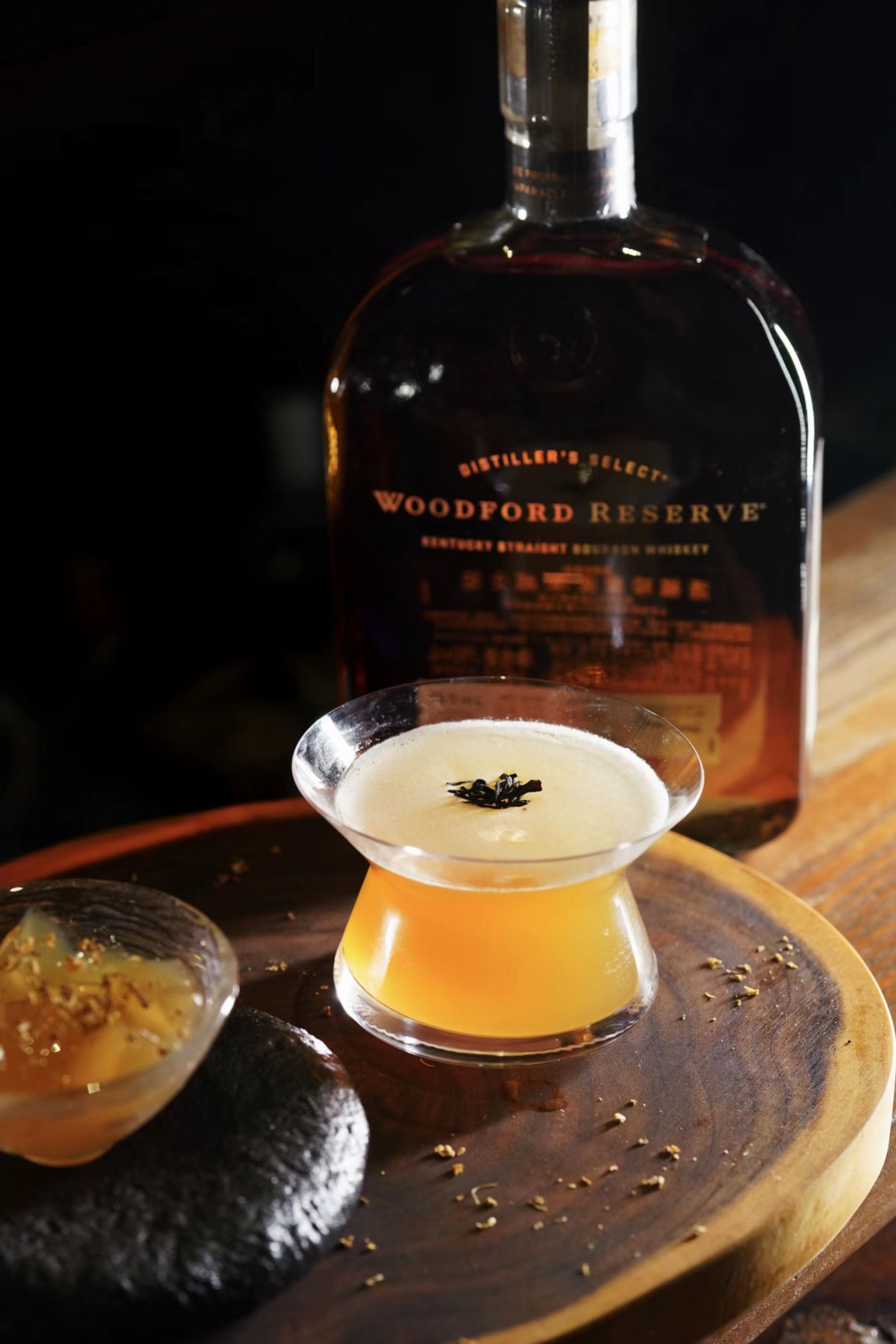
Xu’s creation, “Reborn” (Courtesy of Xu Zihua)
“If you treat every cocktail with such care...it is a piece of art,” echoes Zhou, who lists the multifaceted attention that goes into the inspiration, selection of ingredients, layers of flavors, presentation, choice of glassware, and even the name of every drink.
Zhou sees herself staying in the profession for the long run. She hopes to gain more experience by working in a bigger city with more opportunities, and eventually become a bartending teacher or open her own bar. “It’s not easy for a woman to be a bartender, but as long as she loves it, she will overcome the difficulties and find a way to persist,” she says.
Related Articles