

The reception girl at my hotel in Mangshi, Yunnan, giggled as she handed me mango sweets as a welcome gift. “You’re so lucky to arrive before the Water-Splashing Festival,” she said. The price would more than triple, jumping from the 180 RMB I paid to nearly 600 RMB during the holiday period, as huge crowds fly in from all over the country.
Thailand and the Xishuangbanna region of Yunnan province are typically the go-to destinations for the April festival, celebrated by the Dai ethnic group as their New Year. However, in recent years, Mangshi—a small Yunnan town bordering Myanmar—has emerged as a popular alternative, thanks partly to direct flights from 21 Chinese cities.
Mangshi has been hailed on social media as “a hidden gem on the border and an alternative to Southeast Asia” since going viral in early 2023. During that year’s Chinese New Year holiday, it ranked among the top 10 niche destinations on the travel booking site Ctrip. While the water-splashing festivities might cool the body, enthusiasm for this remote town—fueled by its unique culture and cuisine—still seems hotter than ever.
Tucked in western Yunnan, Mangshi sits just a short motorcycle ride from the China-Myanmar border and is home to more than 30 ethnic groups, most prominently the Dai and Jingpo. According to local legend, when the Buddha traveled through the area, the first rays of sunlight lit up the land. Moved by the sight, he named it Menghuan—the city of dawn—in the Dai language.
Find more stories from Yunnan:
- Azheke’s Shared Prosperity: From Remote Hamlet to Global Spotlight
- On the Trail of Yunnan’s Forgotten Horse Gangs
- Explicit Carving in Yunnan’s Mountains Confuses Scholars
However, its Mandarin name, Mangshi, carries an entirely different meaning. While “shi” means city, “mang” is the same character used in mangguo—the Chinese word for mango. Fittingly, there’s even a Mango Boulevard in town, lined with mango trees. The city’s tourism slogan, “Mangshi is not busy (芒市不忙),” also plays on its name—since the word for “busy (máng)” shares the same pronunciation as the “mang” in Mangshi. The viral slogan has drawn waves of young people to the small city, all in search of a more laid-back lifestyle often associated with Southeast Asian countries like Thailand.
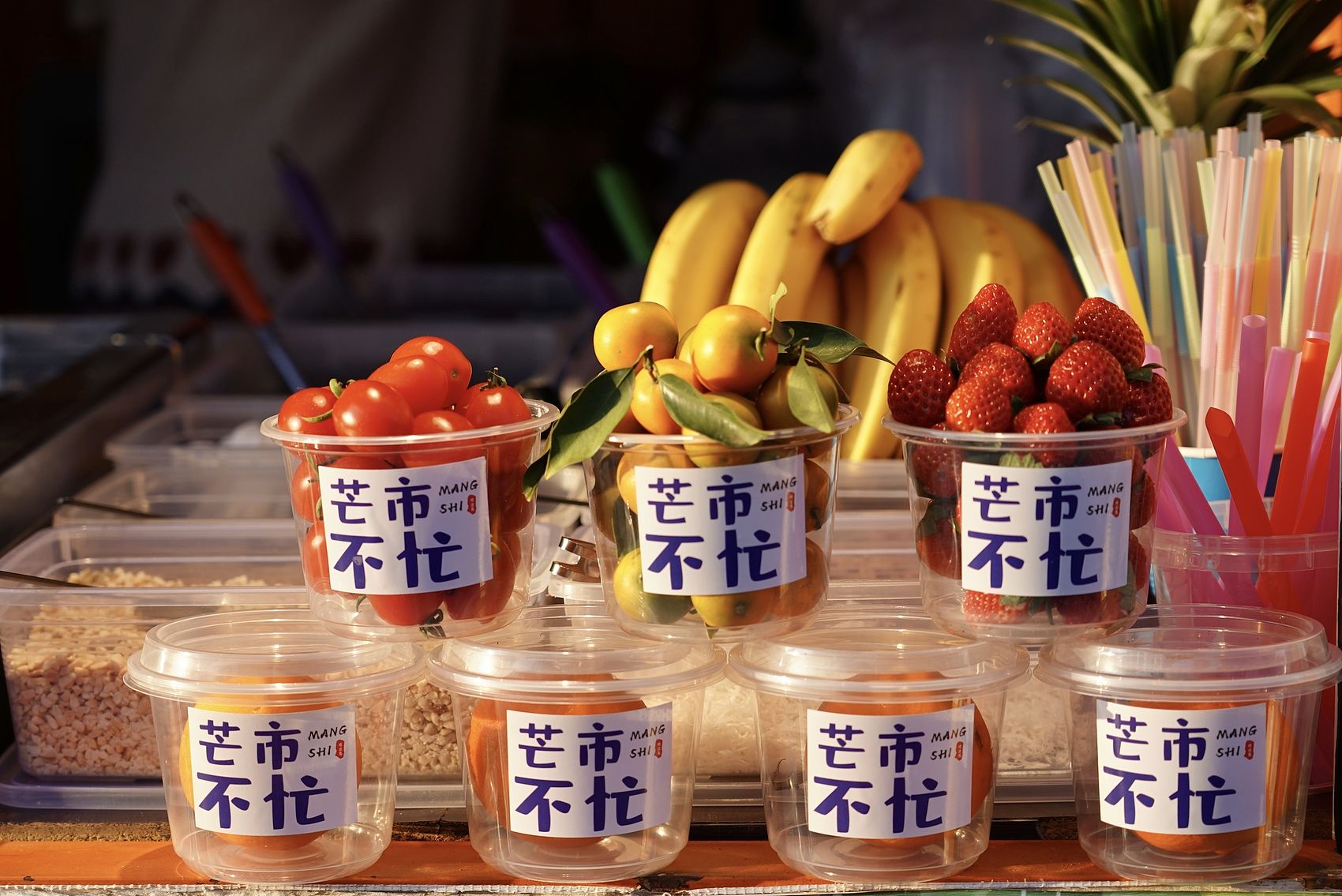
Market stalls selling fruit labeled with Mangshi’s city slogan: “Mangshi is not busy” (VCG)
As Thailand and Myanmar continue to make headlines in China for online scams and human trafficking, Mangshi—safely within China’s borders—has emerged as an unexpected alternative. According to Mangshi’s tourism bureau, the city hit a new record during the 2025 Chinese New Year, welcoming 963,800 visitors—more than double its population of 460,000.
“Human beings have two contradictory desires. They want familiarity but also novelty; safety but also adventure,” a Mangshi taxi driver told me on our way to the hotel.
Indeed, I was very relaxed in Mangshi. With a scooter, nicknamed the “little electric donkey,” one can ride anywhere in 15 minutes.
Besides the Golden and Silver Pagoda, Mangshi doesn’t have any grand attractions. Some visitors—drawn by online hype—leave complaining there’s “nothing to do.” But that’s exactly where its charm lies: in the small, unexpected delights waiting to be discovered.
“Mangshi is like an orchard, with jackfruit, longan, pomelo, and many other fruit trees around,” the taxi driver explained. “In July, all roadside fruits will be picked and piled in Mangshi Square. Everyone can go and take them for free.”
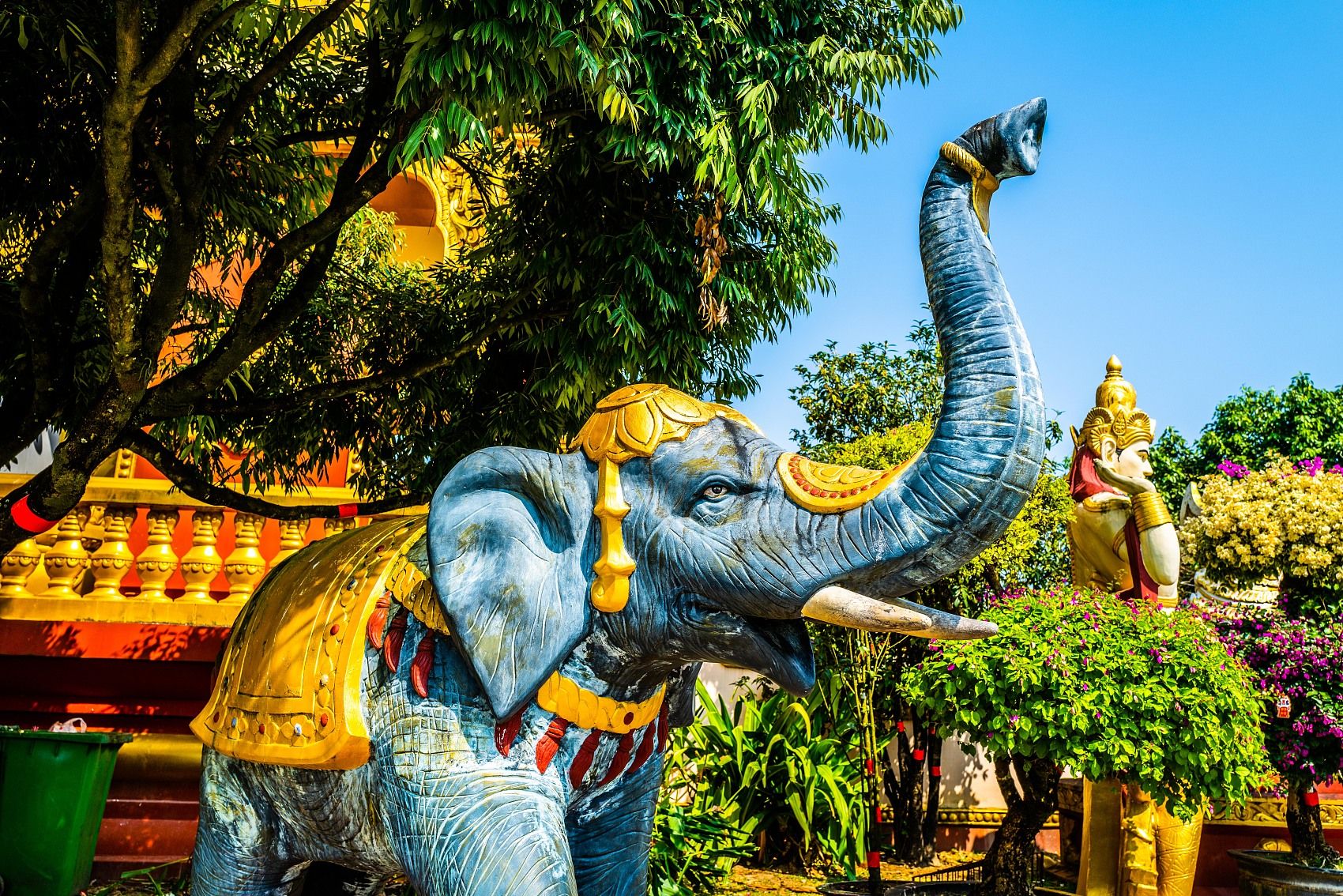
A blue elephant statue outside the Golden Pagoda (VCG)
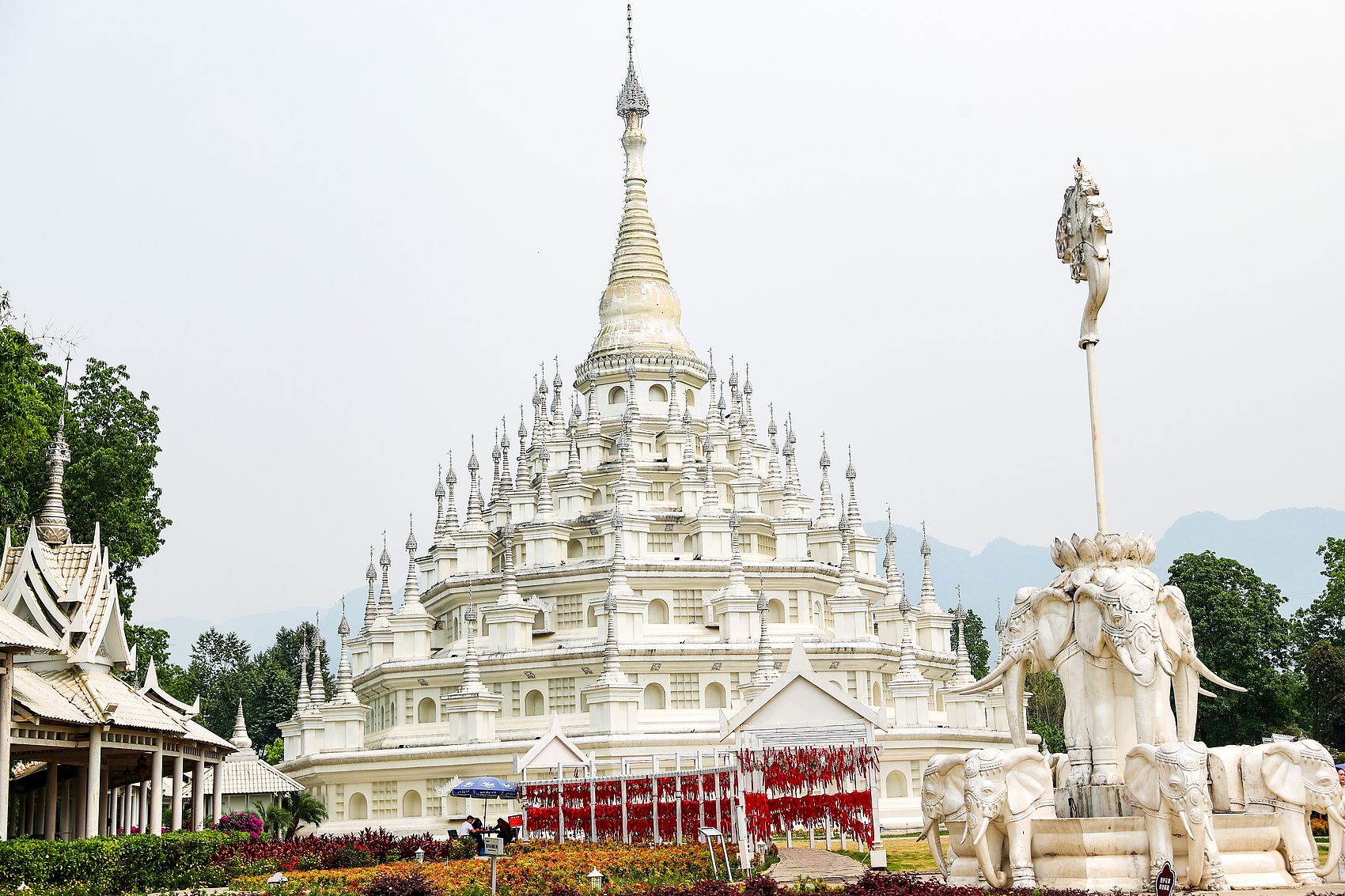
The Silver Pagoda is one of the few tourist attractions in Mangshi (VCG)
It’s this everyday abundance of greenery—rather than curated sights—that gives Mangshi its laid-back magic. Jackfruit trees are everywhere, with green fruits hanging like sweet bombs. Traveler’s Palms stretch out like giant green fans, fanning away the heat. As I wandered through the streets, flanked by towering 10-meter-high King Palms, a peacock-shaped arch appeared at an intersection, surrounded by elephant statues. Both animals are revered by the Dai people—peacocks for their grace and elephants for their strength. The Dai even name one of their traditional wooden drums the “elephant-foot drum” and perform dances that mimic the movements of a peacock.
Beneath the arch, a girl struck a confident pose mid-stride as her friend snapped away, trying to capture her most carefree moment. According to the lifestyle app Xiaohongshu, this spot is a must-visit daka (打卡, “check in”) location—perfect for the classic “Mangshi bu mang” photo. From there, they’ll likely head to the next free daka spot near the Shubaota (树包塔, or “tree-covered pagoda”)—a striking blue pagoda watched over by a 200-year-old bodhi tree. Local belief has it that walking around the pagoda clockwise three times will bring good luck.
But for many visitors, the real highlight of Mangshi isn’t found in photo spots or scenic landmarks—it’s on the table. From a bowl of beef soup ersi (饵丝, rice noodles), where diners scrape fresh mountain pepper root into the broth for an extra kick, to the roasted pig’s tail featured in the hit food documentary, The Story of Chuaner 2, in 2019, Mangshi is full of culinary surprises, influenced mainly by Southeast Asian cuisines given its location. One can circle the city in a day, but it might take a month to taste everything it has to offer. Chen Xiaoqing, a renowned food documentary director, has filmed in Mangshi several times.
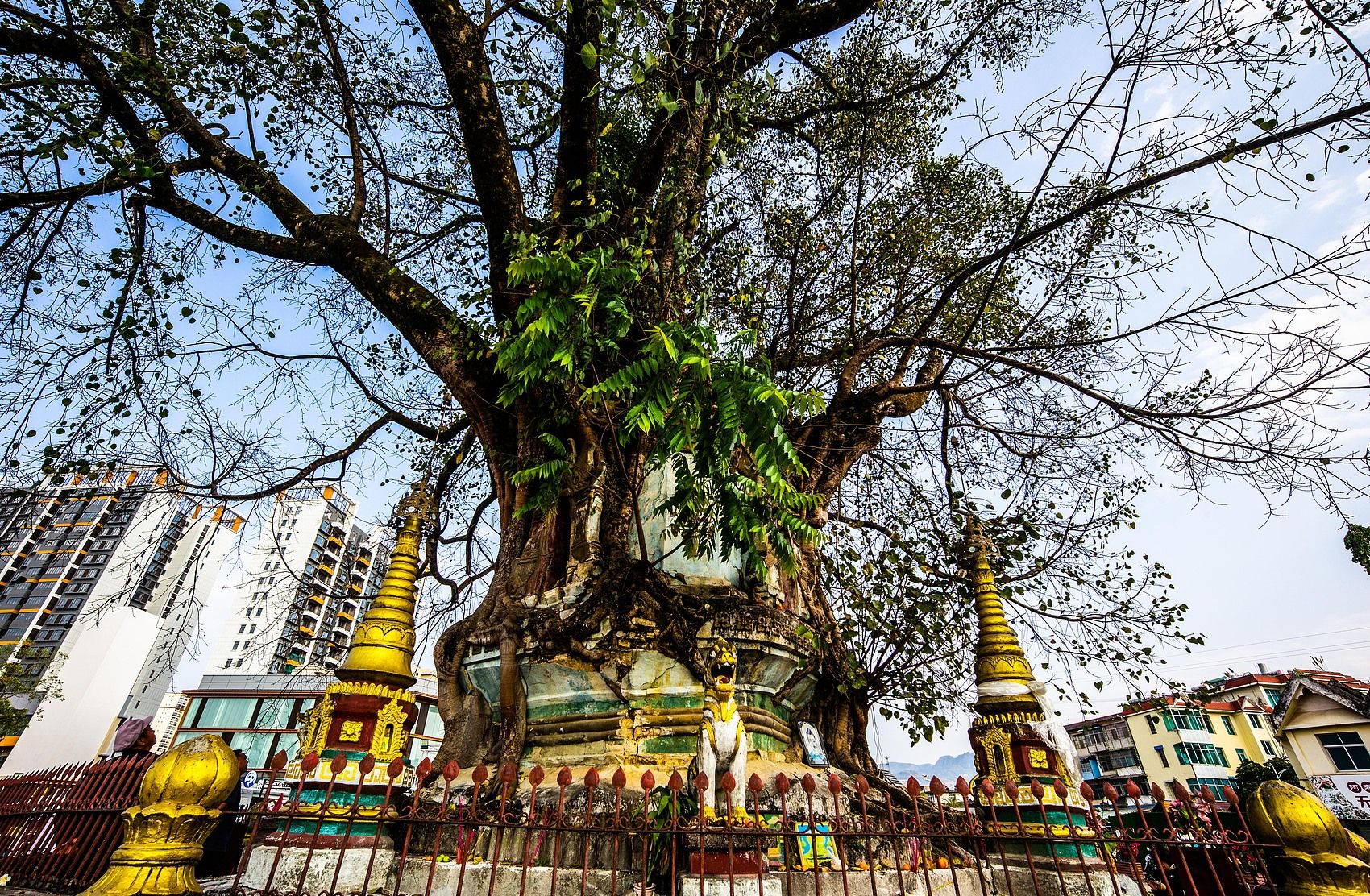
The Shubaota, or “tree-covered pagoda,” is also known among the Dai people as the “Pagoda of Love” (VCG)
Locals told me that the “cheat sheet” to sampling the best of Mangshi’s cuisine is a visit to Baisite Food Market—a popular daka spot known as the go-to place for “all the best food adventures in one stop.” Fittingly, Baisite is a phonetic translation of the English word “best.”
At first glance, it feels like a hawker center straight out of Southeast Asia. An awning stretches across the center, surrounded by food stalls and leafy trees. The tiled floor, with its mix of white, black, blue, and orange, radiates a breezy summer vibe as locals stroll around in flip-flops. Many Southeast Asian flavors can be found here, from the Burmese flying egg pancake known as shuai baba (甩粑粑), to Thai papaya salad and Laos ice coffee. There are also Dai and Jingpo ethnic foods. I circled around indecisively, fanning with my hand in the hot afternoon.
“When the water-splashing festival comes, it’ll cool everything down,” an auntie reassured me with a smile. Dressed in a purple and green headscarf, she was serving up shouzhua fan (手抓饭), a colorful Jingpo dish that translates to “hand-grabbed rice.” The Jingpo people traditionally spread banana leaves on the ground and eat with their hands. They also ferment wine from glutinous rice and mountain spring water, and sip it from cups cut straight from bamboo.
But here, far from their mountainous homeland and in the heart of a bustling food market, the dish is served on a plate with plastic gloves for us tourists. The auntie spread out a fresh banana leaf, scooped rice into the center, and carefully arranged the side dishes by hand: a salad made with zhe’ergen (折耳根, a pungent, fishy-smelling herb), lemongrass ribs, and ghost chicken—a black-boned bird believed to see spirits.
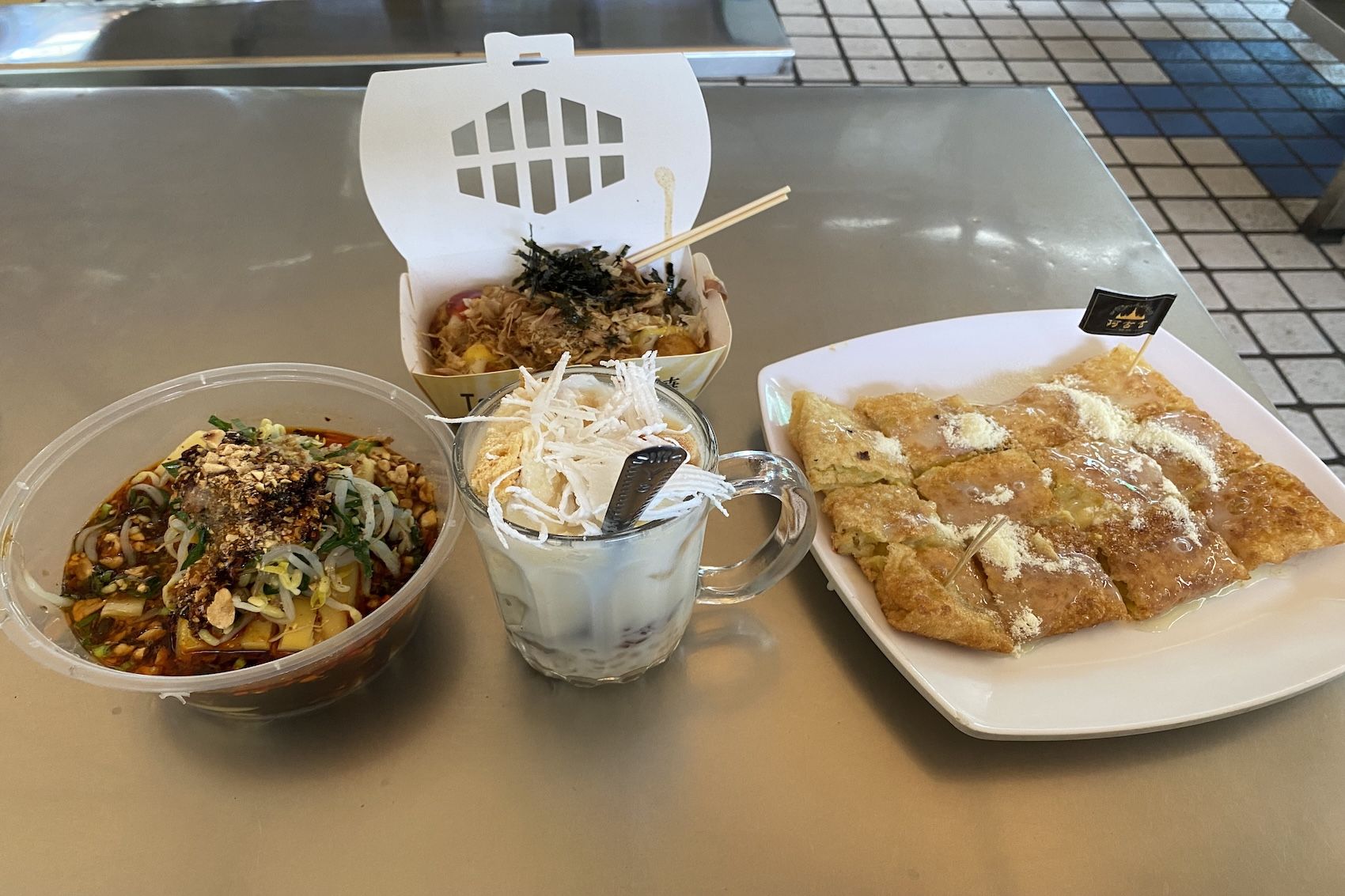
At Baisite Food Market, visitors can try out all sorts of local delicacies (Wikimedia Commons)
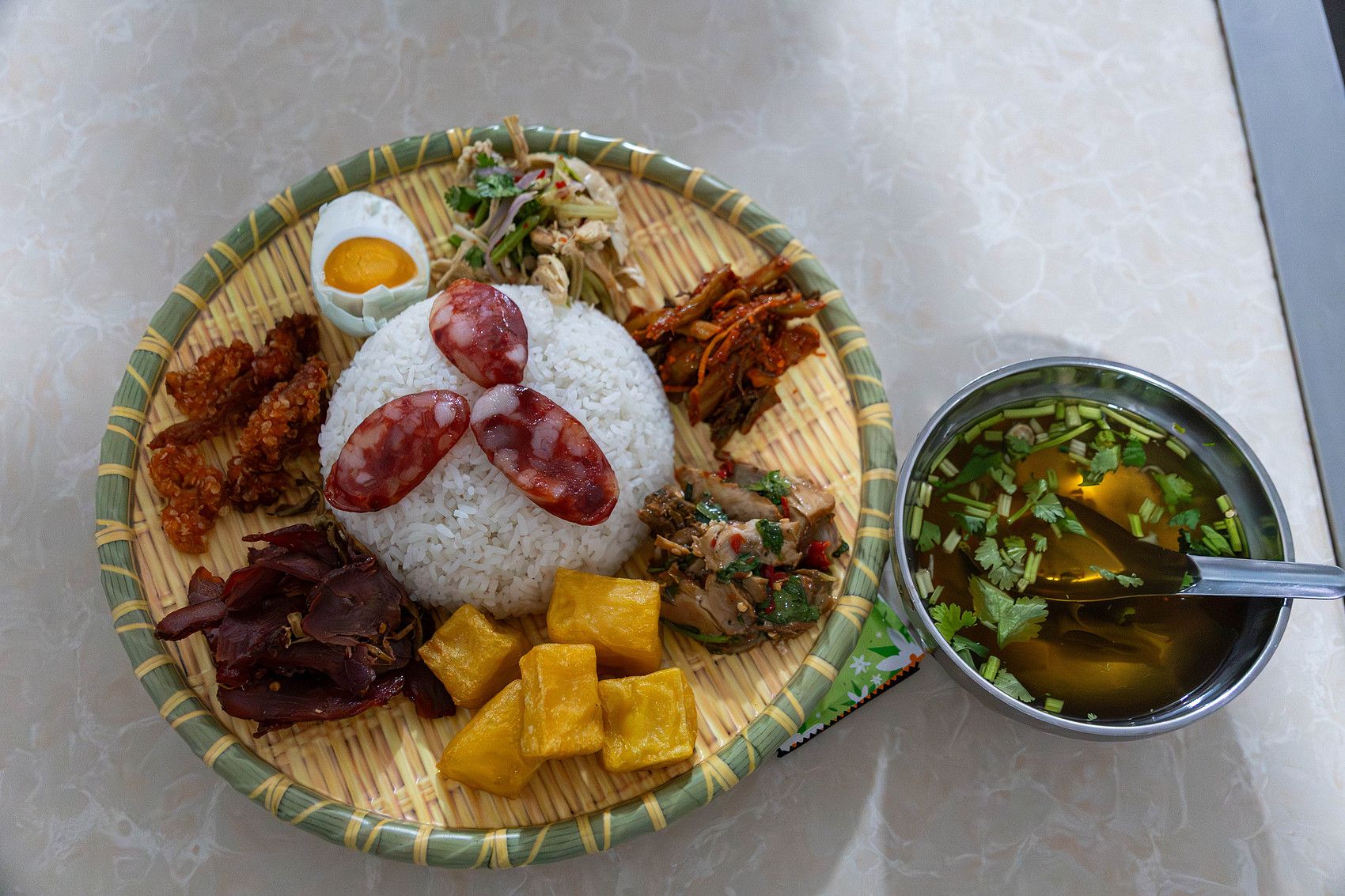
Jingpo dish shouzhua fan, or “hand-grabbed rice” (VCG)
“Do many tourists come here?” I asked.
“We want to come to your place, and you want to come to ours,” the auntie replied with a smile, her expression tinged with quiet curiosity—still a little puzzled by why so many outsiders are drawn to her corner of the world.
In this open-air market, the breeze carried a sweet fragrance of freesia—white, bell-shaped flowers placed outside nearly every stall. A girl came and sat at my table, wearing a blue Dai-style flower hairpin, her hands full with plates of food and drinks. She told me she was from nearby Baoshan (保山) and had come to Mangshi for one reason: the food.
“Even for us Yunnan locals, Mangshi is a food paradise,” she said with a grin. In a city that proudly markets itself as “not busy,” she joked, the only thing that stays busy is your mouth.
She cheerfully drank her paoluda (泡鲁达), a fusion of Southeast Asian flavors, blending coconut milk, condensed milk, white sago pearls, and purple glutinous rice. The final flourish is a few slices of baked bread placed on top of the cup, slowly soaking up the milk until they turn soft and creamy. According to local legend, a Burmese man invented the drink to woo a Dai girl, sending a heartfelt message with the ingredients: “There will be milk, bread, and love.”
The cold drink paired perfectly with her plate of lemon sapie (撒撇), a Dai specialty that many outsiders shy away from. “Sa” means “cold mix” in the Dai language, while “pie” refers to cow’s bitter intestine—known for its grassy, astringent flavor from undigested fluids. A typical serving comes with a bowl of tangy sauce and a mix of rice noodles, beef, cabbage, shiso leaves, and shuanshuan la (涮涮辣)—a deceptively cute local pepper with a brutal kick. Locals say even an elephant would shake its trunk if it touched one.
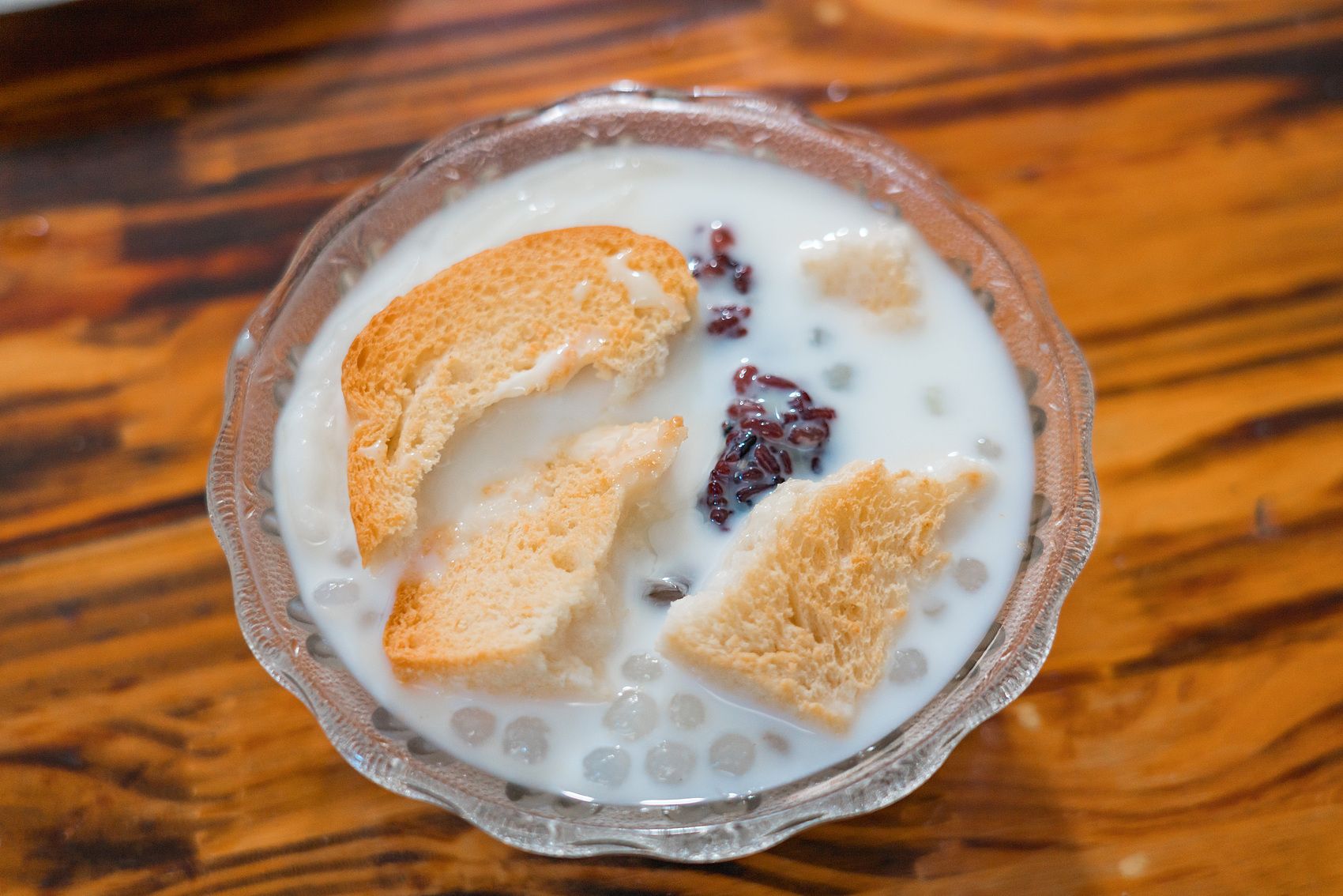
Paoluda is a common street dessert in Yunnan sold at sweet shops tucked away in alleys and on street corners (VCG)
“You’ve come all this way,” the girl urged, using that classic Chinese phrase that’s hard to argue with.
I dipped some rice noodles and beef into the sauce, placed them on a shiso leaf, rolled it up, and popped it into my mouth. The burst of bitter, sour, and fiery flavors hit all at once—a sharp, refreshing jolt that cut straight through the heat. No wonder the Dai love sapie on scorching days.
Thankfully, not all of Mangshi’s thrills are this intense. A visit to a local Burmese hair-wash salon offered a much-needed cool-down for both my burning mouth and overheated mind. Staffed by young Burmese women who work in the border zone under special permits, these salons don’t exist anywhere else in China. And for just 58 RMB, you get a full 50-minute session of pure relaxation.
When I arrived in the afternoon, a few girls were lounging, watching dance videos on Douyin and playfully mimicking the moves—it was their “happy hour.”
“Number seven,” the Burmese lady boss called out.
Number Seven, in a white shirt and with thanaka— a paste made from ground bark—on her cheeks, looked petite but had surprisingly strong hands. After washing my hair, she worked the foam down to my neck, shoulders, and even back. As she scrubbed with practiced strength, I felt like a slippery fish trying to wriggle free—an oddly satisfying struggle.
“Will you have days off during the Water-Splashing Festival?” I said, feeling a little guilty watching her work so hard in such a laid-back city.
“The festival is my busiest time,” she replied with a smile.
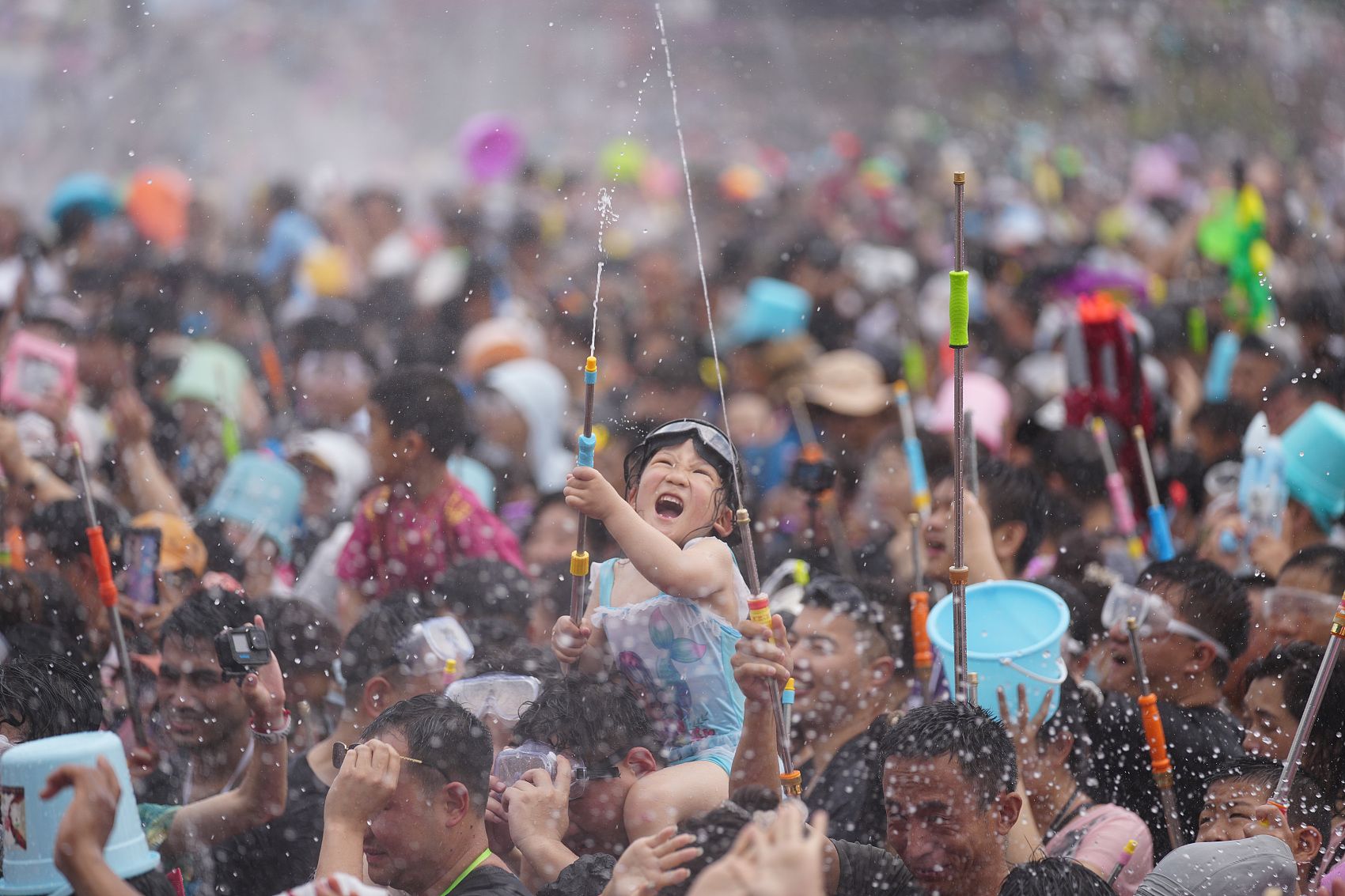
The Water-Splashing Festival in Mangshi kicked off on April 10 this year (VCG)
With 282,800 visitors during last year’s festival, even more are expected this April. Some are skipping Thailand’s Songkran for safety reasons—last year, high-pressure water guns used by drunk tourists made headlines.
Mangshi’s version is more graceful. “We dress in Dai costumes, pick flowers in the morning, and start splashing at noon,” a local barber told me. “Last year, I went with a girl—now she’s my wife.”
As I stepped out of the salon, my hair danced in the dusk breeze. A watering truck passed by, “singing” from its speakers and misting the road. A few drops hit me—like the festival had already begun.
Related Articles