


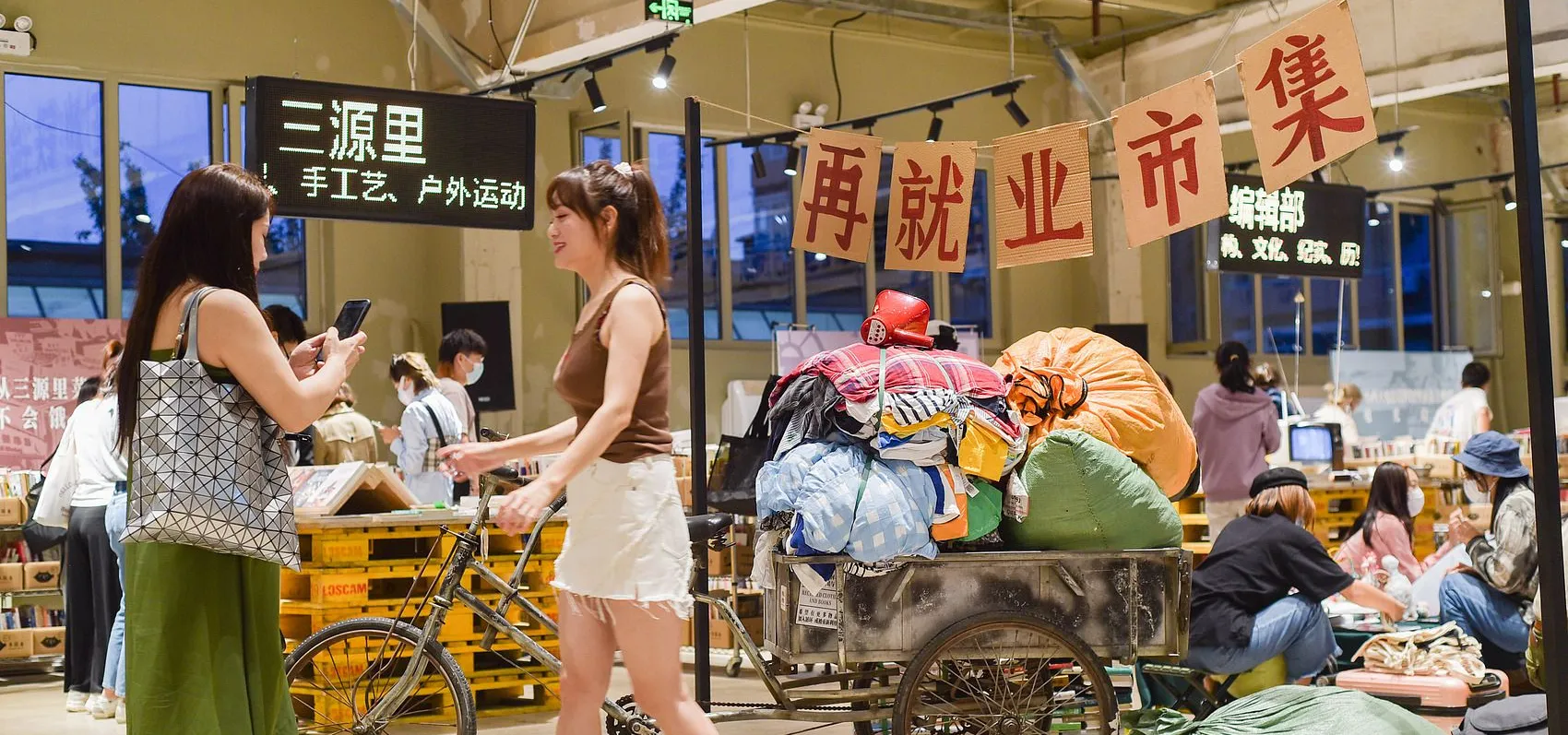

Drawn by sustainability and savings, young shoppers are driving China’s boom in secondhand goods
F
or Zhang Zhiruo, almost everything in her dorm room has a past: a laptop once owned by her sister, a mattress bought from a graduating student, and a blue waistcoat scored at a secondhand fair. A self-claimed “Queen of Garbage,” the 24-year-old college student in agriculture has stitched together a lifestyle almost entirely based on her secondhand finds.
“Our society produces far more than we need, and so much ends up as waste. I don’t want to get caught in the endless cycle of consumerism,” Zhang tells TWOC, explaining her fatigue from fast and excessive consumption. Small-scale bartering and the circular economy give items a second life, allowing society to return to what Zhang calls the “essence of living.”
Zhang is not alone in her lifestyle. Once seen as a last resort only for those short on cash, China’s secondhand market is now being reshaped by young consumers into a modern alternative against the fastest-growing consumer trends. Under economic pressure, weary of relentless consumerism, and amid growing environmental awareness, the younger generation is looking beyond brand prestige to rethink the true value of goods, prioritizing practicality and sustainability instead.
This shift has also fueled the rapid expansion of online resale platforms, neighborhood thrift stores, and secondhand fairs across the country. Although challenges like counterfeiting, thin profit margins for offline shops, and social stigma persist, thrifting is quickly entering the mainstream.
Discover more about China’s consumer trends:
- The Young Chinese Lottery Shop Owners in It to Win It
- As the “2D Goods Economy” Explodes in China, Can Fantasy Worlds Solve Real-life Woes?
- High Stakes in Short Takes: China’s Booming Micro-Drama Business
Second spring
Though inextricably connected with e-commerce and social media today, China’s secondhand market stretches back centuries. In the Eastern Han dynasty (25 – 220), markets in the then-capital Chang’an (present-day Xi’an) were trading pre-owned books and instruments. By the Song dynasty (960 – 1279), relaxed curfews and market controls gave rise to bustling nighttime bazaars for antiques, personal castoffs, and even spoils of war, known as “ghost markets,” some of which can still be found in China today. In the Qing era (1616 – 1911), the imperial court formally resold unwanted palace inventories at Chongwenmen in Beijing. In the 1950s, cities like Shanghai and Beijing introduced state-run consignment shops for old-goods trade. Reform-era markets like Panjiayuan became hubs for secondhand furniture, antiques, and everyday wares, but traditional preferences for new goods kept the growth modest.

Beijing’s Panjiayuan Secondhand Night Market, also known as the “ghost market,” has been a must-visit spot for enthusiasts seeking antiques, accessories, and everyday necessities since the 1980s (VCG)
Despite its centuries-old history, China’s secondhand economy has only boomed in recent years, decades after its Western counterparts. A 2021 industry report co-produced by Tsinghua University, consultancy Frost & Sullivan, and leading resale platform Zhuanzhuan finds that China’s secondhand market expanded from about 300 billion yuan in 2015 to more than 1 trillion yuan in 2020 and is projected to reach 3 trillion yuan by 2025.
Youth are driving the trend: According to database QuestMobile, nearly half of the 178 million users of China’s secondhand e-commerce platforms are under 30. In November, the youth-oriented social media app Xiaohongshu (RedNote) rolled out a personal resale feature.
These online platforms and young consumers like Zhang have helped reshape secondhand goods as a blend of nostalgia, practicality, and a modern lifestyle.
Pan, a 25-year-old PhD student who requested to reveal only his last name, began using Xianyu, China’s largest online secondhand platform owned by e-commerce giant Alibaba, in high school, selling badminton bats he no longer needed. In college, while serving as vice-chair of a student IT club, he found discarded USB drives in good condition being resold on the platform for roughly a third of the retail price. “With a good eye, you can find a lot even on a small budget,” says Pan.
That discovery reshaped how he consumed. A long-time gadget enthusiast, Pan has since swapped over 250,000 yuan worth of secondhand electronics on Xianyu, including watches, phones, and laptops—he buys them secondhand, uses them, then trades them in for another used device as the technology upgrades. Back in 2023, he often swapped two to three phones a year just to keep pace with the market. “It wasn’t about making money, he explains, “It was about the experience.”
Pan sees a pattern: in a fast, competitive market, many older items are still perfectly usable but quickly replaced by the new. That constant churn, he believes, is fueling the boom in secondhand sales and pushing consumers toward healthier habits.
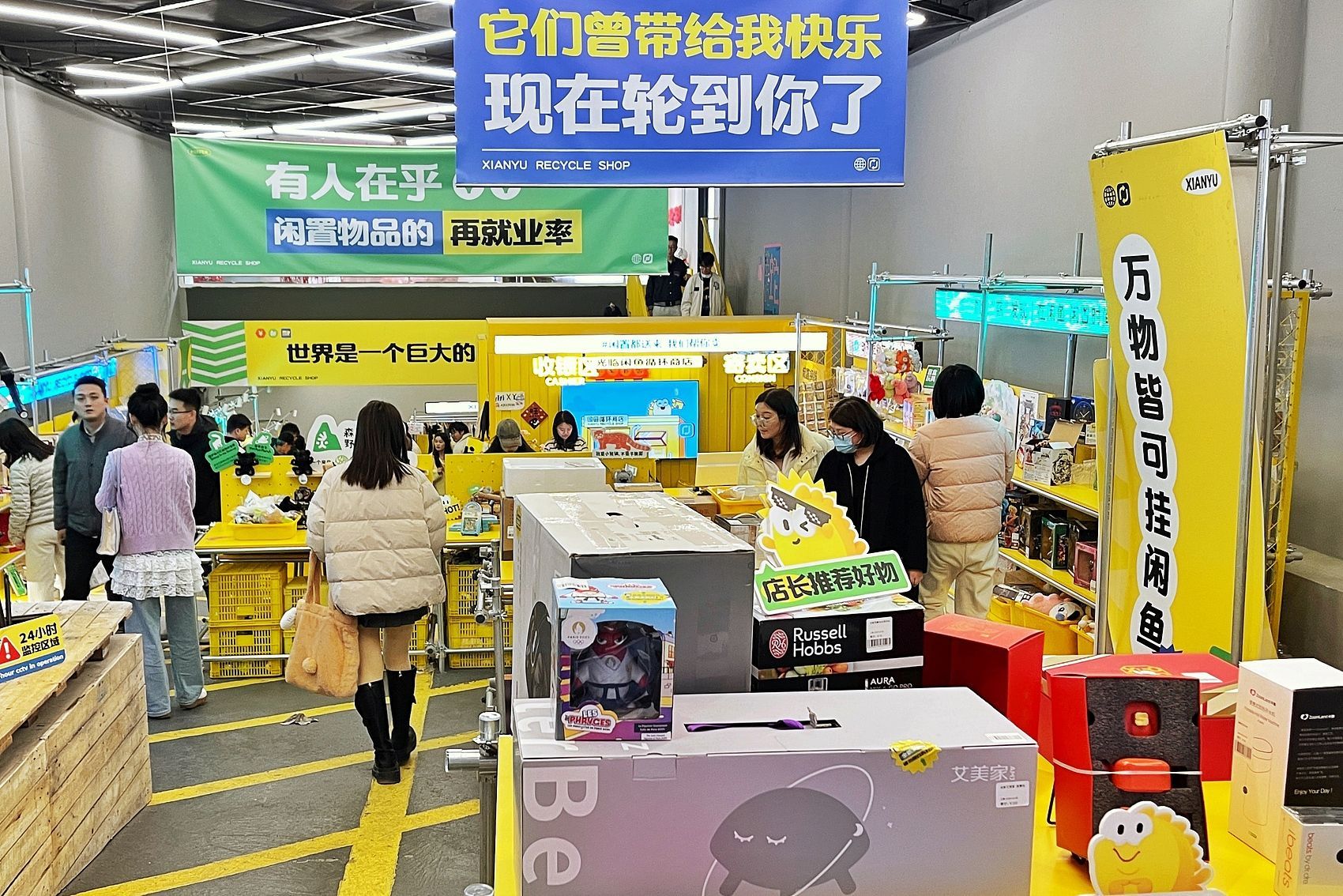
To build trust and streamline transactions, Xianyu pledged last January to open 100 neighborhood thrift stores nationwide within five years. Beyond secondhand goods, these spaces also let users post services they could provide, from errand-running and dog walking to even scooping litter boxes. (VCG)
Policy support has reinforced the shift. Over the past decade, national initiatives have called for green consumption and faster circulation of unused goods. A 2021 national circular economy plan called for standardized secondhand services, while in 2022, authorities, including the National Development and Reform Commission, encouraged community-level resale events and improved dispute-resolution mechanisms. This January, the national government issued guidelines on quality inspection services and data-wiping verification, further professionalizing the secondhand market.
But the rapid rise of secondhand platforms has brought on growing pains. Complaints about false advertising, counterfeit goods, and scams abound. When Pan bought a secondhand MP3 player on Xianyu in high school, he received a device that powered on but was completely unusable. “It left a bad taste in my mouth,” he says, “I didn’t return to the platform until college.”
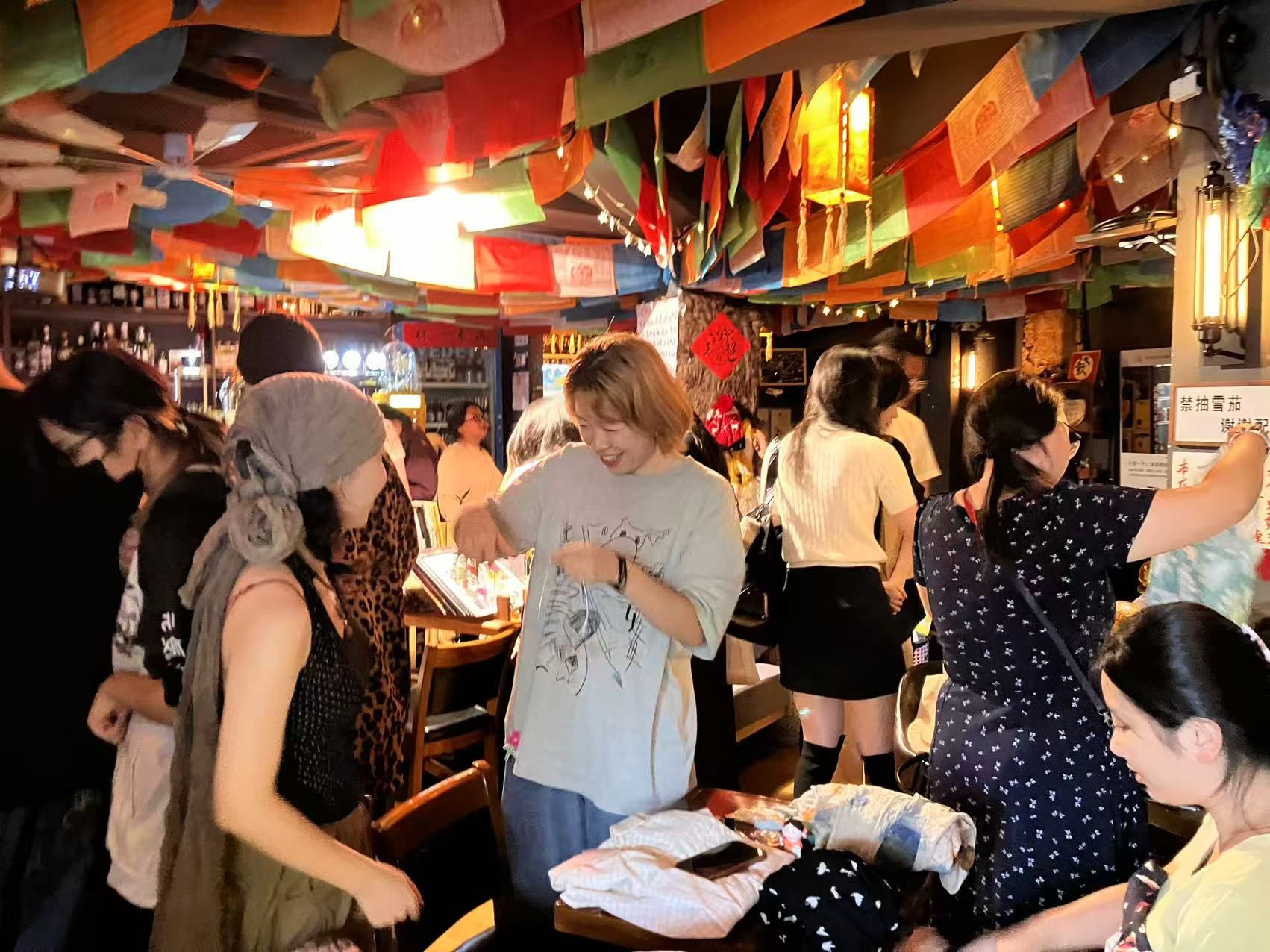
Beyond cost-effective consumption options, secondhand fairs have also become social places where young people connect with like-minded peers (Zhang Zhiruo)
His experience is far from unique. A report by news portal Rednet.cn from January last year found that some sellers deliberately list new counterfeit or substandard goods as secondhand to evade scrutiny. In a 2021 survey by the Jiangsu Consumer Council, over 90 percent of respondents reported problems on secondhand platforms, including counterfeits, refund difficulties, or goods that didn’t match their photos.
To help clean up the marketplace, Pan volunteers as a “jury member” on Xianyu, reviewing disputes over electronics—from fake operating systems to shipping damage. “I’ve fallen into most of these traps myself,” he says. “It becomes a process of cross-checking past experience against new cases.” He now shares these common pitfalls on Xiaohongshu, where hundreds of users have added their complaints, warnings, and tips in the comments.
Platforms are also racing to catch up. This February, Xianyu expanded its dispute-resolution system, drawing on more than 400,000 active users to form specialized review groups across 10 categories, from musical instruments to ACG goods. Zhuanzhuan, another major platform specializing in secondhand electronics and luxury items, operates inspection centers nationwide with thousands of quality-control engineers. Meanwhile, Deja Vu, a book resale platform that has expanded into apparel, has maintained a vast database to distinguish authentic editions from pirated ones since 2017 and tightened its pricing guidelines earlier this year.
Buying meaningfully
Offline secondhand fairs and thrift stores have also carved out a place in China’s circular economy. Their appeal is clear: young consumers come not just to buy, but to see, touch, and engage, offering trust and human connection that algorithms cannot replicate.
Zhang, the self-claimed “Queen of Garbage,” learned that firsthand after she organized a small secondhand fair in a Nanjing park last spring. The once-informal gathering soon became a monthly event, later moving to a local bar. Dozens of young people—mostly women—come to sell or buy clothes, handbags, and albums. “Online, secondhand items feel far removed,” Zhang says. “You spend hours searching, and you’re never fully sure. Here, you can see everything yourself.” After graduation next year, she plans to bring the markets directly into residential communities.
Across China, such grassroots experiments are multiplying. When TWOC visited thrift store Santu in Beijing on a cold Sunday, dozens of young customers drifted in and out over the course of the afternoon, browsing quietly among racks of jackets, board games, necklaces, toys, and notebooks. Some were regulars, while others lingered in surprise at the low prices and unique stories behind their finds. For Gin, the co-owner of the thrift store founded in 2023, Santu is less a business than a “social experiment.” “It’s more accurate to say that we are helping things circulate. This is a healthy approach to consumption,” Gin, now in her 30s, explains. “It’s not about being poor or lacking options. People are choosing secondhand because it feels responsible, creative, and meaningful.”
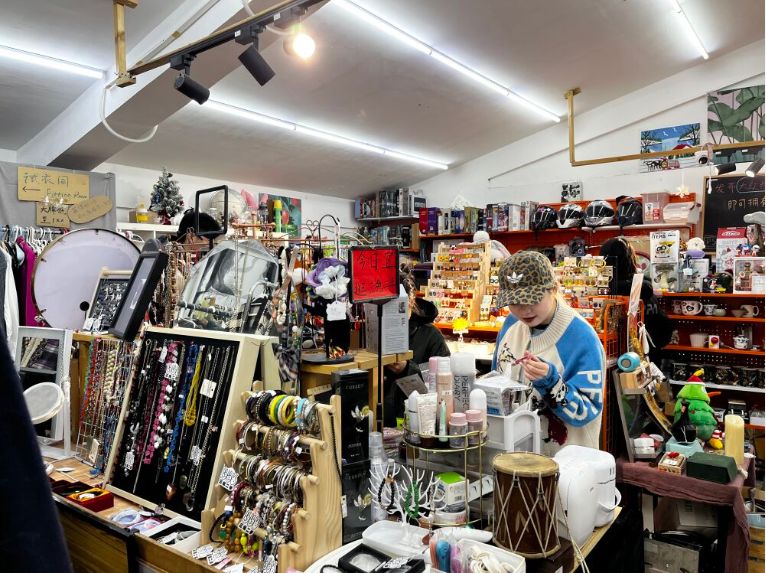
At Santu, a secondhand store in Beijing, sellers submit items through an online assistant for checks on cleanliness and storage suitability, or opt to donate them. Prices are set with reference to major online platforms such as Xianyu, while commissions vary by item. (Yang Tingting)
These efforts are also part of growing policy momentum. This April, the Ministry of Commerce and other authorities named 10 pilot cities to develop standardized secondhand circulation hubs, including Hefei in Anhui and Hangzhou in Zhejiang, covering everything from used mobile phones and clothing to furniture, aiming to create replicable models and a clear regulatory framework.
Online platforms have even joined the offline push. Xianyu has opened over 20 stores nationwide. The business model is simple in theory—buy low and sell high, charge commissions, and mix consignment with donation—but in practice, it’s not all smooth sailing. Obstacles include high rent, certain slow-moving inventory, and thin profit margins, especially in major cities like Beijing. In 2023, Deja Vu closed one of its Beijing stores, citing that nearly all its earnings were consumed by rent (though the store reopened this year in a different location).
For small operators like Gin, the value of the business extends beyond sales. “Many customers bring clothing and other items simply because they don’t want usable goods thrown away,” she tells TWOC. At Santu, clothes pile up quickly, and space is always tight. To clear inventory and encourage creativity, Gin organizes remake competitions in which customers repurpose unsold garments into handbags and other new creations.
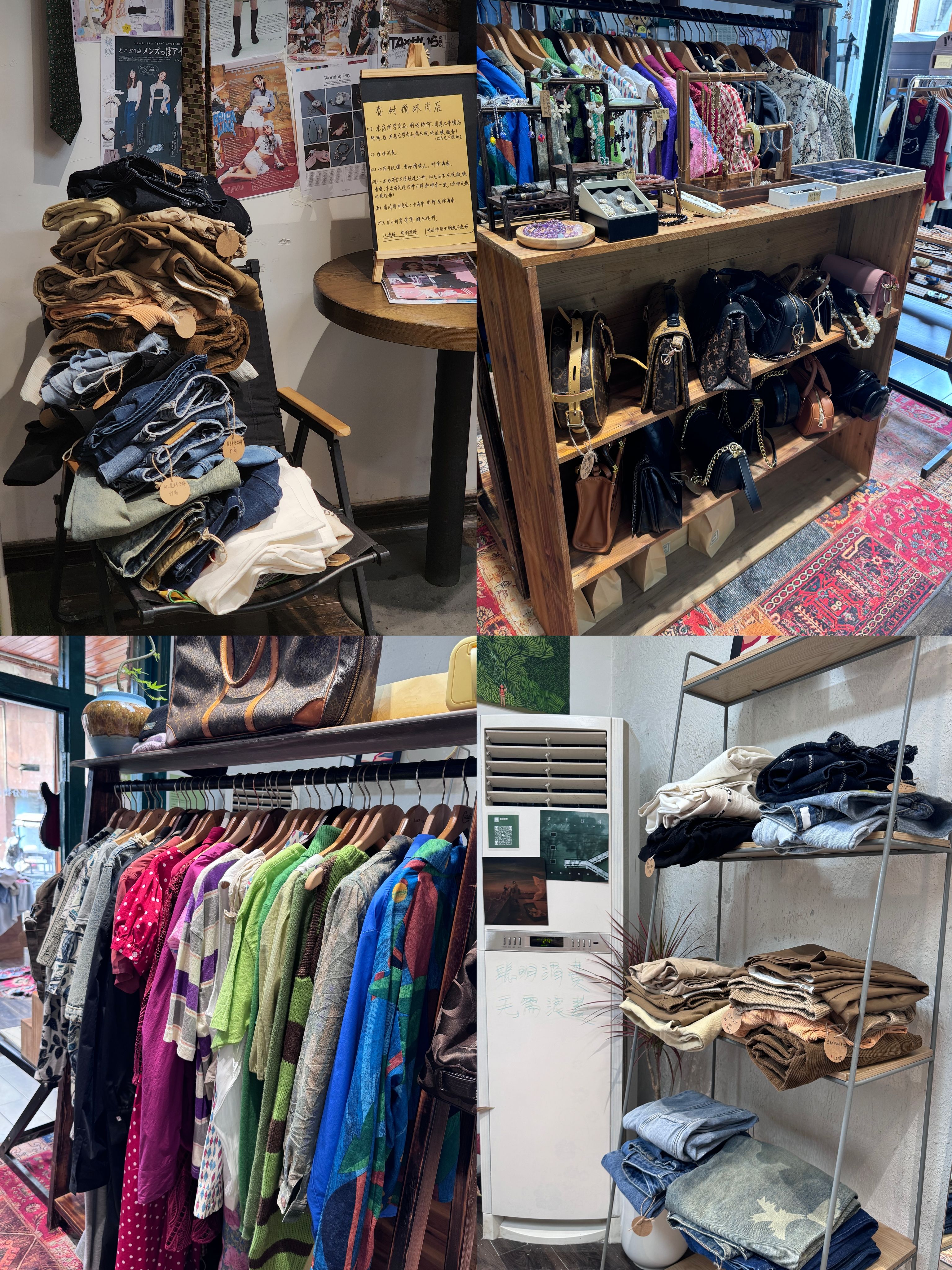
At the Chunshu thrift store in Henan, every garment undergoes cleaning, disinfection, and ironing before sale to help build trust and acceptance of secondhand goods (Yao Jinge)
Cultural barriers, however, remain. Last summer, when Yao Jinge, co-founder of the Spring Tree resale shop in Xinxiang, Henan, held a fair in a local mall, some families approached the event with skepticism. “Some treated it as a place to dump old clothes or pick through trash,” Yao reminisces. “They even criticized us for selling worn or tattered garments.”
For the 27-year-old, such reactions are not setbacks but part of a necessary phase in shifting public perception. In response, she tries to prioritize transparency, authentication, and consistency. At Spring Tree, luxury goods like handbags require proof of purchase and sometimes third-party verification. Every item, including secondhand books, is carefully cleaned, disinfected, documented, and repackaged. Prices are benchmarked against major online platforms. “This way, customers feel reassured, and as their acceptance grows, people around them will gradually come to accept these items as well,” adds Yao.
Secondhand goods, Yao admits, are rarely people’s first choice. But she says that is the point. In today’s throwaway economy, buying secondhand requires people to slow down—to browse, compare, and think about what they actually need. “We don’t want secondhand items to just end up with us or be sold quickly at bargain prices,” she says. “Our goal isn’t just to sell things, but to make sure each item goes to someone who truly needs it.”
A Second Life: Why Young Chinese Are Turning to Thrift? is a story from our issue, “New Markets, Young Makers.” To read the entire issue, become a subscriber and receive the full magazine.
Related Articles



