
From the “birthplace” of Spring Festival to a town glowing with fish-shaped lanterns and parades, here are some ideas for your Chinese New Year getaway
This Spring Festival, China is taking a well-deserved pause with an extra-long nine-day holiday. With work stress usually running high across the country, it’s a rare chance to take a proper break and unwind. It’s also the perfect time to hit the road—soak up festive traditions, and experience a side of China that only comes alive during the New Year.
Our editors at TWOC have picked out a few spots that are worth checking out. Whether you’re chasing cultural traditions, mouthwatering food, or just a dose of holiday cheer, there’s something on this list for you.
Langzhong, Sichuan
You might never have heard of the small city of Langzhong in Sichuan province, but in recent years its name has popped up on travel lists as the Spring Festival approaches, with the city branding itself as the birthplace of the Chinese New Year.
There is some truth to this claim: During the Western Han dynasty (206 BCE – 25 CE), astronomer Luo Xiahong (落下闳), a native of the city, helped compile the Taichu Calendar (太初历), which for the first time fixed the date for the start of the year, laying the foundation for what is now known as the Spring Festival.
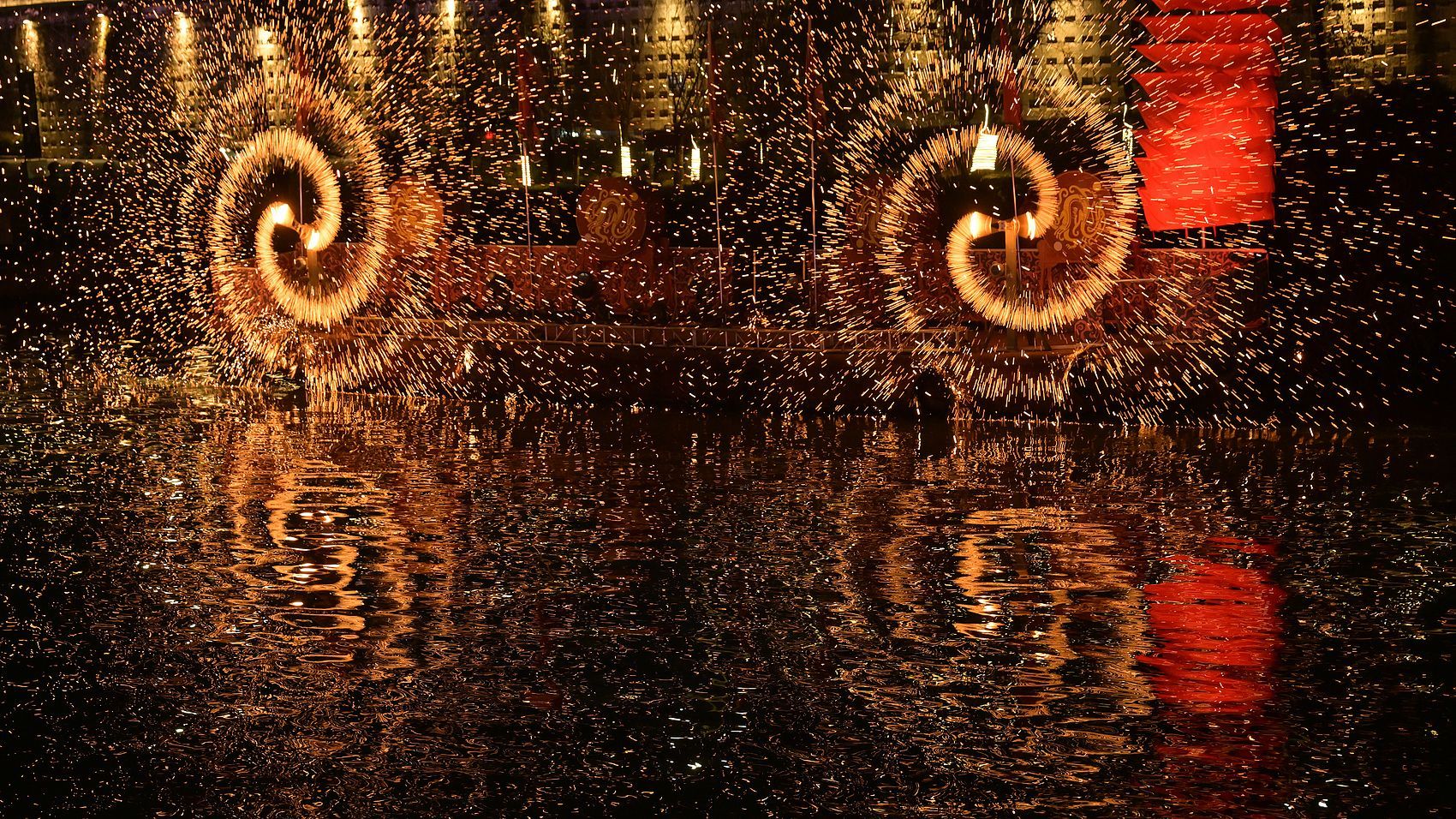
An “iron flower” performance—striking superheated molten iron so that it bursts into showers of sparks—was spectacularly staged along the Jialing River in Langzhong’s old town on February 13 (VCG)
While it might be a bit of a stretch to call Langzhong the definitive birthplace of the Spring Festival—after all, Luo Xiahong wasn’t the only scholar working on the calendar, and he’s not even the most famous, with luminaries like Sima Qian (司马迁), the author of Records of the Grand Historian (《史记》), among his contemporaries—it’s still a place worth visiting, especially for its festive atmosphere, or nianwei (年味).
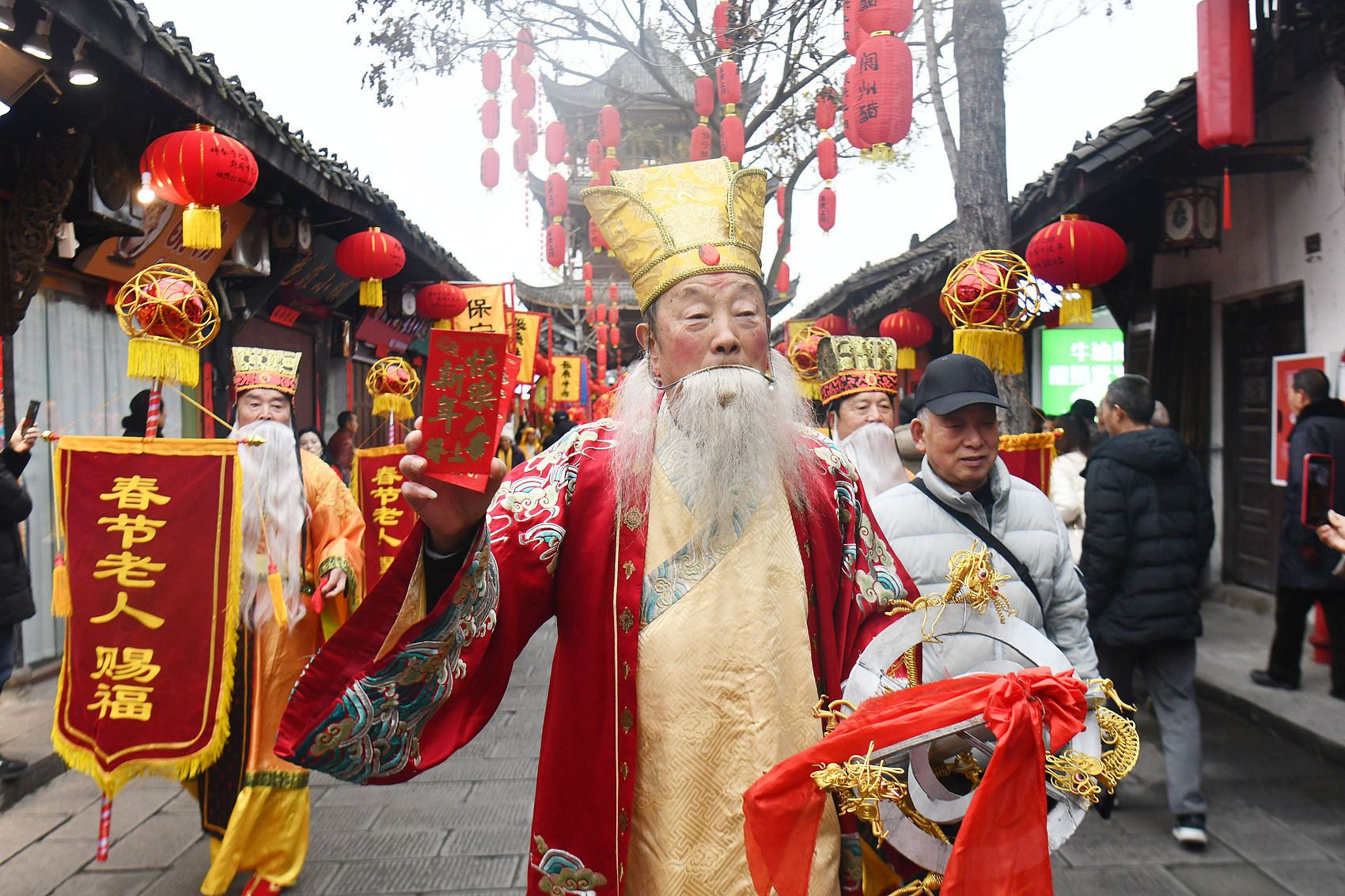
For the past 13 years, Zhang Zhonghe, a Langzhong native, has portrayed the “Spring Festival Grandpa” in the city’s New Year parade (VCG)
Luo has also inspired the legendary “New Year’s Grandpa (春节老人).” Similar to the West’s Santa Claus—which, interestingly, is translated into Chinese as “Christmas Grandpa (圣诞老人)”—each year, a local dresses up as New Year’s Grandpa to offer blessings. But instead of sliding down chimneys, he leads a parade through the old town streets, greeting and handing out red envelope to visitors and locals alike. Other staple festive celebrations are also present in Langzhong during this time, from lion dances to decorative door murals.
Putian, Fujian
Whenever Putian is mentioned to a Chinese person, what immediately springs to mind is likely sneakers. After all, the city has earned its fame for churning out high-quality shoes, as well as knockoffs of brands like Nike and Adidas. However, every Chinese New Year, Putian’s manufacturing vibe gives way to a sea of red decorations and bright orange kumquats, which locals believe will bring good fortune and prosperity.
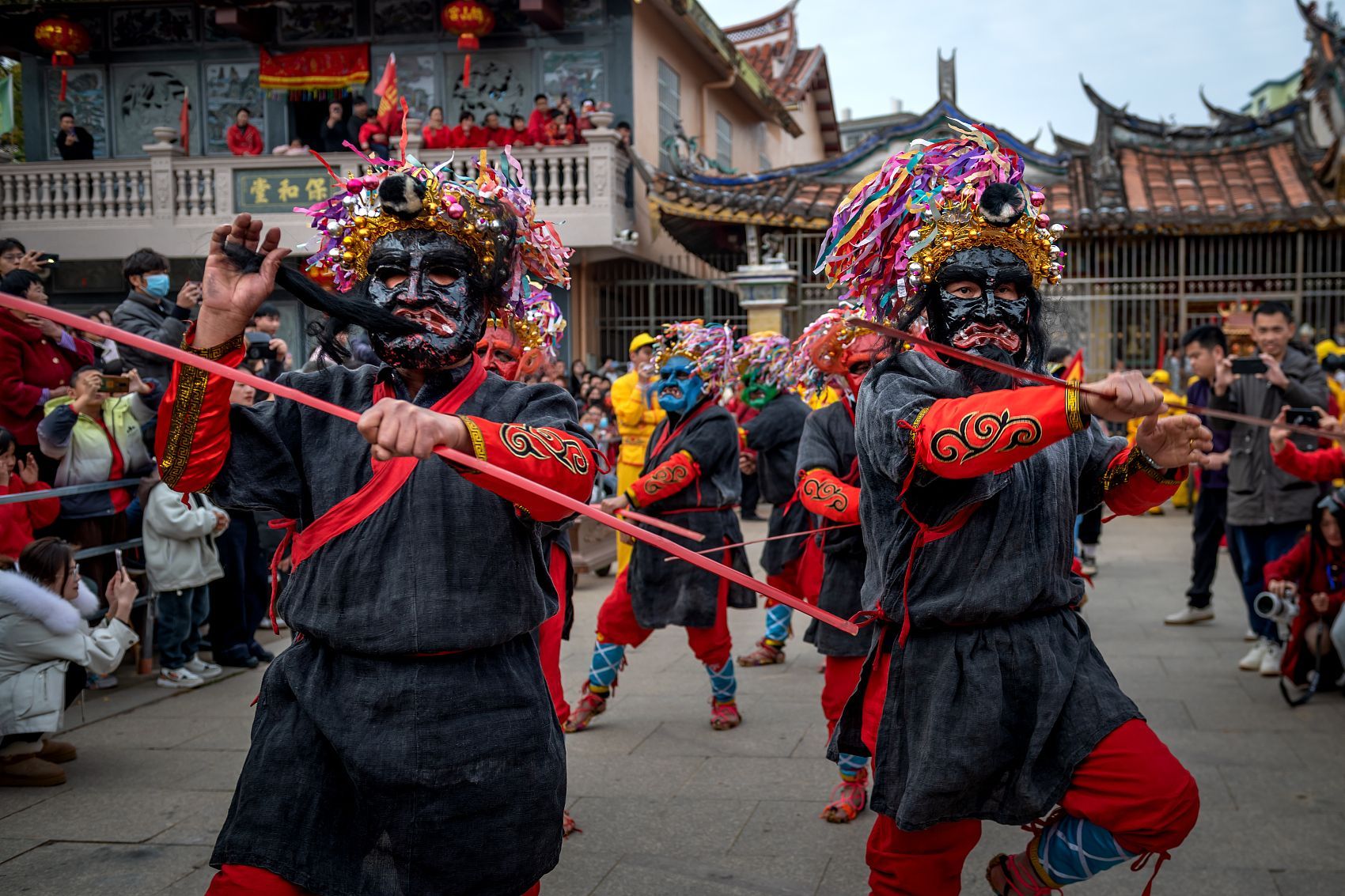
The Zaoli Dance is a traditional folk performance from Putian, Fujian, now recognized as an intangible cultural heritage. Tracing its roots back to the Western Han dynasty, it evolved from an ancient ritual meant to ward off evil spirits. Dancers don fierce masks and striking black-and-red costumes, moving with intense energy and commanding presence. (VCG)
Located in the heart of Fujian, where traditional rituals and beliefs still run deep, this coastal city ranks among the most festive corners of China. As many lament that the New Year has lost its old charm elsewhere, Putian—and the broader Fujian and Guangdong regions—now draw huge crowds of tourists eager to soak up the celebrations that have somehow resisted time, all while enjoying the mild winter weather that hovers around 20 degrees Celsius.
This year, Putian has planned over 100 events across 30 days to celebrate from the start of the New Year through the days following the Lantern Festival, featuring everything from the famous Yingge dance to parades honoring Mazu, the local sea goddess.
Food is another major draw for tourists to the area. If you love noodles and fresh seafood, this is the place for you. Mild, flavorful, and definitely not spicy, it’s comfort food at its finest!
Shexian, Anhui
If you are seeking to immerse yourself in New Year traditions in eastern China, Shexian, a small county in southern Anhui, is the place to be. Home to about 3,000 historical sites and 167 ancient villages, it offers a rare look into China’s rich cultural past.
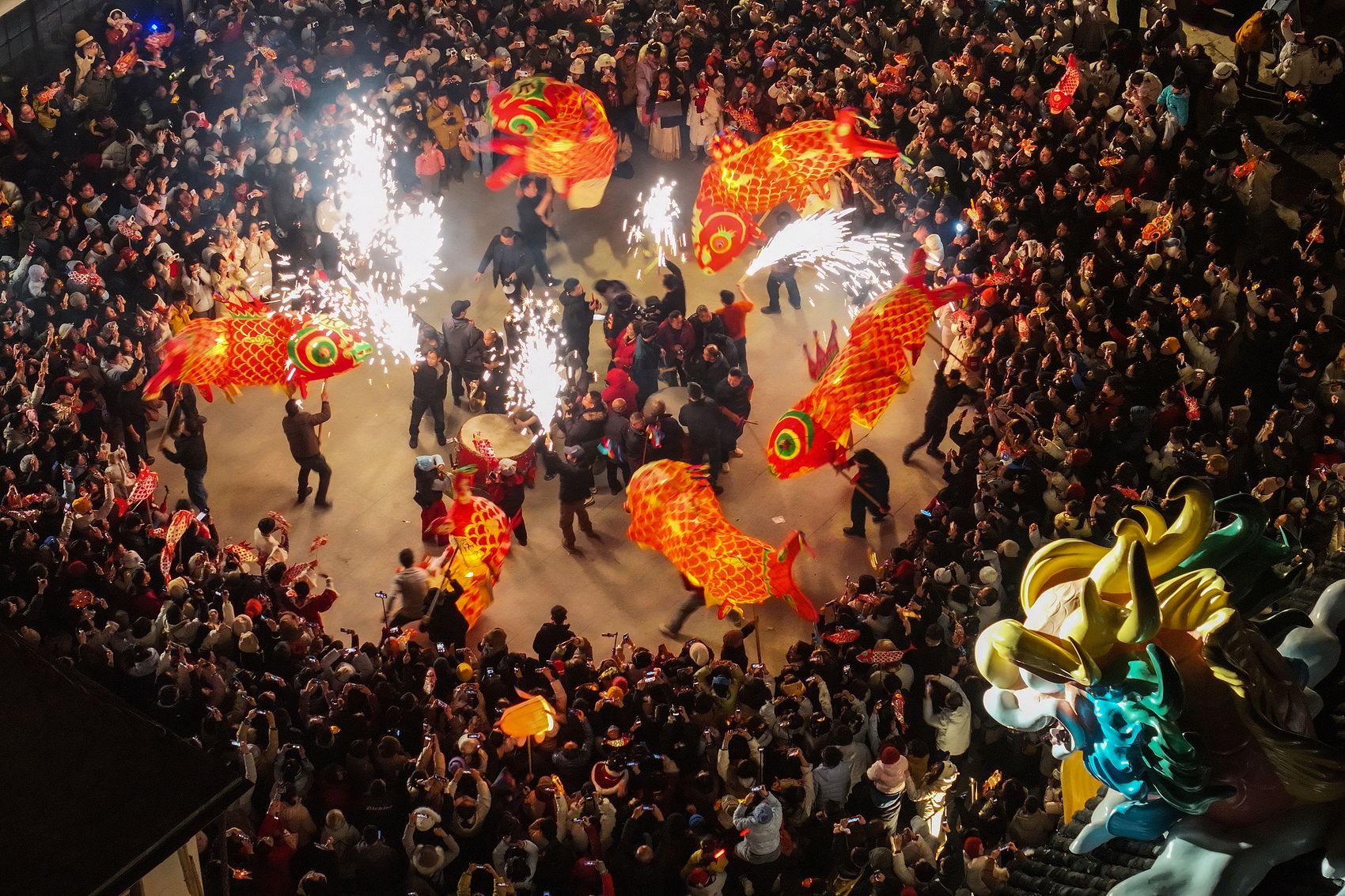
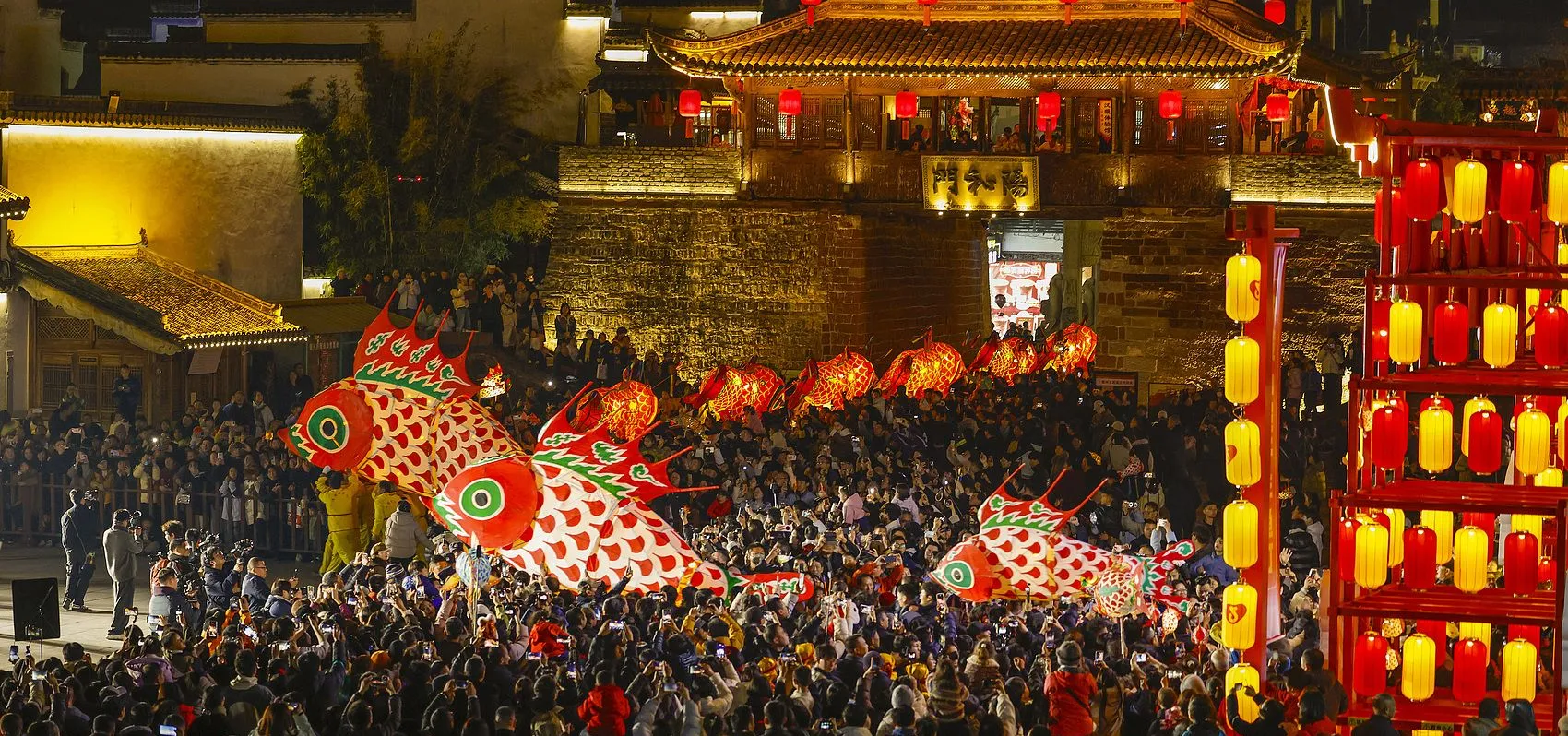
“Yu” (fish) in fish-shaped lanterns is a homophone for “abundance” (余), making the lanterns symbols of a bountiful harvest and good fortune (VCG)
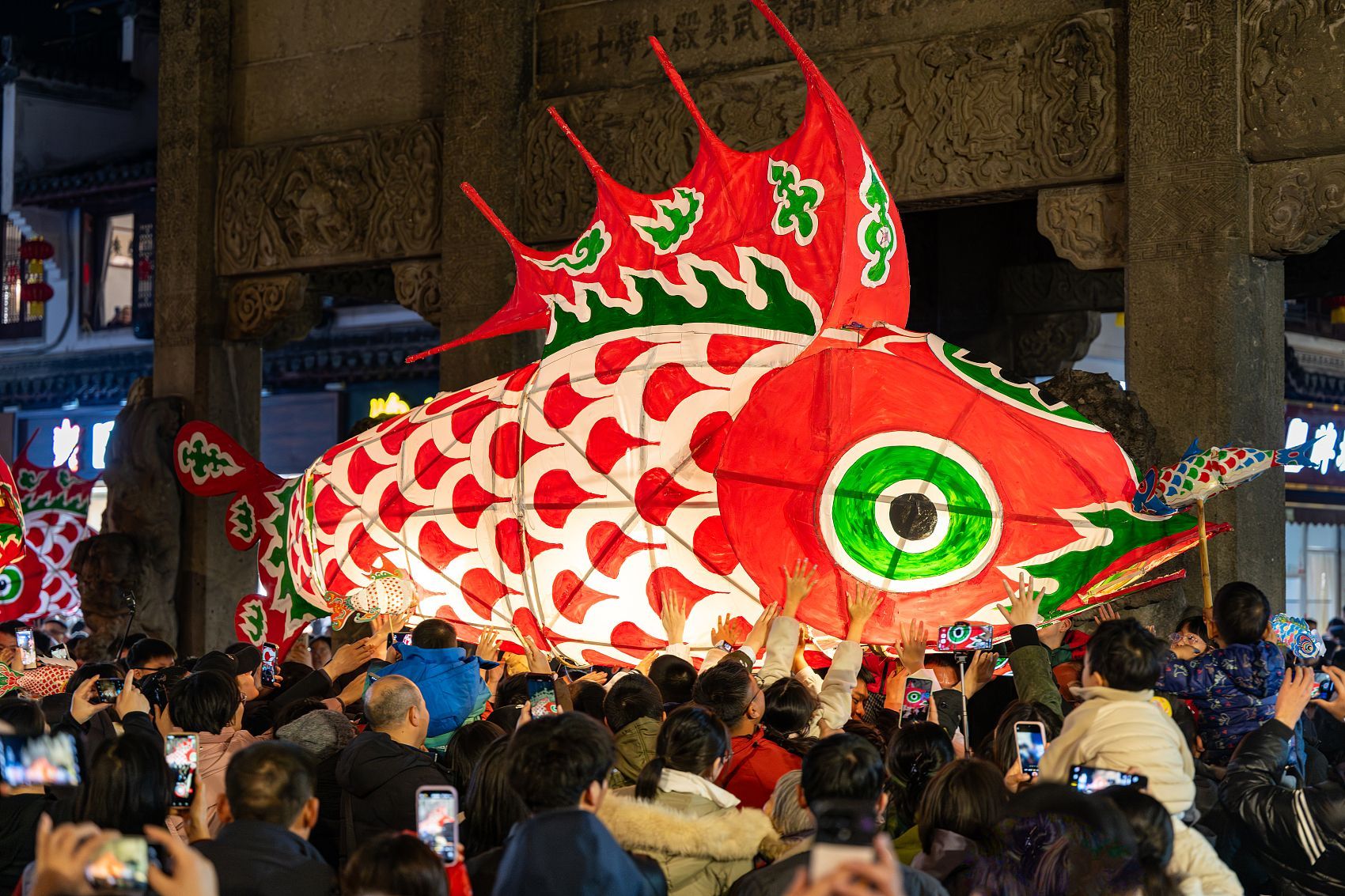
Locals believe that touching the fish lantern brings good luck and fortune for the year ahead (VCG)
Here, you can witness the centuries-old fish-shaped lantern parade, a symbol of blessings and good fortune. Dozens of performers dance with the lanterns, bringing them to life as they wind through the ancient village alleys. While similar performances can be found across China, most fish-shaped lantern troupes trace their roots to this region. Today, this tradition has evolved, offering visitors the chance to join: by day, they can learn to craft their own fish lanterns in local workshops, and by night, they can join the parade, with lanterns in hand, immersing themselves in the lively spectacle.
Beyond the lanterns, Shexian is also bustling with many other festive activities. From long-table New Year feast to traditional woodcut printing, it’s a place where history and New Year spirit come together in the most vibrant way.
Wansui Mountain Martial Arts City, Henan
Since going viral online in 2024 for its interactive show “Granny Wang’s Matchmaking,” which encourages audience members to step forward and introduce themselves in search of a blind date, the martial arts–themed park in Kaifeng, Henan province, has continued to grow in popularity, fueled by immersive experiences featuring ever-present NPCs, interactive segments, and diverse performances.
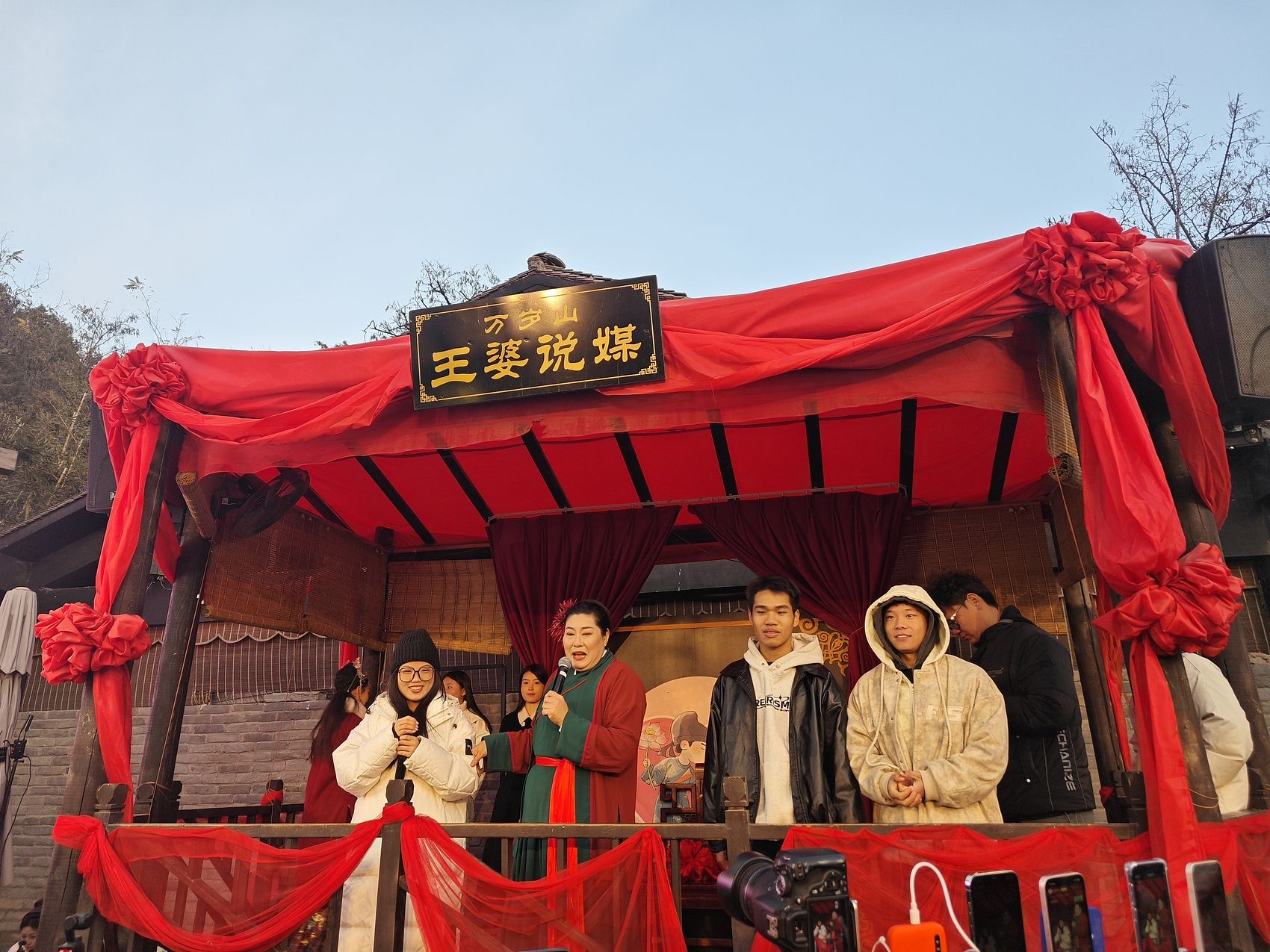
Anchored by the humorous and charming actor Zhao Mei, “Granny Wang’s Matchmaking” remains a popular show at the park today and has reportedly helped over 40 couples get married (VCG)
Established in 2003, Wansui Mountain Martial Arts City comprises six themed zones, ranging from Song dynasty (960 – 1279)–inspired scenes from Outlaws of the Marsh, one of China’s four classic novels, to martial arts fantasy worlds, classical gardens and rivers, and even Republic-era Shanghai with its vintage modern charm.
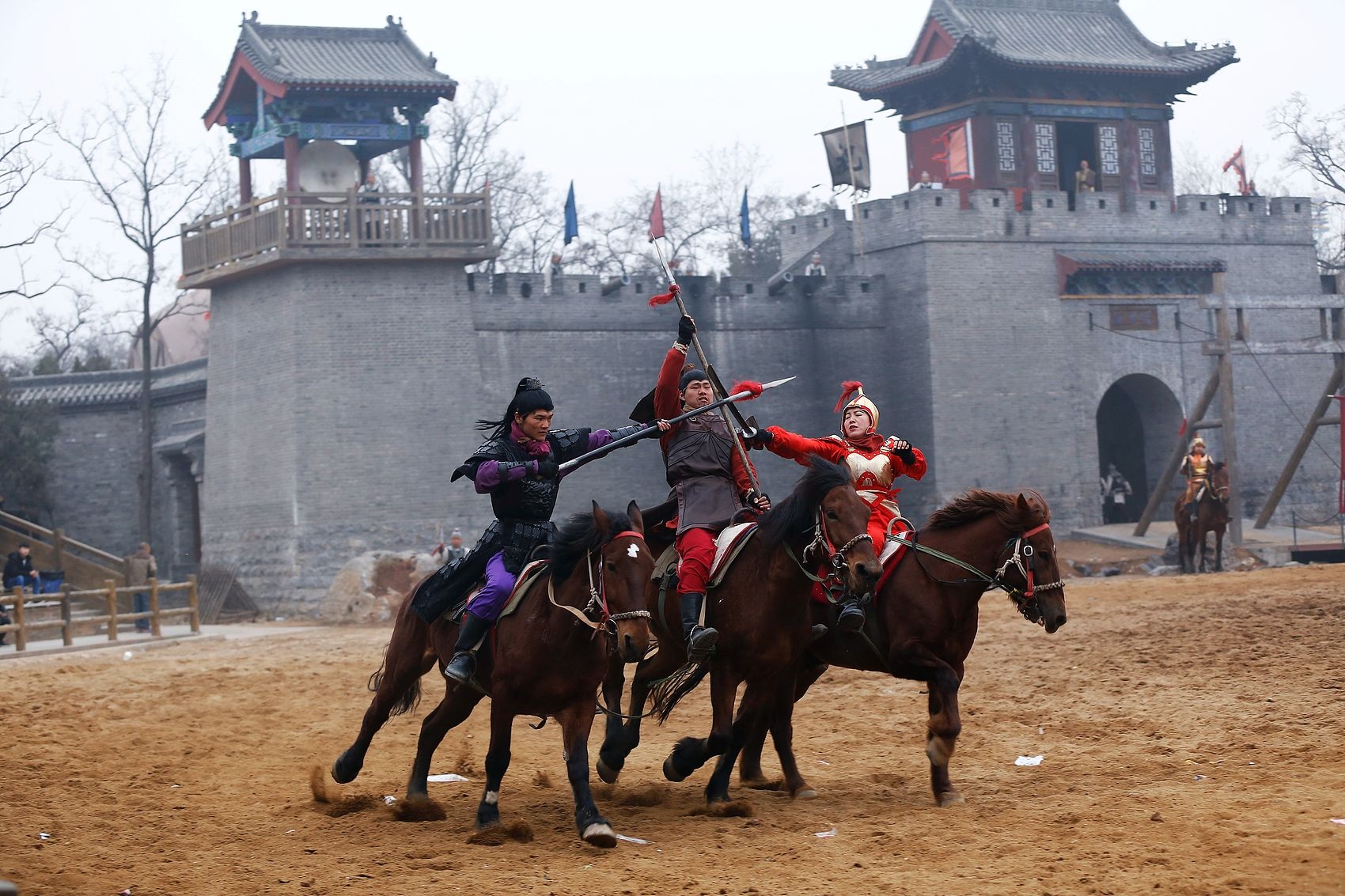
Live performances are the main attraction of the Wansui Mountain Martial Arts City (VCG)
Perfect for soaking up the lively atmosphere of Chinese New Year, the park is hosting a special festival edition from February 17 to March 4, featuring the largest temple fair in the region. Day and night, the park will come alive with more than 4,000 performances, including traditional opera, dance, acrobatics, tea ceremonies, concerts, light shows, drone displays, and more.
With over 1,000 NPCs portraying traditional characters, from the God of Wealth and Dragon King to fox spirits, you’ll quickly be pulled into this fantastical world. Many of these NPCs are also popular online influencers with devoted followings, so don’t be surprised to see crowds lining up to snap selfies with them.
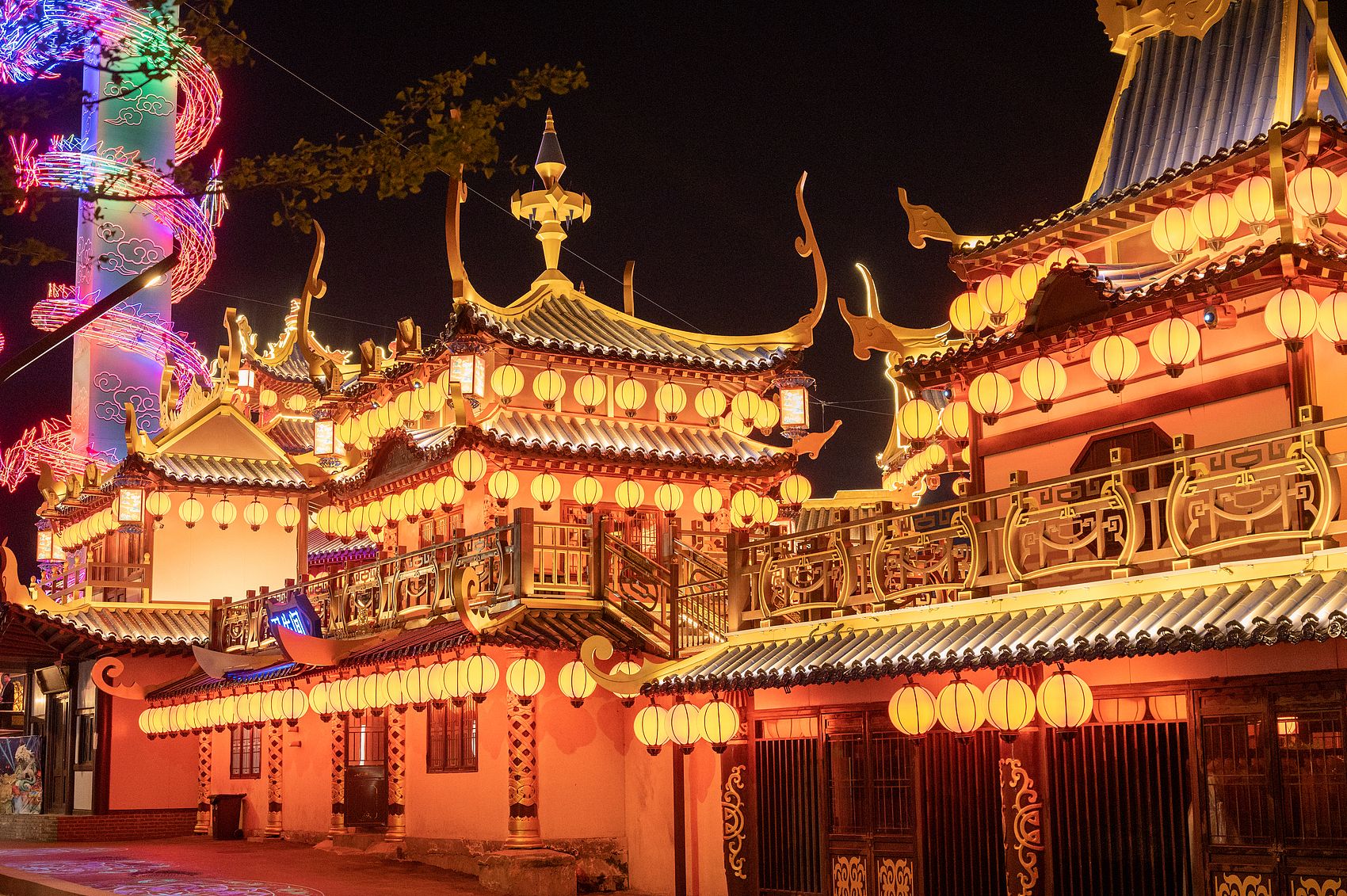
The park lit up at night, creating a more festive vibe (VCG)
The ticket costs 100 yuan and includes access to three additional attractions: a traditional garden park showcasing calligraphy carvings, Kaifeng’s ancient city wall, and a Song dynasty pagoda—each reflecting the city’s history as the capital of the Northern Song (960 – 1127).
Beijing, Shanghai, and Shenzhen
While the Chinese New Year is known worldwide for triggering the largest annual human migration, with hundreds of millions traveling home by every means imaginable, from planes and trains to ferries and motorcycles. This year, however, some are moving in the opposite direction. As part of a larger “reverse travel” trend, many young workers in major cities are instead bringing their parents to join them in places like Beijing, Shanghai, and Shenzhen, taking advantage of cheaper flights and unusually uncrowded urban spaces for a change.
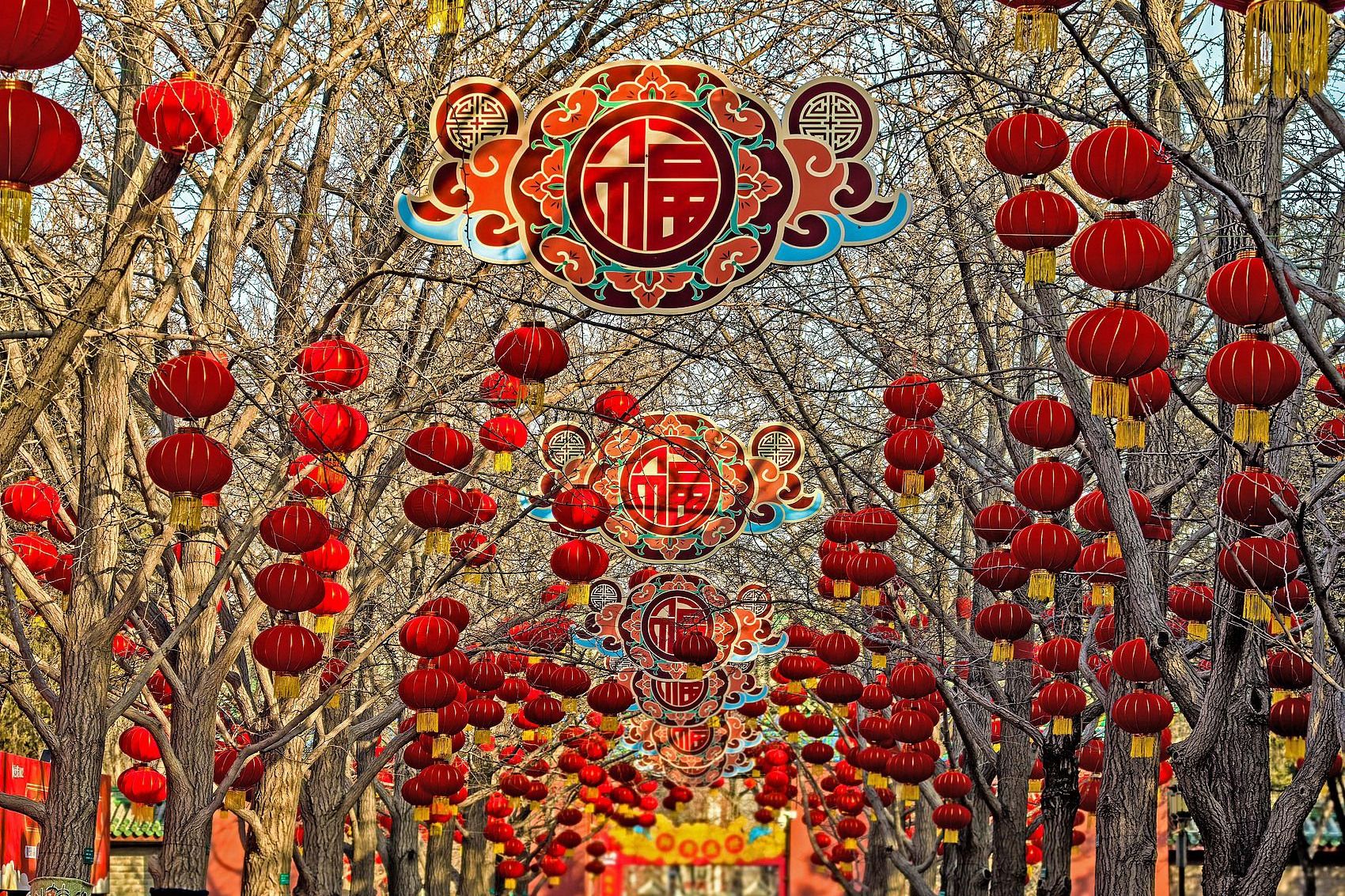
Beijing hosts several traditional temple fairs during the Chinese New Year (VCG)
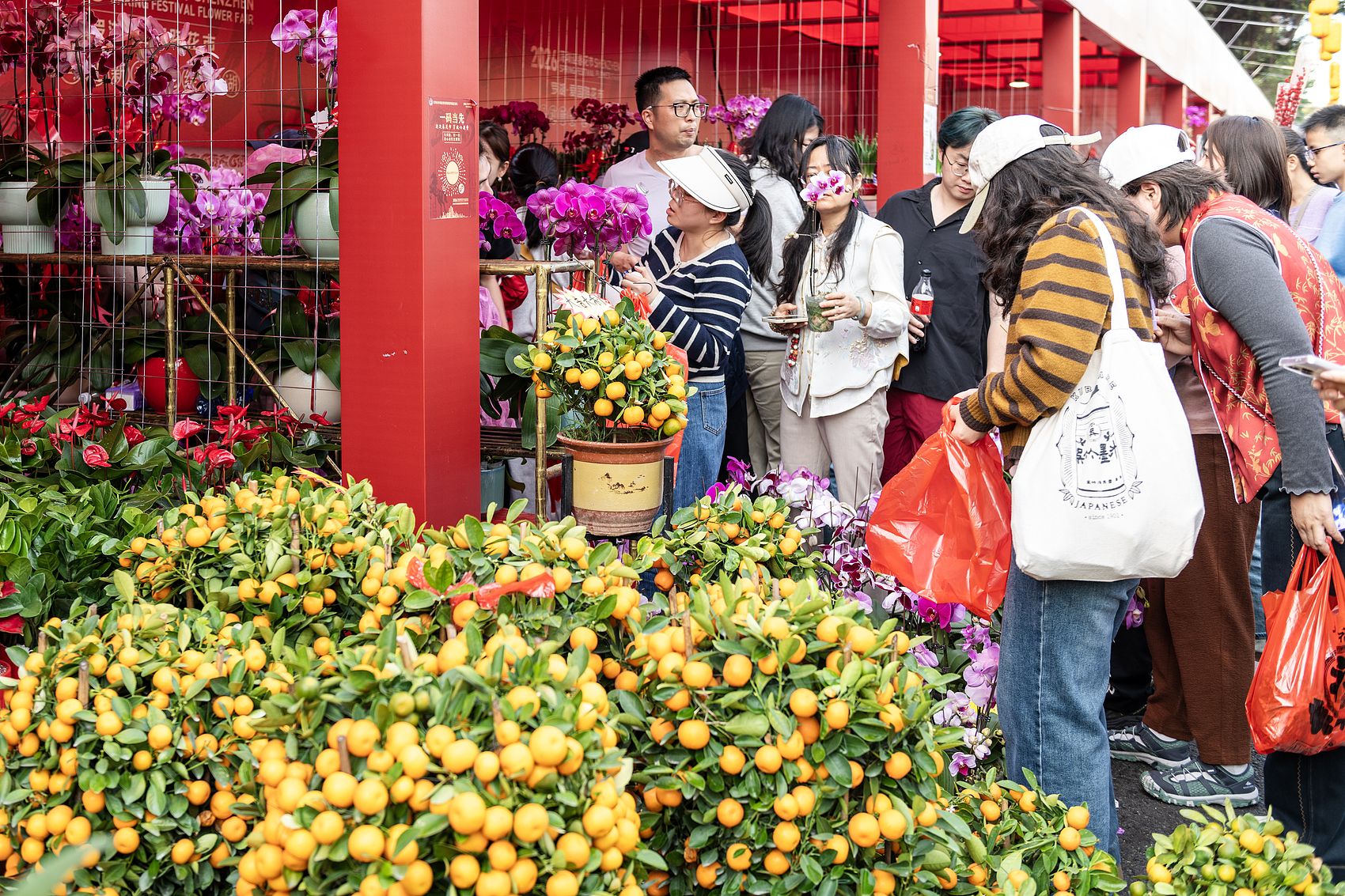
Residents in Shenzhen buy fresh flowers and small kumquat trees to welcome the New Year (VCG)
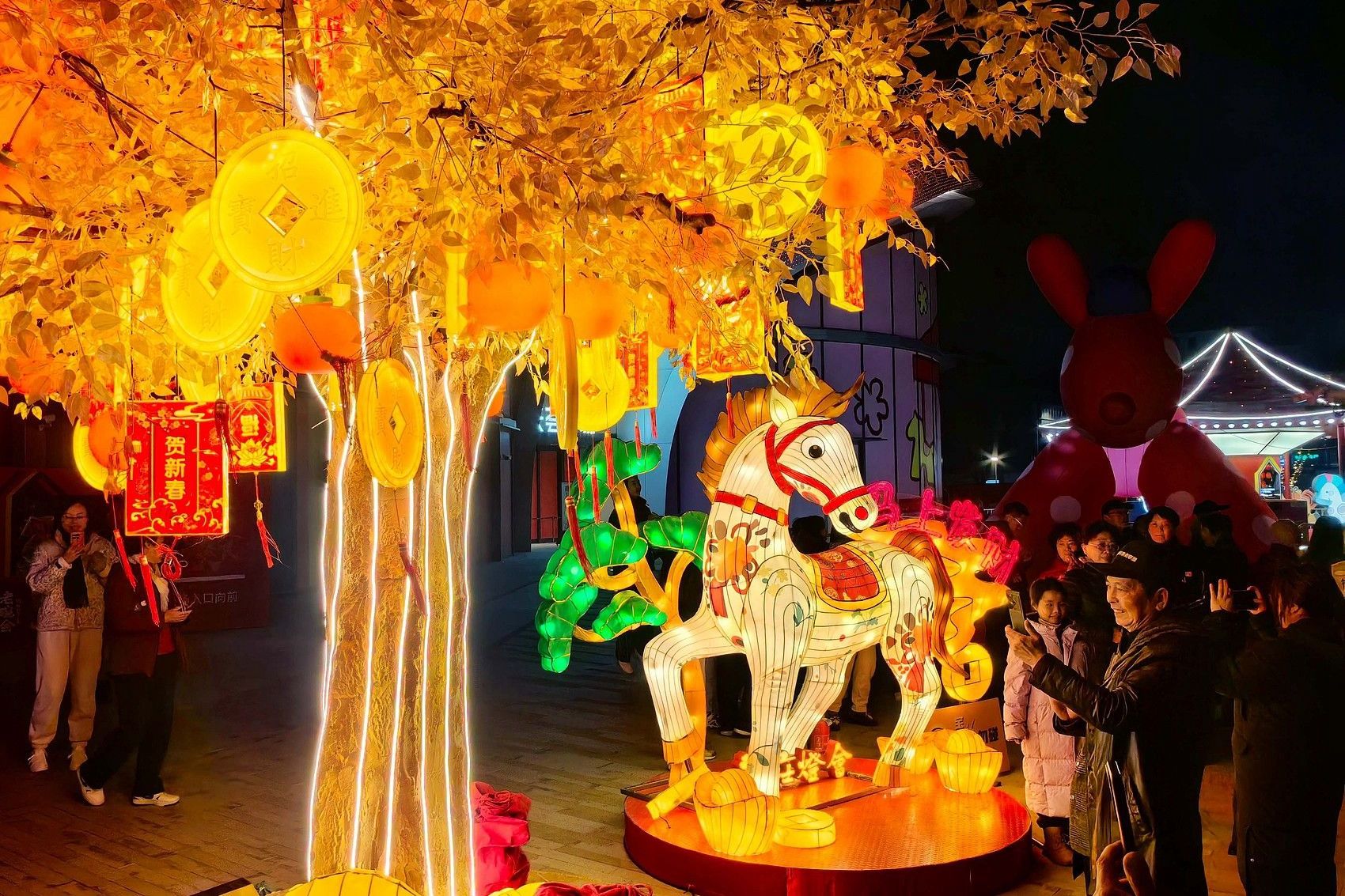
Shanghai ushers in the Year of the Horse with a dazzling light show in the Minhang district, open to the public for free until March (VCG)
Even if you don’t have family to visit in these megacities, dropping by during Chinese New Year is still not a bad idea. Sure, critics like to say they lack festive spirit, but for once, these urban jungles, normally steeped in what netizens jokingly call “work stench (班味),” get a seasonal reset. The crowds of deadline-chasing office workers are replaced by unhurried locals and gleeful visitors reclaiming the streets. Seeing these cities temporarily off duty is a novelty in itself—and well worth the trip.
Related Articles