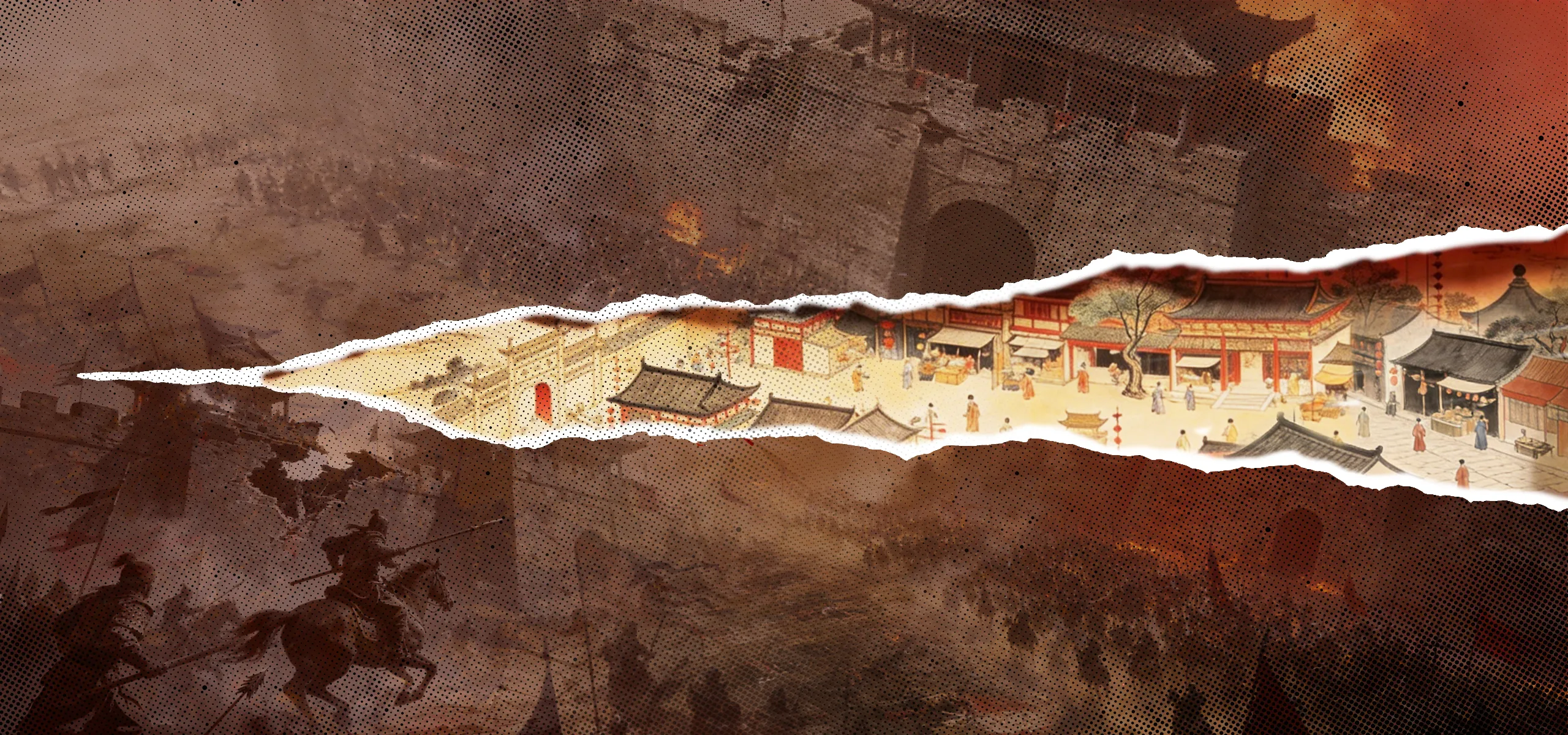

Step back 1,000 years into the Five Dynasties and Ten Kingdoms, when political chaos produced a litany of historical curiosities
Though often overshadowed by better-known dynasties in ancient Chinese history, the Five Dynasties and Ten Kingdoms period has recently gained public attention through popular media set in this era: The action role-playing game (ARPG) Where Winds Meet, released globally last December, brings players on adventures against a backdrop of political and social upheaval, while historical drama, Swords into Plowshares, focuses on a ruler’s pursuit of peace in the age of chaos. Aired in late January, the TV series tells the story of Qian Hongchu (钱弘俶), ruler of the Kingdom of Wuyue, who surrendered his territory to the newly established Song dynasty (960 – 1279), helping to end decades of turmoil.
With some resemblance to the Three Kingdoms period (220 – 280)—a well-known era of division depicted in classic novels and folk legends featuring heroic figures and cunning schemes—the Five Dynasties and Ten Kingdoms period (907 – 979) was arguably far darker, characterized by deeper fragmentation and intensified social disorder. Here are some intriguing facts that help illustrate the character of the time, from eccentric rulers and novel ideas of family politics to the emergence of a distinctive poetic tradition.
Eccentric rulers and ruthless power struggles
In 907, the Tang dynasty collapsed after nearly 300 years of rule. Over the next 53 years, five short-lived dynasties—the Later Liang, Later Tang, Later Jin, Later Han, and Later Zhou—rose and fell in the Central Plains, centered around the Yellow River in modern-day Henan province. Outside this region, multiple local regimes existed; the 10 most representative are known as the “Ten Kingdoms.” The Five Dynasties saw 14 different emperors in over five decades. The Ten Kingdoms, by contrast, were relatively stable—the most prominent, the Kingdom of Wuyue, lasted 71 years, longer than the Five Dynasties combined.
As befitting a period of frequent wars and short, ill-ruled dynasties, this period produced a litany of oddball emperors. Take Li Cunxu (李存勖), the founding emperor of the Later Tang (923 – 937). A brilliant commander who unified the north in 923, Li became obsessed with opera after taking the throne. He even graced the stage himself, performing under the name Li Tianxia (李天下). Li extended his love of the theater into the world of governance, appointing his favored actors to important posts. These men meddled in politics and took bribes, throwing the court into chaos. In 926, a rebellion led by one such actor broke out, and Li was killed by a stray arrow during the chaos.
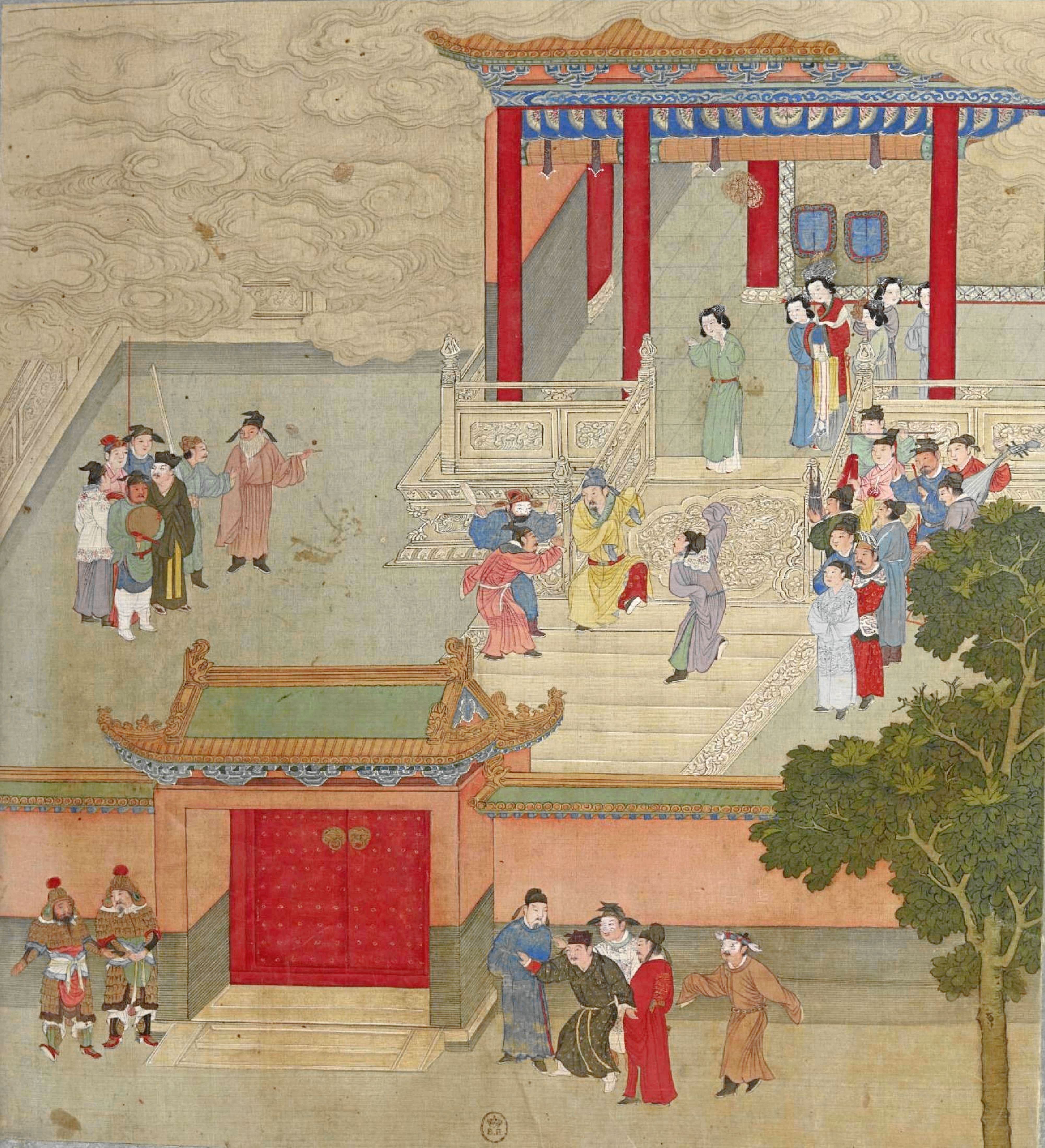
An 18th-century illustrated history book depicts Li Cunxu performing opera with actors while a minister is denied entry at the palace gate (The Emperor’s Mirror, Illustrated and Discussed,《帝鉴图说》)
While Li squandered his power through his eccentricities, only a decade later, it was Shi Jingtang (石敬瑭), founding emperor of the Later Jin (936 – 947), who acquired power through less-than-ideal means. In 936, Shi raised a rebellion against the Later Tang court he had once served. Besieged in Taiyuan, he sought help from the Khitan Liao dynasty (907 – 1125), the nomadic rulers of northeastern China and beyond. As the price, Shi agreed to cede the strategically vital Sixteen Prefectures of Yan and Yun—roughly today’s Beijing, Tianjin, and the northern parts of Hebei and Shanxi, send annual tribute, and—most shockingly—recognize the Khitan emperor, Yelü Deguang (耶律德光), as his “father.” At the time, Shi was 44 years old; Yelü was just 34. Shi ascended to the throne, but was forever labeled the “Son Emperor.” Moreover, the ceded lands removed the Central Plains’ natural defensive barrier, becoming a northern threat for over 400 years.
Adopted sons and eunuchs as political weapons
Shi was not the only ruler in this period to have a manufactured bloodline. In fact, it was common for warlords to take in a large number of adopted sons—not to continue the family line, but to build loyal military-political blocs. Most of those adopted were adult generals.
The most famous example is Li Keyong (李克用), a Shatuo chieftain and the father of the aforementioned Li Cunxu, who created the “Army of Adopted Sons” composed of fierce warriors. Southern kingdoms followed the same pattern. Wang Jian (王建), founding emperor of the Former Shu (907 – 925), adopted over 120 sons, with more than 40 recorded by name.
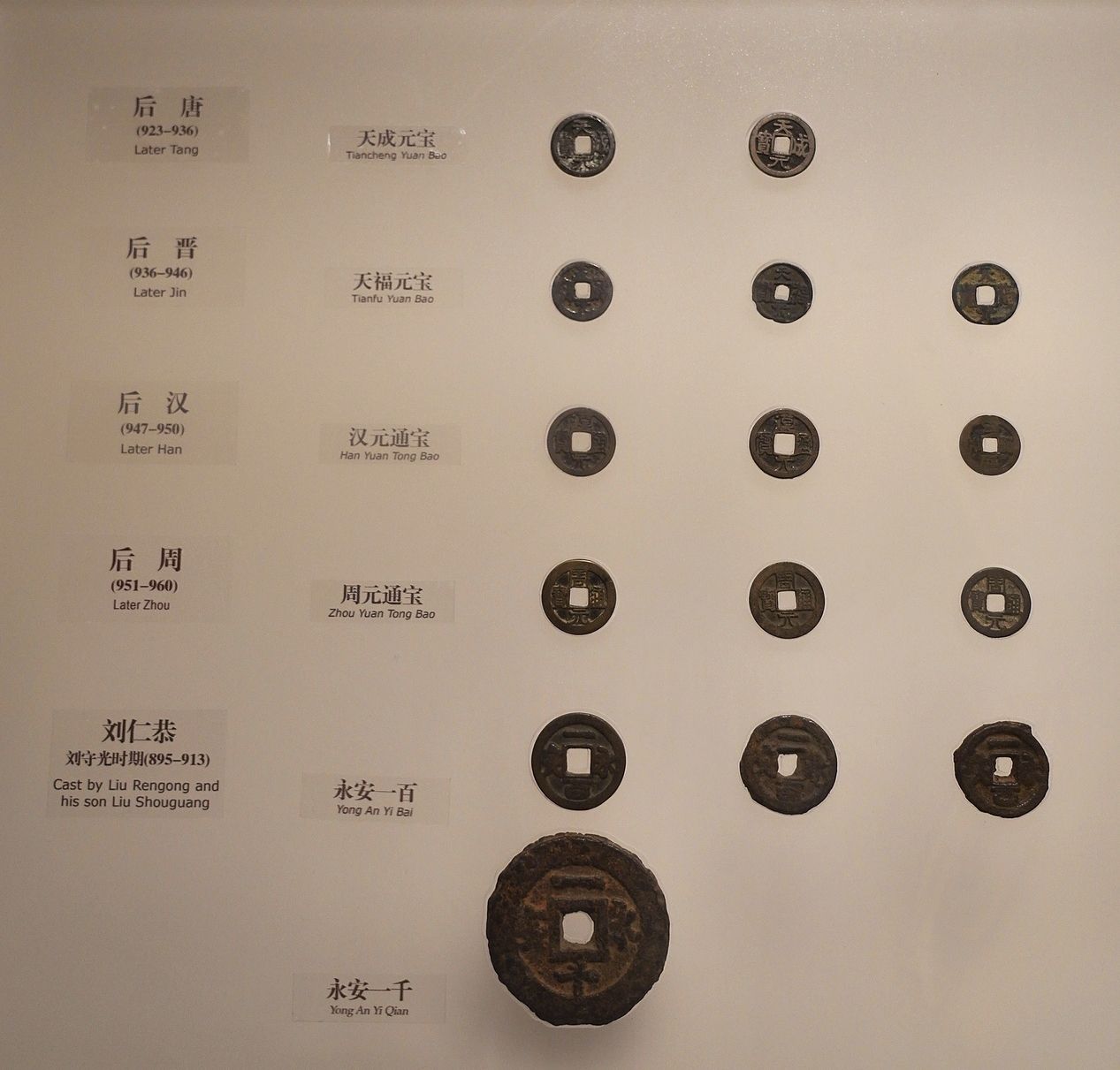
During the Five Dynasties and Ten Kingdoms period, currency and circulation were chaotic, as different regimes minted their own coins that were used mainly locally (VCG)
Adoptions served mutual interests: warlords gained talented followers, while adopted sons gained status and opportunity. But it also planted seeds of conflict. Zhu Wen (朱温), founder of the Later Liang (907 – 923), favored an adopted son over his seven biological sons for succession. Enraged, one of his biological sons led troops into the palace, killed his dying father, and then murdered his adopted brother. Success stories existed, too. Guo Wei (郭威), founder of the Later Zhou (951 – 960), had no surviving sons and passed his throne to his adopted son Chai Rong (柴荣), one of the Five Dynasties’ most capable rulers.
However, a far different take on the question of family affairs in politics was held by Liu Chang (刘鋹), the last ruler of the Southern Han (917 – 971). Liu believed that officials with families could never be fully loyal, as they would prioritize their descendants. He decreed that anyone wishing to serve must first be castrated. According to the 11th-century history record Comprehensive Mirror in Aid of Governance (《资治通鉴》), the number of eunuchs under Liu’s rule at one point swelled to nearly 20,000. Liu left state affairs to these eunuchs while indulging in his harem. In reality, this governance strategy had little merit. In 970, the Song army marched south. The Southern Han surrendered with little resistance, and Liu’s kingdom fell.
A rare case of peaceful power transition
But by far the most notable take on family affairs in this era was that employed by the Qian family, rulers of the Wuyue Kingdom, the subject of the TV series Swords into Plowshares. Founded in 907 by Qian Liu (钱镠) with its capital at present-day Hangzhou, Wuyue remained peaceful while the north was engulfed in war. The Qian family focused on protecting the people and honoring Central Plains rulers, never claiming the emperor’s title. In 978, as the Song dynasty was poised to unify the realm, Wuyue’s last ruler, Qian Hongchu, voluntarily ceded his kingdom—13 prefectures and over 550,000 households—to the Song, sparing his people from the ravages of war. This act secured him a place in history as a ruler who chose peace over power.
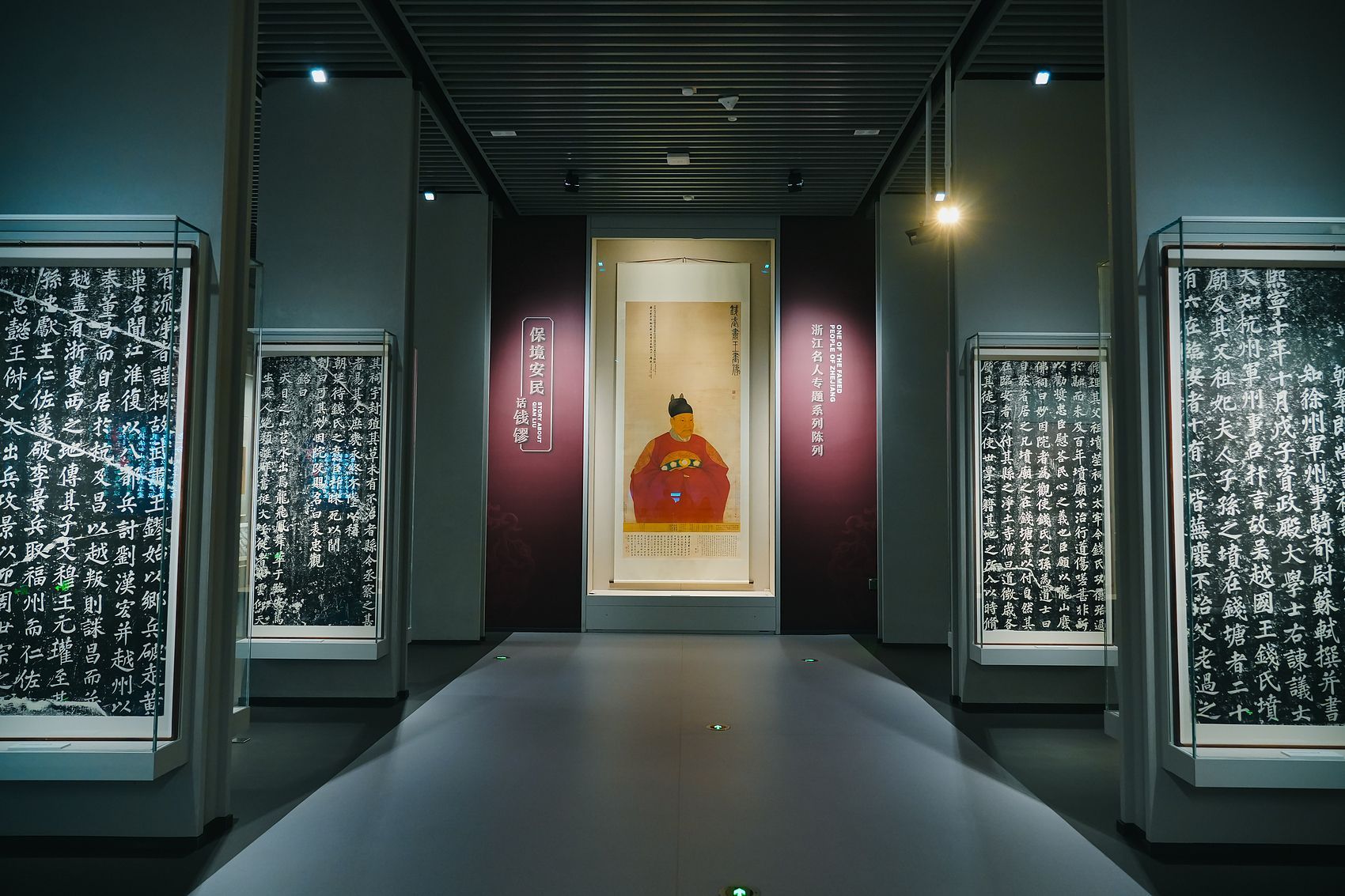
A painting of Qian Liu, founder of the Wuyue Kingdom, is on display at Zhejiang Provincial Museum (VCG)
The Qian family’s lasting fame, however, rests not only on its original rulers but also on its remarkable family values and talent pipeline that extends to the modern day. This principle was enshrined in the family’s guiding document, the Qian Family Precepts (《钱氏家训》). First established by Qian Liu and refined over generations, the 635-character precepts are rooted in the Confucian ideal of moral self-cultivation and social responsibility, emphasizing education, diligence, frugality, and service to society.
These proved durable building blocks. According to modern researcher Yao Liqun, over 320 Qian members passed the highest imperial exams in the Song dynasty alone; more than 20 were enfeoffed as princes or dukes, and nearly 100 served as top officials. Even into the 20th century, the family produced an array of talents, including Qian Xuesen (钱学森), the father of China’s space program, and famed writer Qian Zhongshu (钱钟书).
From pain and chaos, a new literary style arose
However, the Five Dynasties period was not defined solely by destruction and chaos. Amid the warfare and turmoil, a new literary form quietly matured: ci (词) poetry—a type of verse written to be sung to music, with lines of varying lengths and fixed melodic patterns. Often circulating in taverns and markets and composed by anonymous writers or musicians, ci was considered vulgar and low-brow. This was soon changed by a group of poets in present-day Sichuan. Represented by Wen Tingyun (温庭筠) and Wei Zhuang (韦庄), their works focused on romantic sentiments and boudoir sorrows, with an ornate and refined style. In 940, scholar Zhao Chongzuo (赵崇祚) compiled the works of these 18 poets into an anthology titled the Collection of Songs among the Flowers (《花间集》). Later generations thus called these poets the “Among the Flowers School,” whose emergence marked the transition of ci from folk art to literature.
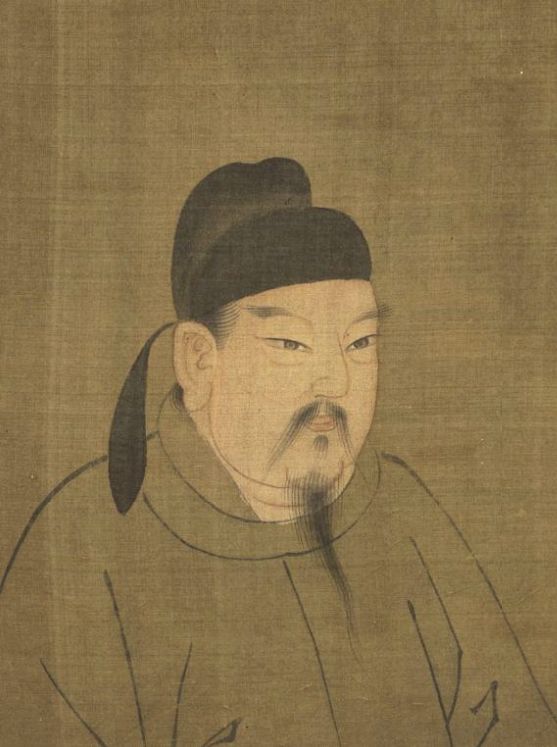
Dubbed the “emperor-poet,” Li Yu expanded ci poetry beyond its narrow focus on romantic sentiment into a broader realm of human experience (Portraits of Emperors of Successive Dynasties,《历代帝王半身像》)
The poet who brought ci to its artistic peak was Li Yu (李煜), the last ruler of the Southern Tang kingdom (937 – 975). Although politically inept, Li possessed extraordinary artistic talent and excelled especially at writing ci. His early poems mainly depict lavish court life in a flowery, sensuous style. In 975, the Song forces captured the capital of the Southern Tang. Li surrendered and was taken as a captive. From this point on, his poetic style shifted to evoke the pain of his fallen kingdom.
Li’s poetry even led to his death. On the night of the Qixi Festival in 978—Li Yu’s 42nd birthday—feeling homesick, he ordered musicians to perform his poem “The Beautiful Lady Yu (《虞美人》)” at his residence. Its particular line, “My lost kingdom, under the bright moon, is too painful to recall,” struck a nerve with Emperor Taizong of Song, who suspected Li intended to restore his kingdom. He subsequently sent poisoned wine, ending Li’s life.
Though a relatively short era, the chaotic Five Dynasties and Ten Kingdoms left a deep impact on the evolution of ancient China, shaping the path toward the next age of imperial unity under the Song dynasty, with later rulers learning from many of its failures. Above all, power is fleeting; for ordinary people, peace is the greatest treasure.
Related Articles