

As autumn arrives in China, lotus roots come into season. So nutritious and beneficial to the body (according to traditional Chinese medicine principles), lotus root is often compared to the prized medicinal plant ginseng. Lotus root can supposedly relieve coughing, soothe the lungs, and improve one’s mood—it is even named “ginseng of the water (水中人参).”
Even ancient people prized lotus root. In the 1970s, archaeologists working on the Mawangdui Han Tomb, a 2,100-year-old tomb uncovered in Changsha, Hunan province, dug up an ancient pot of lotus soup. When they opened the pot up, the soup instantly became oxidized and evaporated, leaving only speculation as to how it tasted.
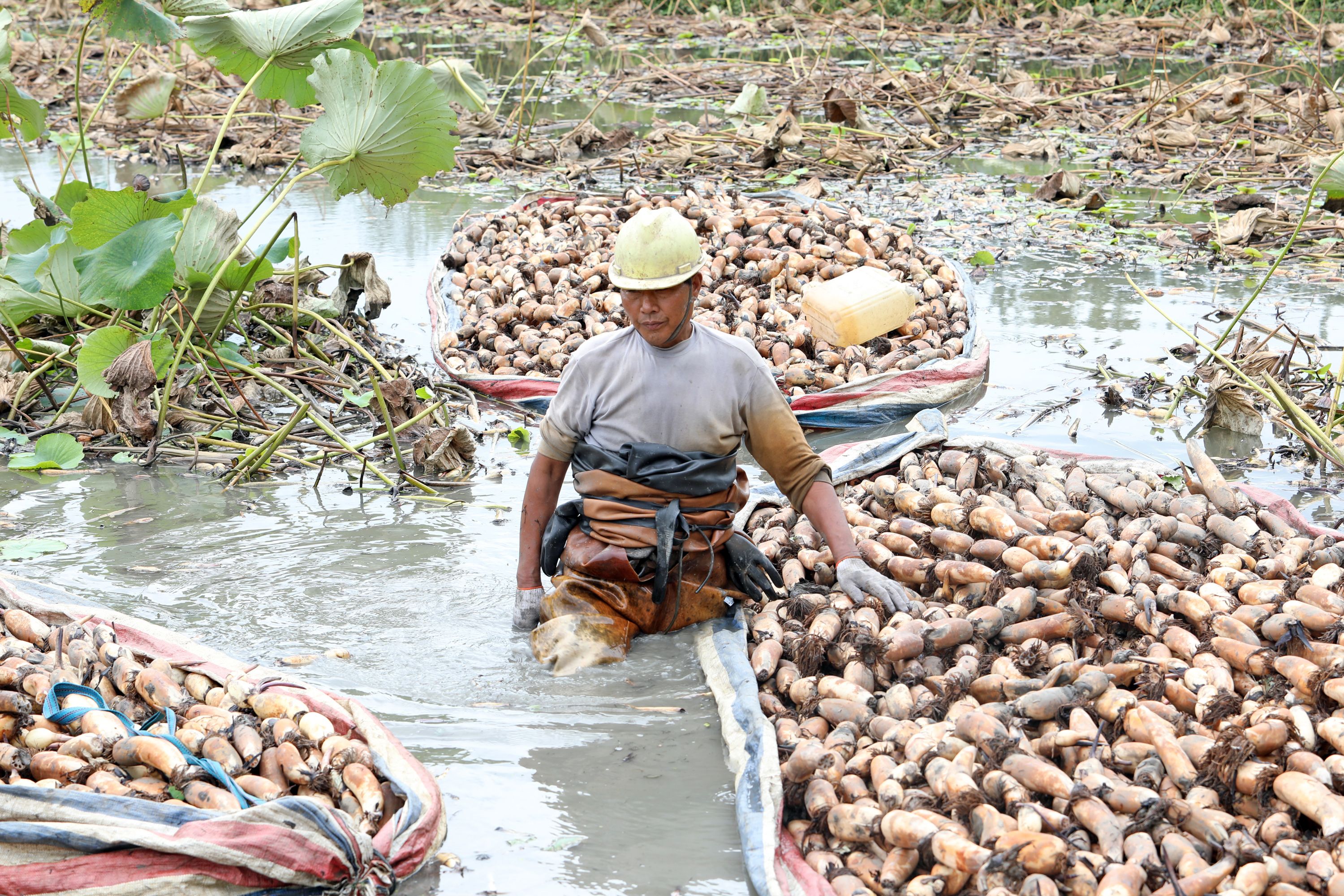
Harvesting lotus roots in Yangzhou, Jiangsu province (VCG)
Curious lotus-eaters may travel first to Mianyang, Sichuan province, where the abundant rainfall and mist makes the lotus roots extra smooth. Lotus root on bamboo skewers is a favorite addition to Sichuanese chuanchuan hotpot (串串火锅), as its refreshing taste balances the spicy flavors of the soup.
In Suzhou, Jiangsu province, a variety known as “snow lotus roots” tastes like a crisp pear. In Baoying, a three-hour drive away from Suzhou, the “red beauty” lotus variety tastes sweet and tender. Jiangsu cuisine is known for its sweetness, so lotus roots are turned into desserts. One dessert sees lotus roots stuffed with glutinous rice and simmered together with sugar, red dates, and lotus seeds until the root turns a smoky red color. The chef then cuts the roots into slices, dribbles over the sugary sauce, and sprinkles over osmanthus flower petals as a finishing touch. The sticky strands of the stringy lotus root cling to the plate as diners lift them with their chopsticks. Indeed, an old saying in Jiangsu goes that “love is as unbreakable as lotus root fibers (藕断丝连),” invoking the strength of the stringy roots.
In neighboring Zhejiang province, locals nickname the lotus roots from Hangzhou West Lake the “arm of Xi Shi (西施臂)” after one of the four legendary beauties of ancient China, who is said to have lived in Hangzhou during the Spring and Autumn period (770 – 476 BCE). Hangzhou locals grind fresh lotus roots into paste, filter it through thin cloth, and dry the sediment under the sun to make a Hangzhou specialty: lotus root powder. In the mornings, breakfast stalls simply add hot water to a bowl of the powder, turning the mixture into a crystallized jelly. An old folk belief suggests that those who eat lotus root jelly made from the plants of West Lake will become as radiant as Xi Shi.

A sculpture of Xishi in Shaoxing, Zhejiang province (VCG)
Around a third of China’s lotus root production, however, comes from Hubei province. In Hubei’s Honghu wetlands, the nutrient-rich mud and subtropical monsoon climate make it a perfect home for lotus roots. Locals have a saying that “after you eat the fish of the Yangtze River and the lotus roots of Honghu, you will never want to leave.”
Markets in Hubei often feature an overwhelming variety of lotus-based foods, from lotus root steamed buns to fried lotus root balls and even “lotus root silk crab” (which is merely lotus root fried in the shape of a crab and contains no crustaceans). Not surprisingly, the culinary TV show A Bite of China featured Hubei lotus root culture in its very first episode back in 2012.
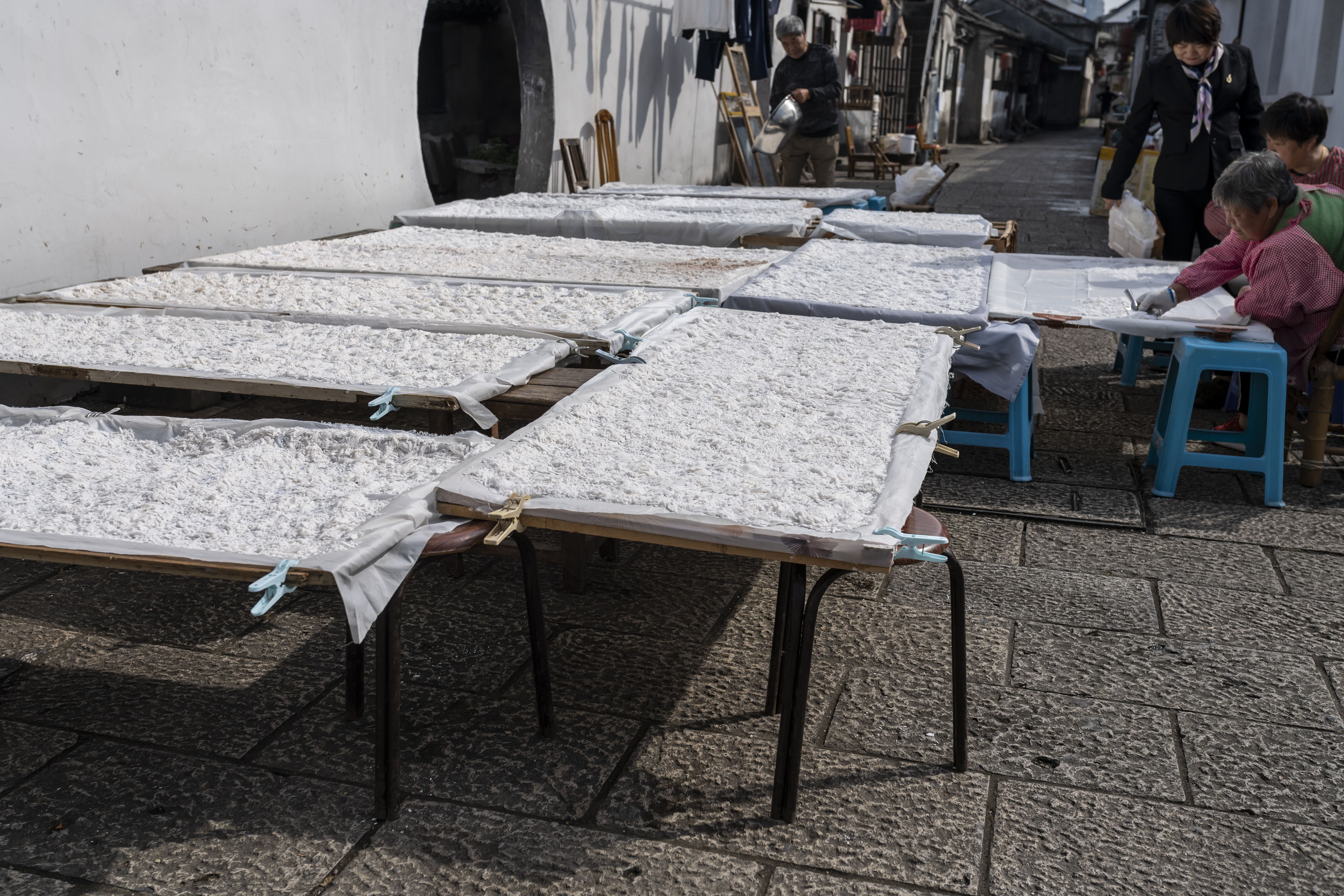
Lotus root powder being dried (VCG)
When the weather gets colder, Hubei locals enjoy warm lotus root soup with pork ribs. Honghu lotus roots are high in starch, making them perfect for cooking a broth. Locals stew the lotus roots with pork ribs, fresh ginger, onions, vinegar, and yellow rice wine. The slow-cooked soup means that the tender pork falls effortlessly off the bone, and the sweetness of the lotus mixes with the salty soup for a rich, refreshing taste.

Adding hot water to lotus root powder turns it into a delicious jelly (VCG)
The secret to Hubei province’s acclaimed soup, however, lies in a traditional Hubei cooking pot known as a diaozi (铫子). Made of coarse sand and clay, diaozi also have tiny holes that filter oil out of the broth during the simmering process, making the soup rich and non-greasy. The more a diaozi is used, the more the flavors of previous meals accumulate in the pot itself, leading to the saying: “the older the diaozi, the more fragrant the soup.” For the oldest diaozi, even just plain water can be boiled into a salty, tasty soup. With the right lotus plants and the correct tools, lotus root can be a perfect autumn dish.
Related Articles