

Frogs have been taking over China’s streets in recent weeks. No, this is not a sign of the apocalypse or the spread of an invasive species of amphibians, but the newest trend plastered all over Chinese social media: “frogs selling their babies (卖崽青蛙).”
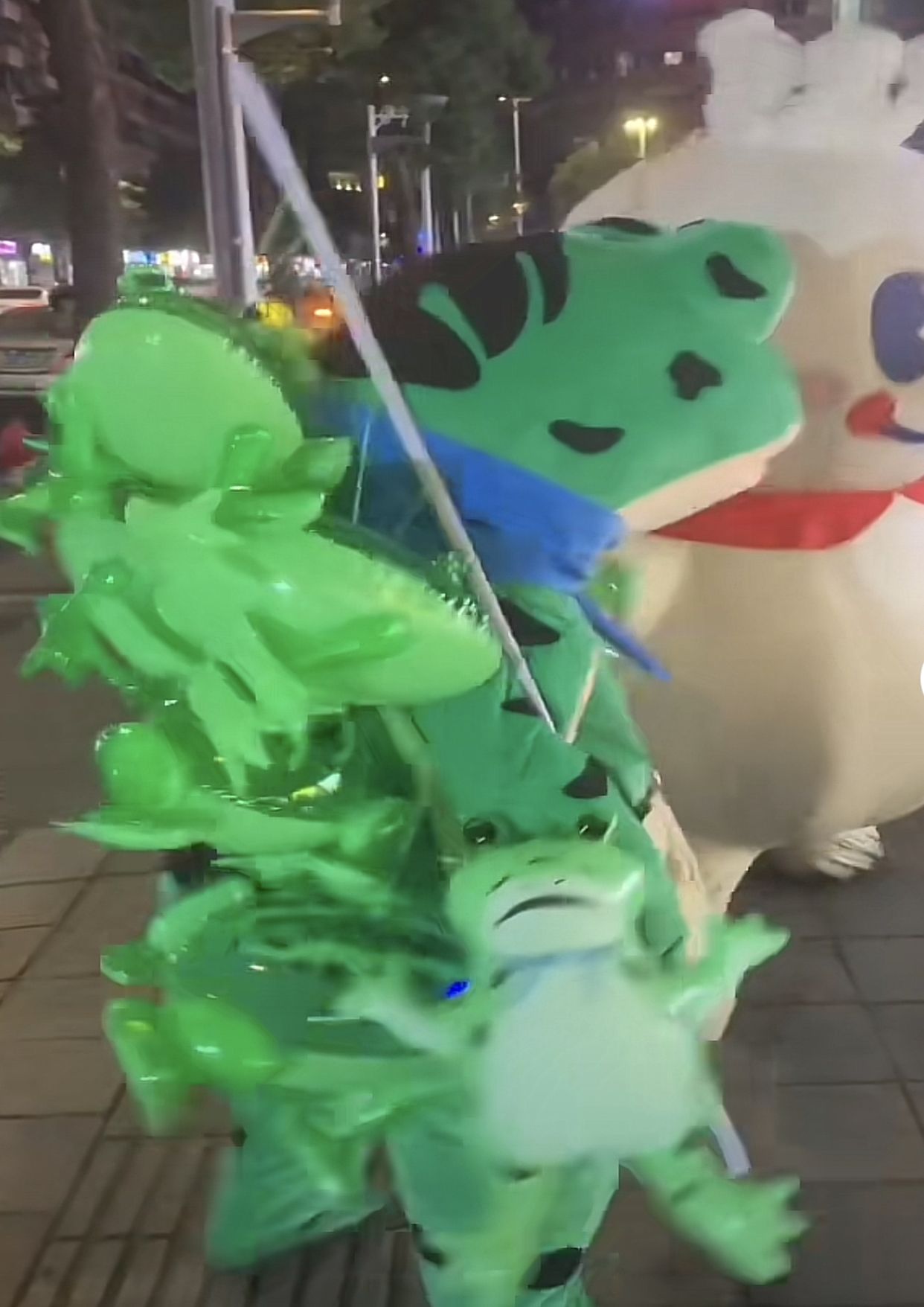
Videos abound of people across the country dressed in frog costumes, selling their “offspring” (little frog balloons and other frog toys) on the streets. They have been snapped riding bicycles or electric scooters, or even running marathons. Recently, some have fallen afoul of authorities (though footage of the frogs being told off by urban management has made for even more hilarious online footage).
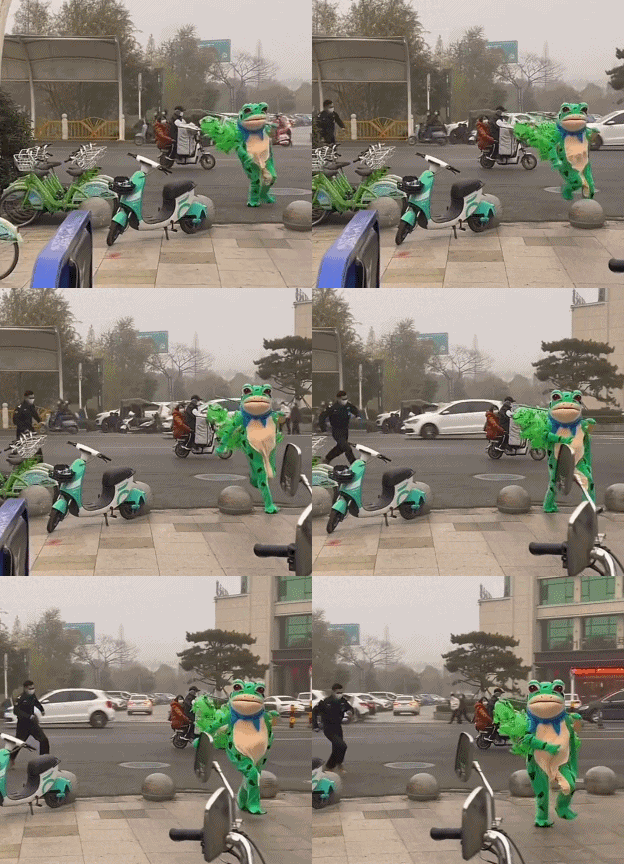
A frog on the run
According to an article in Yangtse Evening News posted last week, the trend started with a 32-year-old former teacher surnamed Tong from Nanjing, Jiangsu province. Tong said she designed the frog costume, taking her inspiration from the villain in popular 1980s children’s animation Calabash Brothers. She began wearing the frog suit around Nanjing in September last year, while selling little frog balloons.
Tong, now a full-time mother, told Yangtse Evening News that she started wearing the costume while livestreaming at home, but found few people watching, “so I decided to take it onto the street, to spread this character…my motivation was to bring people happiness.”
A video of Tong in the frog costume quickly went viral online. Netizens fell in love with the sad-looking character waddling down the street, a loudspeaker in one hand and frog balloons in the other, waving to bemused pedestrians.
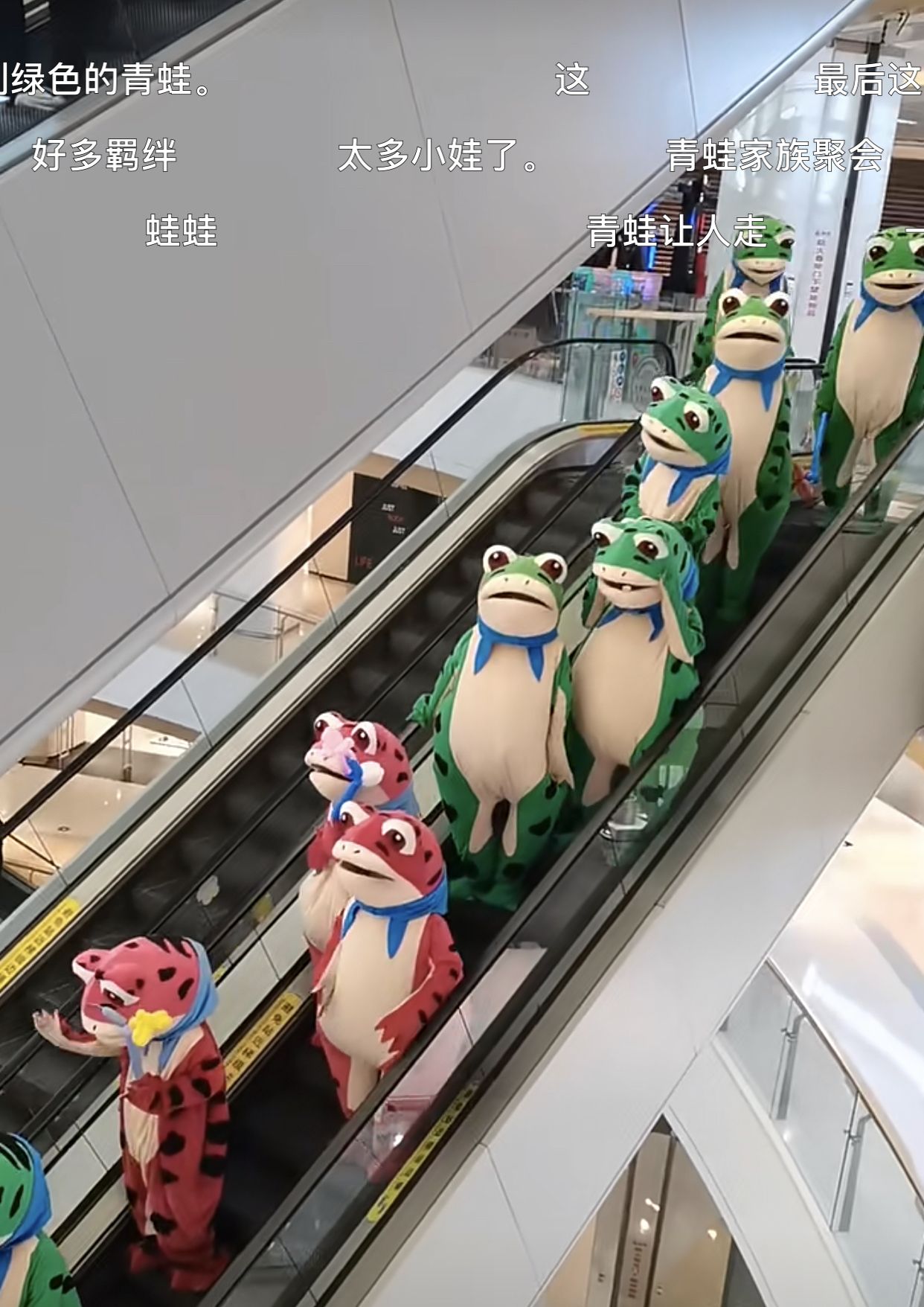
Since then, the frogs have multiplied and the internet is full of discussion on these green-clad people. Hashtags related to the frogs, such as “the frog selling their babies designer is a full-time mom,” cumulatively have over 900 million views on Weibo. On video streaming platform Bilibili, hundreds of videos of the frogs have popped up, with one, showing three frogs all competing to entertain customers and sell their balloons, garnering over 2 million views. Passersby have taken to giving frogs a salute when they see them on the street—a mark of respect for these curious but amusing characters. Meanwhile, “If life wasn’t so hard, who would be so cruel as to sell their own children?“ has become a popular joke for netizens online.
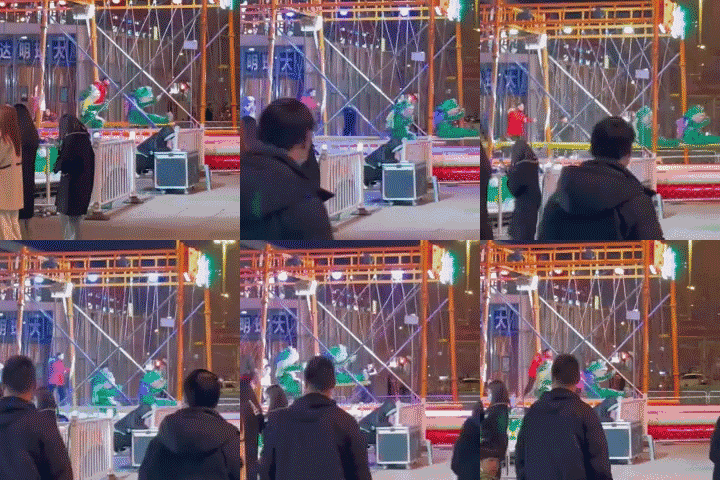
Frogs have been popping up all over China in various situations
This is not the first time frogs have become an internet meme in China. In recent years, netizens have employed frogs to mock the single status of themselves or their friends during Valentine’s Day and China’s Qixi Festival, mainly because the their croaking (咕呱 gūguā) sounds like “孤寡 (gūguǎ, lonely).” On e-commerce platforms, netizens can even hire “gugua frogs (孤寡青蛙)” to add their friends on messaging apps and send them messages mainly containing 孤寡.
Given the negative connotations around frogs and toads in Chinese culture, it’s unsurprising that they would become the new champions of China’s self-deprecating meme-sphere, which has previously rallied around depressive icons like the “salted fish,” Gudetama (the “Lazy Egg”), and even another amphibian, Pepe the Frog (”Sad Frog” or 伤心青蛙 in Chinese) to symbolize frustration with China’s hyper-competitive society. Frogs or toads can be used to indicate that one is not worthy of something, as in the idiom “a toad wishes to eat swan meat (癞蛤蟆想吃天鹅肉)”; or describe an ignorant person with tunnel version, like in “a frog at the bottom of a well (井底之蛙).” Someone failing to realize they are working toward a dead end is called “boiling a frog in tepid water (温水煮青蛙).”
Read more:
- Why Are Chinese Urbanites Wearing Their Ugliest Clothes to Work?
- Why Chinese Fans Are Turning to ”Spineless” Anti-Heroes?
- How Young Chinese Became Obsessed With TCM
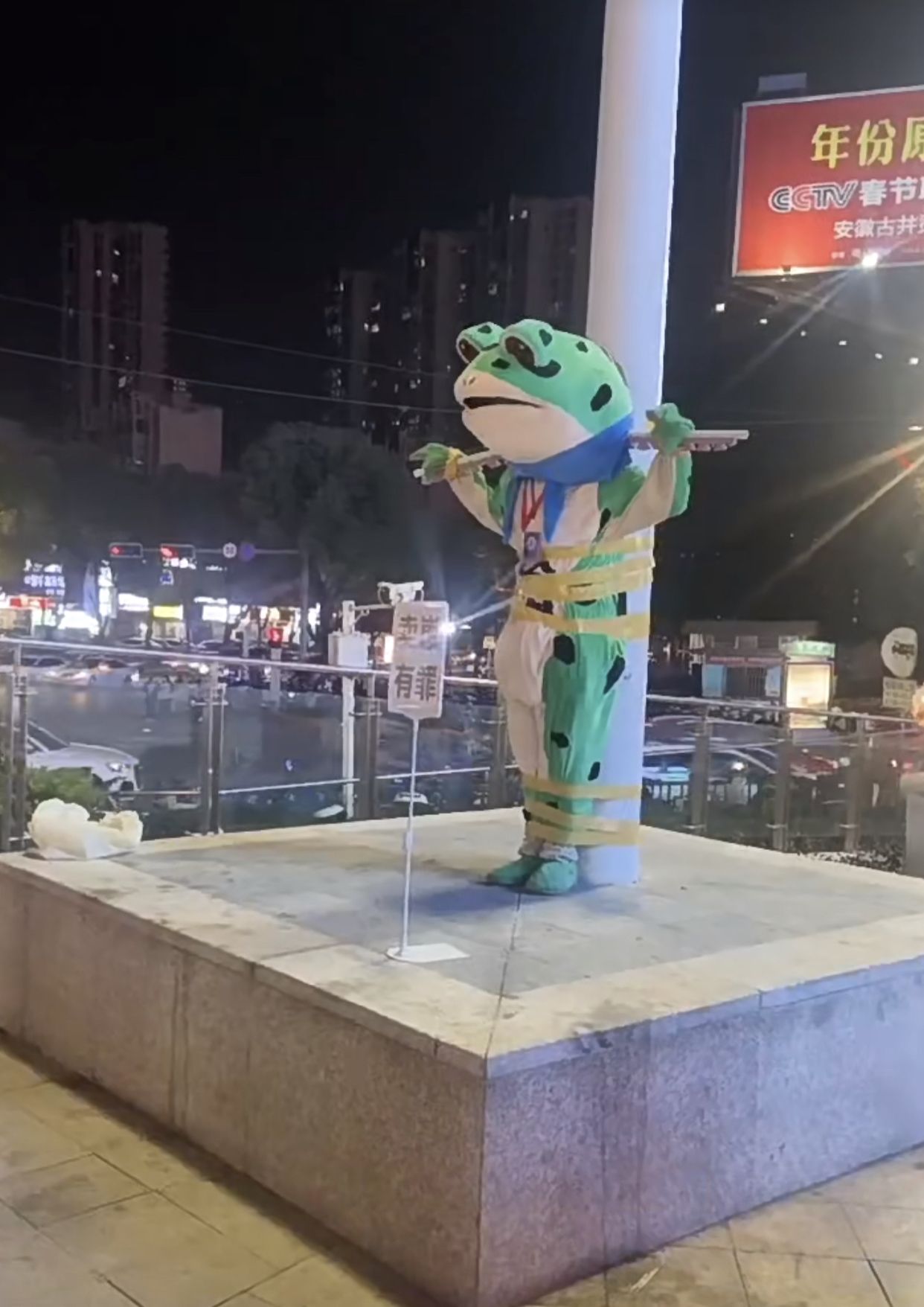
This new frog craze, however, has the amphibians in a more amusing light—though not everyone is happy about these hoppers. Videos online shown urban management (城管, chengguan) in several locations putting a stop to the frogs and their hawking. They argue these frogs are selling on the streets without a license, or just causing a nuisance to the public. In April, a man in a frog costume in Ningbo, Zhejiang province, was fined for riding his scooter without a helmet (despite having his frog costume head on).
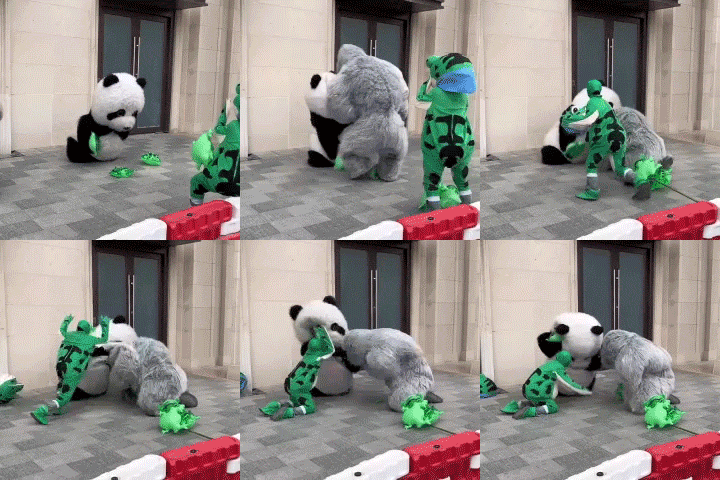
A frog ambushed by other animals
These clips attracted heated debate online, and arguably made frogs even more viral. The hashtag “Do you think frogs selling their babies should be punished?” has garnered over 22 million views since May 14. Some comments agreed that authorities should regulate these sellers properly or streets could become chaotic, but many others defended the frog vendors for contributing to city culture and creating a positive vibe for passersby. A poll on Weibo by the account of business news site National Business Daily found over 106,000 respondents felt the frogs “did not disturb pedestrians or the environment,“ compared to just 8,607 who felt they did.
With debate around frog freedom intensifying, Xu Zhihu, director of the Shanghai Urban Management and Law Enforcement Bureau, appeared on Shanghai TV in May to recommend “prudent supervision, with flexible management.” He recognized the benefits of such “down-to-earth” street culture, but worried that street peddlers might become troublesome for pedestrians and risk falling foul of the Shanghai’s Regulations on the Administration of City Appearance and Environmental Sanitation published last year.

Some wearing frog costumes are elderly
With that, Xu opened a wider debate on street vendors in China. Authorities periodically crack down on street sellers, who often operate without a license, while at other times they turn a blind eye to them or even encourage them to revitalize the local economy. In Shanghai, for example, street peddling was officially prohibited until the new regulations published last year which allowed street sellers to operate in certain areas and time periods as designated by local authorities. But reports in May suggested that applications to sell are still being ignored, with multiple government agencies refusing to take responsibility for implementing the new law.
Despite operating in a legal gray area, some frogs persist in what can be a profitable business venture. Frog costumes are available on e-commerce platform Taboao for around 250 yuan, and baby frog balloons for around 3 yuan; with balloons reportedly being sold to customers for 20 yuan on the streets, frogs can break even after selling just 15 of their children.
Stories of the people inside the costumes have become popular too. Social media posts showed that beneath the green clothing are just regular people, some elderly or even with physical disabilities. Though for Tong, the original frog, it was mainly about having fun, for others the costume represents a chance to make some much-needed cash. “I saw a girl in a frog costume crying after being bullied by a group of kids,” one netizen claimed in a comment under an article on the people wearing the frog costumes by News Weekly on May 16. That article summed up the feelings of many with its headline: “Once the frogs take off their heads, I can’t laugh anymore.”

Related Articles