

In 1919, students and other patriotic youth sparked a protest that became China’s era-defining May Fourth Movement, celebrated today as Youth Day. Without them, modern Chinese history would probably have been very different.
Today, the main figures of the movement are remembered as national heroes. Young people learn their stories through school textbooks and exams referencing the movement’s vital role in spreading new thoughts and inspiring generations to fight for China’s independence from foreign interference.
The movement and its many proponents, revolutionary leaders and ordinary folk alike, remain regular topics on-screen, bringing the event from over 100 years ago to life for new audiences. For this Youth Day, here are three movies and one TV series based on the May Fourth Movement:
The Age of Awakening《觉醒年代》 (2023)
This historical TV drama begins in 1915, three years after thousands of years of imperial rule in China ended when the Qing dynasty was replaced by a republic. But the Republic of China was struggling to modernize the country and was far from independent. The president, Yuan Shikai attempted to restore imperial rule with himself as the emperor, while foreign powers continued trying to expand their control in China. Chen Duxiu (played by Yu Hewei), a leading figure of the May Fourth Movement, embarked on a mission to spread a new culture and start a revolution of the mind.
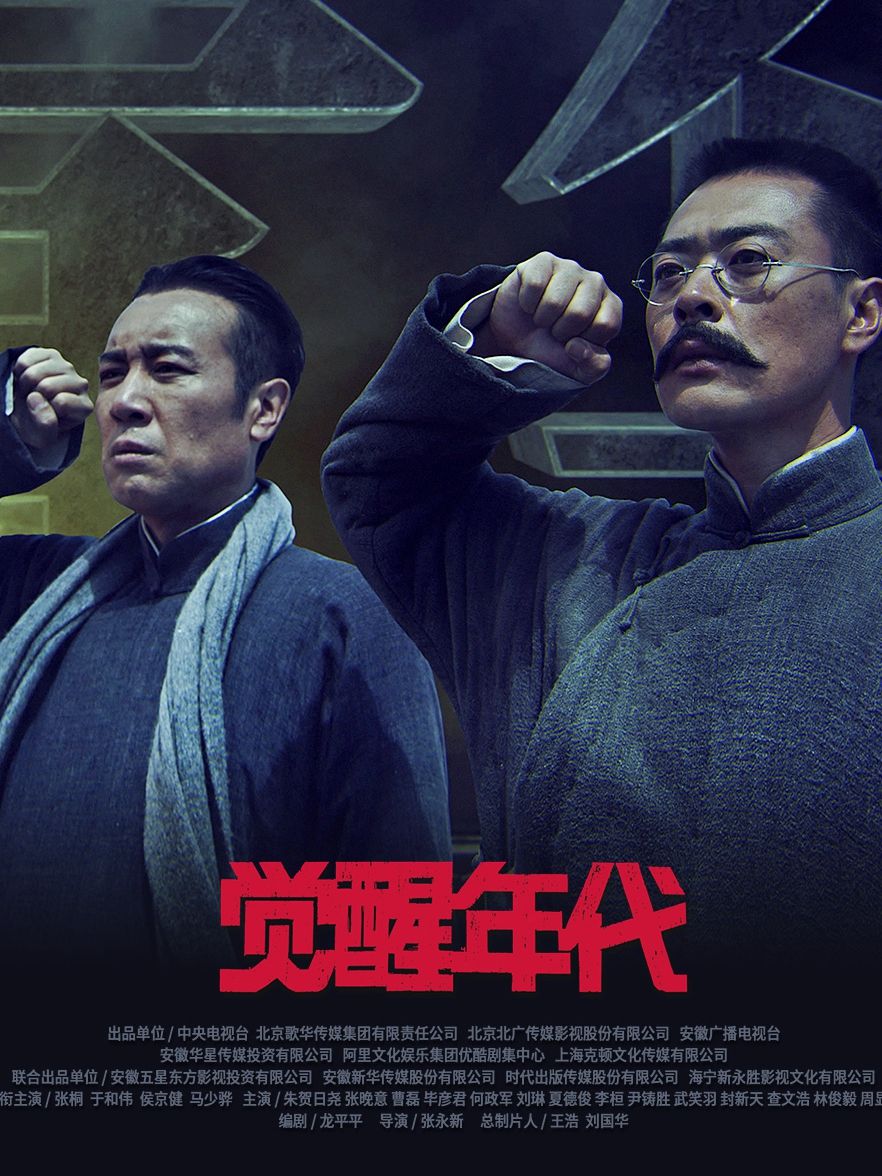
The show dramatizes the actions of Chen Duxiu, and other leaders like Li Dazhao and Hu Shi, while featuring supporting roles from notable figures such as writer Lu Xun, a young Mao Zedong, and Zhou Enlai. Over 43 episodes, the drama details the six years leading up to the establishment of the Communist Party of China (CPC) by Chen and Li in 1921, a period that remains underexplored in film and TV.
Audiences have praised the show for its historical accuracy, rounded characters, and objectivity. “In the past, propaganda dramas always felt too preachy, rigid, and, frankly, boring—I’d even doze off while watching. But The Age of Awakening truly resonates with me… Those historical figures who were originally stiff and one-dimensional in my impression have become much more vivid,” one young viewer explained to Yuli, a public WeChat account that reports on entertainment industry news. With a rating of 9.3 out of 10 from 500,000 users on the review platform Douban, The Age of Awakening is one of the most successful historical TV dramas in recent years.
The Pioneer《革命者》 (2021)
This film focuses on the hours before revolutionary and intellectual Li Dazhao (Zhang Songwen), aged 38, was executed in Beijing in 1927. The non-linear narrative combines with storytelling from different perspectives—including Li’s sympathizers and enemies. Flashbacks of Li’s life juxtaposed with the last 38 hours (a number chosen to mirror his age) of his life take viewers through a series of historical events from 1916 to 1927: A strike by coal mine workers Li helped to organize in Kailuan, Hebei province, in 1922; Li and Chen Duxiu bonding over shared beliefs then founding the CPC; the start of cooperation with the nationalist Kuomintang Party led by Sun Yat-sen in 1922, before that turned to bloodshed five years later. The film also has tender moments, like when Li spends time with his wife Zhao Renlan, and their children.
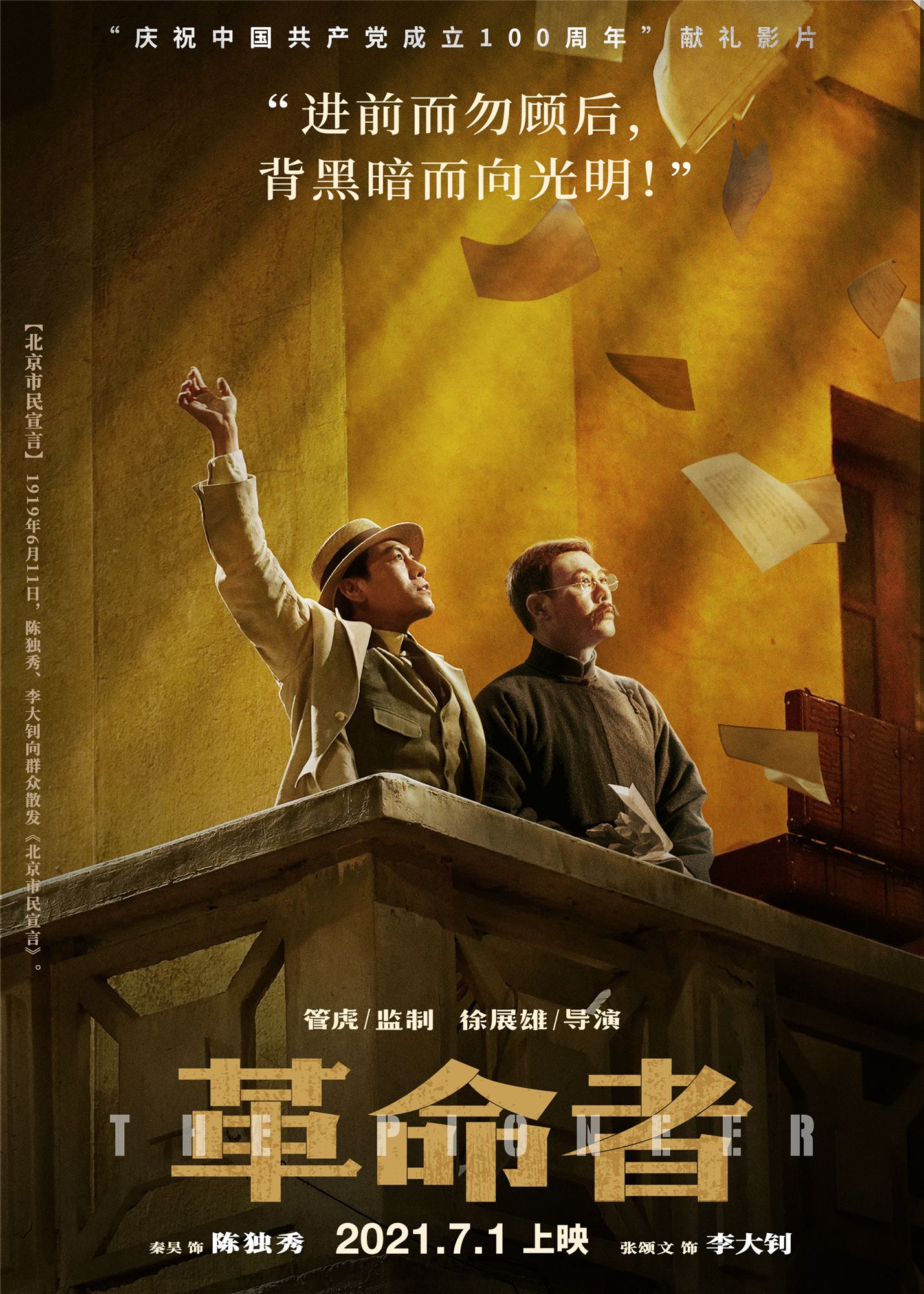
Produced by Guan Hu, the leading figure of the “sixth-generation” Chinese directors, The Pioneer is rated 7.5 on Douban and was voted “The Most Popular Film Among College Students” during the Beijing College Student Film Festival in 2021.
There are very few historical records relating to Li Dazhao. The only video footage of him was a black and white short silent film of him giving a speech at the Bolshoi Theatre in Moscow in 1924. Scriptwriters for The Pioneer therefore had to research memoirs of his contemporaries and news reports from the time.
The constantly changing point-of-view and non-linear narrative, while praised by some as innovative, also received criticism for cluttering the film with too many events and figures in its limited screen time. The results can seem scattered to viewers who are not familiar with these historical details.
My 1919《我的1919》 (1999)
The trigger for the May Fourth Movement was the failed diplomacy of the Chinese government during the 1919 Paris Peace Conference after World War One. This film centers on the Chinese delegation in Paris, especially the patriotic diplomat Gu Weijun (Chen Daoming), or V. K. Wellington Koo, as they navigated foreign and domestic pressures there.
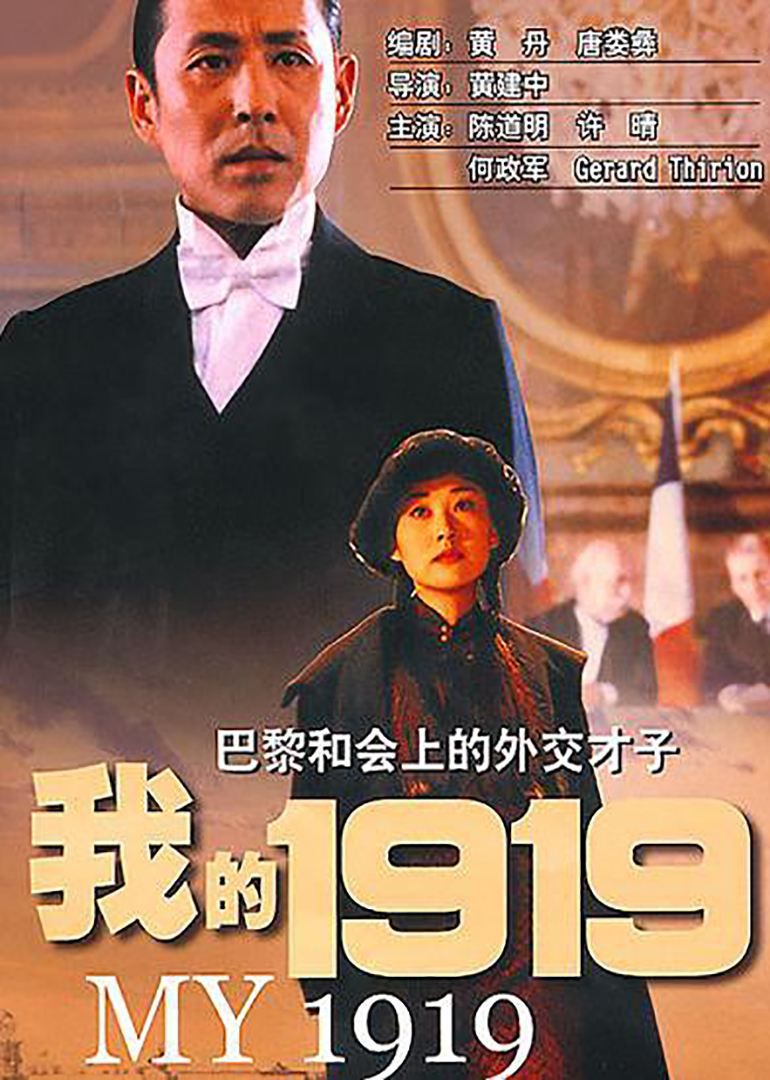
After joining the Allies and declaring war on Germany in 1917, China sent more than 140,000 workers (known as the Chinese Labor Corps) to assist the war effort. But despite China’s supporting role, it became clear the Treaty of Versailles under discussion would not be kind to China’s demands. Instead, the Chinese were sidelined, and the German concession in China’s Qingdao, Shandong province, was handed to Japan. Under the pressure of imperial powers, the government intended to sign the treaty, but that news sparked nationwide protests among students, workers, and other patriotic groups, ignited by a student demonstration in Beijing on May 4, 1919.
Although there are many fictional elements in the film, such as Gu’s passionate speech refusing to sign the treaty at the conference (in reality, the Chinese delegation did not attend the signing ceremony), the film explores the diplomatic struggles and depicts the effort of a few progressive officials as futile in the face of a corrupt government.
Though rated 8.6 on Douban, the film (shot in 1999) can seem outdated today. For instance, the film concocts a romance between a young French woman and Gu to accentuate his charm. Nevertheless, Chen Daoming (a national treasure) delivered a convincing performance as the gentle, yet firm diplomat fighting for his country.
The real-life Gu went on to become one of the founding delegates of the United Nations and the first signatory of the UN Charter. After ending his diplomatic career, he served as a judge of the International Courte of Justice in The Hague and later retired in New York until he passed away in 1985, aged 97.
The Divorce《伤逝》 (1981)
Unlike the three previous works which focus on important historical figures, The Divorce centers around an ordinary young couple brought together by the May Fourth Movement. They marry and enjoy a brief happy time together, but split due to financial pressures. Adapted from legendary writer Lu Xun’s short story under the same title published in 1925, the film explores the larger social context after the May Fourth Movement and poses the question: What happens after the liberation of thought? This was Lu Xun’s only romance story, and he used the genre to express the view that men and women should fight for equal independence and economic rights.
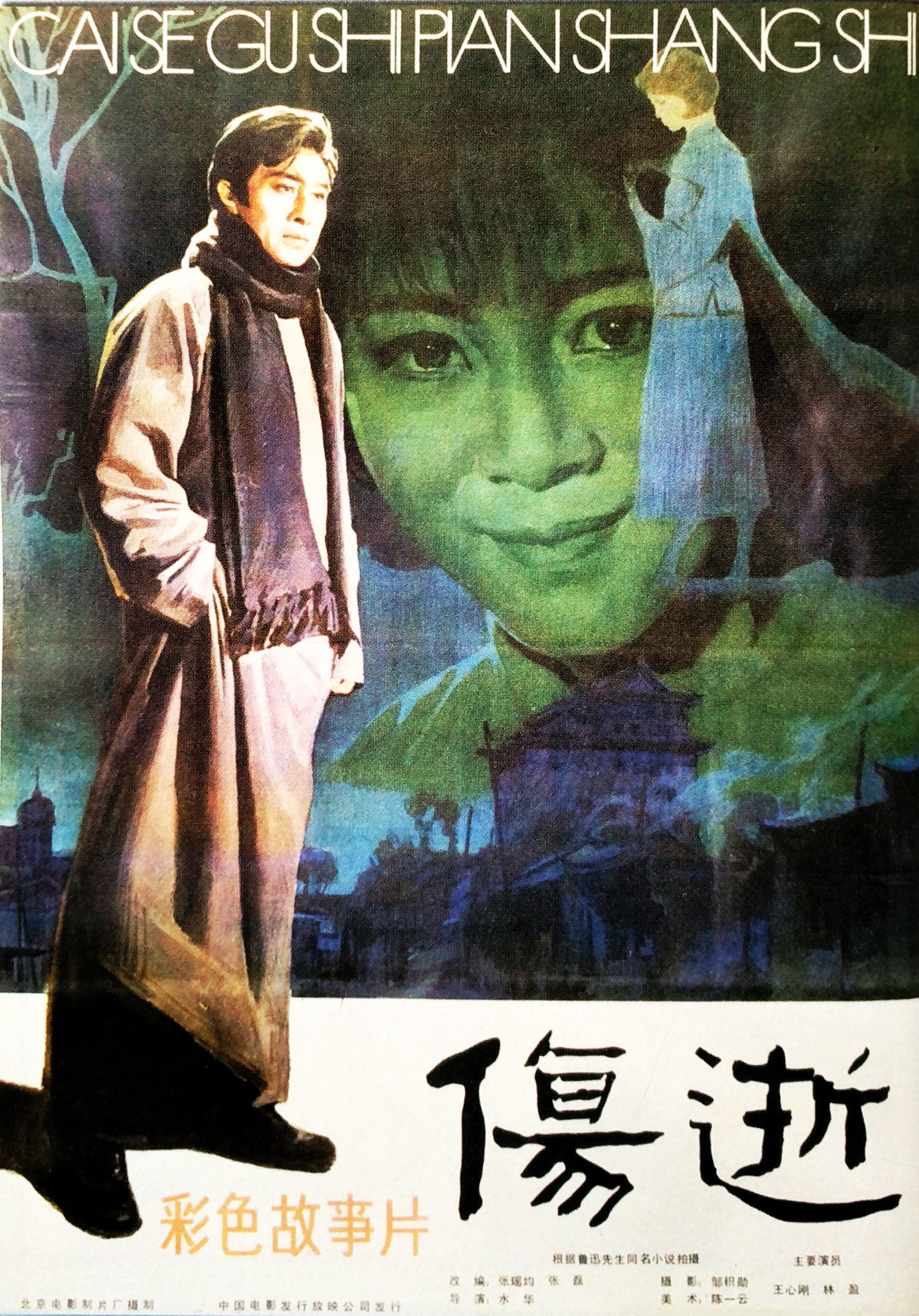
Female students emerged from the May Fourth Movement as a progressive power, with many of them deciding to sever ties with their traditional patriarchal families. In The Divorce, Zijun (Lin Ying) is one such woman. She begins as a brave, rebellious woman embracing new values and ideas, but once she couples with Juansheng (Wang Xingang), Zijun’s fight ends. She throws herself into domestic life oblivious to the outside world, while Juansheng struggles to make money and begins to doubt their life together—neither of them stands the test of married life.
Through this story, Lu Xun emphasized that more needed to change even after the May Fourth Movement: “Economic power is paramount. Firstly, equal distribution between men and women should be achieved within the home; secondly, equal economic influence between men and women should be achieved in society. Unfortunately, I do not know how to obtain this power, I only know that we still need to fight; perhaps even more fiercely than demanding suffrage,” Lu said in a speech to female students at Beijing Women’s Normal University in 1923.
Though the film was produced during the early stages of modern Chinese filmmaking and is low-tech, its sharp critique of family, relationships, and wider society after the May Fourth Movement remains noteworthy.
Related Articles