
Designer toys are leading the growth of China’s “emotional economy,” as millennials and Gen Z seek brands that connect with their feelings
Xiao Miao’s home is adorned with things she loves: Disney’s StellaLou plushies in various sizes and outfits, huggable stuffed red pandas in different postures, exquisite vinyl toy figures shelved on the walls, and rows of stylish Lolita dresses on display. “Just having them there instantly cheers me up,” says the 33-year-old Beijing designer.
A fan of plush toys since she was little, Xiao Miao (nickname) began to collect blind-box figures a decade ago. “I got some of my friends into them, too. Some are now crazier than me,” says Xiao Miao, who TWOC met during a designer toy show this December in Beijing, where she happily secured a few more figures.
Once dismissed as a childish or frivolous pastime, or at best a niche hobby, designer toys and plushies for adults are no longer alien to the general public. Earlier this year, the Labubu series surged into a global fad, with buyers lining up across the world to get their hands on the collectible vinyl plush toy.
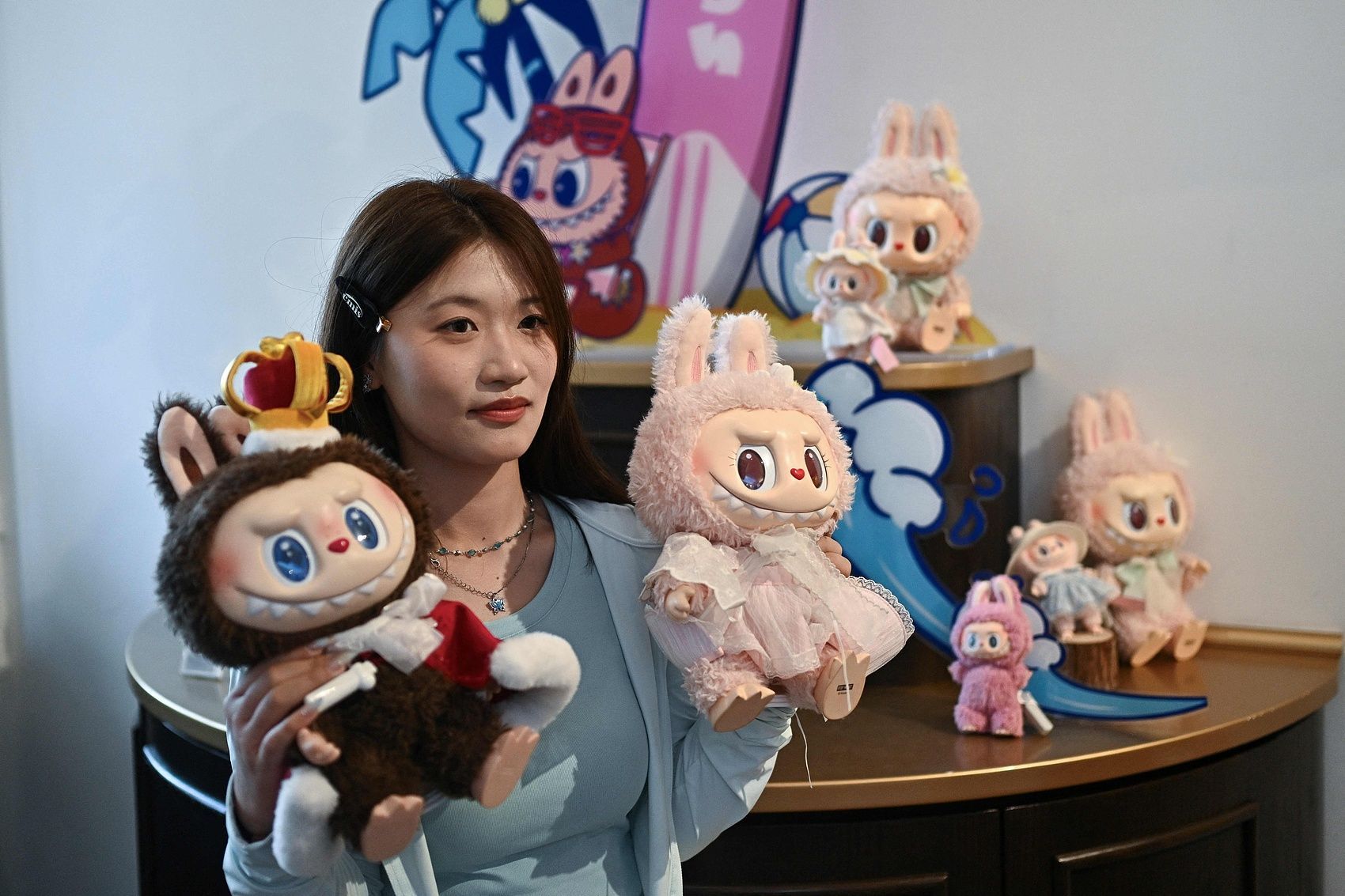
A visitor poses with Labubu dolls at the store in Pop Mart’s theme park, Popland in Beijing (VCG)
Industry experts and media rush to interpret Labubu’s viral success: some called it a social currency, a status symbol that showed one was on trend; others believe young people simply saw themselves in the “ugly cute” monster, imperfect but unbothered by other people’s opinions. The toy is also viewed as a “recession indicator,” as people turn to small indulgences for comfort during times of economic uncertainty.
Follow the latest youth culture trends in China:
- A Second Life: Why Young Chinese Are Turning to Thrift?
- Next in Line: Meet the New Heirs of Chinese Manufacturing
- As the “2D Goods Economy” Explodes in China, Can Fantasy Worlds Solve Real-life Woes?
The rise of designer toys—collectible figures and toys created by artists, often branded and limited in quantity—seems to signal a broader shift in consumer behavior. Traditional decision-making factors, such as utility and price, are giving way to a more abstract yet more powerful driver: emotional value. From personal enjoyment to emotional healing and self-expression, young consumers are increasingly drawn to the affective appeal of goods and services.
This shift has influenced product design, service models, and marketing strategies aimed at making millennials and Gen Zers, the core demographic of today’s consumer market, feel seen, understood, and respected. Yet questions remain: Can purchases meant to offer quick relief from loneliness, anxiety, or boredom truly foster long-term emotional fulfillment?
Soft power
Ever since the art toy movement originated in Japan and China’s Hong Kong SAR in the 1990s— giving rise to Kaws figures and Bearbrick toys and paving the way for later viral hits such as Jellycat in the 2020s—more and more adults, also referred to by cultural commentators as “kidults,” are playing with toys.
Plush toys, or maorong wanju (毛绒玩具) in Chinese, are one of the most popular categories on the designer toy market. According to the trade association China Toy and Juvenile Products Association (CTJPA), 43 percent of plush toys are purchased by people born after the millennium, while 90s-born consumers account for another 36 percent.
“Regardless of age, plush toys are universally appealing,” claims Yu Yi, founder of FufuSoul, a brand of scented plush toys. “They help owners to reconnect with the feeling of childhood, delivering emotional healing through sight and touch.”

FufuSoul’s store in a Wuhan mall features a giant plush toy, inviting visitors to take photos and share their experience (VCG)
A collector of pop art and designer toys himself, Yu has been following Pop Mart, the industry leader, since 2018. Founded in 2010, Pop Mart has collaborated with various artists to launch popular characters such as Molly and Pucky, propelling the collectible toy trend into a global business with over 500 stores worldwide. In 2023, Yu sensed there was a market for plush toys for people dealing with anxiety and other psychological effects of the pandemic. Fufu toys were launched in just a few months and now operate retail outlets across China, as well as pop-up stores in Los Angeles and Bangkok.
According to Yu, most of FufuSoul’s customers are urban women aged 25 to 40 with the spending power to afford the 200 yuan minimum price per toy. But Yu explains that emotionally driven purchasers aren’t typically focused on the price tag: “Young consumers are willing to spend money to treat themselves. They tend to pay more attention to a brand’s philosophy and the quality or feel of its product.”
Yang Yulong, the 34-year-old founder of Black Button, a magnetic plush toy startup, sees a generational divide in shopping. “Our parents’ generation prioritized practicality when it came to household items like refrigerators, color TVs, and big sofas,” he says. “But when we grew up, coinciding with improvements in living standards and an economic boom, we developed a sense of aesthetics and wanted to create a certain ambience for our homes.”
As for Gen Z, Yang believes they often seek a sense of companionship and healing. “Despite having everything [material] they need, as digital natives, they are actually becoming more and more isolated. They don’t necessarily want more features,” says Yang. He adds that this generation is also curious and open-minded, and appreciates innovation and interesting content that resonates with them.
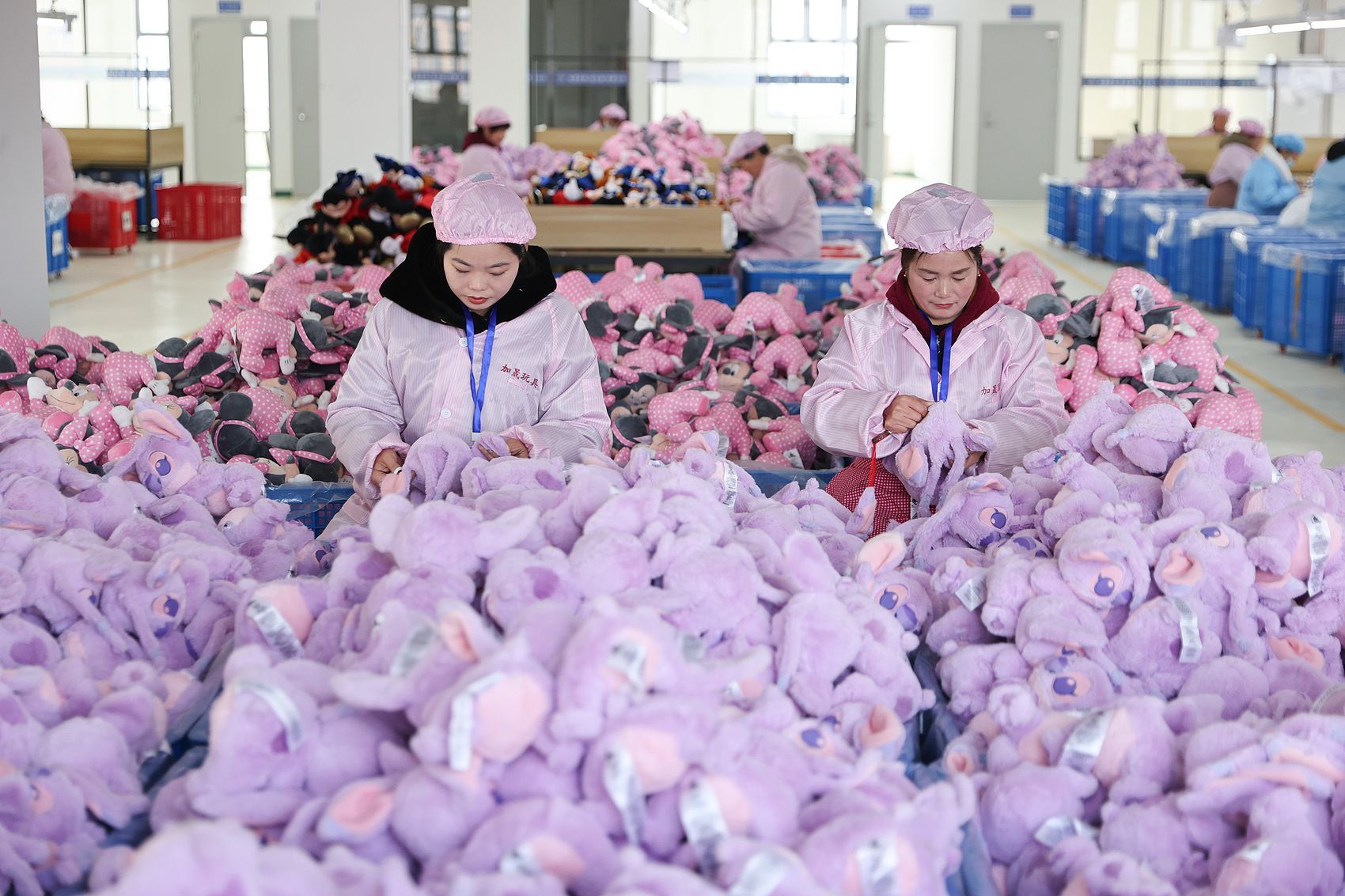
Industry insiders also attribute the rapid rise in the variety of plush toys to China’s powerful supply chain, which includes factories and skilled workers. From design concepts to finished products, the process can take as little as a few weeks. (VCG)
However, value lies in the eye of the beholder. This notion holds especially true in emotional consumption, which was highlighted by a recent controversy. During a Pop Mart livestream sale in November, a host inadvertently called a 79-yuan beaded phone charm “too expensive.” “No worries,” her co-host replied. “Someone’s bound to pay for it.”
The casual remark infuriated many fans, who felt exploited and called for a reevaluation of Pop Mart’s pricing scheme. According to an investigation by a journalist from Chengdu’s Hongxing News, the phone ornament in question consisted of zinc-alloy charms, polyester cords, resin figurines, and glass or acrylic components. Counterfeit versions reportedly cost as little as 4 yuan to produce. So far, Pop Mart has neither commented on the findings nor adjusted the item’s price.
Of course, designer toys are not priced on logic. Their perceived value is shaped by design, appeal as collectibles, and scarcity. Critics argue that Pop Mart has deliberately manufactured scarcity for popular items such as the Monsters series, which Labubu is a part of. Nevertheless, concerns over cost transparency persist in public discourse.
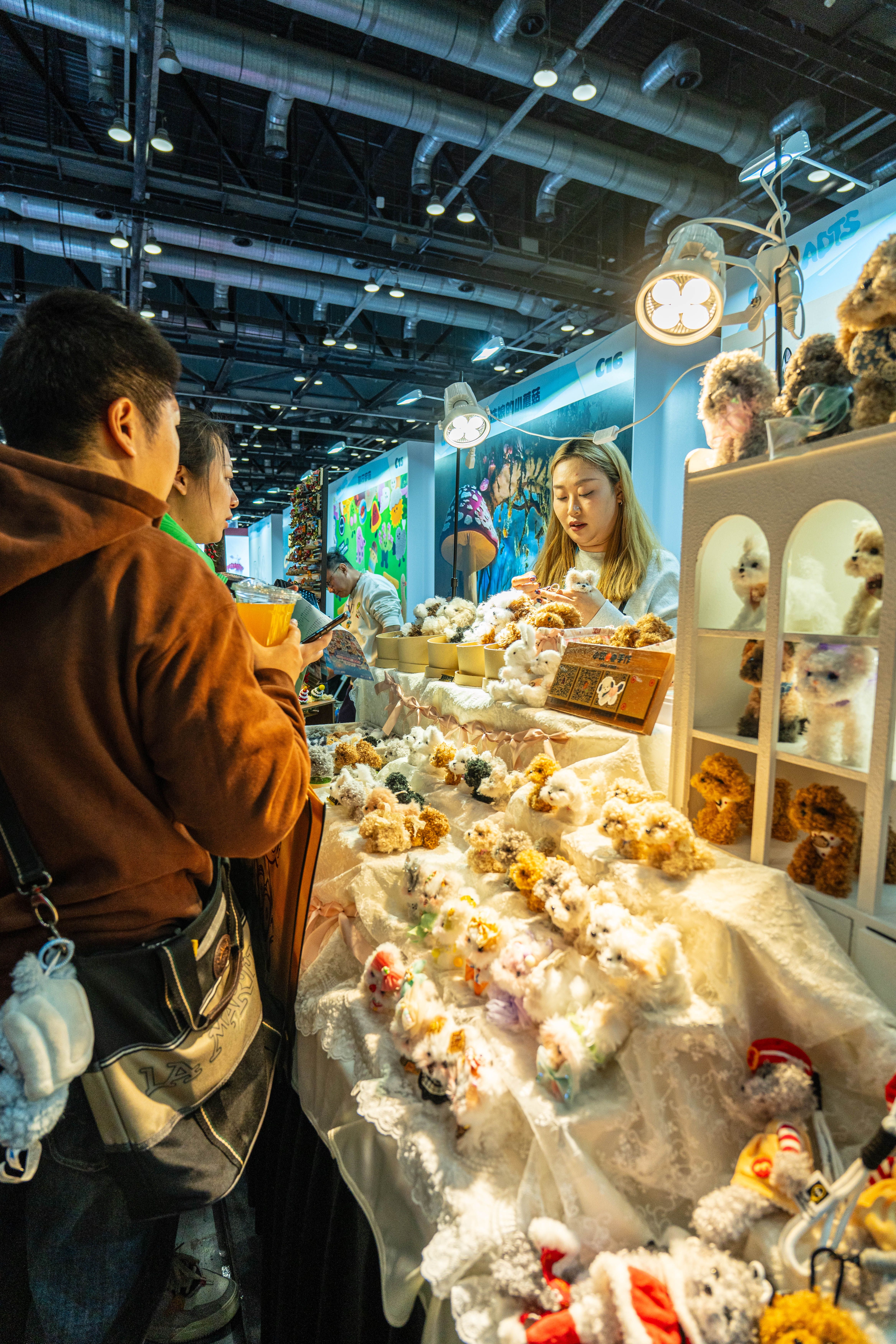
Small independent plushie craft shops are abundant at the Beijing International Art & Designer Toy Show (Liu Jue)
It is, therefore, no surprise that designer toys have become a highly lucrative business. Pop Mart’s gross margin this year is estimated at 65 percent to 70 percent, comparable to that of luxury brands such as Louis Vuitton and Hermès.
The industry is now attracting many new players. Besides leading brands such as Pop Mart, Top Toy, 52 Toys, and TNT Space, traditional toy makers and startups are also eying the field. To boost domestic consumption, the government launched plans this March to support brands developing original intellectual property (IP) and promote the consumption of animation, games, esports, and related products.
However, industry insiders don’t seem bothered by the prospect of more competition, believing that emotional consumption is inherently different from traditional consumption. “Brands in this space aren’t really competing in a zero-sum way,” Yu tells TWOC. “Someone can like one IP, or three, or five at the same time. One brand’s success doesn’t mean people stop buying others.”
Yu also believes the untapped market is immense. “I think emotional consumption really depends on the individual. There’s no real saturation point, because people need emotional comfort every single day.”
Emotional economics
In recent years, “emotional value,” or qingxu jiazhi (情绪价值), has become a buzzword in China. It is invoked in discussions about relationships, workplace culture, and most notably, business.
The role of emotion in economic behavior was first noted in the mid-20th century. In 2000, the American business management book Emotional Value: Creating Strong Bonds with Your Customers defined the term as the economic worth of the feelings customers experience with a company’s products, services, and staff.
Today, the term is at the core of China’s so-called “emotional economy,” widely regarded as a new economic model in which growth is driven by fulfillment of consumers’ emotional needs.
According to the 2025 Gen Z Emotional Consumption Report, jointly released by social networking app Soul and the government-funded Shanghai Youth & Children Research Center in September, 90 percent of youth and young adults born between 1995 and 2010 strongly endorse the idea of “emotional value.” Over 46 percent view it as a “cure for stress and anxiety,” while 43 percent believe that it “makes them feel needed and seen,” and an additional 32 percent consider it a “source of motivation.” More than half of the respondents also say they are willing to pay for items with emotional value, with plush toys, home fragrance products, stress-relief toys, and cultural merchandise ranking among their most popular choices.
A report by data analysis firm iiMedia Research even estimates that China’s emotional economy has reached a market size of 2.7 trillion yuan in 2024 and is projected to exceed 4.5 trillion yuan by 2029, spanning industries from designer toys and pets to online games, immersive tourism, and beyond.
Market experts have also noted the shifts in brand strategies under this new paradigm. “Brands no longer just say what the product does or emphasize its price advantages. Instead, they connect it to emotions,” observes Hu Pei, a Wuhan-based independent brand consultant with over a decade of experience.

As millennials and Gen Zers become the core consumer demographic, a major shift in consumer behavior has emerged, with a focus on self-expression and emotional fulfillment, moving from practicality to self-contentment (VCG)
Moreover, Hu adds, “Marketing used to adopt a ‘preaching’ approach, like ‘I tell you something, and you just follow my lead.’ Now, it’s all about creating resonance, to show that I understand you and I can connect with you.”
Last summer, Hu worked on a short video ad campaign with the tagline “The First 100 Miles” for Car Inc., a car rental company. Rather than detailing the company’s services, she chose to depict relatable moments for new graduates—renting a car for the first time for a road trip, a job interview, or to visit a love interest in another city—turning the idea of car rental into the start of a new chapter in young adults’ lives.
She also cited the example of high-level executives at home appliance brand Haier, along with other Chinese entrepreneurs, who have opened personal social media accounts to appear more accessible to younger audiences.
While the industry may view these shifts as a consumption upgrade that drives new economic growth, consumers have also been questioning whether purchasing is the right approach to self-care. In a 2024 stand-up sketch, comedian Xiao Lu humorously commented on the trend: “Loving yourself means re-parenting yourself. But does buying Beast, Lululemon, or Chanel mean you’re really being your own parent? No, you’re being the parent of capital.”
Scholars have also cautioned against overconsumption, arguing that it only offers temporary relief that masks the root of emotional problems. According to a 2024 survey conducted by the state-funded China National Youth & Children Research Center, while a majority of young people aged 14 and 35 reported a relatively high sense of overall well-being, over 85 percent also reported experiencing various emotional turbulence within a given week, including feeling “depressed and downhearted,” “no joy or ease,” “restless and uneasy,” and “unexplained fear.”
Zhang Xiaheng, director of the Digital Marketing Research Center at Zhejiang University, argues that excessive emotional consumption intensifies the pursuit of immediate emotional gratification, which can lead to impulsive buying and addiction while causing consumers to neglect long-term financial planning and their true needs. In an article published this December in the academic journal China Youth Study, Zhang warns that, if left unregulated, advertising that claims to relieve anxiety could actually amplify or even create certain social anxieties, ultimately undermining the new economy in the long run.
“Seeking a certain sense of self in an uncertain world has become a universal experience for young people growing up today,” wrote Professor Lian Si at China Youth University of Political Studies in an academic article in July, attributing these emotional issues to life in a transitional era where traditional values are constantly being redefined and social structures are being reorganized. To truly reduce societal tension, he advocates for structural changes—policies that expand employment opportunities, provide housing support for youth, and redistribute educational resources to lower-tier cities and vocational institutions—that offer individuals more choice and relief from constant stress.
Perhaps it also means that young people should experience the emotional economy on their own terms. “With many brands jumping on the [emotional consumption] bandwagon,” says brand consultant Hu, “young people have become immune to cheap tricks—forced emotional appeals or fake sense of connection—because they’ve seen it all. I think it all comes down to brands being truthful and sincere.”
Related Articles