Around the time Arthur Conan Doyle created Sherlock Holmes, another iconic detective, Judge Dee, emerged from the imagination of an anonymous Chinese writer. Inspired by the evenhanded Tang dynasty magistrate Di Renjie (狄仁杰) and folktales of crime and punishment, Dee Goong An (《狄公案》) extended a tradition of Chinese gong’an (公案), or “case-crime” fiction, dating back to around the 11th century. In the mid-20th century, Judge Dee gained international recognition through Dutch sinologist Robert van Gulik’s translations, as well as his own original detective novels based on the character’s exploits.
Today, a new generation of Chinese crime and suspense writers continues to captivate readers with works spanning literary crime fiction, socially engaged narratives, and classic detective stories with a distinctively Chinese flavor. Many of these works have been adapted into popular hit films and television dramas, and translated into multiple languages for overseas readers. A writers’ event hosted by the China Writers Association at the Beijing International Bookstore in late May highlighted this evolving landscape, inviting eight noted crime and suspense writers online and offline to share their insights. We delved deeper into the writers featured at the event:
Zijin Chen 紫金陈
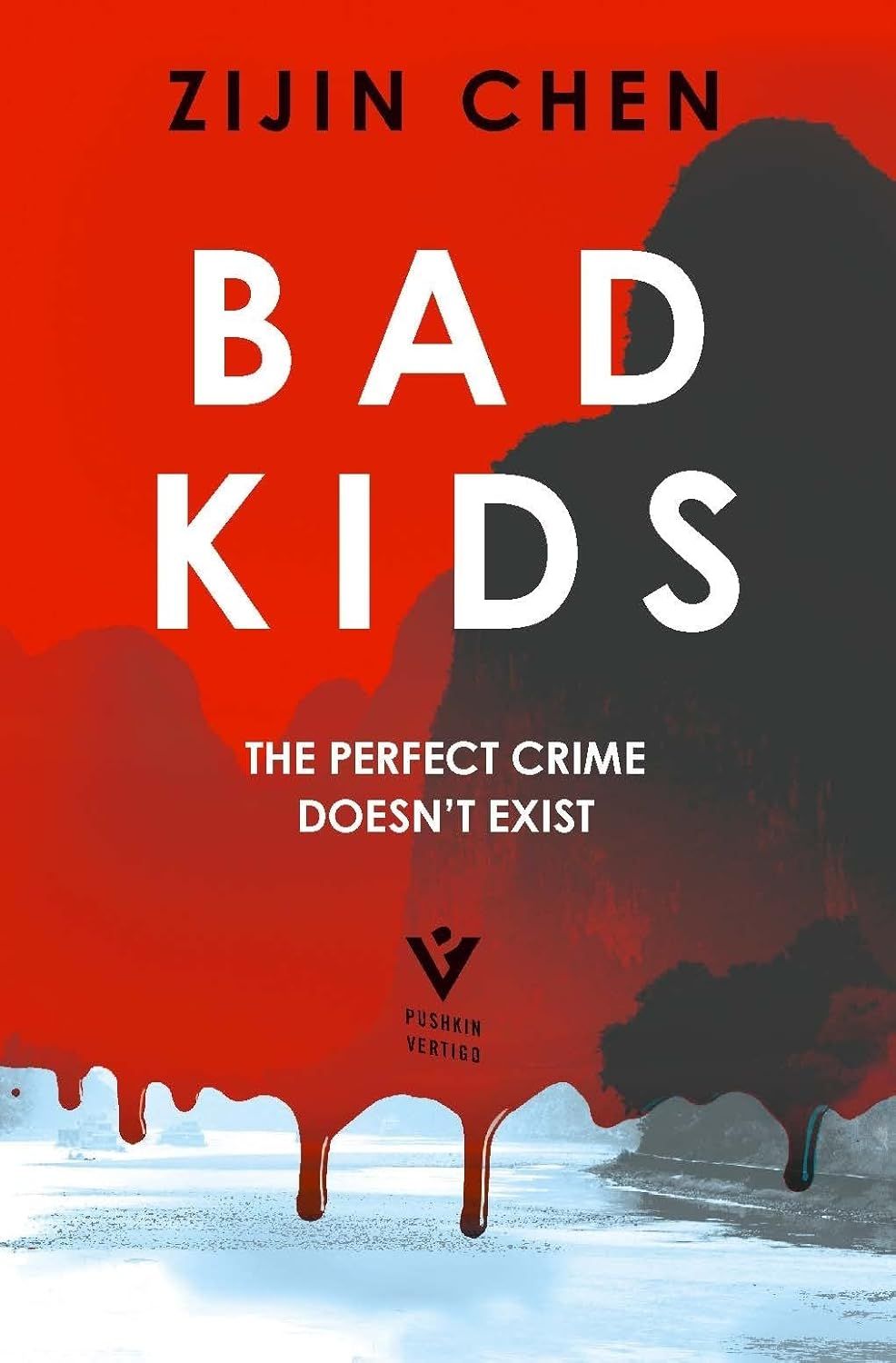
Bad Kids (2022), Pushkin Press
Zijin Chen is perhaps one of the most successful novelists in China when it comes to adaptations. His novels The Untouched Crime (2014), Bad Kids (2014; available in English since 2022), and Low IQ Crimes (2020) have all become major hits on screen, placing him among the most prominent names in China’s crime thriller genre.
A former product manager at a stock-trading platform, Chen has long viewed novels as products on a shelf meant to be sold. With that mindset, he has written many of his works with adaptation in mind. Having started his writing career on Tianya, one of China’s earliest and largest online forums, Chen has been criticized over the years for his prose, but few dispute the readability of his novels or the strength of their plotting and structure. These qualities make his works particularly well suited for adaptation, as production companies often look for a strong narrative framework that screenwriters can build on.
Chen has also become a minor small-screen celebrity in his own right. He has twice appeared on a popular television program focused on consumer complaints after falling victim to scams—once involving dubious TCM treatments and another after his gym shut down without honoring his membership. His habit of naming antagonists in his novels after people who have wronged him has also been widely circulated online, further endearing him to readers.
Cai Jun 蔡骏

Her Covenant (2026), Jiangsu Phoenix Literature and Art Publishing House
It is impossible to discuss the contemporary Chinese thriller without mentioning Cai Jun, widely hailed as the godfather of the genre. His 2001 work The Virus is often regarded as the first mystery novel published on the Chinese internet. The 100,000-word story was born out of a bet with an online friend after Cai bragged that he could write something as good as Koji Suzuki’s seminal Japanese horror novel Ring. At a time when internet access was not yet widespread, The Virus and many of Cai’s later works circulated widely among students through dog-eared paperbacks and pirated .txt files, helping establish him as China’s bestselling mystery author for nine consecutive years.
Since then, Cai has published more than 30 books, won multiple literary awards, and even directed a film adaptation of his novel The Story of X, which began production in 2024. His books have been translated into various languages, including English, French, German, Thai, Japanese, and Korean. His 2013 novel The Child’s Past Life is available in English.
A Yi 阿乙
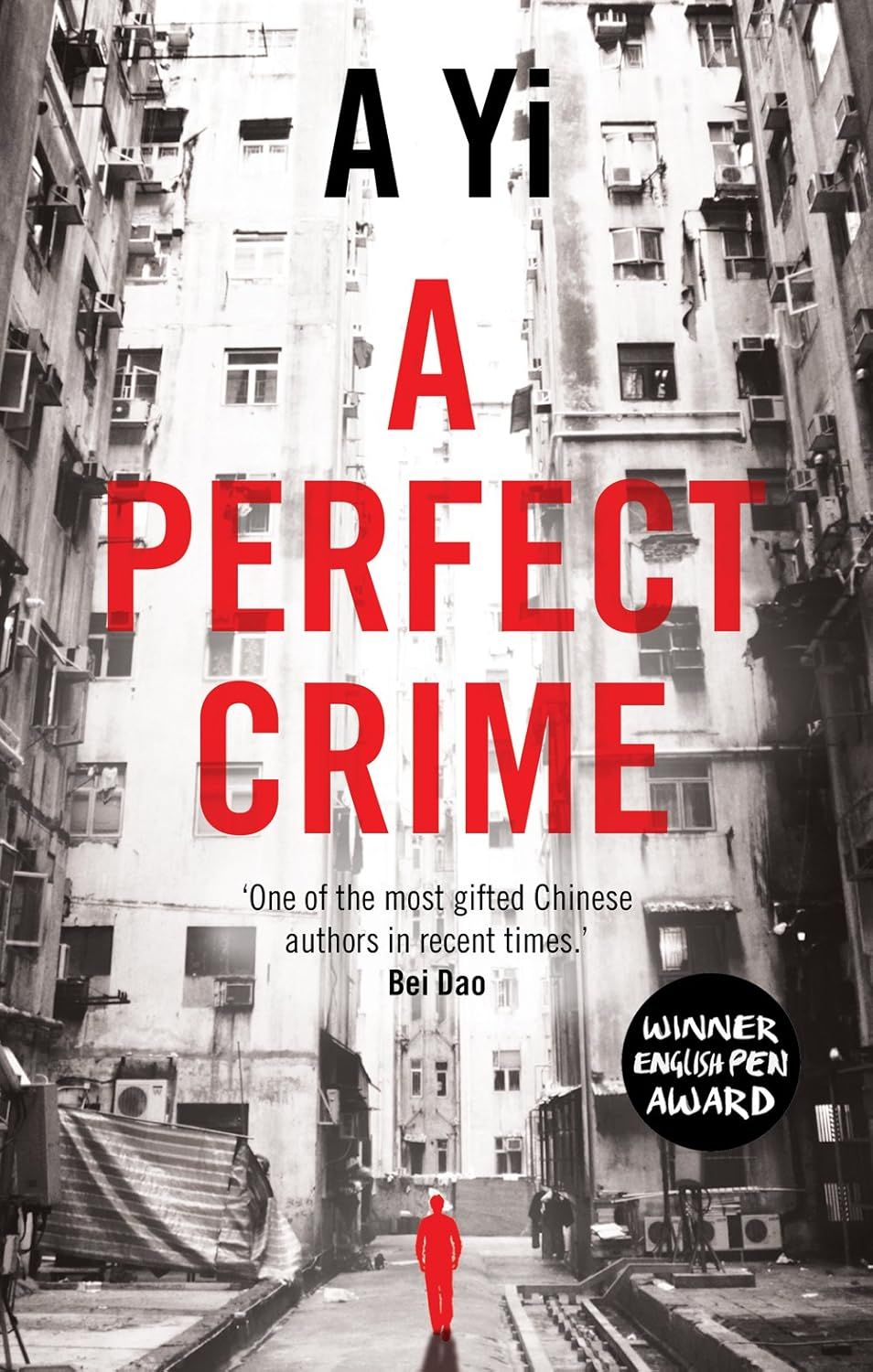
A Perfect Crime (2015), Oneworld Publications
Instead of relying on mind-bending criminal schemes or the cat-and-mouse pursuit between detectives and suspects, A Yi’s literary thrillers offer chilling psychological insights into the minds of criminals. His 2012 novel What’s It Going to Be Then, Eh?, translated into 15 languages, draws its title from the opening line and recurring motif of Anthony Burgess’s dystopian classic A Clockwork Orange.
Published in English as A Perfect Crime (2015), the story is inspired by a real-life murder case with no apparent motive and begins with a high school student murdering his only friend, a young girl, in cold blood. The unnamed protagonist then flees town, is captured, and sentenced to death, before revealing a disturbing, nihilistic truth. Rather than suspense, the novel derives its tension from its relentless pace in spare, incisive prose.
Growing up in a small town in Jiangxi province, A Yi worked briefly as a police officer before becoming a sports editor and, later, a full-time writer. He has published more than a dozen novels and short-story collections since. Among his works recently translated into English is Wake Me Up at Nine in the Morning (2022), which centers on the funeral of a village mob boss, blending the rough realities of rural life with the complexities of human nature, all underpinned by dark undertones.
Here are two of A Yi’s short stories, “Countryside Police Station: An Unsolved Case,” and “International Repercussions,” translated and published by The World of Chinese.
Lü Zheng 吕铮
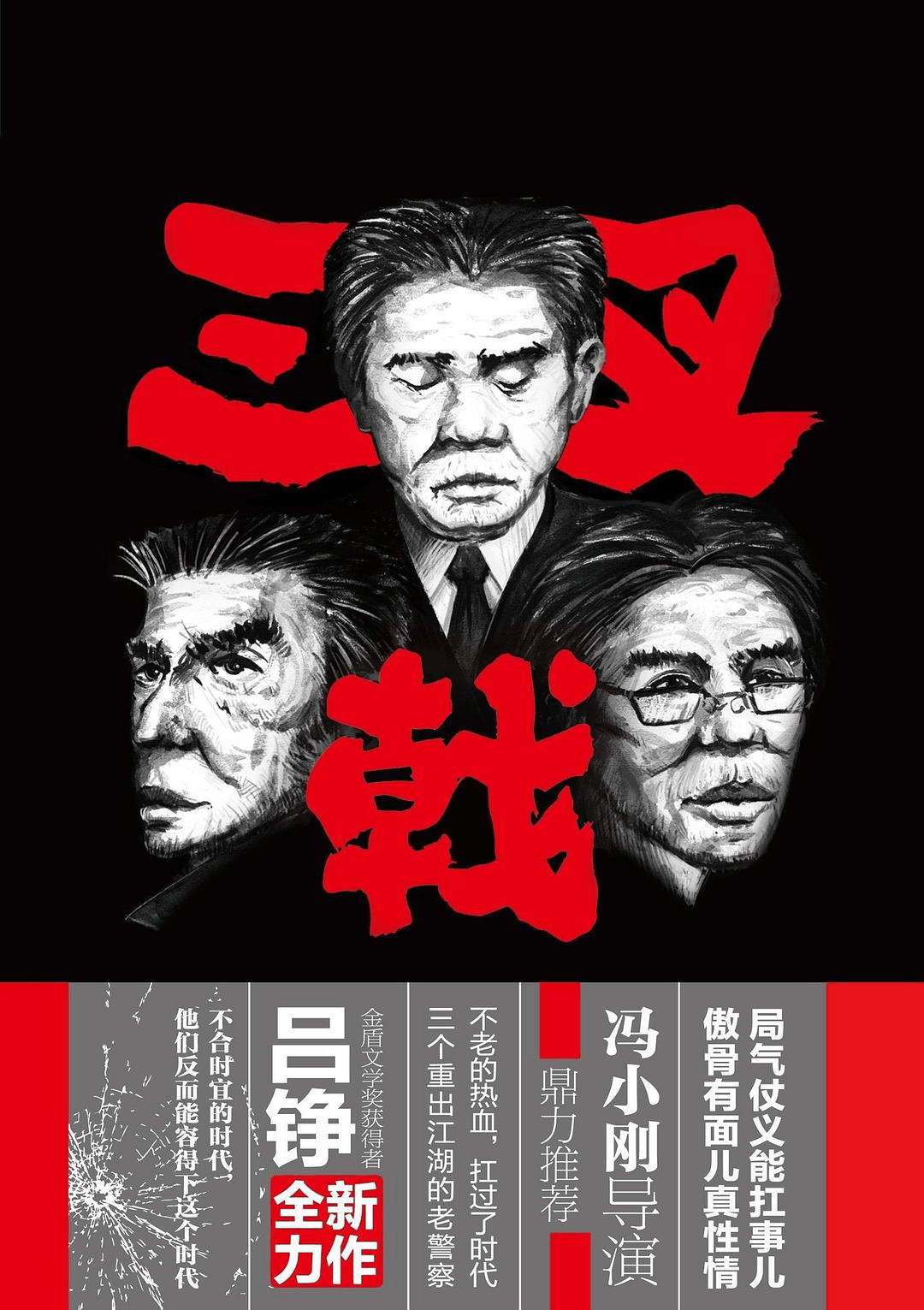
Three Oldboys (2017), Beijing United Publishing Company
A police officer and crime novelist, Lü Zheng draws inspiration from the real-life cases he has encountered over the past two decades. His breakthrough novel Three Oldboys (2017), which follows a trio of veteran detectives nearing retirement as they solve a major financial crime, has become both a bestselling novel and a hit TV series.
Lü’s latest book Double-edged Sword (2025) marks a distinct shift from the clear-cut good and evil framing of his earlier work toward the murkier moral ambiguities of human nature. Centering on the plight of four disgraced officers, the novel explores the flaws, compromises, and difficult choices behind police work.
A multiple literary awards winner, Lü has published around 20 novels, often delving into real-life social issues, from P2P lending scams to AI face-swapping fraud. At the May event in Beijing, Lü argued that Chinese crime fiction should continue to document emerging social challenges. In recent years, he has incorporated more sci-fi elements into his work, exploring how Chinese detective stories might evolve in the future.
Guo Peiwen 郭沛文
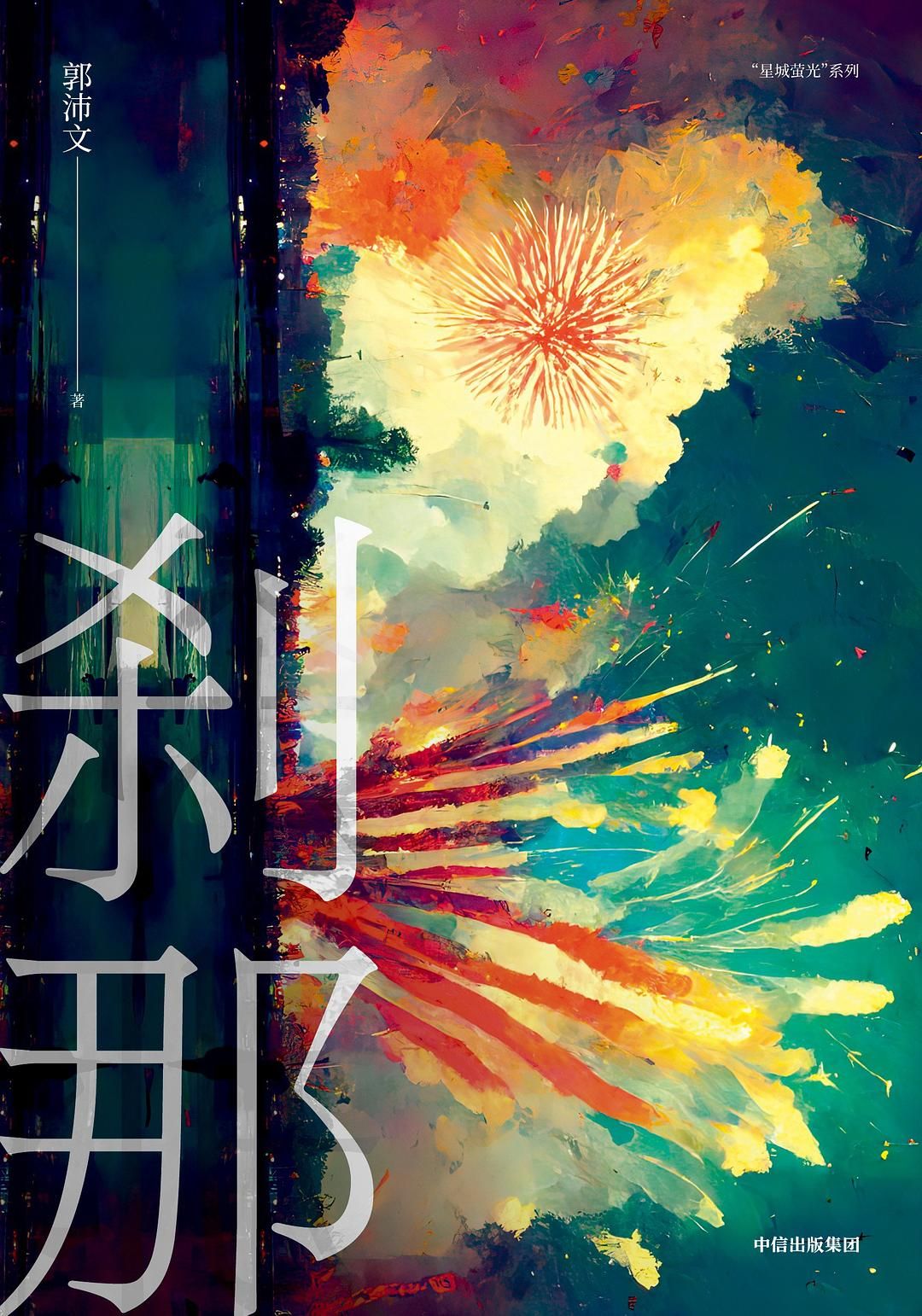
Lost Forever (2026), CITIC Press
“Post-90s” novelist Guo Peiwen emerged as a dark horse in the genre in the late 2010s with The Cold Rain, in which a police officer spends 17 years searching for the truth behind his teenage daughter’s mysterious death after a fall, only to uncover the family traumas and relationship struggles that haunted her and her peers. It was the “Changsha Trilogy” that followed—The Quail (2020), In an Instant (2022), and Lost Forever (2026)—that established his reputation as a realist mystery writer. Set largely in the Hunan capital from the 1990s to the mid-2010s, the novels are known for their nuanced portrayal of local life and the struggles of ordinary people, including victims of pyramid schemes and other predatory financial scams. Local history, dialects, and landscapes also feature prominently in his work.
Born in the 1990s, Guo grew up in a small Hunan county and spent much of his childhood visiting his grandparents in the countryside. He later moved to Changsha for university and stayed on for work. He has drawn extensively on these experiences and observations in his writing, from rural-to-urban migration to the inner workings of various industries he encountered during his years as a journalist before turning to fiction.
“Rapid urban development has brought not only opportunities, but also new social problems,” Guo said at the event in May. “Through suspense fiction, I hope to explore with readers how these problems arise. Ultimately, my novels are about the relationship between individuals and a complex society.”
Huyan Yun 呼延云
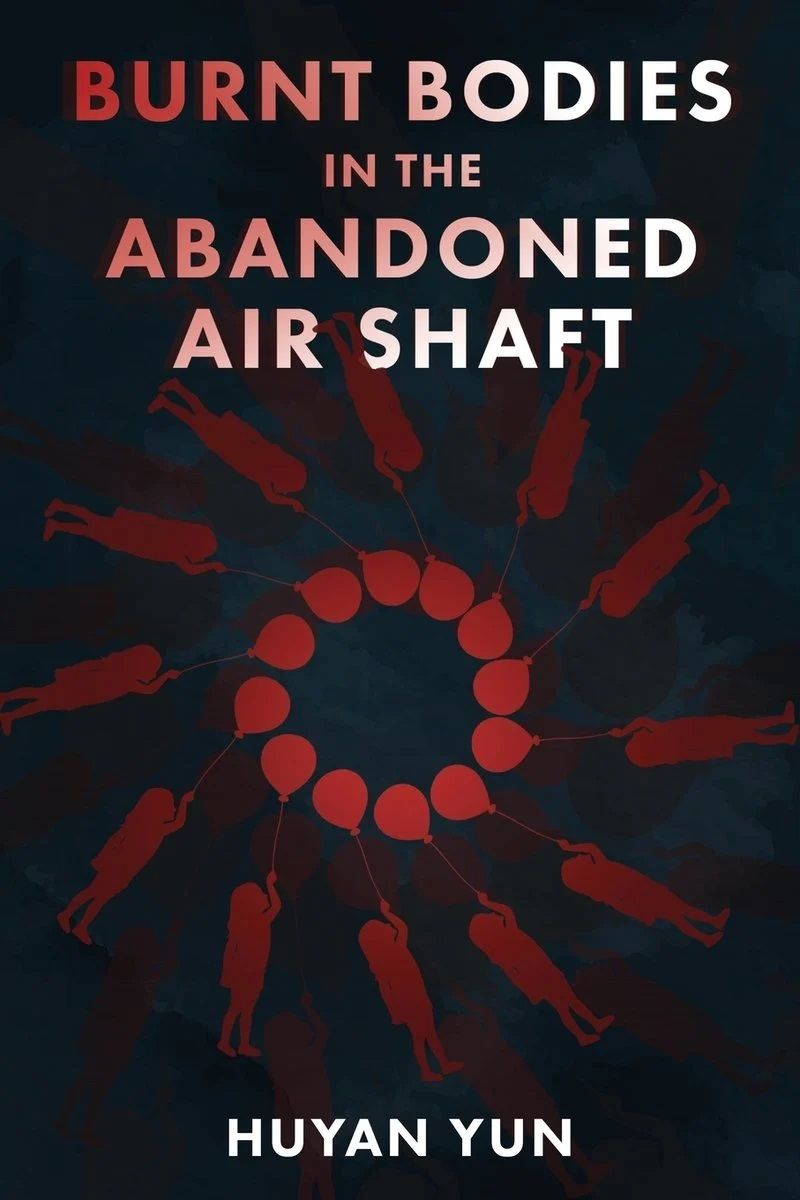
Burnt Bodies in the Abandoned Air Shaft (2025), Legend Times
Since 2009 and the release of his debut work Transmutation, Huyan Yun, whose real name is Zhang Wei, has published more than 10 novels. His writing has gradually evolved from pure detective stories with complex Holmesian plots toward more socially focused narratives on topics such as child abuse, in Burnt Bodies in the Air Shaft (2020), and doctor-patient relationships, in The Ruse of the Empty City (2022).
Based on two unsolved cases involving three deaths in Beijing during the 1990s and 2000s, Huyan’s latest work Ghost Laughing Stone (2025) reaches back to the 1960s and 1970s, when a cohort of young people devoted their youth to the transformation of the Great Northern Wilderness in Heilongjiang. The novel explores the choices and fates of this generation against the backdrop of a rapidly changing society.
At the CWA event in May, Huyan opined on the distinction between Chinese and Western traditions in the “social school” of the mystery genre. Where Western authors emphasize the role of original sin, says Hu, their Chinese counterparts prefer to focus on cold cases, evoking China’s cultural habit of looking to the past for answers and seeking solutions from traditional ways of doing things. “This is the most distinctive feature of China’s mystery novels,” he said.
Huyan’s novels have been translated into other languages, including Vietnamese and Japanese, and following an announcement at this year’s London Book Fair in March, British publisher Legend Times will work with its Chinese counterpart New Star Press to release English editions of his work.
Shi Chen 时晨
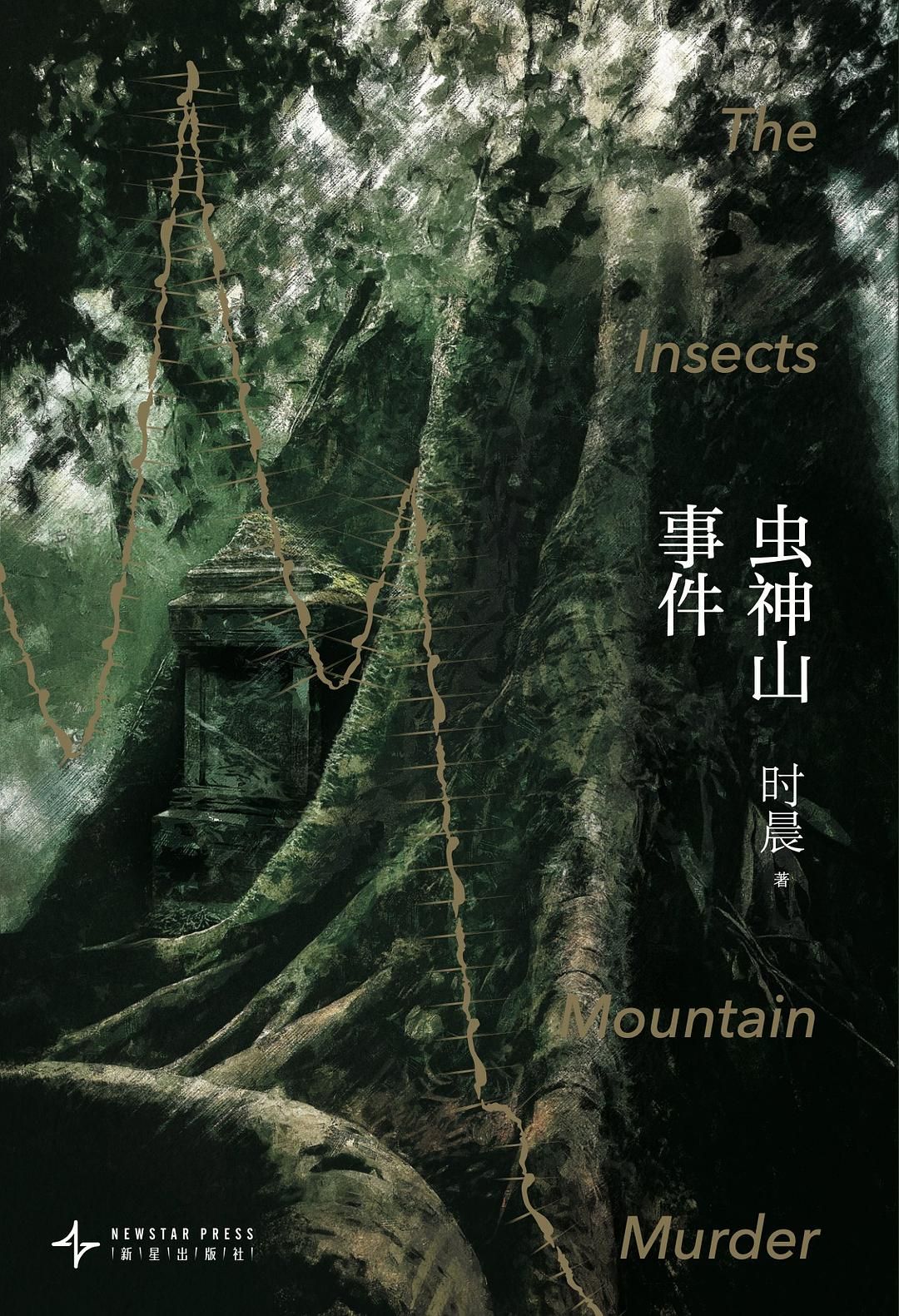
Insects Mountain Murder (2025), New Star Press
For readers who enjoy old-fashioned detective fiction with intricate puzzles and eccentric sleuths, Shi Chen is an author worth seeking out. Across six novels and numerous short stories, he has created the aloof, sharp-tongued mathematician Chen Jue, a genius who uses rigorous logic and mathematical reasoning to solve crimes. His mysteries, infused with Chinese history and culture, take readers from the suburbs of Shanghai to remote islands in the South China Sea.
Shi’s latest novel, and Chen Jue’s swan song, The Insects Mountain Murder (2025), follows a series of killings among archaeologists and field researchers investigating a mysterious insect-worship tradition in the mountains of Yunnan. In another popular series, The Water Margin Hunter (2017 – 2020), Shi draws inspiration from the classical Ming-dynasty novel Water Margin (or Outlaws of the Marsh), blending martial arts lore with suspense into a historical mystery.
Shi also runs Miyunshe Mystery Books in Shanghai, China’s first independent bookstore dedicated to detective fiction. Since opening, it has become a hub for mystery enthusiasts, hosting book talks, readings, and other community events.
Zhao Jingyi 赵婧怡
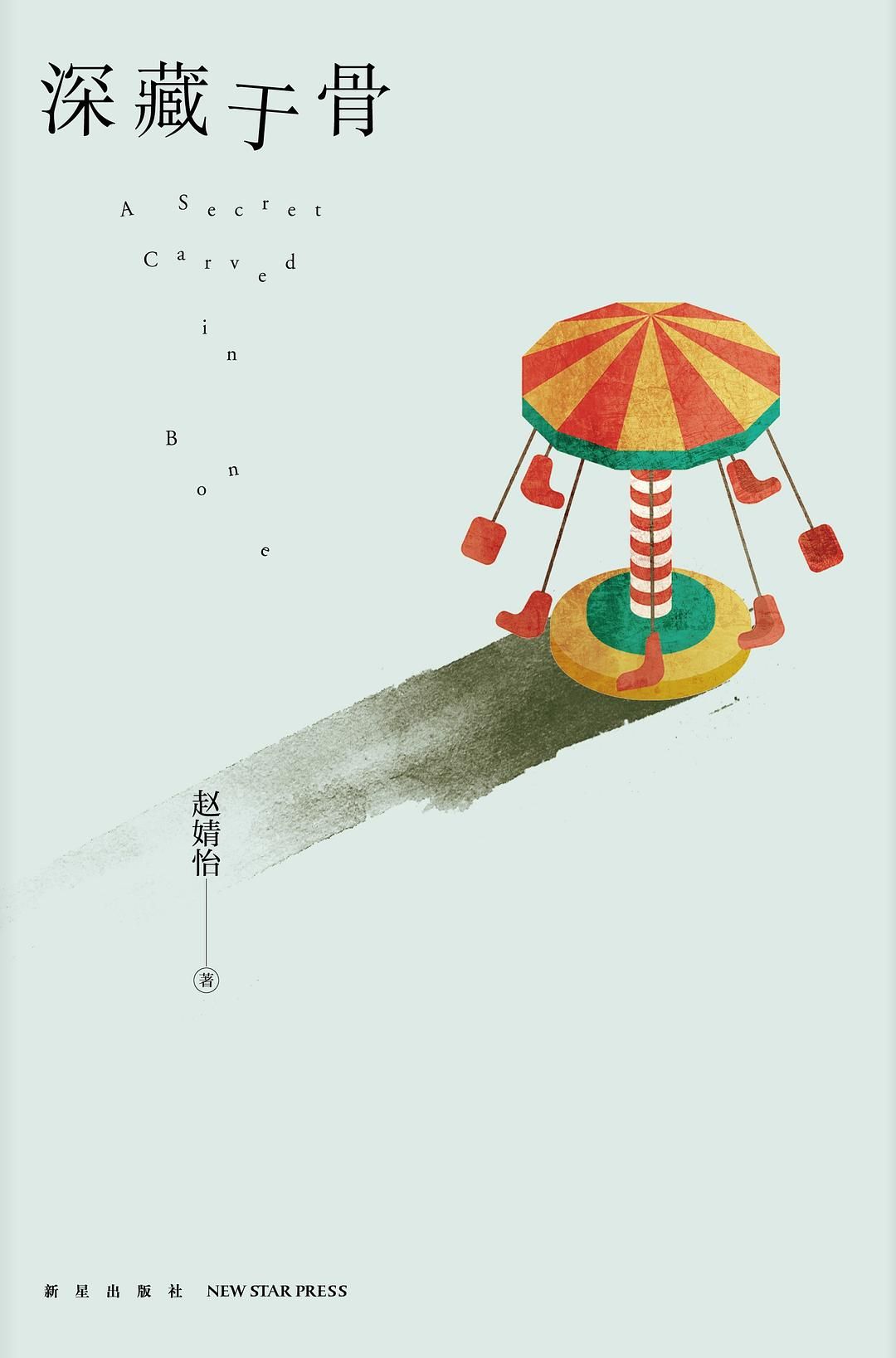
A Secret Carved in Bone (2022), New Star Press
Crime writer and translator Zhao Jingyi might be best known for bringing Japanese detective fiction to Chinese readers, but she has also drawn acclaim for her nuanced, emotional portrayal of ordinary people and everyday life in her own writing. Rather than relying heavily on complicated plot contrivances, Zhao builds her mysteries using grounded, real-life experiences.
Deeply influenced by the Japanese work she translates, her latest novel A Secret Carved in Bone (2022) begins with the discovery of a single corpse before gradually spiralling into two long-buried cases of kidnapping and disappearance, both spanning decades. Rated 7.2 on Douban, the novel has been well received for its tight plot, carefully interwoven narrative threads, and repeated twists.
Zhao’s upcoming novel follows a similar approach, built around two intertwined stories—a female journalist and a pair of high school students—deeply rooted in personal experiences and emotionally resonant of a past era.
At the May event, Zhao expounded on her writing philosophy, noting that while language and culture may differ, human nature and emotion are universal. “You have to write about things that strike a chord with everyone,” she said. “Only sincere storytelling can transcend linguistic and geographic boundaries, and resonate with readers worldwide.”
Related Articles