

“Those who live by the mountains profit from mountains, and those who live by the water profit from water (靠山吃山,靠水吃水),” the Chinese novelist Feng Menglong (冯梦龙) wrote in his collection Stories to Awaken the World (《醒世恒言》) in the 17th century, summarizing Chinese people’s attitude toward food. China’s southeastern coastal areas can add the sea to the list of natural resources behind their creative, savory cuisines.
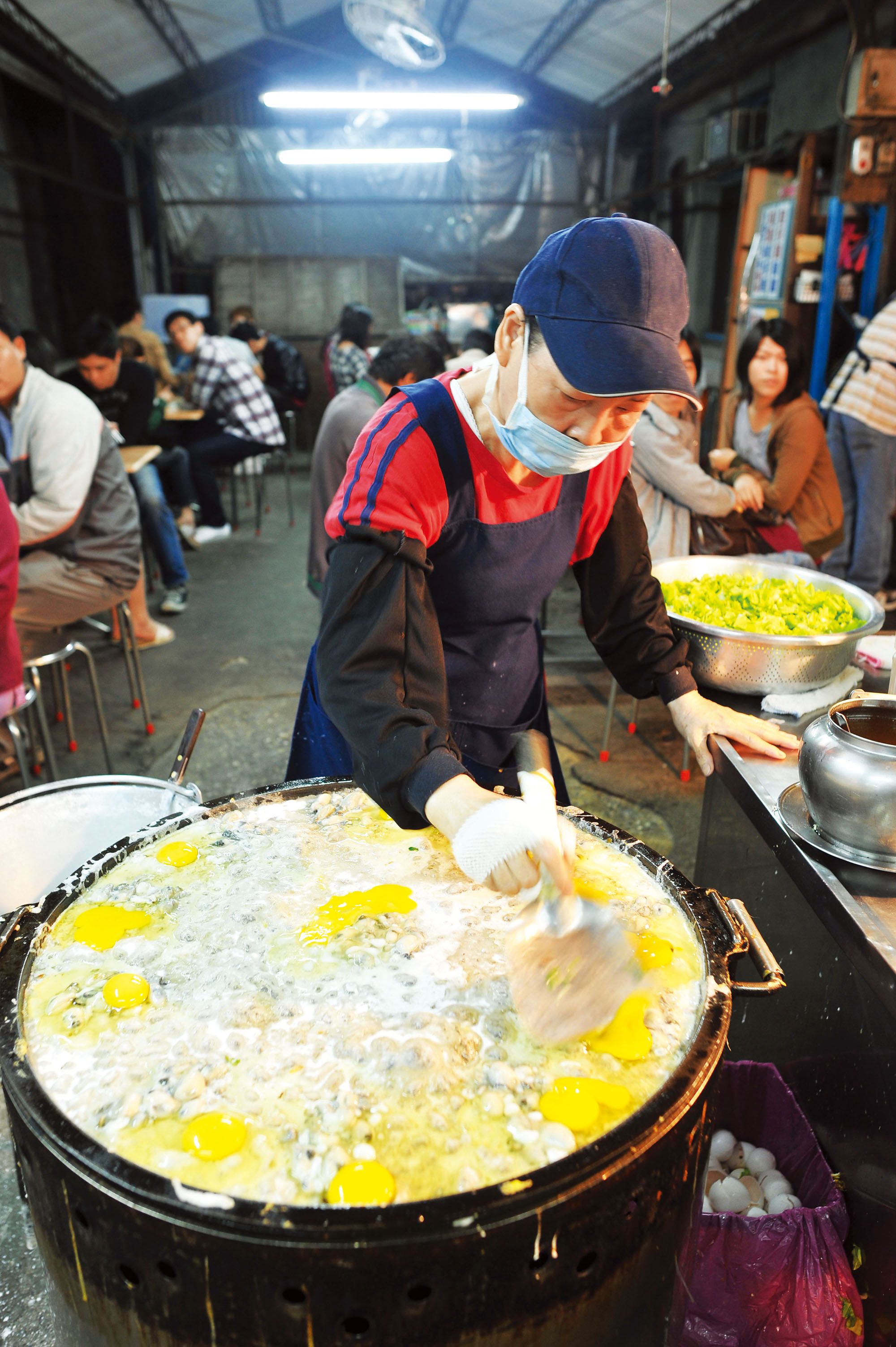
Among these flavorful dishes, a common and affordable eat is oyster omelet, known as o-a-tsian or e’ajian (蚵仔煎) in the Hokkien dialect of southeastern Fujian province, a street dish that combines the fruits of the sea and land—oysters, eggs, and starch. Visitors to Fujian province and the Chaoshan region of Guangdong province, as well as Taiwan, can find o-a-tsian any time of year in street stalls from early morning till late at night.
Although it’s a mystery how local residents invented this dish, some vivid folktales give it a fanciful aura. One of them is about the Ming dynasty (1368 – 1644) general Zheng Chenggong (郑成功), also known by his Dutch name Koxinga, who resisted the Qing conquest of the Ming and established his own kingdom on the then Dutch-held island of Formosa (Taiwan), from which he continued to raid the coastal areas of Qing territory. Supposedly, Zheng came up with the idea of deep-frying the oysters coated with sweet potato starch to feed his army when the Dutch cut off their supply of rice during the Siege of Fort Zeelandia from 1661 to 1662, saving them from hunger and eventually driving the Dutch out of the island.
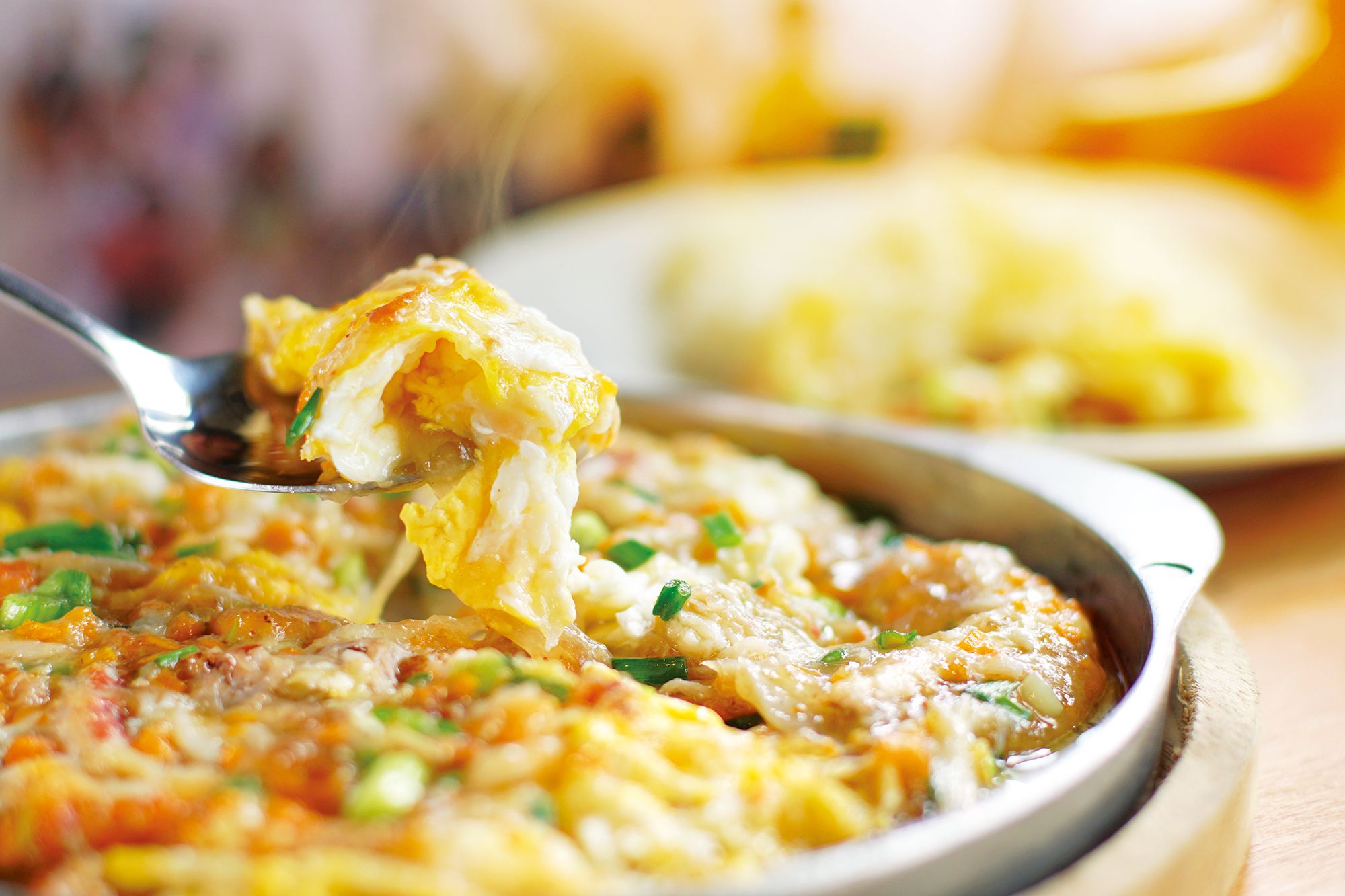
Recipes for o-a-tsian vary between different parts of Fujian, Chaoshan, and Taiwan. Due to the influences of the Hokkien (Fujian) and Teochew (Chaoshan) diasporas, some Southeast Asian countries such as Singapore and Thailand have also adapted the dish with local ingredients. But each version of o-a-tsian always includes the following: small oysters fried in pork lard and covered with sweet potato starch and egg batter. In some regions, a fish sauce or some other flavoring might be poured on top of the omelet for a savory xian (鲜) taste.
Other optional additions include chopped spring onions and coriander leaves on the surface of o-a-tsian, or vegetables like carrots and cabbages in the batter. But no matter how creative the stall owners get, when the omelet sizzles at night markets under the amiable glow of streetlights, filling the roads with mouth-watering smells, eating o-a-tsian is always a comforting experience.
(VCG)
Ingredients:
100g oysters 海蛎
100g sweet potato starch 红薯淀粉
50g potato starch 土豆淀粉
1 egg 鸡蛋
1 spring onion 葱
2 coriander leaves 香菜
2 bok choy 油菜
1/4 tsp salt 盐
1/4 tsp MSG 味精
Fish sauce 鱼露
Ground pepper 胡椒粉
Pork lard 猪油
Steps:
- Wash and dry the small oysters, finely chop the spring onion and bok choy, and beat the egg in a bowl.
- Mix the potato starch and sweet potato starch, and add water. Stir the mixture into a batter, and mix in the spring onion, salt, and MSG.
- Heat some pork lard in a pan over low heat. Pour in the starch batter and fry until the sides set. Add the oysters and bok choy to the surface of the batter.
- Pour in the beaten egg, and turn over the batter as the egg solidifies. Continue frying.
- Fry until the starch batter is solid and becomes transparent. When the edge becomes crispy, take the omelet out of the pan.
- Sprinkle on coriander leaves, pepper, a few drops of fish sauce, and serve.
(VCG)
How to Make Southern China’s Famous Oyster Omelet is a story from our issue, “State of The Art.” To read the entire issue, become a subscriber and receive the full magazine.
Related Articles