

“Close your eyes and imagine a fish tank that hasn’t been changed for a month and has moss growing in it. Then you scoop the water and pour it down the throat,” a netizen describes the peculiar taste of yuxingcao (鱼腥草, literally meaning “fishy-taste-grass”), a herb that repels some—but also has many a diehard fan in Sichuan, Yunnan, and Guizhou provinces.
Just like fish need water, the “fishy” herb also grows in a humid environment near mountain streams. According to traditional Chinese medicine, this herb is believed to reduce heat and inflammation, and even treat mouth ulcers. According to the poem “Yong Ji” (《咏蕺》) by Wang Shipeng (王十朋), written in the Southern Song dynasty (1127 – 1279), people in China already enjoyed this wild plant two thousand years ago.
While people in Sichuan and Yunnan prefer to eat the tender leaves, Guizhou locals enjoy the crisp roots of yuxingcao. “It tastes like summer after the rain,” one Guizhou resident writes on social media platform Xiaohongshu. “There is an earthy fragrance from the grass.”
Guizhou residents allegedly consume 30,000 tons of yuxingcao roots every day. If there were Oscars for Guizhou cuisine, the Best Supporting Actor award would probably go to yuxingcao because it seems to be everywhere: from stalls selling sticky rice in the morning to barbecue stands late at night.
In a Guizhou classic snack called siwawa (丝娃娃), over 10 colorful ingredients from radish to cucumber are shredded into slices and wrapped up in a thin rice pancake. A scoop of chili water mixed with yuxingcao roots adds to the flavor.
Imaginative Guizhou residents even mix yuxingcao into yogurt, bubble tea, and coffee. On Xiaohongshu, visitors to Guizhou take a special challenge: the yuxingcao drink. “Finish it now and you are a Guizhou resident,” goes a common marketing refrain for the beverage.
Yuxingcao is not the only herb in Guizhou that poses a challenge to diners. Nettles, or qianma (荨麻), are nicknamed “biting weed” or “scorpion weed,” and its stems and leaves are covered with long, thin spikes that cause a rash on the skin if touched. In keeping with the Chinese idiom “fight poison with poison,” the nettle leaves are traditionally believed to have detoxifying properties, even as an antidote for snake venom.
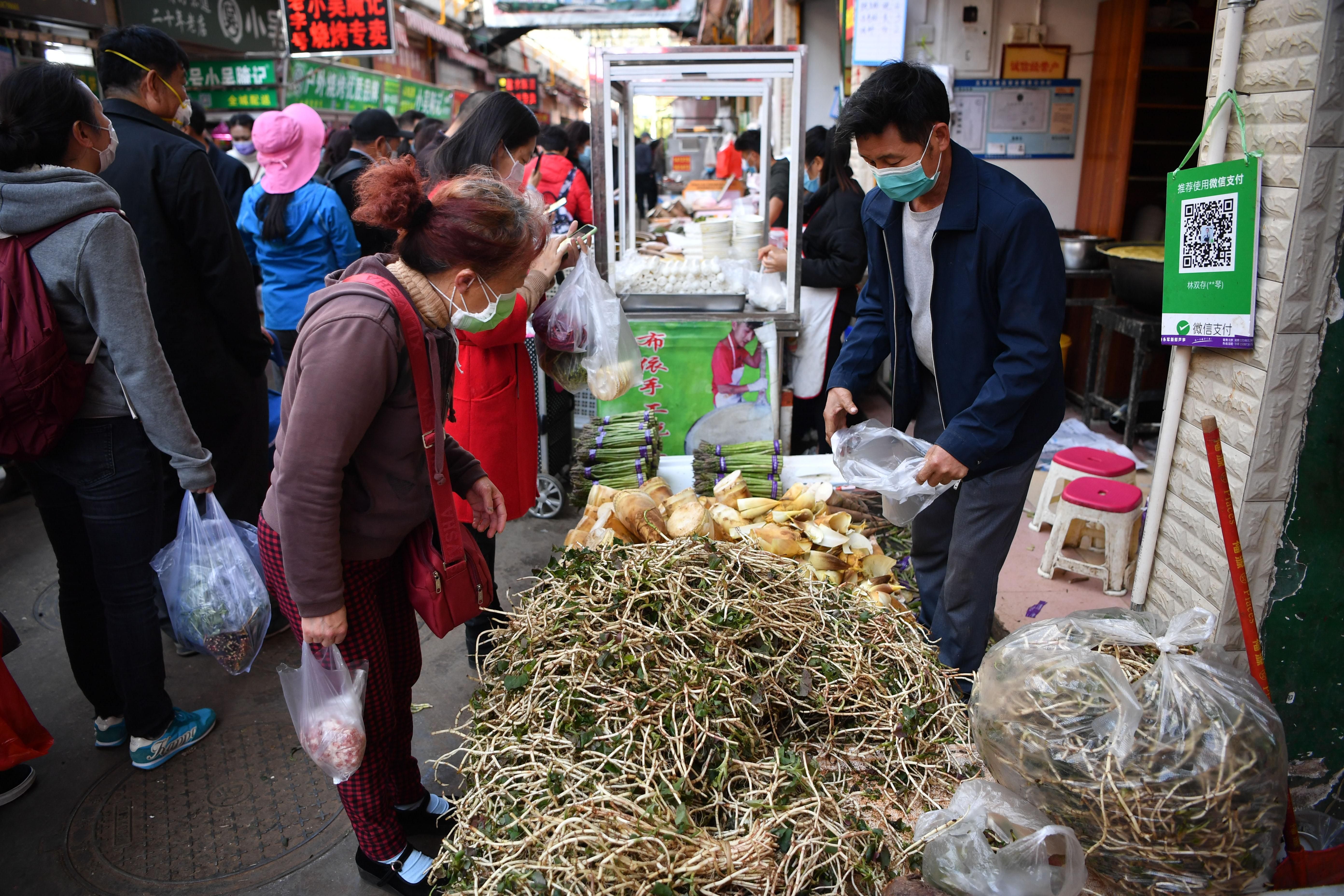
Shoppers at a market in Kunming buying yuxingcao (VCG)
On Xiaohongshu, a user named Lele Grandma shares videos on how to make a Guizhou qianma hotpot. With gloves and scissors, she cuts fresh qianma leaves and washes them in a well in her village. Then she heats up an old oven and mixes pork, tomatoes, mushrooms, and qianma into a spicy sour soup.
“Is it tasty?” she asks her husband. “Of course,” he says in one video as he adds more qianma to his rice bowl. The once dangerous spikes are softened during cooking, leaving qianma tasting fresh and sweet.
The video evokes childhood memories for many. “My grandma told me a folktale that qianma goblins eat up kids if we misbehave,” writes one follower under Lele Grandma’s video. “When I went swimming in the river with my brother and we forgot to go home for dinner, dad came to chase us with qianma,” recalls another. “We jumped out of the water and ran home as quickly as possible.”
Another common Chinese herb is zisu (紫苏), or perilla, with its beautiful purple leaves and mint-like taste. In the 2022 TV series A Dream of Splendor set in the Northern Song dynasty (960 – 1127), Zhao Pan’er, a girl running a tea shop, creates a purple drink using the herb that becomes an instant hit. As recorded in the book Vast Record of Varied Matters (《事林广记》) by Chen Yuanliang (陈元靓) from the Southern Song dynasty, Emperor Renzong once asked his chefs and doctors to assess various herbal drinks, and the purple zisu drink was declared the best for its taste and health benefits.
The zisu plant has grown in China for 2,000 years, and Hunan province is a main region for cultivation. Every summer, just as fish and shrimps from Dongting Lake are ready for harvest, the zisu leaves also turn purple. The leaves are said to remove the raw smell of the seafood and give it a more refreshing taste.
In Changsha, the provincial capital of Hunan, there is a saying: “If zisu leaves are not present, the sellers won’t take up knives to dissect the eels.” Wander around the markets in Changsha, and every seafood stall has zisu leaves to go with the seafood. Whenever someone buys fish, the enthusiastic seller tucks a handful of fresh zisu into their hands.
Related Articles